
Luister gratis naar deze podcast in de app: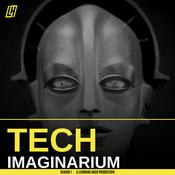 Gratis downloaden in de App Store
radio.net
Slaaptimer
Favorieten opslaan
7 afleveringen
TI06 Three Predictions from SF That Came True ... And Three That Didn't.
13-07-2026 | 1 u. 5 Min.Did science fiction predict AirPods? Neuralink? The death of God?
For this final episode of Season One, John Helmer and Ezri Carlebach give you what hacks call a listicle: three transcendently significant things prefigured in science fiction that definitely came true — and three that didn't. Or haven't yet. Prediction, as Niels Bohr said, is very hard.
Along the way:
Thirteenth-century flying machines
Victorians watching live war coverage on flat-screen TV
elearning before there was elearning
Verne, Wells, jetpacks, flying cars, prediction markets, transporter beams, universal nudism and Octavia Butler's uncannily detailed vision of the Age of Trump.
That's a wrap on season one. Let us know what you've enjoyed — and what you'd like to hear in future episodes. All suggestions considered.
Connect with The Learning Hack:
LinkedIn: linkedin.com/in/johnhelmer X: @johnhelmer Threads: @jphelmer Substack: @learninghack Instagram: @tech.imaginarium Website: learninghackpodcast.com
Listen and watch: https://linktr.ee/learninghack
Music by Nick Dwyer recording as Flintet. The Tech Imaginarium is a Learning Hack podcast, produced and hosted by John Helmer and written by John Helmer and Ezri Carlebach.TI05 Frankenstein: Man Made Man
27-06-2026 | 44 Min.How a teenage girl's waking dream birthed what is (probably) the first science fiction novel – and in the process gave the world its most enduring image of technology gone wrong.
This time we're coming for the myth, the curse, the cliche that is Frankenstein. John Helmer and Ezri Carlebach climb up the tower, point the lightning conductor to the heart of the storm, and attach electrical cables to the neck-bolts of that fearful thing on the slab. Yes, it may be 200-years old but ... it's alive!
They walk through the original 1818 plot — stranger and bleaker than the films — weigh the long-running argument over whether it really counts as science fiction, and trace the monster's afterlife from the 1910 Edison short and James Whale's 1931 classic to Boris Karloff, Mel Brooks, Eddie Van Halen's "Frankenstrat", Guillermo del Toro ... and beyond.
In this episode:
What really happened at the Villa Diodati in 1816?
The radical parents and a childhood shadowed by death that made Mary Shelley
Born in the age of revolutions, Enlightenment values battles alchemy and the occult
How two Brits, James Whale and Boris Karloff, created a look for the monster in their famous 1931 film that resonated through a thousand sequels, rip-offs and pisstakes
Did Mary Shelley predict the death of God?
Connect with The Learning Hack:
LinkedIn: linkedin.com/in/johnhelmer
X: @johnhelmer
Threads: @jphelmer
Substack: @learninghack
Instagram: @tech.imaginarium
Website: learninghackpodcast.com
Listen and watch: https://linktr.ee/learninghack
Music by Nick Dwyer recording as Flintet. The Tech Imaginarium is a Learning Hack podcast, produced and hosted by John Helmer and written by John Helmer and Ezri Carlebach.TI04 Asimov 2: Foundation
13-06-2026 | 57 Min.Can the future of an entire civilisation be calculated like the behaviour of gas molecules? In the second of two episodes on Isaac Asimov, John Helmer and Ezri Carlebach turn from his robots to his other great franchise — the Foundation saga — and the seductive idea at its heart: psychohistory, a fictional science that claims to predict the fate of galactic empires. From a Gilbert and Sullivan libretto opened at random to Apple TV's billion-dollar adaptation, this is a conversation about how one pulp idea grew into a cornerstone of science fiction and why its questions about prediction, determinism and power feel uncomfortably current.
In this episode:
The origins of Foundation — Asimov, his editor John W. Campbell, and the Gilbert and Sullivan operetta that inspired a galactic empire
The original trilogy (Foundation, Foundation and Empire, Second Foundation), Hari Seldon, psychohistory and the Mule
How Asimov was pushed by Doubleday into the prequels and sequels — and how he retrofitted Foundation into his robot universe
Two adaptations compared: the 1973 BBC Radio dramatization and Apple TV's contemporary series
The ideas behind the saga — Gibbon, Spengler, Toynbee, and the long-running argument over Marx and Hegel
Prediction as power — from Carissa Véliz's work to prediction markets and accelerationism
Asimov the man: his later fame, his legacy, and his failings
Connect with The Learning Hack:
LinkedIn: linkedin.com/in/johnhelmer
X: @johnhelmer
Threads: @jphelmer
Bluesky: @johnhelmer.bsky.social
Instagram: @tech.imaginarium
Website: learninghackpodcast.com
Listen and watch:
All links: https://linktr.ee/learninghack
Next time: Frankenstein — Mary Shelley's fever dream and the most enduring image in techTI03 Asimov 1: The Robot Laws
06-06-2026 | 1 u. 7 Min.In 1942, a 22-year-old chemistry student and part-time writer set down three short rules for how a fictional robot ought to behave. His aim was to kill off the lazy "robot-as-Frankenstein-monster" cliché. More than eighty years later, real engineers, real ethicists and real lawmakers are still arguing about them.
This is the first of two episodes on Isaac Asimov — one of the "big dogs" of science fiction whose output ran to some five hundred books. John Helmer and Ezri Carlebach take on the most enduring part of that legacy: the Three Laws of Robotics. The Laws went on to power nine linked short stories in I, Robot, several films, hundreds of academic papers, and an argument about AI safety that shows no sign of ending any time soon.
In this episode:
The man and the output
Robots before Asimov
I, Robot as nine thought experiments
Susan Calvin — one of SF's first great female scientists
The Three Laws and the trolley problem
Coming next: Foundation
Links and resources:
Website: techimaginarium.co.uk
Instagram: @tech.imaginarium
Watch on YouTube: https://www.youtube.com/@JohnHelmerConsulting
Music by Nick Dwyer recording as Flintet. The Tech Imaginarium is a Learning Hack podcast, produced and hosted by John Helmer and written by John Helmer and Ezri Carlebach.TI02 5 Foundational SF Authors You've Never Heard Of
31-05-2026 | 1 u. 4 Min.Every genre has a shadow canon — the writers who don't make the syllabus, don't sell out on Amazon, and rarely get the Netflix series. In science fiction, that shadow canon is where some of the most intellectually adventurous, politically serious and formally daring work of the twentieth century was done.
Having opened the series with the big names — Wells, Verne, Poe, the Mount Rushmore of the genre — John and Ezri jump forward to the late 1960s and 1970s and turn to five authors most listeners won't know: Kate Wilhelm, Joanna Russ, John Sladek, John Brunner and Christopher Priest. Feminist SF, satirical SF, dystopian SF set in a Britain going to the dogs. The thread that connects them is "prescience", a word that keeps coming up. Were these writers really predicting the future – or just paying close enough attention to the present?
In this episode:
Why 1969 makes such a strange hinge point — Apollo 11 and the realisation of Goddard's cherry-tree dream, set against the assassinations of 1968, Vietnam, Prague, Altamont, and the first wave of environmental science
Kingsley Amis, New Maps of Hell, and the New Wave: Moorcock's New Worlds, Ballard's "inner space", and SF's discovery that it could not avoid politics
Kate Wilhelm — Hugo, Nebula and Locus winner for Where Late the Sweet Birds Sang, a co-founder of the Clarion Writers' Workshop who is now better known as a mystery writer
Joanna Russ — The Female Man, written in 1970 but unpublished until 1975, and How to Suppress Women's Writing; a Westinghouse Science Talent Search finalist who chose literature as her weapon
John Sladek — the satirist whose robot in Tik-Tok has had its "asimov circuits" go on the blink, and whose hoax book on a thirteenth sign of the zodiac proved people will believe anything stated with enough confidence
John Brunner — the "Club of Rome Quartet", the novel that coined "worm" for self-replicating code, and Stand on Zanzibar, set in 2010 and unsettlingly familiar by the time we got there
Christopher Priest — Fugue for a Darkening Island and A Dream of Wessex, the racial framing Priest himself later grappled with, and The Prestige (with David Bowie as Tesla)
The big question under all of it: what is the difference between prescience and prediction — and is it significant that "prescience" contains the word "science"?
Links and resources:
Website: techimaginarium.co.uk
Instagram: @tech.imaginarium
Watch on YouTube: https://www.youtube.com/@JohnHelmerConsulting
Music by Nick Dwyer recording as Flintet. The Tech Imaginarium is a Learning Hack podcast, produced and hosted by John Helmer and written by John Helmer and Ezri Carlebach.
Meer Fictie podcasts







Trending Fictie -podcasts

















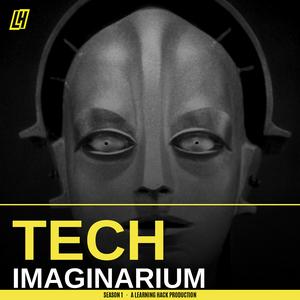
Over The Tech Imaginarium
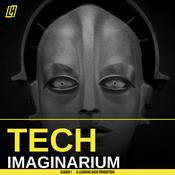
How Science Fiction Made the Modern World.
Since its birth a century ago, this fascinating genre has been turning science fact into fictions that have captured the imagination of millions. John Helmer and Ezri Carlebach explore how these stories have, in turn, inspired developments in technology that shape all our lives today.
Podcast websiteLuister naar The Tech Imaginarium, Full Body Chills en vele andere podcasts van over de hele wereld met de radio.net-app
Ontvang de gratis radio.net app
- Zenders en podcasts om te bookmarken
- Streamen via Wi-Fi of Bluetooth
- Ondersteunt Carplay & Android Auto
- Veel andere app-functies
Ontvang de gratis radio.net app
- Zenders en podcasts om te bookmarken
- Streamen via Wi-Fi of Bluetooth
- Ondersteunt Carplay & Android Auto
- Veel andere app-functies

The Tech Imaginarium
Scan de code,
download de app,
luisteren.
download de app,
luisteren.
The Tech Imaginarium: Podcasts in familie
 Netherlands

