
Luister gratis naar deze podcast in de app: Gratis downloaden in de App Store
radio.net
Slaaptimer
Favorieten opslaan
98 afleveringen
New episode of 10/14 07:35 PM
15-10-2026 | 1 u. 12 Min.In this episode of The Deep Seed Podcast, I sit down with wildlife biologist and conservation scientist Dr Shekhar Kolipaka to explore one of the biggest questions at the heart of regeneration: how can humans learn to live with nature again?
Shekhar takes us from ancient rock art and Indigenous relationships with wildlife to the rise of agriculture, modern cities and increasingly fragile food systems. We explore how humans gradually became disconnected from the ecosystems that sustain us and what it might take to rebuild that relationship.
But this isn’t only a philosophical conversation.
In Kabirdham (India) Shekhar and his colleagues are working with Commonland and local partners on the regeneration of an entire landscape. Bringing together forest restoration, agriculture, water, biodiversity, livelihoods, food security and local communities rather than treating each challenge in isolation.
We explore why farmers in the plains and communities living in the forested hills depend on one another, how relatively small changes can cascade through an entire landscape, and why ecological restoration ultimately requires something much harder than planting trees or changing farming practices: people have to want to participate.
That led Shekhar to investigate something rarely discussed scientifically in the world of regeneration: inspiration.
Drawing on psychological research into how inspiration actually works, his team asked a fascinating question: can you deliberately inspire an entire landscape to change?
Their experiment eventually led to Anjor, a gathering in Kabirdham designed around hundreds of local change-makers and the idea that transformation can spread from person to person. Effectively, turning inspiration into action.
We also explore human rewilding, biophilia and biophobia, urban food resilience, the importance of traditional ecological knowledge, and what landscapes around the world can learn from one another.
This conversation ultimately asks us to reconsider something fundamental: perhaps regeneration isn’t simply about restoring degraded ecosystems.
Perhaps we need to restore our relationship with them too.
🎙️ GUEST - DR SHEKHAR KOLIPAKA
Wildlife biologist, conservation scientist and landscape restoration practitioner working with Commonland in India.
✨ COMMONLAND
Commonland is a global organisation working to restore degraded landscapes at scale. Through its Four Returns framework, Commonland brings together local communities, farmers, businesses, governments and investors to build healthy and resilient landscapes for generations to come.
https://commonland.com/
✨ THE DEEP SEED
The Deep Seed is a podcast exploring the people, ideas and solutions helping regenerate our food systems and ecosystems. Through long-form conversations with farmers, scientists, entrepreneurs and leading thinkers, we explore how we can build a healthier relationship with the living world.
🔔 Subscribe for more conversations on regenerative agriculture, soil health, ecosystem restoration, biodiversity and the future of food.
🌱 IN THIS EPISODE
Coexisting with nature • Biophilia & biophobia • Wildlife conservation • Ancient rock art • Traditional ecological knowledge • Human rewilding • Food-system resilience • Landscape restoration in India • Kabirdham • Regenerative agriculture • Water & biodiversity • Commonland’s Four Returns • The psychology of inspiration • Anjor • Community-led regeneration • Scaling landscape restoration
Hosted on Ausha. See ausha.co/privacy-policy for more information.How to Bring an Ecosystem Back to Life | Astrid Vargas
30-09-2026 | 1 u. 12 Min.Astrid Vargas has spent her life helping bring endangered species back from the brink of extinction, from the black-footed ferret in North America to the Iberian lynx in Spain.
But over the years, her focus expanded from saving individual species to something much bigger: restoring entire ecosystems and landscapes.
In this episode, we follow that remarkable journey. We explore the silent decline of butterflies and insects, the extraordinary recovery of the Iberian lynx, what happens when predators return to an ecosystem, and why restoring nature ultimately means working with the people who live within it.
Astrid also shares the story of AlVelAl, a pioneering landscape restoration initiative in southern Spain bringing together farmers, conservationists, entrepreneurs and local communities to regenerate a region threatened by desertification.
We talk about rewilding, trophic cascades, regenerative agriculture, the politics of environmentalism, the power of community, and why hope and inspiration may be just as important to restoration as ecology itself.
At its heart, this is a conversation about something surprisingly hopeful: nature can come back. And we know more about how to help it recover than we might think.
⎯⎯⎯⎯⎯⎯
In this episode, we explore:
• The extraordinary recovery of the Iberian lynx
• Why top predators can transform entire ecosystems
• Trophic cascades, explained simply
• The silent decline of butterflies, insects and pollinators
• Why conservation must move beyond saving individual species
• Rewilding vs ecological restoration
• How Astrid helped catalyse AlVelAl in southern Spain
• Regenerative agriculture and landscape restoration
• Commonland’s 4 Returns and 3 Zones frameworks
• Why restoration must create livelihoods as well as biodiversity
• The importance of local ownership and community
• How restoration can happen at bioregional scale
• Why hope may be one of conservation’s most important tools
⎯⎯⎯⎯⎯⎯
✨ASTRID VARGAS
Astrid Vargas is a conservation biologist whose career has taken her from endangered-species recovery programmes to large-scale landscape restoration. Her work has included the black-footed ferret in North America and the Iberian lynx in Spain, where she played a major role in the species’ captive-breeding programme.
She later worked with Commonland and helped catalyse AlVelAl, the large-scale landscape restoration initiative in south-eastern Spain that brings together ecological restoration, regenerative agriculture, entrepreneurship and community development.
⸻
🌱 COMMONLAND
This episode was made in partnership with Commonland, an international non-profit working with local partners to restore degraded landscapes around the world.
https://commonland.com/
⸻
🌱 ALVELAL
AlVelAl is a large-scale regeneration initiative in southeastern Spain, bringing farmers, businesses and communities together to restore degraded landscapes through regenerative agriculture, ecosystem restoration and a stronger local economy.
https://alvelal.es/
Hosted on Ausha. See ausha.co/privacy-policy for more information.The 20-Year Plan to Restore Nature at Scale [WILLEM FERWERDA]
16-09-2026 | 1 u. 14 Min.What does it actually take to restore nature? Not just on individual farms or through isolated projects, but across entire landscapes?
For more than a decade, ecologist and Commonland founder Willem Ferwerda has been working on exactly that question.
In this episode, Willem takes us inside the thinking behind Commonland and the Four Returns framework: a long-term approach to landscape restoration that brings together ecology, agriculture, communities, business and finance.
We explore why restoring ecosystems requires thinking in decades; why technical knowledge is often not the biggest barrier to change; what Willem learned from decades working in conservation around the world; and why farmers and landowners can become what he beautifully describes as “islands of hope” within degraded landscapes.
We also get into the economics of regeneration: long-term finance, the role of farmers and communities, and why our economies ultimately need to operate within the ecological systems on which they depend.
At its heart, this is a conversation about moving from loss to return: restoring not only biodiversity, soil and water, but livelihoods, communities, purpose and hope. 💚
This episode is part of a special Deep Seed series produced in collaboration with Commonland, exploring what it really takes to restore landscapes at scale.
✨ WILLEM FERWERDA
Ecologist, conservationist and founder of Commonland.
https://www.linkedin.com/in/willem-ferwerda-1540135/
✨ COMMONLAND
A global organisation working with partners around the world to support large-scale, long-term landscape restoration through the Four Returns framework.
https://commonland.com/
Hosted on Ausha. See ausha.co/privacy-policy for more information.How China Brought 4 Million Hectares Back to Life | John D. Liu
09-09-2026 | 1 u. 35 Min.What if humanity already knows how to restore the ecosystems we have degraded?
For more than three decades, filmmaker and ecologist John D. Liu has documented some of the world’s most ambitious efforts to bring damaged landscapes back to life.
His work documenting the restoration of China’s Loess Plateau showed him something that would shape the rest of his life: large-scale ecological degradation is not necessarily irreversible.
So if restoration is possible, why aren’t we doing it everywhere?
In this conversation, John takes us from the Loess Plateau to the possibility of restoring the Sinai Peninsula. We explore how vegetation, soil, biodiversity and the water cycle interact, why degraded landscapes struggle to retain water, and what happens when ecological function becomes the starting point for how we manage land.
But John’s argument goes much further than ecosystem restoration.
We discuss why our economic system often rewards extraction rather than ecological health, why GDP is such an incomplete measure of wealth, whether perennial polycultures and regenerative agriculture could reshape our food system, and what it would mean to organise human civilisation around restoring the living systems on which we depend.
John also reflects on ageing, responsibility, his friendship with Jane Goodall, the creation of the Ecosystem Restoration Communities movement, and his work as an Ecosystem Ambassador for Commonland.
At 73, after decades spent documenting both ecological destruction and extraordinary recovery, John remains convinced of something profoundly hopeful:
Humans don’t have to be a destructive force on this planet. We can become a restorative one.
This episode was produced in partnership with Commonland, a global organisation working to enable large-scale landscape restoration through its holistic Four Returns approach.
⎯⎯⎯
🎙️ JOHN D. LIU
John D. Liu is a filmmaker, ecologist and ecosystem restoration advocate whose documentaries have helped bring global attention to the potential of large-scale landscape restoration.
✨ COMMONLAND
Commonland works with communities around the world to restore degraded landscapes and create thriving futures for people and nature through its Four Returns approach.
https://commonland.com/
✨ THE DEEP SEED
The Deep Seed explores the people, ideas and solutions helping regenerate our food systems and ecosystems.
Through long-form conversations with farmers, scientists, entrepreneurs and leading thinkers, we explore regenerative agriculture, soil health, ecosystem restoration, biodiversity and how we can build a healthier relationship with the living world.
🔔 Follow The Deep Seed for more conversations on regenerative agriculture, soil health, ecosystem restoration, biodiversity and the future of food.
Hosted on Ausha. See ausha.co/privacy-policy for more information.From Soil to Plate: The Chef Who Became a Farmer
20-08-2026 | 34 Min.A few years ago, Anna Wynants decided to combine her two biggest passions: farming and cooking.
She opened ‘De Keukentafel’, which is both a small organic regenerative farm and a fine dining restaurant.
Every morning, she walks into the gardens with her coffee to see what’s thriving, what’s ripe, and which ingredients are ready to find their way onto the menu.
For a creative chef like her, it’s like paradise: a whole range of fresh and delicious ingredients to choose from. She then expertly and lovingly harvests, transforms and elevates these ingredients to create beautiful, original and delicious dishes. I had the pleasure of trying some of her food, and it’s truly exceptional.
I left De Keukentafel deeply inspired by both the place and the person behind it. I hope this conversation leaves you feeling the same.
✨TOP 50 FARMERS
Anna is one of 50 farmers selected for Top 50 Farmers 2026, a farmer-first accelerator program designed to empower, connect, and elevate regenerative farmers across Europe. This episode was produced in collaboration with Top 50 Farmers to bring you an example of how regeneration is being pursued in many contexts and many ways.
Discover more - www.top50Farmers.com
✨DE KEUKENTAFEL
https://www.de-keukentafel.com/
✨DEEP SEED PODCAST
Follow us for more stories about regenerative pioneers, scientists and experts (click on the ‘subscribe’ button under the video)
Email us at raphael@deepseed.eu
Hosted on Ausha. See ausha.co/privacy-policy for more information.
Meer Aardwetenschappen podcasts

Trending Aardwetenschappen -podcasts
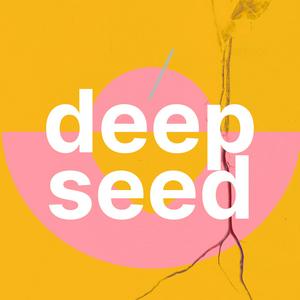
Over Deep Seed - Regenerative Agriculture
Welcome to the Deep Seed Podcast, your ultimate source for all things regenerative agriculture, soil health, and ecosystem restoration!
Join your host, Raphaël, on an exciting journey into the heart of sustainable farming and environmental resilience. The podcast is packed with inspiring conversations with regenerative farmers, cutting-edge innovators, and leading experts who are pioneering the movement towards a more regenerative food system.
Whether you’re a passionate advocate for sustainability, a professional in agriculture or environmental science, or just curious about the future of our food systems, the Deep Seed Podcast is your gateway to the vibrant world of regenerative agriculture.
Key topics discussed include:
Agroecology and its role in creating sustainable food systems
The power of agroforestry in boosting biodiversity and productivity
How carbon farming can fight climate change while benefiting farmers
The benefits of no-till farming for soil health and erosion prevention
Holistic grazing practices that restore ecosystems and enhance animal welfare
Crop rotation and polyculture for nutrient-rich soils and resilient farms
Exploring the potential of food forests and other nature-based solutions
The critical link between soil microbiology and plant health
Restoration agriculture and the future of land regeneration
Climate solutions that leverage regenerative practices to sequester carbon
Promoting biodiversity through sustainable farming approaches
Insights into the importance of sustainable diets and their environmental impact
Rewilding and its role in ecosystem restoration and preservation
Produced in partnership with Soil Capital, a leader in supporting regenerative agriculture and rewarding farmers for improving soil health, this podcast is a must-listen for anyone interested in sustainable farming and climate action.
Get in touch with me LinkedIn - Raphael Esterhazy
Hosted on Ausha. See ausha.co/privacy-policy for more information.
Podcast websiteLuister naar Deep Seed - Regenerative Agriculture, وثائقيات حياة البرية والطبيعة en vele andere podcasts van over de hele wereld met de radio.net-app
Ontvang de gratis radio.net app
- Zenders en podcasts om te bookmarken
- Streamen via Wi-Fi of Bluetooth
- Ondersteunt Carplay & Android Auto
- Veel andere app-functies
Ontvang de gratis radio.net app
- Zenders en podcasts om te bookmarken
- Streamen via Wi-Fi of Bluetooth
- Ondersteunt Carplay & Android Auto
- Veel andere app-functies

Deep Seed - Regenerative Agriculture
Scan de code,
download de app,
luisteren.
download de app,
luisteren.
 Netherlands