
Luister gratis naar deze podcast in de app: Gratis downloaden in de App Store
radio.net
Slaaptimer
Favorieten opslaan
Into the Impossible With Brian Keating
Big Bang Productions Inc.
Nieuwste aflevering
641 afleveringen
Wharton AI Researcher: If AI Froze Today, It Would Still Rewrite Work
20-10-2026 | 1 u. 1 Min.Forecasters gave AI under 2% odds of helping solve a millennium-level math problem by September 2026. It happened. Ethan Mollick has been measuring what AI actually does to real work with field experiments, not forecasts, and his answer is not what most people expect. Subscribe if you want science with evidence, not speculation.
Mollick runs the Generative AI Lab at Wharton. He is the author of Co-Intelligence and Coexistence, his new book on navigating a world where AI tools are already good enough to change almost all intellectual work, even if progress stopped today.
The conversation covers the jagged frontier: why AI solved a math olympiad before it could count the Rs in strawberry, what it means that roles blur when everyone on a team starts using AI, and what four human advantages still hold an edge when a model can already write a publishable paper. It also covers what happens when your kids tell you that you sound like Claude.
What you’ll hear:
What centaur, cyborg, and conjurer work actually look like in a real academic lab
Why brainstorming was considered a bad idea shortly after it was invented and what that means for working with AI
Why Mollick reduced em dashes in his new book and what that tells you about living alongside these models
What co-evolution might look like if the escalator keeps moving
“If we just had the models we have right now, that’s enough to change almost all of human work in the next ten years. It’s good enough.” — Ethan Mollick
CHAPTERS
00:00 AI writes good papers now. Taste is the weak spot.
03:14 The jagged frontier: math olympiad gold, but not the Rs in strawberry
06:30 Deep knowledge, wide knowledge, taste, and agency
09:44 Escalator or eschaton?
16:02 Does AI simulate wisdom or actually have it?
23:46 The labs keep AI in English. Here is why.
32:28 Roles blur. Everyone does everything now.
36:42 My kids say I sound like Claude. They might be right.
38:12 AI found errors in his sources that his fact-checkers missed
46:34 What to do before giving a child access to AI
Get the transcript, fascinating bonus content, and my Monday M.A.G.I.C. Message: https://briankeating.com/yt
Enter the debate: https://briankeating.com/ai
Have a .edu email and live in the USA? You automatically win a meteorite: https://BrianKeating.com/edu
Subscribe: https://www.youtube.com/DrBrianKeating?sub_confirmation=1
Support Into the Impossible on Patreon, get my weekly M.A.G.I.C. Message, unfiltered bonus content, and live monthly Office Hours with me: https://www.patreon.com/drbriankeating
Join this channel for perks, monthly Office Hours, and your name in the Member Roster at the end of every episode: https://www.youtube.com/channel/UCmXH_moPhfkqCk6S3b9RWuw/join
Featured Guest:
Ethan Mollick on Twitter/X: https://x.com/emollick?lang=en
Coexistence (book and site): https://co-existence.ai/
One Useful Thing (Substack): https://www.oneusefulthing.org/
My books:
Losing the Nobel Prize (memoir): http://amzn.to/2sa5UpA
Think Like a Nobel Prize Winner: https://urlgeni.us/amzn/TLANPW
Focus Like a Nobel Prize Winner: https://a.co/d/hi50U9U
Galileo’s Dialogue (first-ever audiobook): https://a.co/d/iZPi9Un
Twitter/X: https://x.com/BrianKeating
Substack: https://briankeating.substack.com
Blog: https://briankeating.com/blog
Audio-only: https://briankeating.com/podcast
#EthanMollick #AI #artificialintelligence #AItools #briankeating #intotheimpossible #AIagents
Learn more about your ad choices. Visit megaphone.fm/adchoicesAre UFOs Alien Tech? Avi Loeb vs Michael Shermer
14-10-2026 | 1 u. 22 Min.Is there alien technology in our skies, or just birds, balloons and bad video?
Two members of the White House UAP Science Advisory Council face off LIVE. Harvard astrophysicist Avi Loeb, who chairs the council, makes the case for searching. Michael Shermer, the council skeptic Loeb picked himself, says show me the evidence. They have $1,000 riding on whether non-human technology is confirmed by 2030.
Get all my best ET content: https://big-bang.kit.com/bvyt
We'll cover the redacted Pentagon videos, Loeb's new papers on tracking objects over Nevada, the claims from David Grusch, Rep. Anna Paulina Luna and Eric Weinstein, and what evidence would change each of their minds.
Avi Loeb: https://avi-loeb.medium.com/
Michael Shermer: https://www.bostonglobe.com/2026/10/08/opinion/aliens-uap-ufo-videos-trump/
Subscribe to The INTO THE IMPOSSIBLE Podcast: https://www.youtube.com/DrBrianKeating?sub_confirmation=1
Sponsorships and speaking: https://BrianKeating.com
Learn more about your ad choices. Visit megaphone.fm/adchoicesAdam Grant: Don't Trust Your Gut. Test It.
13-10-2026 | 44 Min.When two people are vibing, their brainwaves synchronize and so do their heartbeats. That is not a metaphor. It is a measurable physiological event, and organizational psychologist Adam Grant has spent his career figuring out how to make it happen on purpose. Subscribe if you want science with evidence, not speculation.
Grant’s new book Vibe is his seventh. It argues that the science of human connection has been hiding in plain sight for a century, and that most of what people do to build relationships is either backwards or unnecessary.
The episode covers why the highest sign of chemistry between people is enjoying your disagreements rather than avoiding them, why remote work produces boreout rather than burnout, and why your first impression of someone is a snapshot of one situation that may not represent the whole person. It also covers burstiness, confident humility, and why universities have survived COVID, AI, and every other disruption that was supposed to end them.
What you’ll hear:
Why the pendulum clock experiment from 1665 explains what happens when people stop trying to force a connection
What the HiPPO effect does to a team and why the highest paid person’s opinion kills creative ideas
Why Grant ran experiments on university fundraising callers that tripled their revenue with a five-minute intervention
What desirability bias is and why Grant thinks it is more dangerous than confirmation bias
Why Grant A/B tested the subtitle of his own book and what “relationships” signaled that “connections” did not
What Grant and Brian agree on about false certainty and thinking in conditional probabilities
“The highest sign of chemistry between people is not agreeing with them. It’s enjoying your disagreements.” — Adam Grant
CHAPTERS
00:00 Vibing is real. Your brainwaves prove it.
05:30 Task conflict vs. relationship conflict
07:40 Who is actually in charge: parents or infants?
10:14 Burstiness: the remote work pattern that works
14:24 Don’t trust your gut. Test it.
19:34 Confident humility: the essence of a good scientist
21:32 Desirability bias is worse than confirmation bias
29:00 Zoom fatigue is boreout, not burnout
30:02 The A/B test that killed “relationships”
34:14 Don’t disbelieve what can’t be falsified
Get the transcript, fascinating bonus content, and my Monday M.A.G.I.C. Message: https://briankeating.com/yt
Enter the debate: https://briankeating.com/ai
Have a .edu email and live in the USA? You automatically win a meteorite: https://BrianKeating.com/edu
Subscribe: https://www.youtube.com/DrBrianKeating?sub_confirmation=1
Support Into the Impossible on Patreon, get my weekly M.A.G.I.C. Message, unfiltered bonus content, and live monthly Office Hours with me: https://www.patreon.com/drbriankeating
Join this channel for perks, monthly Office Hours, and your name in the Member Roster at the end of every episode: https://www.youtube.com/channel/UCmXH_moPhfkqCk6S3b9RWuw/join
Featured Guest:
Adam Grant website: https://adamgrant.net/
Vibe (book): https://www.amazon.com/dp/B0GPHPNZ14
Adam Grant on Twitter/X: https://x.com/adammgrant
My books:
Losing the Nobel Prize (memoir): http://amzn.to/2sa5UpA
Think Like a Nobel Prize Winner: https://urlgeni.us/amzn/TLANPW
Focus Like a Nobel Prize Winner: https://a.co/d/hi50U9U
Galileo’s Dialogue (first-ever audiobook): https://a.co/d/iZPi9Un
Twitter/X: https://x.com/BrianKeating
Substack: https://briankeating.substack.com
Blog: https://briankeating.com/blog
Audio-only: https://briankeating.com/podcast
#AdamGrant #loneliness #remotework #psychology #briankeating #intotheimpossible #Vibe
Learn more about your ad choices. Visit megaphone.fm/adchoicesRoman Yampolskiy vs Joscha Bach: Can Anyone Control Superintelligence?
09-10-2026 | 1 u. 14 Min.Roman Yampolskiy says keeping a superintelligence safe forever is as impossible as building a perpetual motion machine. Joscha Bach says today's AI is more controllable than anyone expected, and that shutting it down would doom us anyway.
📬 Get the transcript, fascinating bonus content, and my Monday M.A.G.I.C. Message: https://briankeating.com/ai
Roman Yampolskiy is a computer scientist at the University of Louisville who has spent more than a decade on the AI control problem. Joscha Bach is a cognitive scientist who studies how minds, biological and artificial, build a model of reality.
We cover: why a perpetual safety device may be as impossible as perpetual motion, what happens when AI research automates itself (Roman puts it at 28 percent today), whether nuclear deterrence is the right analogy, who really benefits when AI labs ask to be regulated, and why consciousness may have nothing to do with whether AI is safe.
Being conscious does not make you kind.
00:00 Simulation theory meets certain doom
03:25 Is P(doom) even a real number?
06:05 Why a simulated world still matters
09:26 Should we have skipped the Trinity test?
13:04 Did nukes actually keep the peace?
17:32 Why haven't we wiped out the spiders?
22:35 Is AI doom falsifiable?
25:48 Why a self-driving car isn't the threat
29:27 Roman's 28% automation number
34:46 Intelligence is not agency
39:20 Can superintelligence be proven safe?
42:40 Who wins when AI labs ask for regulation?
47:45 Does consciousness make AI safer?
53:48 Would a perfect mind discover God?
58:37 The Tower of Babel, read backward
1:03:52 Can you control a mind a million times smarter?
1:04:43 The narrow AI path Roman wants instead
🏄♂️ Twitter: @plinz
🏄♂️ Twitter: @romanyam
📬 Get the transcript, fascinating bonus content, and my Monday M.A.G.I.C. Message: https://briankeating.com/ai
🌠 Have a .edu email and live in the USA 🇺🇸? You automatically win a meteorite: https://BrianKeating.com/edu
🎯 Support Into the Impossible on Patreon: get my weekly M.A.G.I.C. Message, unfiltered bonus content, and live monthly Office Hours with me: patreon.com/drbriankeating
⭐ Join this channel for perks, monthly Office Hours, and your name in the Member Roster at the end of every episode: youtube.com/@drbriankeating
📚 My books:
Losing the Nobel Prize (memoir): http://amzn.to/2sa5UpA
Think Like a Nobel Prize Winner: https://a.co/d/03ezQFu
Focus Like a Nobel Prize Winner: https://a.co/d/hi50U9U
Galileo's Dialogue (first-ever audiobook): https://a.co/d/iZPi9Un
🌐 More:
🏄♂️ Twitter: @BrianKeating
📚 Substack: https://briankeating.substack.com/
✍️ Blog: https://briankeating.com/blog
🎙️ Audio-only: https://briankeating.com/podcast
#intotheimpossible #briankeating #science #physics #astronomy #cosmology #podcast #universe
Learn more about your ad choices. Visit megaphone.fm/adchoices"I Thought It Would Fail!" Francis Halzen: Winner of the 2026 Nobel Prize In Physics [Reupload from 2022]
07-10-2026 | 1 u. 27 Min.The physicist who turned a cubic kilometer of Antarctic ice into a telescope says the most exciting moment of his career was not the discovery. It was the first atmospheric neutrino. Before that, he was deep in debt to NSF and his own university with no neutrino to show for it.
Francis Halzen is principal investigator of the IceCube Neutrino Observatory at the South Pole and Hilldale and Gregory Breit Distinguished Professor of Physics at the University of Wisconsin-Madison.
We cover: why ice under the South Pole is clearer than anything a lab can make, the 2,600 TeV event that dwarfs the LHC, why IceCube sees more energy in cosmic neutrinos than in gamma rays, how neutrinos crossing the universe test quantum gravity, and the quark he refused to believe in.
Physics is a miserable career unless you are obsessed by it.
Recorded in 2022, before IceCube detected neutrinos from our own galaxy.
Learn from Nobel Prize winners, and you could win a meteorite: Please join my mailing list here 👉 briankeating.com/x
Chapters
00:00 Physics is a miserable career, unless
02:54 A textbook written before the W was found
06:11 Breaking into Lemaître's computer at night
10:57 Do scientists owe the public anything?
13:55 Deep in debt with zero neutrinos
19:40 The persuasion nobody teaches scientists
20:15 Why it could only be the South Pole
23:20 Learn physics by doing, not by courses
26:00 How to turn Antarctic ice into a telescope
31:30 2,600 TeV: far beyond the LHC
35:00 More energy in neutrinos than gamma rays
40:00 Tracing ghost particles to NGC 1068
46:00 Testing quantum gravity with neutrinos
1:01:00 Ten times the ice for the same price
1:07:08 What he would leave his descendants
1:11:19 What his generation should be proud of
1:12:51 The quark he refused to believe in
1:17:09 Imagination can trump intelligence
📺 Watch my most popular videos:
Neil Turok Believes Physics Is In Crisis
Nobel Prizewinner Frank Wilczek
Stephen Wolfram vs. Eric Weinstein
Sir Roger Penrose: Nobel Prize in Physics, Black Holes and More
Noam Chomsky: Consciousness, Elon Musk, and More
Sabine Hossenfelder
Avi Loeb: UFOs and UAPs
Neil deGrasse Tyson
Follow me to ask questions of my guests:
🏄♂️ Twitter: @DrBrianKeating
📝 Mailing list: briankeating.com/mailing_list
✍️ Detailed blog posts: briankeating.com/blog
🎙️ Listen on audio-only platforms: briankeating.com/podcast
A production of imagination.ucsd.edu
Executive Producer: Brian Keating
Producer P.G.A: Stuart Volkow
Editing: Lucas Scheiblich
Learn more about your ad choices. Visit megaphone.fm/adchoices
Meer Natuurwetenschappen podcasts



Trending Natuurwetenschappen -podcasts



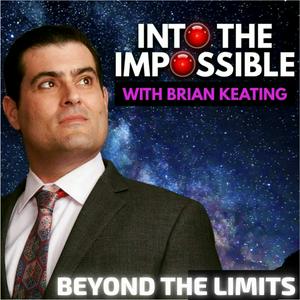
Over Into the Impossible With Brian Keating
Think like a physicist. Wonder like a human. Into the Impossible is where Cosmic Conversations happen — uniting Nobel Prize winners, iconoclasts, authors, and technologists to explore reality’s deepest questions. From AI to aliens, from biophysics to the brain, from the cosmos to the multiverse, Brian Keating, Chancellor’s Distinguished Professor of Physics at UC San Diego covers it all.
If you’ve ever asked What’s out there? or What’s next?, this is where curiosity meets clarity.
Learn to think like this. 🎙 Full episodes, notes & more: briankeating.com/podcast
Podcast websiteLuister naar Into the Impossible With Brian Keating, The Numberphile Podcast en vele andere podcasts van over de hele wereld met de radio.net-app
Ontvang de gratis radio.net app
- Zenders en podcasts om te bookmarken
- Streamen via Wi-Fi of Bluetooth
- Ondersteunt Carplay & Android Auto
- Veel andere app-functies
Ontvang de gratis radio.net app
- Zenders en podcasts om te bookmarken
- Streamen via Wi-Fi of Bluetooth
- Ondersteunt Carplay & Android Auto
- Veel andere app-functies

Into the Impossible With Brian Keating
Scan de code,
download de app,
luisteren.
download de app,
luisteren.
 Netherlands