

Luister gratis naar deze podcast in de app: Gratis downloaden in de App Store
radio.net
Slaaptimer
Favorieten opslaan
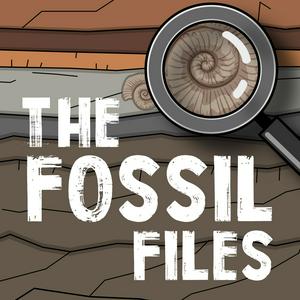
The Fossil Files
Robert Sansom and Susannah Maidment
Nieuwste aflevering
45 afleveringen
Where did turtles come from?
08-09-2026 | 47 Min.The origin of turtles has long been a scientific mystery. Not only do they have super weird things going on with their ribs, head, and teeth, but also its unclear if they were more closely related to birds and crocodiles, or snakes and lizards, or something else. This week we take a deep dive into the origin of turtles, terrapins and tortoises, and the process of "turtleization". New data from the important Permian critter Eunotosaurus of South Africa might have now solved that problem of the question: Where did turtles come from?
This weeks's paper is "The phylogenetic origin of turtles" by Xavier Jenkins and colleagues published in Current Biology in June 2026 https://doi.org/10.1016/j.cub.2026.04.070
Wide screen art by Gabriel Ugeuto.Fake Fossil Fails [Bonus]
28-08-2026 | 19 Min.What happens when fossils that have been faked or 'enhanced' end up being used in scientific studies? Why does it happen? How can we spot them? How do researchers, preparators, publishers and museums deal with it? In this bonus episode Susie and Rob take a look at three nightmarish examples of faked fossils that ended up in the scientific literature, and what happened after they were spotted. Our first story is the discovery that the exceptional soft tissues of a famous Permian reptile had actually been painted on, the second of a dinosaur that had been stitched together from multiple fossils that ended up being far more interesting than the fake, and finally a cheetah that was stitched together from fossil, plastic, and plaster, yet still got published.
This is a preview of our bonus episode. The full episode is available on our Patreon along with lots of other bonus content https://www.patreon.com/cw/FossilFiles
The papers and sources discussed this week are:
"Forged soft tissues revealed in the oldest fossil reptile from the early Permian of the Alps" by Valentina Rossi and colleagues published in Palaeontology in February 2024 https://doi.org/10.1111/pala.12690
"The Archaeoraptor forgery" by Timothy Rowe and colleagues published in Nature in 2001 https://doi.org/10.1038/35069145 with additional information from Benjamin Gutierrez https://www.prehistoric-wildlife.com/archaeoraptor/
"A primitive Late Pliocene cheetah, and evolution of the cheetah lineage" by Per Christiansen and Ji Mazák published in PNAS in 2009, retracted 2012 https://doi.org/10.1073/pnas.0810435106 with important extra research and context from Retraction Watch https://retractionwatch.com/2012/08/20/author-retracts-pnas-about-alleged-pliocine-cheetah-fossil-that-had-been-questioned/Were dinosaurs eating fruit? Cretaceous Plant Power
18-08-2026 | 45 Min.As well as tasting good, fruit play a really important role in ecosystems across the world. But when did they evolve? Were dinosaurs eating them and dispersing them? In a fossil files first, we take a look at the evolution of plants, in particular the centuries long mystery of how and when the flowering plants (angiosperms) got going. A newly described site in New Mexico yields large and varied fleshy fossil fruits which upend how we think about Cretaceous ecosystems. The fossil fruits and seeds are orders of magnitude bigger than other Cretaceous fruit, indicating an active role of animals in their consumption and dispersal in complex forest environments. We also take a look at the story from pollen to reconstruct how and when angiosperms diversified, potentially in two pulses in the Cretaceous and after the Cretaceous. Plant Power!
The papers we look at this week are "Diversification of angiosperm reproductive strategies predated the end-Cretaceous extinction" by Jiamen Lee from Berkley and colleagues published Science in June 2026 https://doi.org/10.1126/science.adw9457, "Pulsed evolution shaped extant angiosperm pollen disparity" by Yang Luo from Kunming and colleagues published in Nature Communications in January 2026 https://doi.org/10.1038/s41467-025-68253-8, and "Integrated analysis of fossils and molecular divergence time estimates a latest Jurassic origin of angiosperms" by Ruolin Wu from Bristol and colleagues published in Nature Plants in June 2026 https://doi.org/10.1038/s41477-026-02311-x
Wide screen art by Brian Engh.
You can support The Fossil Files and access bonus via our Patreon https://www.patreon.com/cw/FossilFilesThe weird case of a whale necropolis, sat at the bottom of an ocean trench for 5 million years
04-08-2026 | 44 Min.The deep sea environment holds many mysteries but yields hardly any fossils. A new mindblowing finding at the bottom of the Indian ocean challenges the way we think about life in the deep and the nature of palaeontology. In 2023, a Chinese submersible exploring a 6km deep trench found 476 fossil cetaceans. These extinct whale fossils were covered with life forms previously unknown to science, and what's more, the fossils ranged in age from recent to 5 million years old. How did they get there? Why so many? Can fossils really accumulate in the same place for 5 million years, and just…. sit there?
This week's paper is "A 5.3-million-year-old deep-sea whale necropolis in the Diamantina Zone" by Xiaotong Peng and colleagues, published in Nature in June 2026 https://doi.org/10.1038/s41586-026-10546-z
Wide screen includes picture from Global Trend.How to become a palaeontologist: Finding and applying for PhDs
28-07-2026 | 21 Min.Studying for a PhD is in an important step towards becoming a scientist, but the process of finding and applying for a PhD programme is mysterious and inaccessible. In this bonus episode Susie and Rob discuss some tips and ideas to demystify the process. Is a PhD right for you? How do you find the right supervisor and project? What are universities looking for in your application? What questions are you going to face in the interview? This a preview of our bonus episode, the full episode can be found on our Patreon. For further related content, check out our episode "How to become palaeontologist" (#26).
Meer Aardwetenschappen podcasts
 Real Organic PodcastAardwetenschappen, Gezondheid en fitness, Non-Profit, Voeding, Wetenschap, Zaken en persoonlijke financiën
 NRC Onbehaarde ApenAardwetenschappen, Wetenschap
 The Great Simplification with Nate HagensAardwetenschappen, Natuurwetenschappen, Wetenschap
 Rare EarthAardwetenschappen, Wetenschap
 American Shoreline Podcast NetworkAardwetenschappen, Wetenschap
 The Market Gardener PodcastAardwetenschappen, Wetenschap
 DrilledAardwetenschappen, Sociale wetenschappen, Waargebeurde misdaad, Wetenschap
 Regenerative Agriculture PodcastAardwetenschappen, Natuurwetenschappen, Wetenschap
 Planet PossibleAardwetenschappen, Natuur, Natuurwetenschappen, Non-Profit, Wetenschap, Zaken en persoonlijke financiën
Trending Aardwetenschappen -podcasts
Over The Fossil Files
In "The Fossil Files", a pair of palaeontologists delve into the latest discoveries from the world of palaeontology and seek to bring fossils to back to life. Each episode, Susie and Rob will discuss an interesting new research paper ranging from topics of what dinosaurs ate, how plesiosaurs swam, where we came from, and the science of de-extinction. Whilst doing so, we peek under the hood of how the science of palaeontology is done and how research gets to see the light of day. It is for anybody interested in palaeontology and past life whether that is students, researchers themselves, or simply the fossil-curious - we laugh as we learn, and hope you will too.
Episode guide at https://fossils.libsyn.com/
Bonus content at Patreon https://patreon.com/FossilFiles
Podcast websiteLuister naar The Fossil Files, Real Organic Podcast en vele andere podcasts van over de hele wereld met de radio.net-app
Ontvang de gratis radio.net app
- Zenders en podcasts om te bookmarken
- Streamen via Wi-Fi of Bluetooth
- Ondersteunt Carplay & Android Auto
- Veel andere app-functies
Ontvang de gratis radio.net app
- Zenders en podcasts om te bookmarken
- Streamen via Wi-Fi of Bluetooth
- Ondersteunt Carplay & Android Auto
- Veel andere app-functies

The Fossil Files
Scan de code,
download de app,
luisteren.
download de app,
luisteren.
 Netherlands