
Luister gratis naar deze podcast in de app: Gratis downloaden in de App Store
radio.net
Slaaptimer
Favorieten opslaan
234 afleveringen
Natural Remedies for Babies: What Parents Need to Know S9 | Ep 233
22-10-2026 | 37 Min.What does “natural” really mean when it comes to your baby’s health?
In this episode of The Sense by Meg Faure, Meg chats to Michele Carelse, clinical psychologist turned entrepreneur and founder of Feelgood Health. Michele shares how a growing need for natural health alternatives in her psychology practice inspired her to develop her own remedies, eventually building a business with more than 350 products for the whole family.
Together, they explore what parents should know about choosing natural products, supporting babies through common ailments and sleep challenges, and navigating the growing natural health market.
Michele also opens up about the realities of motherhood and entrepreneurship, the importance of self-care and the lessons she has learnt over 25 years in business.
Whether you're a parent looking for more informed ways to approach your little one's wellbeing or an aspiring entrepreneur with an idea you can't let go of, this conversation offers plenty to think about.
IN THIS EPISODE YOU'LL LEARN
How Michele went from clinical psychologist to founder of a growing natural health business.
Why her first remedies focused on concentration, ADHD and hyperactivity in children.
What the word “natural” really means and why natural doesn't automatically mean safe or effective.
What parents should consider when reading product labels and choosing natural health products for their families.
Why babies need particular care when it comes to essential oils and herbal remedies.
How natural remedies fit into a broader approach to baby sleep, including routines, sleep hygiene and helping babies feel safe and comfortable.
What Michele's experience has taught her about juggling motherhood, family life and entrepreneurship.
Why being a “good enough” parent matters more than striving for perfection.
The entrepreneurial lessons of persistence, consistency, curiosity and being willing to reinvent yourself.
What's next for Feelgood Health as Michele looks to expand its reach in South Africa and internationally.
CHAPTERS
00:00 Welcome: Natural health, parenting and entrepreneurship
00:42 From clinical psychologist to natural health entrepreneur
04:47 Michele's first remedies for concentration and hyperactivity
06:10 Growing Feelgood Health into a family-focused brand
07:30 Building a business while raising children
10:05 What does “natural” really mean?
14:47 Choosing natural products for babies safely
17:42 When natural remedies aren't enough: trusting your instincts and seeking medical advice
19:23 Baby sleep: a holistic approach to settling and bedtime routines
23:47 Understanding Du-Du Drops and age-specific formulations
26:09 What parents should look for on product labels
29:36 Lessons from 25 years of entrepreneurship
32:30 What's next for Feelgood Health?
34:15 Closing thoughts
ABOUT THE GUEST
Michele Carelse | Founder of Feelgood Health
Michele Carelse is the founder of Feelgood Health, a natural health brand that grew out of her clinical psychology experience working with patients seeking alternatives to conventional approaches.
Explore Feel Good Health to discover their natural health product range and learn more about the brand.
Shop now | Instagram | Facebook
ABOUT THE SENSE BY MEG PODCAST
Sense by Meg Faure is a weekly podcast for parents who want evidence-based guidance. Hosted by OT, author and parenting expert Meg Faure, each episode brings together expert insight and real-world experience to help parents feel informed and supported. The podcast is proudly associated with Parent Sense, the all-in-one parenting app for routines, sleep, nutrition and expert advice.
Parent Sense App: Your all-in-one baby care app with personalised support from pregnancy to five years including routines, nutrition and expert advice.
Download it here and use code SENSE50 for 50% off.
FOLLOW US
Meg Faure
Instagram | LinkedIn | Website
Parent Sense
Instagram | LinkedIn | WebsiteThe Magic of Family Mealtimes: Raising Connected Kids in a Screen-Filled World S9 | E232
15-10-2026 | 33 Min.What if one of the most powerful things you can do for your child happens around the dinner table?
In this episode of Sense by Meg, Meg Faure is joined by early childhood educator and parenting expert Sue Atkins to explore why family mealtimes matter far more than we might realise. From language development and emotional connection to building lifelong family rituals, they unpack how everyday moments around the table can help children feel that they belong.
They also discuss the impact of screens on mealtimes, how to navigate resistance when changing established habits, and simple ways to make eating together more enjoyable, from toddlers to teenagers.
No perfect parenting required. Just small, intentional moments that help families reconnect.
IN THIS EPISODE YOU'LL LEARN
Why family mealtimes support language, listening, turn-taking, emotional expression and a sense of belonging.
How to introduce shared mealtimes from an early age without creating pressure around food.
What screens can take away from family meals, including conversation, connection and opportunities for children to tune into their hunger.
Practical ways to make mealtimes playful, relaxed and engaging for children of different ages.
How to transition away from screens at the table without turning it into a battle.
Conversation starters that encourage children to share more than a one-word answer about their day.
Why consistent family rituals can help you stay connected to your children, even through the teenage years.
How to build better habits without guilt, perfectionism or a complete family routine overhaul.
CHAPTERS
00:00 Meet Sue Atkins: Parenting, Education and the Moments We Remember
01:37 The Golden Moments of Childhood
03:35 What Screens Take Away from Family Mealtimes
05:36 When Should Children Start Eating with the Family?
06:57 How Small Mealtime Rituals Become Lifelong Memories
09:15 Screens at the Table: What Are Children Missing?
11:51 Making Mealtimes Playful, Social and Enjoyable
12:59 Practical Mealtime Ideas for Babies, Young Children and Teens
15:49 Why Family Meals Matter During the Teenage Years
17:09 Start Small: Why Consistency Beats Perfection
18:10 How to Break the Screen-at-Mealtime Habit
20:01 From Distraction to Connection: Practical Ideas That Work
21:18 Conversation Starters That Get Children Talking
22:51 Sue Atkins' Parenting Resources and the Digital Jungle
24:35 Just One More Snake: Helping Children Navigate Screen Time
27:08 Autoplay, Online Safety and Protecting Childhood
29:00 Mindful Parenting Without the Guilt
29:58 The Takeaway: Be a Real Parent, Not a Perfect One
ABOUT THE GUEST
Sue Atkins is an experienced educator, headteacher and parenting expert with more than 22 years of teaching experience. Passionate about protecting childhood while helping families navigate an increasingly digital world, Sue creates practical resources that help parents turn research and good intentions into everyday action. Her work includes Navigating the Digital Jungle and Just One More Snake, her children's book addressing autoplay and the challenges of screen use.
𝗙𝗼𝗹𝗹𝗼𝘄 𝗦𝘂𝗲 𝗔𝘁𝗸𝗶𝗻𝘀:LinkedIn | Website | Podcast: Listen to Navigating the Digital Jungle
ABOUT THE SENSE BY MEG PODCAST
Sense by Meg is a weekly podcast for parents who want evidence-based, compassionate guidance. Hosted by OT, author and parenting expert Meg Faure, each episode brings together expert insight and real-world experience to help parents feel informed and supported. The podcast is proudly associated with Parent Sense, the all-in-one parenting app for routines, sleep, nutrition and expert advice.
Parent Sense App: Your all-in-one baby care app for routines, nutrition, and expert advice. Download it here and use code SENSE50 for 50% off.
FOLLOW US
Meg Faure
Instagram | LinkedIn | Website
Parent Sense
Instagram | LinkedIn | WebsiteInside Parent Sense: From a Baby App to a Global Parenting Support Platform S9 | Ep231
08-10-2026 | 38 Min.In this special episode of the Sense by Meg Faure, Meg takes us behind the scenes of Parent Sense. Why she created it, the problem she set out to solve, and how the business has evolved from a direct-to-parent app into a B2B2C platform reaching parents through employers, healthcare providers, insurers and other trusted partners.
Joined by Tové de Chazal Gant and Ashleigh Bouguenon, Meg explores the gaps in modern parenting support, the idea of “care deserts”, why digital care can help fill the spaces between healthcare appointments, and how Parent Sense measures whether it is genuinely making a difference in parents’ lives.
The team also discusses trust, engagement, preventative care, maternal mental health, employee wellness and the ambitious goal of reaching one million parents.
IN THIS EPISODE YOU’LL LEARN
Why Meg first created Parent Sense and the surprising conversation that prompted her to move from books into an app.
What “care deserts” are and why there are huge gaps between formal healthcare touchpoints.
How digital care can support parents between appointments and reach families who struggle to access traditional healthcare.
Why Parent Sense shifted from a direct-to-consumer model to a B2B2C model through trusted organisations.
How partnerships with medical insurers, employers, brands and other organisations can put parenting support directly into parents’ hands.
Why trust and safety are fundamental to Parent Sense.
Which metrics matter when measuring the impact of a parenting support platform.
How engagement data can become meaningful intelligence about parent behaviour, confidence and healthcare needs.
Why supporting parents is a long-term investment and why the benefits aren't always visible in a current financial year's budget.
What Parent Sense hopes to achieve next, including expanding employee wellness support and reaching underserved parents globally.
Meg's North Star goal of reaching one million parents.
CHAPTERS
00:00 Welcome to a very different Sense by Meg episode
00:36 Why Parent Sense needed to exist
02:15 The problem Meg wanted to solve for parents
03:49 What are “care deserts”?
08:21 What does access for all parents really mean?
09:44 From B2C to B2B2C
12:24 Meet Ashleigh: Taking partnerships to the next level
14:00 How partnerships multiply impact
17:22 The trust circle
19:24 How do you measure success?
21:50 From engagement to preventative healthcare
24:13 Turning data into intelligence
27:52 Why isn't every organisation supporting parents?
33:29 Where is Parent Sense going next?
36:09 The A-team behind Parent Sense
ABOUT THE GUESTS
Tové de Chazal Gant is COO & Co-Founder of Parent Sense. She has played a key role in developing Parent Sense's B2B2C model and its partnerships with medical insurers, employers and other organisations. She is passionate about using data and preventative care to improve outcomes for parents and families.
Ashleigh Bouguenon is Client, Operations & Partnerships Lead at Parent Sense. Ashleigh leads partnerships at Parent Sense, working across the business to build collaborations that benefit parents and families. She connects parents with trusted organisations, products, services and experts, while helping partners reach the families who need them most.
ABOUT THE SENSE BY MEG PODCAST
Sense by Meg is a weekly podcast for parents who want evidence-based, compassionate guidance. Hosted by OT, author and parenting expert Meg Faure, each episode brings together expert insight and real-world experience to help parents feel informed and supported. The podcast is proudly associated with Parent Sense, the all-in-one parenting app for routines, sleep, nutrition and expert advice.
Parent Sense App: Your all-in-one baby care app for routines, nutrition, and expert advice. Download it here and use code SENSE50 for 50% off.
FOLLOW US
Meg Faure
Instagram | LinkedIn | Website
Parent Sense
Instagram | LinkedIn | WebsiteBreast or Bottle: Why Your Baby’s Sensory Personality May Decide with Dr Nellie Balfour S9 | Ep230
01-10-2026 | 30 Min.Same mum. Same home. Same breast milk. So why did one of Dr Nellie Balfour's boys turn away from the breast within weeks, while his little brother won't let go?
The answer has nothing to do with the milk, and everything to do with your baby's sensory personality.
In this episode, Meg Faure catches up with paediatrician and mum of two Dr Nellie Balfour as her second baby, Uyakile, turns three months old. What unfolds is a fascinating look at feeding, development and immunity through the eyes of a doctor who is also living it at home.
IN THIS EPISODE YOU’LL LEARN
Why slow-to-warm-up babies often pick the bottle, and why social butterflies may prefer the breast
The ingredient in breast milk your baby can't digest at all, and why scientists now believe it matters so much for gut health and immunity
The "falling in love" milestone around three months, and the simple sign that shows it's happening
Why bringing two tiny hands together is one of your baby's first calming strategies
How Nellie's newborn stayed well while his big brother brought every bug home from school
Government vs private vaccine schedules in South Africa: what's actually different, and does the timing change?
Whether you're breastfeeding, bottle feeding or doing a bit of both, this episode will change how you see your baby's choices.
Want to know your baby's sensory personality? Find out on the Parent Sense app. Download it here and use code SENSE50 for 50% off.
CHAPTERS
00:00 Welcome back & meeting Dr Nellie Balfour
01:32 Three months with baby Uyakile
02:23 Combo feeding: breast and bottle
04:02 What are HMOs? Meg explains human milk oligosaccharides and their role in the baby's gut microbiome.
06:43 Why Nellie chose her formula Nellie explains what caught her attention when choosing a formula
07:33 Why some babies prefer the bottle Meg explores feeding preferences through a sensory lens and compares Nellie's two babies.
10:35 Baby milestones at three months Smiling, cooing, eye contact, following and bringing the hands to midline.
12:29 Understanding social-emotional milestones Meg explains the developmental trajectory behind early social connection.
14:48 Falling in love with your baby What happens as babies begin developing preferences for their significant people.
16:22 From connection to communication Meg explains how object permanence, pointing and early social development eventually lay foundations for language.
17:52 Why bringing the hands to midline matters How this movement can become an important calming and soothing strategy.
19:44 Immunity, illness & vaccinations Nellie shares how her baby has managed while his older brother has been exposed to bugs at school.
21:29 Government vs private vaccinations in South Africa Nellie explains the difference between the government EPI schedule and additional private vaccines.
ABOUT THE GUEST
Dr Nellie Balfour is a paediatrician and mother of two. She returns to Sense by Meg Faure for the 6-week update, following her earlier appearances during her pregnancy and the unexpected birth.
Follow Dr Nellie Balfour on Instagram
ABOUT THE SENSE BY MEG PODCAST
Sense by Meg is a weekly podcast for parents who want evidence-based, compassionate guidance. Hosted by OT, author and parenting expert Meg Faure, each episode brings together expert insight and real-world experience to help parents feel informed and supported. The podcast is proudly associated with Parent Sense, the all-in-one parenting app for routines, sleep, nutrition and expert advice.
Parent Sense App: Your all-in-one baby care app for routines, nutrition, and expert advice. Download it here and use code SENSE50 for 50% off.
FOLLOW US
Meg Faure
Instagram | LinkedIn | Website
Parent Sense
Instagram | LinkedIn | Website
#BabyDevelopment #BabyMilestones #Breastfeeding #ComboFeeding #BottleFeeding #BabyFeeding #BabyHealth #BabyImmunity #Vaccinations #SensoryDevelopment #NewbornBaby #ThreeMonthOldBaby #ParentingPodcastWhat It’s Like to Give Birth to Quadruplets + the First Weeks in the NICU
24-09-2026 | 41 Min.Sam Smith returns to Sense by Meg Faure to share the next chapter of her extraordinary journey: the birth of her four babies at just over 31 weeks and their first four weeks in the NICU.
Sam shares the emotional reality of her delivery, from her waters breaking in the middle of the night to a C-section involving a team of more than 20 medical professionals, followed by the weeks in the neonatal ICU.
Joining Meg and Sam is Professor Welma Lubbe, a neonatal nursing expert and Parent Sense advisor, who explains how prem babies experience the world through their senses, the importance of skin-to-skin contact and how parents can support their babies as they develop.
IN THIS EPISODE YOU'LL LEARN
What happened when Sam’s waters unexpectedly broke at just over 31 weeks pregnant
What a planned C-section for premature quads looks like
What to expect when their babies are admitted to the neonatal ICU
Why the period between birth and being able to hold your baby can be so emotionally difficult
How skin-to-skin contact supports bonding, breastfeeding and regulation
What premature babies need from their sensory environment
Why light, sound, touch, smell and temperature matter so much for prem babies
How parents can recognise signs that their baby is becoming overwhelmed
How smell can be used to create familiarity and comfort in the NICU
How breastfeeding and expressing can work when babies are too premature to feed fully at the breast
What parents can do to prepare prem babies for the transition from tube feeding to breast or bottle feeding
What factors doctors consider before a premature baby is ready to go home
Why parents' confidence and readiness are also important parts of the transition home
CHAPTERS
00:00 Welcome back, Sam
01:04 Meet Professor Welma Lubbe
03:43 The night Sam’s waters broke
05:08 Arriving at hospital and preparing for delivery
07:30 The quads arrive at just over 31 weeks
08:33 Inside the operating theatre: a team of more than 20
13:33 The first days in the NICU
15:30 The emotional experience of not being able to hold your babies
18:22 Skin-to-skin, cuddles and the first breastfeeding attempts
21:55 Sam’s breastfeeding and expressing journey
26:18 Understanding the sensory world of premature babies
27:58 Using smell to comfort and prepare babies for feeding
28:28 Touch, sucking and creating a womb-like environment
30:22 Learning to read your premature baby’s signals
31:46 When illness enters the NICU journey
35:29 The incredible NICU team behind premature babies
39:01 What premature babies need before leaving hospital
ABOUT THE GUEST
Sam Smith
Sam is a Cape Town-based mum mom of five including her quadruplets. She previously joined Sense by Meg to share her pregnancy journey.
Follow Sam Smith on Instagram | @samsmithofcapetown
Professor Welma Lubbe
Prof Welma is a professor of nursing at the North-West University and a specialist voice in the field of neonates and premature babies. She is also an advisor to the Parent Sense app in the neonatal and premature-baby space.
Follow Prof Welma on LinkedIn
ABOUT THE SENSE BY MEG PODCAST
Sense by Meg is the parenting podcast from occupational therapist, parenting expert and Parent Sense founder Meg Faure.
With more than 20 years of experience in occupational therapy and a special focus on infant regulation, sensory processing, attachment and early relationships, Meg brings together leading experts, researchers and parents to explore the science behind raising happy, healthy and resilient children.
The podcast is part of Parent Sense, a science-backed parenting solution designed to help parents understand their children and feel more confident in their parenting journey.
Parent Sense App: Your all-in-one baby care app for routines, nutrition and expert advice.
Download the Parent Sense app and use code SENSE50 for 50% off.
FOLLOW US
Meg Faure
Instagram | LinkedIn | Website
Parent Sense
Instagram | LinkedIn | Website
Meer Kind en gezin podcasts










Trending Kind en gezin -podcasts






















Over Sense by Meg Faure: Real Life Parenting
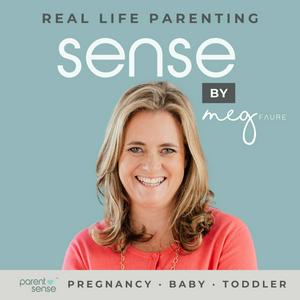
Real-life parenting support from pregnancy to the toddler years. Join occupational therapist, bestselling author, and Parent Sense founder Meg Faure for expert insight and honest conversations with real moms and leading parenting scientists. From sleep and weaning to milestones, emotions, and tantrums, this is the calm, trusted, science-backed sense you need to parent with confidence.
Podcast websiteLuister naar Sense by Meg Faure: Real Life Parenting, NOS Jeugdjournaal en vele andere podcasts van over de hele wereld met de radio.net-app
Ontvang de gratis radio.net app
- Zenders en podcasts om te bookmarken
- Streamen via Wi-Fi of Bluetooth
- Ondersteunt Carplay & Android Auto
- Veel andere app-functies
Ontvang de gratis radio.net app
- Zenders en podcasts om te bookmarken
- Streamen via Wi-Fi of Bluetooth
- Ondersteunt Carplay & Android Auto
- Veel andere app-functies

Sense by Meg Faure: Real Life Parenting
Scan de code,
download de app,
luisteren.
download de app,
luisteren.
 Netherlands
