

Luister gratis naar deze podcast in de app: Gratis downloaden in de App Store
radio.net
Slaaptimer
Favorieten opslaan
1001 Stories From The Gilded Age
Jon Hagadorn Podcast Host
Nieuwste aflevering
303 afleveringen

THE NAMESAKE by WILLA CATHER
20-09-2026 | 30 Min.🎙️ SHOW NOTES — The Namesake by Willa Cather
1001 Stories From the Gilded Age
Willa Cather's "The Namesake" (first published in McClure's Magazine in 1907) is one of her most thoughtful early works — a story that explores how memory, heritage, and the pull of home can shape an artist's identity. Told through a framed narrative in a Paris studio, the story follows sculptor Lyon Hartwell as he recounts the emotional journey that led him back to his family's Pennsylvania roots and inspired his celebrated statue, The Color Sergeant.
Cather uses Hartwell's reminiscence to examine the quiet but powerful ways the past asserts itself. His discovery of his uncle's Civil War legacy — and the trunk bearing his own name — becomes a moment of deep personal reckoning. Through it, Cather reveals how the stories we inherit can guide our creative lives, even when we've traveled far from home.
This episode fits beautifully within 1001 Stories From the Gilded Age because it captures the era's fascination with identity, national memory, and the role of art in shaping America's cultural voice. Cather was still developing the style that would later define her frontier novels, but The Namesake already shows her gift for emotional clarity, elegant structure, and the subtle interplay between personal ambition and family legacy.
⭐ Themes & Talking Points
Art and Identity: How returning home reshapes Hartwell's creative purpose.
Family Legacy: The emotional weight of inherited stories and names.
Expatriate Perspective: Cather's interest in Americans abroad and the tension between old roots and new ambitions.
Gilded Age Culture: The rise of national magazines like McClure's and their role in shaping American literature.
📚 About Willa Cather
At the time she wrote The Namesake, Cather was transitioning from journalism to fiction, finding her voice as one of America's most important literary figures. Her early stories often reflect her own experiences of leaving home, seeking artistic independence, and navigating the cultural shifts of the early 20th century.
⭐ Support the Show
Enjoying our weekly explorations of Gilded Age storytelling? Support the show at: www.patreon.com/1001storiesnetwork (patreon.com in Bing)A WAGNER MATINEE by WILLA CATHER
13-09-2026 | 21 Min.🎙️ SHOW NOTES — A Wagner Matinée by Willa Cather
1001 Stories From the Gilded Age
Willa Cather's A Wagner Matinée is one of her most powerful early stories—an intimate portrait of memory, sacrifice, and the emotional cost of frontier life. When Aunt Georgiana returns to Boston after thirty years on a Nebraska homestead, her nephew Clark takes her to a Wagner concert. What unfolds in that concert hall is a deeply moving awakening: a reminder of the beauty she once lived for, and the life she surrendered to survive on the plains.
Cather wrote this story in 1904, drawing on her own childhood memories of Nebraska and the women who endured its hardships. First published in McClure's Magazine and later included in The Troll Garden (1905), the story quickly became one of the works that marked Cather as a rising literary voice. Its themes—art, longing, and the quiet ache of lost dreams—still resonate today.
This episode of 1001 Stories From the Gilded Age explores the emotional depth of Cather's writing and the cultural divide between the refined world of Boston and the stark realities of frontier life. It's a story that lingers long after the final note fades.
⭐ Support the Show
If you enjoy our weekly journeys through classic literature and Gilded Age storytelling, please consider supporting us at: www.patreon.com/1001storiesnetwork Your support helps us keep these stories alive and ad‑free.
🌐 Follow Us & Stay Connected
Website: www.bestof1001stories.com Facebook: facebook.com/Bestof1001stories.com, Instagram: instagram.com/1001storiespodcast2026, YouTube: youtube.com/@1001storiespodcast, Twitter/X: twitter.com/1001stories
Join our community, share your favorite episodes, and help spread the word about the great stories we bring to life every week.GREATEST LOVE STORIES: KING CHARLES II AND NELL GWYNN
11-09-2026 | 25 Min.🎙️ 1001 Stories From The Gilded Age
SHOW NOTES
"King Charles and Nell Gwynn"
From Lyndon Orr's Famous Affinities of History — A Tale of Wit, Charm, and the Most Beloved Mistress of the Merry Monarch
Tonight's story takes us back to the Restoration — a time of powdered wigs, crowded playhouses, and a king determined to bring laughter back to England after years of Puritan rule. But we experience it through the voice of Lyndon Orr, writing in 1909, whose elegant, magazine‑era storytelling makes this historical romance feel perfectly at home in our Gilded Age series.
"King Charles and Nell Gwynn" is one of Orr's most delightful portraits: a lively, affectionate look at the most famous royal mistress in English history — a woman who rose from poverty and the London stage to become the adored companion of King Charles II, the "Merry Monarch."
👑 Story Summary
Lyndon Orr paints a vivid picture of Nell Gwynn, born into hardship, raised in the rough world of London's streets, and eventually finding her way into the bustling theatrical scene of Drury Lane. She begins as an orange‑seller, becomes a comic actress, and quickly earns a reputation for her sparkling wit, natural charm, and irrepressible humor.
Her rise catches the eye of King Charles II, whose court is overflowing with intrigue, rival mistresses, and political tension. Yet Nell stands apart. She is not noble, not calculating, not scheming — and that is precisely why Charles loves her. She is genuine in a world of masks.
Orr's narrative highlights:
Nell's quick wit, which disarmed courtiers and delighted the king
Her refusal to take herself too seriously, even as she became a national celebrity
Her compassion, especially toward the poor and toward Charles's illegitimate children
Her rivalry with Louise de Kérouaille, the French mistress whose airs and pretensions Nell skewered with unforgettable humor
One of the most famous anecdotes — preserved by Orr — is Nell calming an angry London crowd by leaning out of her carriage and declaring:
"Good people, I am the Protestant whore!"
The crowd roared with laughter and let her pass. It was Nell's charm in a single moment: bold, funny, and utterly fearless.
In Orr's telling, Nell becomes not just a royal mistress, but a symbol of the Restoration's joy — a reminder that after years of austerity, England wanted laughter, music, and humanity. And Charles, weary of politics and betrayal, found in Nell the one person who loved him simply as a man.
🎨 Themes & Tone
Wit as power — Nell's humor becomes her greatest weapon
Class mobility — a girl from the streets rises to the royal court
Human warmth vs. political coldness — Nell's authenticity contrasts with court intrigue
The Merry Monarch's longing for simple happiness
The Gilded Age fascination with historical romance — Orr's lens turns history into literature
Orr's prose is elegant, sympathetic, and deeply human — a perfect match for the magazine‑fiction sensibilities of the Gilded Age.
📚 Why This Story Fits 1001 Stories From The Gilded Age
Although the events take place in the 1600s, Orr's retelling is pure Gilded Age historical literature:
Written in 1909, during the height of narrative‑driven magazine culture
Focused on character, romance, and personality, not dry history
Crafted with the same tone as your Gilded Age fiction selections — polished, accessible, and emotionally rich
Part of a collection (Famous Affinities of History) beloved by early‑20th‑century readers
It is history told with the warmth and drama of a short story — exactly the kind of piece your audience loves.
🕰️ Historical Context
Nell Gwynn (1650–1687) — actress, wit, philanthropist, and beloved mistress of Charles II
King Charles II (1630–1685) — restored to the throne in 1660 after Cromwell's Commonwealth
Their relationship became one of the most famous romances in English history
Orr's account blends fact with narrative flair, making it ideal for audio storytelling
Get all of our shows at one website: WWW.BESTOF1001STORIES.COM
REVIEWS NEEDED . My email works as well for comments: 1001storiespodcast@gmail.com
SUPPORT OUR SHOW BY BECOMING A PATRON! https://.patreon.com/1001storiesnetwork. Its time I started asking for support! Thank you. Its a few dollars a month OR a one time. (Any amount is appreciated).
YOUR REVIEWS AND SUBSCRIPTIONS AT APPLE/ITUNES AND ALL ANDROID HOSTS ARE NEEDED AND APPRECIATED! LINKS BELOW...
Learn more about your ad choices. Visit podcastchoices.com/adchoicesALOHA OE by JACK LONDON
09-09-2026 | 19 Min.🎙️ 1001 Stories From The Gilded Age
SHOW NOTES
"Aloha Oe"
Jack London's Hawaiian Farewell — A Story of Love, Empire, and the Cost of Seeing Clearly
Tonight's story comes from one of America's most powerful literary voices of the early 20th century — Jack London, writing at a moment when the Gilded Age's ambitions were colliding with America's expanding presence in the Pacific. First published in 1908 in Lady's Realm and later reprinted in The Smart Set and The House of Pride (1912), "Aloha Oe" is one of London's most evocative short works, and one of the finest in your collection of 680 stories so far.
Set against the backdrop of colonial Hawaii, the story blends romance, social tension, and political undercurrents into a single, unforgettable departure scene — a moment where music, culture, and human emotion rise above the machinery of empire.
🌺 Story Summary
The tale opens on the docks of Honolulu, where a great transport ship prepares to depart. The scene is one of spectacle and emotion:
Native princes and princesses, sugar magnates, and territorial officials crowd the gangway.
The Royal Hawaiian Band plays "Aloha Oe," followed by a string orchestra aboard the ship, its singer's voice rising "birdlike" above the noise.
Thousands gather to say farewell — but not to the soldiers or officers aboard.
The farewell is for a group of United States Senators, visiting Hawaii on a junket. Among them is Senator Jeremy Sambrooke, whose statistical, empire‑minded gaze sees only labor, railroads, and plantations — never the beauty or humanity before him.
But the heart of the story lies with his daughter.
During their month in Hawaii, she has quietly transformed from a girl into a young woman — and has fallen in love with a part‑Hawaiian young man, a relationship her father never notices.
As the ship prepares to leave, the young man stands on the dock, looking up at her with longing. She looks back, caught between her father's world and the one she is leaving behind. The music swells, the crowd roars, and the ship pulls away — carrying her toward a future shaped not by love, but by the machinery of American power.
London's final image is one of bittersweet clarity: the girl, now a woman, stands among the garlands and flowers, forever changed by a love her father never saw.
🌴 Why "Aloha Oe" Fits the Gilded Age Series
Although set in Hawaii, the story is steeped in Gilded Age themes:
American expansion and political ambition — the Senators represent the era's industrial and imperial mindset.
Class and racial boundaries — the girl's romance challenges the rigid social lines of colonial society.
Spectacle and ceremony — departures, bands, garlands, and public display mirror the era's love of grandeur.
Personal awakening — a young woman discovering her identity amid the pressures of wealth and politics.
London's writing here is cinematic, emotional, and socially observant — a perfect match for the polished magazine fiction of the Gilded Age.
🎨 Themes & Atmosphere
Romance vs. social constraint
Colonial tension and cultural erasure
The blindness of power — the Senator sees statistics, not people
The bittersweet nature of departure
Music as emotional truth — "Aloha Oe" becomes the voice of the story
The atmosphere is lush, musical, and deeply human — a farewell scene that feels both intimate and epic.
📚 Publication Notes
First published in Lady's Realm, December 1908
Reprinted in The Smart Set (May 1909)
Collected in The House of Pride (1912)
Set in colonial Hawaii during the era of U.S. territorial control
🎧 Suggested Outro
"Aloha Oe" is one of Jack London's most quietly powerful stories — a tale where a single moment of farewell reveals the fault lines of empire, the blindness of ambition, and the fragile courage of young love. It is a story of music, memory, and the way a single glance across a crowded dock can change a life forever."THE VELVETEEN RABBIT by MARJERY WILLIAMS
06-09-2026 | 25 Min.🎙️ 1001 Stories From The Gilded Age
SHOW NOTES
"The Velveteen Rabbit"
A Timeless Tale of Love, Loss, and Becoming Real
Tonight's story comes from the closing years of the Gilded Age and the dawn of the Jazz Age — a moment when children's literature was blossoming into a true art form. First published in Harper's Bazaar in 1921 and released as a book in 1922, The Velveteen Rabbit by Margery Williams has become one of the most beloved children's stories of all time.
Though gentle in tone, it carries the emotional depth, craftsmanship, and moral clarity that made late‑Gilded‑Age magazine fiction so enduring. It is a story about childhood, imagination, and the quiet courage it takes to love something — or someone — enough to make them "Real."
🧸 Story Summary
A young boy receives a velveteen toy rabbit for Christmas. At first, the Rabbit is overlooked in favor of newer, mechanical toys — the flashy inventions of a modern nursery. But the oldest toy, the Skin Horse, teaches him a truth that lies at the heart of the story:
"Real isn't how you're made… It's a thing that happens to you. When a child loves you for a long, long time — not just to play with, but REALLY loves you — then you become Real."
The Rabbit longs for this transformation.
When the Boy begins sleeping with him, carrying him everywhere, and loving him fiercely, the Rabbit's fur grows shabby, his seams loosen, and his whiskers fall away — but he doesn't mind. He is becoming Real through love.
One summer day, real rabbits approach him and tease him for being unable to hop. The Rabbit insists he is real — and in the Boy's eyes, he is. But the truth of his nature remains painfully clear.
Then tragedy strikes: The Boy falls ill with scarlet fever, and the doctor orders the nursery disinfected — all toys, including the Rabbit, must be burned.
Left alone in a sack in the garden, the Rabbit cries a real tear. From that tear grows a flower, and from the flower emerges the Nursery Magic Fairy, who tells him that because the Boy truly loved him, she will make him Real to everyone.
She transforms him into a living rabbit, and he joins the wild rabbits in the forest. Sometimes, the Boy glimpses a familiar rabbit in the woods — not knowing it is his beloved toy, now Real.
🌼 Why It Fits the Gilded Age Series
Although published just after the Gilded Age, The Velveteen Rabbit embodies the era's literary spirit:
Magazine fiction crafted with care — short, polished, emotionally resonant
Themes of innocence, sentiment, and moral clarity
A blend of realism and gentle fantasy
A focus on domestic life and childhood, central to turn‑of‑the‑century storytelling
It is a perfect example of how stories from this period used simple settings to explore profound emotional truths.
🎨 Themes & Atmosphere
Love as transformation
The dignity of being worn, used, and imperfect
Childhood imagination as a gateway to magic
Loss, renewal, and the bittersweet passage of time
The story's emotional power lies in its simplicity — a nursery, a child, a toy, and the quiet miracle of love.
📚 Publication Notes
First appeared in Harper's Bazaar (1921)
Published as a book in 1922
Written by Margery Williams Bianco
Illustrated by William Nicholson
Ranked #28 on the National Education Association's "Teachers' Top 100 Books for Children" list
🔔 Programming Note
New stories every Sunday at noon ET Tune in to 1001 Ghost, Chiller & Lovecraft for weekly releases of classic horror, supernatural tales, and dark fiction — the perfect counterbalance to the gentle magic of tonight's story.
"The Velveteen Rabbit" reminds us that becoming Real is not about perfection — it's about love, loyalty, and the courage to endure. In a world that often prizes the shiny and new, this little velveteen rabbit stands as a quiet testament to the power of being cherished, even as the years wear us thin. It is a story that has touched generations, and tonight, it becomes part of our Gilded Age collection — a timeless tale of becoming."
Meer Fictie podcasts
 Saga, de verhalenpodcastFictie
 WraakDrama, Fictie
 Video PalaceDrama, Fictie, Kunst, Uitvoerende kunst
 Case 63Fictie
 OMINOUS THRILL: Her HorrorweenDrama, Fictie
 RAAFFictie, Komische fictie
 StaatsgeheimDrama, Fictie
 De verwarde cavia - het luisterboek!Boeken, Fictie, Komische fictie, Kunst
 Sherlock Holmes Short StoriesBoeken, Drama, Fictie, Kunst
 De BrandstapelDrama, Fictie
Trending Fictie -podcasts
 The Valentyne Heresy: A Warhammer 40K RPGFictie, Games, Komische fictie, Vrije tijd
 National EmergencyDrama, Fictie, Sciencefiction
 The Road of ShadowsFictie, Sciencefiction
 Old Gods of AppalachiaFictie, Sciencefiction
- Saga, de verhalenpodcastFictie
 Geen Woorden Maar DrakenFictie, Komische fictie
 The Left Right GameFictie, Kunst, Sciencefiction
 The Mysteries Of Derlin CountyFictie, Komische fictie, Waargebeurde misdaad
 Dumb-Dumbs & Dragons: A D&D PodcastFictie, Games, Komische fictie, Vrije tijd
 Red ValleyFictie, Sciencefiction
 BlackoutDrama, Fictie, Kunst
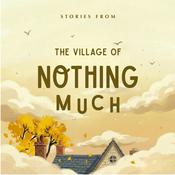 Stories from the Village of Nothing MuchFictie, Geestelijke gezondheid, Gezondheid en fitness, Sociale wetenschappen, Vrije tijd, Wetenschap
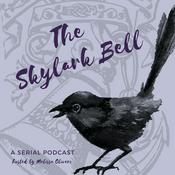 The Skylark BellDrama, Fictie, Maatschappij & cultuur
 Station 151Fictie, Sciencefiction
 PetrifiedDrama, Fictie, Maatschappij & cultuur
 De Vrouw met Duizend GezichtenFictie
 Na MiddernachtFictie
 The Bright SessionsDrama, Fictie
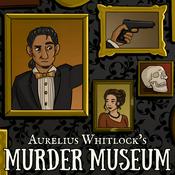 Aurelius Whitlock's Murder MuseumFictie, Komische fictie
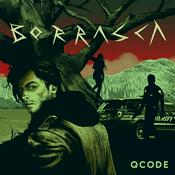 BorrascaDrama, Fictie
Over 1001 Stories From The Gilded Age
1001 Stories From The Gilded Age (Formerly 1001 Greatest Love & Life Stories) brings you a wide mix of classic short stories and long-form family-friendly novels, a perfect mix of timeless classics from another age - when life was slower, men and women dressed well in public, , and courtesy, manners, and morals were practiced. From this age comes great stories from woman authors as well as popular stories such as The Secret Garden, Anne of Green Gables and Black Beauty. Our "Gilded Age' collection spans mostly from 1875-1929. Please share with a friend! Now narrating Anne of The Island (3rd in Anne series) every Sun and Wed at noon Eastern, and new short stories every Fri at noon ET.
Podcast websiteLuister naar 1001 Stories From The Gilded Age, Saga, de verhalenpodcast en vele andere podcasts van over de hele wereld met de radio.net-app

Ontvang de gratis radio.net app
- Zenders en podcasts om te bookmarken
- Streamen via Wi-Fi of Bluetooth
- Ondersteunt Carplay & Android Auto
- Veel andere app-functies
Ontvang de gratis radio.net app
- Zenders en podcasts om te bookmarken
- Streamen via Wi-Fi of Bluetooth
- Ondersteunt Carplay & Android Auto
- Veel andere app-functies

1001 Stories From The Gilded Age
Scan de code,
download de app,
luisteren.
download de app,
luisteren.
1001 Stories From The Gilded Age: Podcasts in familie
 Netherlands