
Luister gratis naar deze podcast in de app: Gratis downloaden in de App Store
radio.net
Slaaptimer
Favorieten opslaan
48 afleveringen
47. Movement After Miscarriage, Mom Guilt, and Keeping Something for Yourself with Amy Haas
06-10-2026 | 40 Min.Why do so many moms feel guilty the second they do something just for themselves?
I sat down with Amy Haas, a running and strength coach, the creator behind Race Across the States, and a brand new mom to a baby girl. Amy has run a half marathon in all 50 states, which took her about 10 years. Running carried her through some really hard seasons, including a miscarriage before her daughter was born.
We talk about using movement for your mental health instead of as punishment, and the surprising backlash Amy got from other moms for running and going back to work after having her baby. Amy explains why she believes kids become part of your life instead of replacing it. She also opens up about losing trust in her body after her miscarriage, the phrase from her OB that got her through pregnancy after loss, and why a five-minute walk absolutely counts.
And yes, I share how my kids and I ended up in a full-on power walking competition in the driveway. 😂
If you've ever skipped a workout because you couldn't do the "whole thing," or felt like taking time for yourself made you less of a mom, this one is for you. 🤍
About Amy
Amy Haas is a running and strength coach and the founder of Run With AIM. After running a half marathon in every state, she's now chasing the major marathons and running in national parks with her husband. She shares openly about movement, body image, women supporting women, and now, early motherhood.
Connect with Amy
Instagram: @raceacrossthestates
Coaching: runwithaim.com
Connect with me 💛
🌐 Website: milestonesandmotherhood.com
📸 Instagram: @milestones.and.motherhood and @more.than.milestones
✍️ Substack: https://substack.com/@morethanmilestones
🍼 Tummy Time Masterclass: https://milestonesandmotherhood.com/tummy-time
🛍️ Amazon storefront: https://a.co/d/03ucPZbo
✉️ For sponsorship or guest inquiries: podcast@milestonesandmotherhood.com
If this conversation meant something to you, follow More Than Milestones and leave a rating or review. It really helps other moms find the show.
Timestamps ⏱️
00:00 Welcome and meet Amy Haas
00:27 From one half marathon to all 50 states
02:47 What's next: major marathons and national parks
04:00 Movement as a tool for mental health, not punishment
06:13 Falling into the weight-loss mindset and unlearning it
07:45 When your mind quits before your body does
09:57 Eight weeks postpartum and the comparison trap
11:13 The backlash: "Why did you even have kids?"
14:39 Having something that's yours before motherhood
16:00 Why women feel guilty prioritizing themselves
18:28 Perfectionism and all-or-nothing movement
21:23 Letting yourself celebrate the win
21:58 Miscarriage and losing trust in your body
23:43 Rebuilding trust by controlling what you can
26:07 "Common things happen commonly": pregnancy after loss
29:08 How running prepared Amy for motherhood
31:39 The five-minute walk: one way to start this week
33:13 Habit stacking and the driveway power walk
35:50 Growing up with the bodies we were sold
38:31 Dinner table talk and practicing what we preach
39:42 Where to find Amy46. What Counts as a Word? Toddler Speech Milestones, Late Talkers, and When Not to Wait with Pediatric SLP Caley Nunnally
29-09-2026 | 30 Min.Does "bah" count as a word? What about the sign for more? And if you're told to wait and see, but something in your gut is telling you not to...then what?
My son has been in speech therapy since he was about 17 months old, so this one is personal. As a physical therapist, motor milestones have always felt pretty concrete to me. If a baby isn't rolling, we see it. Speech never felt that clear, and looking back at old videos now, I can see things I didn't know to look for at the time.
I'm joined by my friend Caley Nunnally, pediatric speech-language pathologist, mom of two, and founder of Learn with Chatterboxes. Caley has spent 13 years working with late talkers and early diagnosed autistic kids, with a specialty in AAC (augmentative and alternative communication).
We talk about why word count is really just the tip of the pyramid, the three things that make a word "count" (signs included), what Caley looks for at the two-year checkup, and why some kids with strong understanding don't qualify for early intervention before age three. We also get into one of the biggest worries she hears from parents: that AAC or sign language will keep a child from talking. Caley explains why the research actually points the other way. She wraps up with the simple, everyday strategies she gives parents, starting with which words to focus on first.
If you've ever sat there counting your toddler's words and wondering if you're overthinking it, this one's for you. 🤍
About Caley:
Caley Nunnally is a pediatric speech-language pathologist with 13 years of experience and a mom of two. She works primarily with late talkers and early diagnosed autistic children, with a specialty in augmentative and alternative communication (AAC). She splits her time between a children's hospital and her private practice, and shares speech and language education on Instagram at Learn with Chatterboxes.
Connect with Caley:
Instagram: @learnwithchatterboxes
Caley answers questions in the comments on her posts, so that's the best place to ask questions.
Connect with me: 💛
🌐 Website: milestonesandmotherhood.com
📸 Instagram: @milestones.and.motherhood and @more.than.milestones
✍️ Substack: https://substack.com/@morethanmilestones
🍼 Tummy Time Masterclass: https://milestonesandmotherhood.com/tummy-time
🛍️ Amazon storefront: https://a.co/d/03ucPZbo
✉️ For sponsorship or guest inquiries: podcast@milestonesandmotherhood.com
If this conversation was helpful, follow More Than Milestones so you never miss an episode, and leave a rating or review. It really does help other parents find the show.
Timestamps ⏱️
00:00 Welcome and meet Caley
01:18 KC's side of this conversation: parenting a child in speech therapy
02:05 Looking at the whole child: joint attention, understanding, and gestures
03:50 Is there a timeline for first words?
06:28 Do signs count as words?
07:30 Why speech milestones feel harder to spot than motor milestones
08:22 Early intervention and why some kids don't qualify before age 3
09:52 Receptive vs. expressive language
11:22 Does AAC, sign language, or bilingualism delay speech?
14:42 What to look for at two years: 50 words and two-word combinations
19:17 Words vs. utterances (and why "all done" is one word)
21:12 When your gut says don't wait: outpatient therapy options
24:39 Caley's top tips for supporting speech at home
29:16 Where to find Caley45. Are Babies Actually Different Now, or Is Everything Around Them? What's Really Behind the Shift in Baby Development (Part 2 with Carly Clearwater)
22-09-2026 | 50 Min.Six weeks. Eight weeks. That's when so many of us are back at work, pumping in a bathroom or a shuttle bus or wherever we can grab a few minutes. Nobody tells you that stretch, the schedule, the container time, how much of a village you actually have, is quietly shaping how your baby moves and grows too.
This is part two of the conversation I started with my mom about how infant milestones have shifted across generations. Last time, what changed. This time, I sat down with Carly Clearwater, a pediatric occupational therapist and lactation consultant who works with infants and their families, and the founder of ClearPath OT in New Jersey, to get into why.
We talk about what going back to work that early actually does to breastfeeding, and why the "convenience" products on the shelf exist because families genuinely need them, not because anyone's doing something wrong.
We get into how social media can take one rare, scary video and make it feel like something about to happen to your own baby, and why the "village" we're missing isn't really about who lives nearby anymore.
And we talk about something I think about constantly in my own practice: how one small, early thing, like a baby who hates tummy time because of reflux, can quietly snowball if nobody catches it early. Carly walks through what early intervention actually is, why you can usually self-refer for a free evaluation, and how to spot a typical hard stretch versus something worth a closer look.
If part one left you finally able to stop second guessing your gut, I think this one does the same thing, just from the why behind it.
More about Carly:
Carly Clearwater, OTR/L, IBCLC is a pediatric occupational therapist and international board certified lactation consultant, in addition to her role as a mom of two toddlers. She's passionate about helping parents confidently support their babies through all their daily occupations (eat, sleep, poop, and play) to build a strong foundation for continued development.
🌐 Website: clearpathotservices.com
📸 Instagram: @clear.path.ot
Resources mentioned in this episode:
🍼 Free baby containers guide: idyllic-hat-942.myflodesk.com/baby-containers-guide
🔎 Early intervention contact info by state (CDC): cdc.gov/act-early/early-intervention/contact-information-by-state
Connect with me: 💛
🌐 Website: milestonesandmotherhood.com
📸 Instagram: @milestones.and.motherhood and @more.than.milestones
✍️ Substack: https://substack.com/@morethanmilestones
🍼 Tummy Time Masterclass: https://milestonesandmotherhood.com/tummy-time
🛍️ Amazon storefront: https://a.co/d/03ucPZbo
✉️ For sponsorship or guest inquiries: podcast@milestonesandmotherhood.com
If this one helped make sense of the shift you've been feeling, follow the show and leave a rating or review. It genuinely helps more parents find these conversations.
⏱️ Timestamps
00:00 – Meet Carly Clearwater, pediatric OT and lactation consultant (part two of the generations conversation)
01:31 – Are babies actually different, or is the environment different?
02:57 – Why this isn't about blaming parents
05:56 – The four building blocks of infant development: eat, sleep, poop, play
07:21 – Why development is all connected (the reflux → tummy time snowball)
09:19 – Going back to work at six and eight weeks postpartum
12:16 – How early return to work affects breastfeeding
15:40 – Container use, busier schedules, and losing the line of moderation
16:54 – Social media, misinformation, and the "age of parenting anxiety"
19:11 – Baby wearing as a modern compromise (and its own misinformation problem)
20:49 – The lack of village and what "community" really means now
26:13 – What's missing without generational modeling
29:02 – The difference between a delay and atypical development
33:10 – Why preventative care beats reactive care
34:55 – A real example of how one missed early step snowballs
37:24 – How to self-refer to early intervention (and why it's often free)
39:05 – The lactation visit most insurance covers that almost no one uses
41:46 – What parents can actually do: real, practical solutions
43:51 – Yellow flags vs. red flags
44:45 – Normalizing floor time and tummy time today44. Baby Milestones Then vs. Now: What’s Changed & Why - Perspectives from a Pediatric PT of 40+ Years
15-09-2026 | 49 Min.Bonus Episode: My Mom, the OG Pediatric PT, on What Tummy Time Really Looked Like
Surprise! This one's a bonus episode, and it's personal. 🤍 I sat down with the OG pediatric PT herself, my mom, Susan Swiat, who spent 40 years in early intervention, to talk about what parenting actually looked like before the Back to Sleep campaign changed everything and before the baby container industry figured out how to profit off of new parents being scared.
We get into why babies used to sleep and play on their stomachs without anyone calling it "tummy time," how swings, bouncers, and car seats quietly created something called container baby syndrome, the real rise in torticollis and flat spots on baby's heads, and why crawling was recently and quietly pulled from the pediatrician's milestone checklist without much explanation.
If you've ever second guessed your gut because of something you saw online, I think this conversation is going to bring you a lot of relief.
Connect with me: 💛
🌐 Website: milestonesandmotherhood.com
📸 Instagram: @milestones.and.motherhood and @more.than.milestones
✍️ Substack: https://substack.com/@morethanmilestones
🍼 Tummy Time Masterclass: https://milestonesandmotherhood.com/tummy-time
🛍️ Amazon storefront: https://a.co/d/03ucPZbo
✉️ For sponsorship or guest inquiries: podcast@milestonesandmotherhood.com
If this one gave you a little relief about trusting your gut, follow the show and leave a rating or review, it genuinely helps more moms find us. There's a part two coming soon with an OT's take on all of this too. 👀
⏱️ Timestamps
(00:00) Meet the OG pediatric PT: my mom, Susan
(02:00) What sleep and tummy time looked like before Back to Sleep
(05:30) How the baby container industry capitalized on new parent fear
(08:15) What container baby syndrome actually means
(12:00) The rise in torticollis, plagiocephaly, and baby helmets
(16:00) What cultural differences taught her about early movement
(19:30) Screens, tablets, and losing the instinct to just play with your baby
(23:00) Milestone ranges then vs. now, and why crawling quietly disappeared from screenings
(27:30) Why crawling matters more than people realize
(31:00) Growing up anxious in the social media era vs. her generation
(34:30) Her advice for new moms and new therapists43. What 8.5 Years of Not Sleep Training Taught Me About Trusting My Gut (Season 1 Finale)
28-07-2026 | 19 Min.After eight and a half years of helping my three kids fall asleep every single night, no sleep training, no cry it out, this past weekend they told me they were ready to try it on their own. This is the story of that night, what I didn't expect to feel, and the honest update on what's happened since 💛
I'm getting real about what it took to trust my gut through years of doubt, comments, and exhausted nights, sleep trained or not, and why this is the first thing in parenting I have zero regrets about. If you're in the thick of sleepless nights right now and unsure which way to go, or tired of people weighing in on your choices, this one's for you.
In this episode, you'll hear: 📝
Our sleep backstory: 8.5 years of no sleep training, and how we made it work
What it actually felt like the night my kids said they were ready to sleep on their own
Why trusting my gut on this one decision became my anchor through years of doubt
The honest, unexpected update on what happened just days later
My biggest advice if you're in the thick of sleepless nights right now, no matter which path you're on
This also happens to be our season one finale, and I could not be more grateful for this community. Thank you for listening, sharing, and being here. If there's a topic, guest, or story you want next season, please send it my way 🙏
Connect with me: 💛
🌐 Website: milestonesandmotherhood.com
📸 Instagram: @milestones.and.motherhood and @more.than.milestones
✍️ Substack: https://substack.com/@morethanmilestones
🍼 Tummy Time Masterclass: https://milestonesandmotherhood.com/tummy-time
🛍️ Amazon storefront: https://a.co/d/03ucPZbo
✉️ For sponsorship or guest inquiries: podcast@milestonesandmotherhood.com
💦 LMNT: http://drinklmnt.com/MILESTONE
Get a free 8-count Sample Pack of LMNT’s most popular drink mix flavors with any purchase.
If you loved this episode: ⭐
Please subscribe, leave a review, and share it with a parent who needs to hear it 🙏 See you next season on More Than Milestones!
Meer Kind en gezin podcasts






Trending Kind en gezin -podcasts











Over More than Milestones
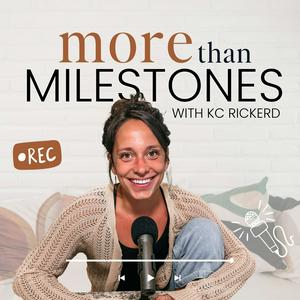
Hosted by pediatric physical therapist, wife and mom of three, Dr. KC Rickerd, More Than Milestones is the podcast that goes beyond baby checklists and dives deep into real motherhood, real development, real relationships, and everything in between.Whether you’re supporting your baby’s motor development, navigating big kid emotions, or navigating a new stage of life & parenting, this show blends expert-backed education with the honest, unfiltered reality of motherhood.Each week, KC brings you conversations with trusted professionals—pediatricians, therapists, sleep and feeding experts, mental health pros, and more—plus raw, relatable stories from fellow moms and caregivers. No pressure to be perfect. Just honest conversations, support, humor, and community for the journey you’re on.If you're looking for clarity, connection, and a reminder that while supporting our children’s development is important, so is supporting ourselves - you’re in the right place, because it’s always more than milestones.
Podcast websiteLuister naar More than Milestones, Donald Duck Voorleescast en vele andere podcasts van over de hele wereld met de radio.net-app
Ontvang de gratis radio.net app
- Zenders en podcasts om te bookmarken
- Streamen via Wi-Fi of Bluetooth
- Ondersteunt Carplay & Android Auto
- Veel andere app-functies
Ontvang de gratis radio.net app
- Zenders en podcasts om te bookmarken
- Streamen via Wi-Fi of Bluetooth
- Ondersteunt Carplay & Android Auto
- Veel andere app-functies

More than Milestones
Scan de code,
download de app,
luisteren.
download de app,
luisteren.
 Netherlands