
Luister gratis naar deze podcast in de app: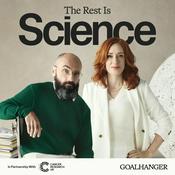 Gratis downloaden in de App Store
radio.net
Slaaptimer
Favorieten opslaan
100 afleveringen
Earth’s Tilt Makes Time Slippery
25-10-2026 | 53 Min.A sundial can be almost 16 minutes fast in November and 14 minutes slow in February, yet there's nothing wrong with it. So why does the Sun, our oldest timekeeper, disagree with the clock on your wrist?
In this episode, Professor Hannah Fry and Michael Stevens (Vsauce) explore the equation of time - the strange relationship between Earth's tilt, its orbit around the Sun and the way we measure our days.
Why does a day last 24 hours? Has it always been that way? And how can a piece of ancient coral reveal that time itself has changed?
To find out, Hannah and Michael investigate an ingenious sundial that appears to correct its own mistakes, and discover the extraordinary places on Earth where shadows disappear completely.
Along the way, they explore why sailors relied on the stars, the Moon's remarkable journey across London's sky, and the curious fact that the Pacific Ocean is so enormous it meets itself on the other side of the world.
Michael's references:https://rl.se/subsolarpoint
https://www.curiositybox.com/pages/closest-approach-to-uranus-------------------For more information about Cancer Research UK, their research, breakthroughs and how you can support them, visit https://cancerresearchuk.org/restisscience
Cancer Research UK is a registered charity in England and Wales (1089464), Scotland (SC041666), the Isle of Man (1103) and Jersey (247). A company limited by guarantee. Registered company in England and Wales (4325234) and the Isle of Man (5713F). Registered address: 2 Redman Place, London, E20 1JQ.
-------------------
Find The Rest Is Science all over the internet by clicking here.
-------------------
Video Producer: Adam Thornton + Oli Oakley + Jack MeekAnimator: Sam BensonVideo & Social: Bex TyrrellProducer: Simona Rata + Lucy LipscombeSenior Producer: Lauren Armstrong-CarterChief Digital Officer: Samuel OakleyExec Producer: Neil Fearn
Learn more about your ad choices. Visit podcastchoices.com/adchoicesWhat Happened When We Stopped Squatting?
21-10-2026 | 37 Min.In many parts of the world, people rest in a deep squat every day. In others, most adults can barely get down there. So what’s going on? Hannah Fry and Michael Stevens dig into the history of squatting and why the ability to squat differs so much between cultures.Plus, your questions: What happens to the air pressure inside a car when it goes round a bend? Why do some burps come out higher than others? And why do tautologies sound like wisdom?-------------------For more information about Cancer Research UK, their research, breakthroughs and how you can support them, visit https://cancerresearchuk.org/restisscience Cancer Research UK is a registered charity in England and Wales (1089464), Scotland (SC041666), the Isle of Man (1103) and Jersey (247). A company limited by guarantee. Registered company in England and Wales (4325234) and the Isle of Man (5713F). Registered address: 2 Redman Place, London, E20 1JQ. ------------------- Find The Rest Is Science all over the internet by clicking here. ------------------- Video Producer: Adam Thornton + Oli Oakley + Jack Meek Animator: Sam Benson Video & Social: Bex Tyrrell Producer: Simona Rata + Lucy Lipscombe Senior Producer: Lauren Armstrong-Carter Chief Digital Officer: Samuel Oakley
Exec Producer: Neil Fearn
Learn more about your ad choices. Visit podcastchoices.com/adchoicesMathematicians Are The Canary Down The AI Coal Mine
18-10-2026 | 1 u. 7 Min.OpenAI claims a swarm of AI agents has solved the Navier-Stokes problem, one of the hardest unsolved questions in mathematics, with a $1 million prize attached. Then it released more than 700 more mathematical manuscripts, including claims touching the Riemann hypothesis, faster than anyone can check them. Mathematicians are not happy, and the reason goes far beyond the money.
In this episode of The Rest of Science, mathematician and fluid dynamicist Hannah Fry takes Michael Stevens through the equations that describe everything that flows, from the blood in your veins to a rocket leaving the atmosphere. Then she tells him why this story has turned the vocation of mathematics upside down.
Ten thousand AI agents. Millions of messages. One tiny term in the equation that nobody wanted to look at, until it unlocked the problem. But did AI really solve a million dollar problem? Why are some mathematicians accusing the models of stealing their work? And how might a proof that is completely correct be the least satisfying result in the history of maths?
Along the way, Hannah un-mixes a glass of dye with nothing but corn syrup and patience, and the pair ask what happens to curiosity when the answers arrive faster than the understanding.
-------------------
For more information about Cancer Research UK, their research, breakthroughs and how you can support them, visit https://cancerresearchuk.org/restisscience
-------------------
Find The Rest Is Science all over the internet by clicking here.
-------------------
Video Producer: Oli Oakley Animator: Sam BensonVideo & Social: Bex TyrrellAssistant Producer: Lucy LipscombeProducer: Simona RataSenior Producer: Lauren Armstrong-CarterChief Digital Officer: Samuel OakleyExec Producer: Neil Fearn
Learn more about your ad choices. Visit podcastchoices.com/adchoicesThe Right Way To Open A Shaken Soda Can
14-10-2026 | 38 Min.A can of fizzy drink has been violently shaken. The pressure is building, the bubbles are ready to erupt, and Michael Stevens is about to open it. But Hannah Fry has a trick up her sleeve. Can a few taps really prevent an explosion?This week on The Rest Is Science, Hannah and Michael begin with the surprisingly complicated physics of carbonation before tackling a much bigger question: can we really trust science?From the replication crisis and scientific studies that fail to stand up to scrutiny, to the strange incentives that shape what gets published, they explore why even respected scientific discoveries can turn out to be wrong...and why that might not be such a bad thing.Along the way, they investigate whether Archimedes really could have moved the Earth with a long enough lever, why aircraft are designed to withstand enormous pressure changes, and what happens when we lose our curiosity.Plus, an unexpected discussion about nuns, the dangers of absolute certainty, and why asking questions might be one of the most important things we can do.-------------------"For more information about Cancer Research UK, their research, breakthroughs and how you can support them, visit https://cancerresearchuk.org/restisscienceCancer Research UK is a registered charity in England and Wales (1089464), Scotland (SC041666), the Isle of Man (1103) and Jersey (247). A company limited by guarantee. Registered company in England and Wales (4325234) and the Isle of Man (5713F). Registered address: 2 Redman Place, London, E20 1JQ."-------------------Find The Rest Is Science all over the internet by clicking here.-------------------Video Producer: Adam Thornton + Oli Oakley + Jack MeekAnimator: Sam BensonVideo & Social: Bex TyrrellAssistant Producer: Lucy LipscombeProducer: Simona RataSenior Producer: Lauren Armstrong-CarterChief Digital Officer: Samuel OakleyExec Producer: Neil Fearn
Learn more about your ad choices. Visit podcastchoices.com/adchoicesSomething Weird Is Going On With Placebos
11-10-2026 | 49 Min.For the past few decades, something strange has been happening in clinical trials. Painkillers aren't getting worse, but the placebos they're tested against appear to be getting better.
In one landmark study, the advantage of pain medication over placebo shrank from 27.3% in 1996 to just 8.9% in 2013.
Even stranger? This trend was found almost entirely in American trials.In this episode of The Rest Is Science, Professor Hannah Fry and Michael Stevens (Vsauce) investigate the extraordinary science of the placebo effect;
how our expectations influence pain, why belief can change the way our bodies respond, and what this means for the future of medicine.
Why does the way a treatment is presented matter so much? And how can simply expecting something to hurt actually make it hurt?
But the placebo effect doesn't stop at medicine. From pedestrian crossing buttons that do nothing to the surprising psychology of road safety, Hannah and Michael explore just how easily our expectations can shape our experience of the world.
-------------------
"For more information about Cancer Research UK, their research, breakthroughs and how you can support them, visit https://www.cancerresearchuk.org/our-research/rest-is-scienceCancer Research UK is a registered charity in England and Wales (1089464), Scotland (SC041666), the Isle of Man (1103) and Jersey (247). A company limited by guarantee. Registered company in England and Wales (4325234) and the Isle of Man (5713F). Registered address: 2 Redman Place, London, E20 1JQ."
-------------------
Find The Rest Is Science all over the internet by clicking here.
-------------------Video Producer: Adam Thornton + Oli Oakley + Jack MeekAnimator: Sam BensonVideo & Social: Bex TyrrellAssistant Producer: Lucy LipscombeProducer: Simona RataSenior Producer: Lauren Armstrong-CarterChief Digital Officer: Samuel OakleyExec Producer: Neil Fearn
Learn more about your ad choices. Visit podcastchoices.com/adchoices
Meer Natuurkunde podcasts

Trending Natuurkunde -podcasts
Over The Rest Is Science
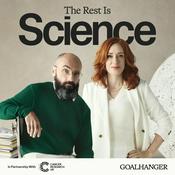
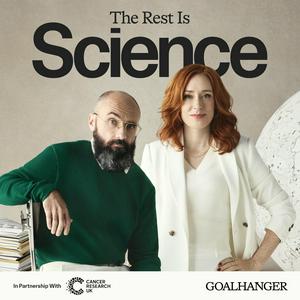
Join mathematician Professor Hannah Fry and science creator Michael Stevens (Vsauce) as they dig into the weird scientific questions that often go unexplored.
Welcome to The Rest Is Science, a show that sits in the fascinating space between what we think we know, and what we actually know. Why do we assume we understand things like time, randomness, or even gravity? Once you start questioning these familiar ideas, reality becomes astonishingly strange and completely fragile.
Whether you're a lifelong science fan or just naturally curious, The Rest Is Science will change your perception of reality, and prove that the biggest questions are always the most fun.
Podcast websiteLuister naar The Rest Is Science, Hiçbir Şey Tesadüf Değil en vele andere podcasts van over de hele wereld met de radio.net-app
Ontvang de gratis radio.net app
- Zenders en podcasts om te bookmarken
- Streamen via Wi-Fi of Bluetooth
- Ondersteunt Carplay & Android Auto
- Veel andere app-functies
Ontvang de gratis radio.net app
- Zenders en podcasts om te bookmarken
- Streamen via Wi-Fi of Bluetooth
- Ondersteunt Carplay & Android Auto
- Veel andere app-functies

The Rest Is Science
Scan de code,
download de app,
luisteren.
download de app,
luisteren.
The Rest Is Science: Podcasts in familie






 Netherlands

