Luister gratis naar deze podcast in de app: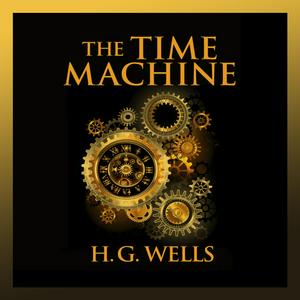 Gratis downloaden in de App Store
radio.net
Slaaptimer
Favorieten opslaan
Beschikbare afleveringen
5 van 12
- The Time Machine - Chapter 12--------14:51
- The Time Machine - Chapter 11--------13:27
- The Time Machine - Chapter 10--------7:38
- The Time Machine - Chapter 9--------16:48
- The Time Machine - Chapter 8--------16:47
Meer Kunst podcasts
 De Grote Vriendelijke PodcastKunst, Boeken
 Boeken FMKunst, Vrije tijd, Boeken
 Boze Geesten | Open GeestenKunst
 De Groene Amsterdammer PodcastKunst, Nieuws, Maatschappij & cultuur
 ill-advised by Bill NighyKunst, Komedie, Muziek, Boeken
 Etenstijd!Kunst, Eetwaar
 Ruben en Tijl met de botte bijlKunst, Komedie
 Maffe MeesterwerkenKunst, Beeldende kunst
 de Paulien Cornelisse podcastKunst, Boeken, Uitvoerende kunst
 Met Groenteman in de kastKunst
Trending Kunst -podcasts
 This Cultural LifeKunst, Maatschappij & cultuur, Persoonlijke dagboeken
 Wereld vol ActeursKunst, Uitvoerende kunst
 پلی لیست | PlayListKunst, Muziek
 About Buildings + CitiesKunst, Beeldende kunst
 The Paris ReviewKunst, Boeken
 Het Ronde HuisKunst, Maatschappij & cultuur, Waargebeurde misdaad, Boeken
 Meditation music. Peaceful calm music 528, 432 HzKunst, Kind en gezin, Muziek
 The SporkfulKunst
 【睡前相声】郭德纲于谦相声合集-高清晰Kunst
 De Donkere KamerKunst, Beeldende kunst
 The New Yorker: FictionKunst, Boeken
 Creative CodexKunst
 Over DatumKunst, Maatschappij & cultuur, Documentaire, Mode en schoonheid
 Vloeken in de Kerk - de podcastKunst, Uitvoerende kunst
 The EmeraldKunst, Religie en spiritualiteit, Maatschappij & cultuur
 Service95 Book Club With Dua LipaKunst, Maatschappij & cultuur, Boeken
 The New Yorker: The Writer's Voice - New Fiction from The New YorkerKunst
 Over EtenKunst, Eetwaar
 drie boekenKunst, Boeken
 BacklistedKunst, Vrije tijd, Boeken, Hobby's
 Reading Ferdowsi فردوسی خوانیKunst, Boeken
 Weird StudiesKunst, Maatschappij & cultuur, Filosofie
 GlasgenotenKunst, Eetwaar
 Wijn en WijsheidKunst, Onderwijs, Eetwaar
 Tetragrammaton with Rick RubinKunst, Maatschappij & cultuur, Filosofie
- Maffe MeesterwerkenKunst, Beeldende kunst
 THEMOVEKunst, Sport
Over The Time Machine
The Time Machine is a science fiction novella by H. G. Wells, published in 1895. It is generally credited with the popularisation of the concept of time travel by using a vehicle that allows an operator to travel purposefully and selectively. The term "time machine", coined by Wells, is now universally used to refer to such a vehicle. This work is an early example of the Dying Earth subgenre.The Time Machine has since been adapted into two feature films of the same name, as well as two television versions, and a large number of comic book adaptations. It has also indirectly inspired many more works of fiction in many media.Wells had considered the notion of time travel before, in an earlier work titled The Chronic Argonauts. This short story was published in his college's newspaper and was the foundation for "The Time Machine." Wells frequently stated that he had thought of using some of this material in a series of articles in the Pall Mall Gazette, until the publisher asked him if he could instead write a serial novel on the same theme; Wells readily agreed, and was paid £100 (equal to about £10,000 today) on its publication by Heinemann in 1895. The story was first published in serial form in the January to May numbers of The New Review (newly under the nominal editorship of W. E. Henley). The first book edition (possibly prepared from a different manuscript) was published in New York by Henry Holt and Company on 7 May 1895; an English edition was published by Heinemann on 29 May. These two editions are different textually, and are commonly referred to as the "Holt text" and "Heinemann text" respectively. Nearly all modern reprints reproduce the Heinemann text.The story reflects Wells's own socialist political views, his view on life and abundance, and the contemporary angst about industrial relations. It is also influenced by Ray Lankester's theories about social degeneration, and share many elements with Edward Bulwer-Lytton's novel Vril. Other science fiction works of the period, including Edward Bellamy's Looking Backward and the later Metropolis, dealt with similar themes.“Face this world. Learn its ways, watch it, be careful of too hasty guesses at its meaning. In the end you will find clues to it all.”-H.G. Wells, The Time Machine
Podcast websiteLuister naar The Time Machine, De Grote Vriendelijke Podcast en vele andere podcasts van over de hele wereld met de radio.net-app
Ontvang de gratis radio.net app
- Zenders en podcasts om te bookmarken
- Streamen via Wi-Fi of Bluetooth
- Ondersteunt Carplay & Android Auto
- Veel andere app-functies
Ontvang de gratis radio.net app
- Zenders en podcasts om te bookmarken
- Streamen via Wi-Fi of Bluetooth
- Ondersteunt Carplay & Android Auto
- Veel andere app-functies

The Time Machine
Scan de code,
download de app,
luisteren.
download de app,
luisteren.
 Netherlands