PodcastsNatuurGood Fire Podcast

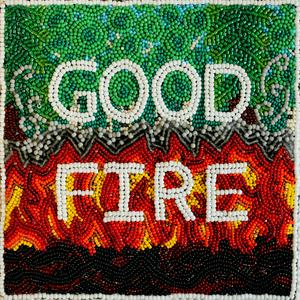
Good Fire Podcast

Indigenous Leadership Initiative
Good Fire Podcast
Nieuwste aflevering

67 afleveringen

  • Good Fire Podcast

    Season 3 | Special Live Episode | Good Fire Podcast

    17-01-2026 | 1 u. 34 Min.
    This episode of Good Fire was recorded in front of a live audience of 300 people at the Fire and Ice Symposium during the 2025 Banff Centre Mountain Film and Book Festival, on Treaty 7 territory. Host Dr. Amy Cardinal Christianson (Métis, Treaty 8) is joined by Alvin First Rider of the Blood Tribe (Blackfoot Confederacy), along with visual storyteller Jordan Melograna from the Indigenous Leadership Initiative. Together, they reflect on Indigenous fire stewardship as a living practice—one rooted in sovereignty, cultural continuity, and care for future generations. What unfolds is not just a conversation about fire, but a gathering of stories—about land, memory, responsibility, and the work of rebuilding relationships that were deliberately broken.

    Takeaways
    Host Dr. Amy Cardinal Christianson (Métis, Treaty 8) is joined by Alvin First Rider of the Blood Tribe (Blackfoot Confederacy), along with visual storyteller Jordan Melograna from the Indigenous Leadership Initiative. Together, they reflect on Indigenous fire stewardship as a living practice—one rooted in sovereignty, cultural continuity, and care for future generations.

    Listeners are invited into a deeper understanding of good fire: fire as a gift, a teacher, and a tool for healing. Alvin shares how fire and bison have always shaped Blackfoot grasslands, and how restoring these relationships is both ecological work and an expression of Indigenous self-determination. From Fire Guardian programs on the Blood Reserve to community-led wildfire training in the North, the episode highlights how Indigenous Nations are reclaiming fire on their own terms—despite legal, financial, and colonial barriers that remain firmly in place.

    The conversation also explores how fire stewardship is year-round work. It includes winter planning, community education, youth training, and storytelling—long before flames ever touch the ground. Through lived examples, the episode challenges dominant narratives that frame fire only as disaster, replacing fear with knowledge, preparedness, and respect.

    A powerful thread throughout the episode is storytelling itself. Jordan reflects on the responsibility of documenting cultural fire in ways that are accountable to community, emphasizing co-authorship, consent, and long-term relationships over extraction. These stories—shared freely—are meant to shift public understanding, counter misinformation, and make visible the calm, collective, and deeply intentional nature of cultural burning.

    At its heart, this episode is about hope. While there is grief for the landscapes altered by fire exclusion and climate change, there is also determination and possibility. Indigenous fire stewardship is not a relic of the past—it is happening now, led by communities who know their lands intimately and are working every day to restore balance.

    Fire does not have to be something we fear. When practiced with care, knowledge, and respect, it can help heal the land—and our relationships with it.

    Resources
    Video from this episode: Reignition: Bringing Good Fire Back to the Land
    Alvin First Rider
    Jordan Melograna
    Banff Centre Mountain Film and Book Festival
    Blood Tribe Land Management
    Block by Block Creative
    Kainai Nation ignites the first Indigenous fire guardians program in Canada
    Reigniting Cultural Burning with the Blood Tribe Fire Guardians

    If you liked this episode, please rate and review Good Fire on Apple Podcasts, Spotify or wherever you listen to podcasts.
  • Good Fire Podcast

    Reigniting Relationships: Indigenous Fire Stewardship and Community Resilience

    16-01-2026
    🔥 Reigniting Relationships: Indigenous Fire Stewardship and Community Resilience with Amy Cardinal Christianson, Alvin First Rider and Jordan Melograna
    Good Fire Podcast — Special Live Episode
    This episode of Good Fire was recorded in front of a live audience of 300 people at the Fire and Ice Symposium during the Banff Centre Mountain Film and Book Festival, on Treaty 7 territory. What unfolds is not just a conversation about fire, but a gathering of stories—about land, memory, responsibility, and the work of rebuilding relationships that were deliberately broken.
    Resources
    Video from this episode: Reignition: Bringing Good Fire Back to the Land
    Alvin First Rider
    Jordan Melograna
    Banff Centre Mountain Film and Book Festival
    Indigenous Leadership Initiative
    Blood Tribe Land Management
    Block by Block Creative
    Kainai Nation ignites the first Indigenous fire guardians program in Canada
    Reigniting Cultural Burning with the Blood Tribe Fire Guardians
    Show Notes
    Host Dr. Amy Cardinal Christianson (Métis, Treaty 8) is joined by Alvin First Rider of the Blood Tribe (Blackfoot Confederacy), along with visual storyteller Jordan Melograna from the Indigenous Leadership Initiative. Together, they reflect on Indigenous fire stewardship as a living practice—one rooted in sovereignty, cultural continuity, and care for future generations.
    Listeners are invited into a deeper understanding of good fire: fire as a gift, a teacher, and a tool for healing. Alvin shares how fire and bison have always shaped Blackfoot grasslands, and how restoring these relationships is both ecological work and an expression of Indigenous self-determination. From Fire Guardian programs on the Blood Reserve to community-led wildfire training in the North, the episode highlights how Indigenous Nations are reclaiming fire on their own terms—despite legal, financial, and colonial barriers that remain firmly in place.
    The conversation also explores how fire stewardship is year-round work. It includes winter planning, community education, youth training, and storytelling—long before flames ever touch the ground. Through lived examples, the episode challenges dominant narratives that frame fire only as disaster, replacing fear with knowledge, preparedness, and respect.
    A powerful thread throughout the episode is storytelling itself. Jordan reflects on the responsibility of documenting cultural fire in ways that are accountable to community, emphasizing co-authorship, consent, and long-term relationships over extraction. These stories—shared freely—are meant to shift public understanding, counter misinformation, and make visible the calm, collective, and deeply intentional nature of cultural burning.
    At its heart, this episode is about hope. While there is grief for the landscapes altered by fire exclusion and climate change, there is also determination and possibility. Indigenous fire stewardship is not a relic of the past—it is happening now, led by communities who know their lands intimately and are working every day to restore balance.
    Fire does not have to be something we fear. When practiced with care, knowledge, and respect, it can help heal the land—and our relationships with it.
  • Good Fire Podcast

    Season 3 | Episode 9 | Good Fire Podcast

    02-05-2025 | 1 u. 34 Min.
    In this episode of the Good Fire Podcast, hosts Amy Cardinal Christianson and Matthew Kristoff sit down with Elizabeth Azzuz and Margo Robbins to talk about restoring cultural fire in their tribal territory and across the world.

    Quotes
    05.06 - 5.27: “Fire has an amazing effect on not just the land and the health of the land and the resources that it produces but it is in fact a way to bring health back to our communities.”
    05.57 - 06.07: “Fire is one of the ways to reconnect us to the land around us and our ancestors and our cultural lifeways.”
    19.00 - 19.05: “It seems like, oftentimes, women are the movers and shakers in the community.”

    Takeaways
    Meet Elizabeth Azzuz (1.45)
    Elizabeth Azzuz is a Yurok Tribe member, a descendent of the Karuk Tribe and has ties to the Metis Nation as well. She began burning at age 4 when her grandfather decided to teach her after watching her play with matches. She’s always loved what fire can do to restore the environment and provide food, medicine and basket materials. She takes great joy in training younger generations to carry this knowledge forward.

    Meet Margo Robbins (02.57)
    Margo Robbins is the executive director of Cultural Fire Management Council (CFMC) and is a member of the Yurok Tribe. As a basket weaver, she saw the tradition dying out because of regulations preventing cultural burning on their land, which is required to reproduce new single shoots of hazel needed for weaving the frames of baskets. She was about to become a grandmother and wanted her grandchildren to be carried in traditional baskets. So, she conveyed this to The California Endowment.

    Loss of cultural identity (04.32)
    As a CFMC cofounder, Margo realized that many young Indigenous people are losing their connection to their identity as Yurok people, which manifests in unhealthy behaviours like using drugs and alcohol. She emphasizes that working with fire is in their DNA as a people and their true calling. Before working in fire, she worked in the school system and used to include information on fire in her lessons as well. Now her focus is on restoring the land and helping other tribal people reclaim their fire traditions as well.

    “We didn’t take no for an answer” (07.44)
    Margo marvels at how the fire-creation stories of many different tribes have a lot in common. Margo had just finished her first burn in CFMC when she met Elizabeth who also expressed interest in joining. She narrates the story of how CFMC came to be, and how they have worked to make cultural burning possible now. They knew the dangers of fuel buildup and so recruited volunteers, developed a partnership with Nature Conservancy and conducted community training sessions to be allowed to burn.

    Dual win (12.45)
    After several years of burning on a volunteer basis, CFMC finally received a million-dollar wildfire prevention grant through CAL FIRE in 2019. With limited burn windows and specific burn schedules, they also did home protection and roadside clearance to provide full-time jobs to the employees. They chose places rich in cultural resources to burn so that they could provide “important cultural resources for the community while also providing wildfire protection in an area that is rated as extremely high fire risk”.

    “A place that will be ours” (15.00)
    Elizabeth shares that they recently purchased 140 acres for CFMC, a unit they have burned on a few times before, which is also close to Margo’s home. She is excited about the possibility of the first Indigenous fire training facility in California. Having their own space means they don’t have to borrow Tribal facilities, and they can bring on more staff. The two buildings that the property comes with have been assigned for training and parking fire engines, respectively.

    Comfort in their territory (17.56)
    Elizabeth believes the longevity and stability of the organization come from the women in the tribal community, evident in the common thought processes shared in the board meeting conversations. Margo quips about how they have had to shift gears many times to bring the training center dream to fruition. They built CFMC based on learnings from other organizations but created partnerships and terminology to cater to the needs and sensibilities of the Yurok people specifically.

    “Happy and joyful” (23.23)
    It makes Elizabeth happy to see the organization grow and expand in a natural way. Margo explains how they balance the needs of the government along with those of the tribes in doing a cultural burn. CFMC has created a seat at the decision-making table on prescribed fire, so they can share the cultural and ecological importance of burning. Margo ensures that the protocols and lines of command for safety don’t diminish their joy in working together with fire.

    Putting medicine on the ground (26.58)
    Margo points out that neither CALFIRE nor the US Forest Service lead their burns, and CFMC upholds the culture of the tribes in conducting the burn. Elizabeth adds that when they do a test fire, they open up their training with a prayer, asking permission from the land, animals, people, and the environment to restore their land, which sets the tone for the burn. Margo finishes the prayer with a song, which moves many people to tears.

    Passing on the torch (30.14)
    Elizabeth talks about CFMC’s Our Family Burns Program, which helps “Elders, single families, and community members create a space for themselves”. They teach the families to clear around their homes, create piles, and burn safely. Elizabeth finds it heartwarming to hear young people wanting to learn this to protect their family’s property. Including young students in their training is important to teach them to care for their environment and be safe.

    Playing with fire (33.33)
    Margo recalls when a wildfire started across her house many years ago, which traumatized her grandchildren. However, not wanting her grandchildren to be afraid of fire, she asked if they would like to burn with her. They went out into her yard, and she taught them about how fire works and how to burn safely using a little briar patch. They now have participated in 5-6 burns. She finds that since kids play with fire anyway, “it’s important for them to learn the responsible use of fire”.

    “Unbalanced fir tree domination” (39.29)
    Margo highlights that Douglas fir is native to their homelands and has a spiritual significance in ceremonies and dances. However, the ban on cultural burning and logging companies replanting fir trees densely caused a proliferation of fir trees and unbalanced the ecosystem. She uses fire to maintain that balance and to keep the grass healthy for human and non-human animals. Elizabeth laments that large logging industries use chemicals that poison water bodies and affect the health of the people.

    Fighting on the planet’s side (43.21)
    Elizabeth observes that Indigenous peoples who live in rural areas notice more in the environment than those in the cities and are more driven to fight the organizations destroying what they need to survive. Margo celebrates that using medical records of the cancerous effects of aerial sprays and providing alternatives to the toxins was successful in stopping them. They are in the process of negotiating air quality permits to allow them to increase the pace and scale of cultural burns to combat wildfires.

    We’re all in this together (49.18)
    Elizabeth discovered what is needed to get everyone on board with culture burning when developing her relationship with Humboldt County’s Air Quality division. Informing them of when they will burn, for how long and how much helps people become comfortable with the smoke. Even though tribal entities have sovereign rights and don’t have to comply with district policies, building those bridges and networks allows people to prepare, like turning on air purifiers in Elders’ homes.

    Normalizing cultural burning smoke (53.36)
    Margo shares that an ‘exceptional events’ accommodation can be applied to cultural fire smoke, but it is an in-depth process, so they are still advocating for the smoke to be considered baseline by the California Air Resources Board. She notes that the American Lung Association is part of one of the beneficial fire policy groups she is part of, and they support prescribed burns smoke. Elizabeth mentions information comparing prescribed burning smoke to wildfire smoke.

    Reintroducing elk to the territory (56.50)
    Elizabeth tells the story of how one of the previous board members had a dream of reintroducing elk onto the land for his grandchildren. With the burns they have been doing, historic pathways have opened up for elk to travel from the coast into the Karuk territory. The Elders are excited to see elk there again and to be able to find ruminating deer who have become healthy after fire has created healthy food for them.

    Inviting porcupines (59.35)
    Margo is looking forward to bringing back porcupines onto the land since their quills were used as the yellow in their baskets and as regalia. They were killed by the forest service because they were eating fir. Elizabeth remembers collecting their quills in her childhood, and it was frightening for her to see them disappearing. However, many species are coming back to the territory due to cultural burning, and it helps them plan more burns based on the patterns of returning species.

    Fire programs that encompass cultural burning (01.04.00)
    The Indigenous Peoples Burning Network was initiated by The Nature Conservancy, who met cultural fire practitioners from the Yurok, Karuk, and Hoopa Tribes to ask if they wanted to reclaim their traditional burn practices. While they had been burning for a while, it had not been in true traditional ways, so they decided to create a Yurok Karuk Hoopa Healthy Country Plan. Basket weavers from each tribe participated and proved the success of the burn by how much hazel they could gather after.

    Smoke signals (1.09.56)
    Margo knows about burning on her territory, but tribes from flat grasslands burn differently and adapt the process to fit their homeplace and their needs. When Elizabeth and Margo began doing online presentations on the benefits and necessity of reclaiming fire, they became extremely popular amongst tribes from all over. That exposure brought support from six different philanthropic groups and foundations, securing their financial basis to continue to do this work.

    Spreading the word (1.16.01)
    Elizabeth was invited to speak on a podcast and then received an email from the State Department asking her to speak on cultural fire in Greece, where it’s illegal to burn but the government overlooks it because farmers refuse to stop burning, so they can protect their farms. The audience there was happy to hear her speak about loving fire and its benefits when others are afraid of fire. She believes it will take “the entire population of the world to make this happen and for us to be able to restore the environment”.

    Resources
    Cultural Fire Management Council
    Elizabeth Azzuz
    Margo Robbins
    The California Endowment: Building Healthy Communities
    Indigenous Peoples Burning Network
    Elemental Film
    “Firelighters: Fire is Medicine” movie

    Sponsors
    Canada Wildfire
    Indigenous Leadership Initiative

    If you liked this episode, please rate and review Good Fire on Apple Podcasts, Spotify or wherever you listen to podcasts.
  • Good Fire Podcast

    Fire In Our DNA with Elizabeth Azzuz and Margo Robbins

    01-05-2025
    Good Fire Podcast by Amy Cardinal Christianson and Matthew Kristoff
    Stories of Indigenous fire stewardship, cultural and social empowerment, and environmental integrity
    Fire In Our DNA with Elizabeth Azzuz and Margo Robbins
    Episode highlight
    In this episode, Elizabeth Azzuz and Margo Robbins talk about restoring cultural fire in their tribal territory and across the world.
    Resources
    Cultural Fire Management Council
    Elizabeth Azzuz
    Margo Robbins
    The California Endowment: Building Healthy Communities
    Indigenous Peoples Burning Network
    https://www.elementalfilm.com/
    “Firelighters: Fire is Medicine” movie https://www.youtube.com/watch?v=AskCYsXWKpA&t=1s
    Sponsors
    Canada Wildfire
    Indigenous Leadership Initiative
    Quotes
    05.06 - 5.27: “Fire has an amazing effect on not just the land and the health of the land and the resources that it produces but it is in fact a way to bring health back to our communities.”
    05.57 - 06.07: “Fire is one of the ways to reconnect us to the land around us and our ancestors and our cultural lifeways.”
    19.00 - 19.05: “It seems like, oftentimes, women are the movers and shakers in the community.”
    Takeaways
    Meet Elizabeth Azzuz (1.45)
    Elizabeth Azzuz is a Yurok Tribe member, a descendent of the Karuk Tribe and has ties to the Metis Nation as well. She began burning at age 4 when her grandfather decided to teach her after watching her play with matches. She’s always loved what fire can do to restore the environment and provide food, medicine and basket materials. She takes great joy in training younger generations to carry this knowledge forward.
    Meet Margo Robbins (02.57)
    Margo Robbins is the executive director of Cultural Fire Management Council (CFMC) and is a member of the Yurok Tribe. As a basket weaver, she saw the tradition dying out because of regulations preventing cultural burning on their land, which is required to reproduce new single shoots of hazel needed for weaving the frames of baskets. She was about to become a grandmother and wanted her grandchildren to be carried in traditional baskets. So, she conveyed this to The California Endowment.
    Loss of cultural identity (04.32)
    As a CFMC cofounder, Margo realized that many young Indigenous people are losing their connection to their identity as Yurok people, which manifests in unhealthy behaviours like using drugs and alcohol. She emphasizes that working with fire is in their DNA as a people and their true calling. Before working in fire, she worked in the school system and used to include information on fire in her lessons as well. Now her focus is on restoring the land and helping other tribal people reclaim their fire traditions as well.
    “We didn’t take no for an answer” (07.44)
    Margo marvels at how the fire-creation stories of many different tribes have a lot in common. Margo had just finished her first burn in CFMC when she met Elizabeth who also expressed interest in joining. She narrates the story of how CFMC came to be, and how they have worked to make cultural burning possible now. They knew the dangers of fuel buildup and so recruited volunteers, developed a partnership with Nature Conservancy and conducted community training sessions to be allowed to burn.
    Dual win (12.45)
    After several years of burning on a volunteer basis, CFMC finally received a million-dollar wildfire prevention grant through CAL FIRE in 2019. With limited burn windows and specific burn schedules, they also did home protection and roadside clearance to provide full-time jobs to the employees. They chose places rich in cultural resources to burn so that they could provide “important cultural resources for the community while also providing wildfire protection in an area that is rated as extremely high fire risk”.
    “A place that will be ours” (15.00)
    Elizabeth shares that they recently purchased 140 acres for CFMC, a unit they have burned on a few times before, which is also close to Margo’s home. She is excited about the possibility of the first Indigenous fire training facility in California. Having their own space means they don’t have to borrow Tribal facilities, and they can bring on more staff. The two buildings that the property comes with have been assigned for training and parking fire engines, respectively.
    Comfort in their territory (17.56)
    Elizabeth believes the longevity and stability of the organization come from the women in the tribal community, evident in the common thought processes shared in the board meeting conversations. Margo quips about how they have had to shift gears many times to bring the training center dream to fruition. They built CFMC based on learnings from other organizations but created partnerships and terminology to cater to the needs and sensibilities of the Yurok people specifically.
    “Happy and joyful” (23.23)
    It makes Elizabeth happy to see the organization grow and expand in a natural way. Margo explains how they balance the needs of the government along with those of the tribes in doing a cultural burn. CFMC has created a seat at the decision-making table on prescribed fire, so they can share the cultural and ecological importance of burning. Margo ensures that the protocols and lines of command for safety don’t diminish their joy in working together with fire.
    Putting medicine on the ground (26.58)
    Margo points out that neither CALFIRE nor the US Forest Service lead their burns, and CFMC upholds the culture of the tribes in conducting the burn. Elizabeth adds that when they do a test fire, they open up their training with a prayer, asking permission from the land, animals, people, and the environment to restore their land, which sets the tone for the burn. Margo finishes the prayer with a song, which moves many people to tears.
    Passing on the torch (30.14)
    Elizabeth talks about CFMC’s Our Family Burns Program, which helps “Elders, single families, and community members create a space for themselves”. They teach the families to clear around their homes, create piles, and burn safely. Elizabeth finds it heartwarming to hear young people wanting to learn this to protect their family’s property. Including young students in their training is important to teach them to care for their environment and be safe.
    Playing with fire (33.33)
    Margo recalls when a wildfire started across her house many years ago, which traumatized her grandchildren. However, not wanting her grandchildren to be afraid of fire, she asked if they would like to burn with her. They went out into her yard, and she taught them about how fire works and how to burn safely using a little briar patch. They now have participated in 5-6 burns. She finds that since kids play with fire anyway, “it’s important for them to learn the responsible use of fire”.
    “Unbalanced fir tree domination” (39.29)
    Margo highlights that Douglas fir is native to their homelands and has a spiritual significance in ceremonies and dances. However, the ban on cultural burning and logging companies replanting fir trees densely caused a proliferation of fir trees and unbalanced the ecosystem. She uses fire to maintain that balance and to keep the grass healthy for human and non-human animals. Elizabeth laments that large logging industries use chemicals that poison water bodies and affect the health of the people.
    Fighting on the planet’s side (43.21)
    Elizabeth observes that Indigenous peoples who live in rural areas notice more in the environment than those in the cities and are more driven to fight the organizations destroying what they need to survive. Margo celebrates that using medical records of the cancerous effects of aerial sprays and providing alternatives to the toxins was successful in stopping them. They are in the process of negotiating air quality permits to allow them to increase the pace and scale of cultural burns to combat wildfires.
    We’re all in this together (49.18)
    Elizabeth discovered what is needed to get everyone on board with culture burning when developing her relationship with Humboldt County’s Air Quality division. Informing them of when they will burn, for how long and how much helps people become comfortable with the smoke. Even though tribal entities have sovereign rights and don’t have to comply with district policies, building those bridges and networks allows people to prepare, like turning on air purifiers in Elders’ homes.
    Normalizing cultural burning smoke (53.36)
    Margo shares that an ‘exceptional events’ accommodation can be applied to cultural fire smoke, but it is an in-depth process, so they are still advocating for the smoke to be considered baseline by the California Air Resources Board. She notes that the American Lung Association is part of one of the beneficial fire policy groups she is part of, and they support prescribed burns smoke. Elizabeth mentions information comparing prescribed burning smoke to wildfire smoke.
    Reintroducing elk to the territory (56.50)
    Elizabeth tells the story of how one of the previous board members had a dream of reintroducing elk onto the land for his grandchildren. With the burns they have been doing, historic pathways have opened up for elk to travel from the coast into the Karuk territory. The Elders are excited to see elk there again and to be able to find ruminating deer who have become healthy after fire has created healthy food for them.
    Inviting porcupines (59.35)
    Margo is looking forward to bringing back porcupines onto the land since their quills were used as the yellow in their baskets and as regalia. They were killed by the forest service because they were eating fir. Elizabeth remembers collecting their quills in her childhood, and it was frightening for her to see them disappearing. However, many species are coming back to the territory due to cultural burning, and it helps them plan more burns based on the patterns of returning species.
    Fire programs that encompass cultural burning (01.04.00)
    The Indigenous Peoples Burning Network was initiated by The Nature Conservancy, who met cultural fire practitioners from the Yurok, Karuk, and Hoopa Tribes to ask if they wanted to reclaim their traditional burn practices. While they had been burning for a while, it had not been in true traditional ways, so they decided to create a Yurok Karuk Hoopa Healthy Country Plan. Basket weavers from each tribe participated and proved the success of the burn by how much hazel they could gather after.
    Smoke signals (1.09.56)
    Margo knows about burning on her territory, but tribes from flat grasslands burn differently and adapt the process to fit their homeplace and their needs. When Elizabeth and Margo began doing online presentations on the benefits and necessity of reclaiming fire, they became extremely popular amongst tribes from all over. That exposure brought support from six different philanthropic groups and foundations, securing their financial basis to continue to do this work.
    Spreading the word (1.16.01)
    Elizabeth was invited to speak on a podcast and then received an email from the State Department asking her to speak on cultural fire in Greece, where it’s illegal to burn but the government overlooks it because farmers refuse to stop burning, so they can protect their farms. The audience there was happy to hear her speak about loving fire and its benefits when others are afraid of fire. She believes it will take “the entire population of the world to make this happen and for us to be able to restore the environment”.
    Send in your comments and feedback to the hosts of this podcast via email: [email protected] and [email protected].
    If you liked this podcast, please check out YourForest podcast too, rate and review it on Instagram, Twitter and Facebook tag a friend, and send your feedback and comments to [email protected].
  • Good Fire Podcast

    Season 3 | Episode 8 | Good Fire Podcast

    25-04-2025 | 1 u. 10 Min.
    In this episode of the Good Fire Podcast, hosts Amy Cardinal Christianson and Matthew Kristoff sit down with Lisa Shepherd and Paul Courtoreille who share personal memories and cultural insights into fire’s role within Métis traditions. From childhood experiences to modern applications, they discuss fire's ability to connect communities, heal the land, and preserve Métis heritage.

    Quotes
    1.07.33 - 1.07.09: “In order for us to gain back that which was almost disappeared, we need to be able to live in our truth, which… means… being able to recognize the land is in us... it’s where we come from, it’s what we are made up of.”

    Takeaways
    A Journey to Reclaim Language and Culture (4.33)
    Lisa introduces herself, acknowledging her Métis and Italian heritage. While she didn’t grow up speaking Cree, she is now learning it to reclaim her cultural roots. Lisa expresses the importance of integrating language into daily life, not just for herself but for her children and future generations. This reconnection is part of her broader goal as a Métis artist to revitalize cultural practices and traditions lost due to colonization.

    Childhood Memories of Cultural Burns (6.14)
    Lisa shares a childhood memory of participating in a cultural burn at four years old. She vividly describes walking alongside the fire, stepping on flames, and watching it roll across the grass. This moment stands out as a formative experience, showing the unity of her community and fire’s life-giving role. Paul adds his perspective, recalling how fire was integral to his family’s life for ceremonies, cooking, and traditional healing, as taught by his grandfather, a medicine man.

    Fire as the “Little Fire Within Us” (8.14)
    Paul describes fire as part of all life, comparing it to the mitochondria within our cells that produce energy. He reflects on his upbringing in the Gift Lake Métis Settlement, where fire was central to both practical and spiritual life. He emphasizes how deeply fire is connected to the Métis worldview, symbolizing energy, connection, and renewal.

    Language and Fire’s Cultural Connection (11.19)
    Paul explores linguistic ties between Cree words and fire, explaining how the language reflects fire’s cultural significance. While Cree lacks root words, its descriptive nature ties fire to various concepts and practices, deepening its role within Métis traditions.

    Displacement and the Loss of Knowledge (15.44)
    Lisa discusses the historical displacement of Métis people from Jasper National Park in 1907. This forced removal disrupted traditional practices, cutting off communities from their land and cultural knowledge. She recounts efforts by Parks Canada to reconnect with Indigenous communities and foster truth-telling about these historical injustices. Lisa highlights the complex expectations placed on Métis people, who are often expected to retain Indigenous knowledge despite the colonial disruptions that made it difficult to do so.

    Fire as the Heartbeat of the Community (19.14)
    Lisa reflects on the metaphorical “fire in the belly” that drives Métis people to reclaim their traditions and language. She emphasizes that humans are not separate from nature but deeply intertwined. Connecting with the land and engaging in cultural practices helps restore this sense of unity and well-being.

    Including Children in Fire Practices (25.45)
    Lisa shares how her son participated in a recent cultural burn, documenting the experience through photography. She notes the importance of involving children in fire practices to demystify its role and teach them how fire can renew and heal the land. Lisa believes that hands-on experiences help children understand the responsibility and respect required when working with fire.

    Watching Fire Come to Life (28.50)
    Lisa describes how observing the movements of fire during a cultural burn, including the spiralling patterns of smoke, deepened her appreciation for its spirit and vitality. These firsthand experiences, she explains, cannot be replicated through imagination alone—they require presence and connection to the land.

    Revitalizing Practices Through Art and Storytelling (33.00)
    Lisa speaks about creating a children’s book that teaches the sacred relationship between fire and land. The project began with an image of a rabbit she envisioned during a brainstorming session. Through intricate beadwork and storytelling, she sought to illustrate fire’s positive role while ensuring the book remained engaging and accessible for children.

    The Challenges of Fire Stewardship Today (39.16)
    Paul reflects on his experience as a trapper and his deep understanding of the land and its interconnected ecosystems. He shares how modern practices and environmental changes, such as diminishing food sources for muskrats, have impacted traditional ways of life. Lisa emphasizes the importance of recognizing fire’s relationship with water and its role in supporting diverse ecosystems, from muskrats to dragonflies.

    Addressing Children’s Fears About Fire (43.34)
    Lisa highlights the importance of teaching children about fire responsibly to reduce fear and empower them with knowledge. She contrasts the destructive imagery of wildfires often portrayed in media with the nurturing role of controlled burns. By guiding children through these lessons, she hopes to foster a deeper connection to the land and a respect for fire’s role in Métis culture.

    The Urgency of Passing Down Knowledge (1:03:29)
    Paul emphasizes the critical need to pass traditional fire knowledge to younger generations. He recalls how cultural burns were once an annual practice in his community, highlighting the importance of acting before this knowledge is lost. Lisa echoes this sentiment, stressing that opportunities to teach and practice these traditions must be preserved to ensure Métis culture thrives.

    Fire as a Sacred Connection to Land (1:06:46)
    Lisa closes by reflecting on her deep connection to the land, describing it as an intrinsic part of her identity. She emphasizes that reclaiming Métis traditions requires acknowledging this relationship and creating space to live in alignment with cultural truths.

    Resources
    Lisa Shepherd
    Métis Nation of Alberta
    Parks Canada Indigenous Connections
    Métis Crossing
    Rocky Mountain House National Historic Site

    Sponsors
    Canada Wildfire
    Indigenous Leadership Initiative

    If you liked this episode, please rate and review Good Fire on Apple Podcasts, Spotify or wherever you listen to podcasts.
Meer Natuur podcasts
Over Good Fire Podcast
In this podcast we explore the concept of fire as a tool for ecological health and cultural empowerment by indigenous people around the globe. Good Fire is a term used to describe fire that is lit intentionally to achieve specific ecological and cultural goals. Good fire is about balance.
Podcast website

Luister naar Good Fire Podcast, Zaailingen en vele andere podcasts van over de hele wereld met de radio.net-app

Ontvang de gratis radio.net app

  • Zenders en podcasts om te bookmarken
  • Streamen via Wi-Fi of Bluetooth
  • Ondersteunt Carplay & Android Auto
  • Veel andere app-functies