

Luister gratis naar deze podcast in de app: Gratis downloaden in de App Store
radio.net
Slaaptimer
Favorieten opslaan
103 afleveringen

Ep 102 | Why Humanoids Won’t Be in Our Homes Anytime Soon (w/ Majid Khadiv)
23-07-2026 | 1 u. 11 Min.My conversation with Prof. Dr. Majid Khadiv, Head of the ATARI LAB (Applied and Theoretical Aspects of Robot Intelligence) and Assistant Professor at TUM (the Technical University of Munich).
The ATARI Lab focuses on AI planning in dynamic environments, bridging optimal control with modern foundation models to make general-purpose humanoid robots safe, adaptable, and truly autonomous.
ATARI Lab: https://ce.cit.tum.de/en/aipd/
Majid on LinkedIn: https://www.linkedin.com/in/majid-khadiv-a92a2a62/
Ilir on X: https://x.com/IlirAliu_
Ilir on LinkedIn: https://www.linkedin.com/in/ilir-aliu/
Timestamps:
0:00 Building national humanoids in Iran without resources
2:11 Why playing soccer beats being a tech kid
3:03 How my sister proved you can break through the entrance exam
5:10 Thinking deeply about a single math problem for five hours
7:02 Visualizing physics: Why Newtonian mechanics just clicked
8:38 Why traditional schooling fails curious minds
10:50 Should AI tutors replace the classroom experience?
18:48 Discovering the intersection of control and dynamics in robotics
20:30 Building the Surena III humanoid from scratch with PhD students
23:44 Honda's Asimo vs our 98kg robot: The engineering reality
26:01 How the 2015 DARPA Robotics Challenge humbled everyone
28:55 Why grades don't reflect true deep-thinking ability
34:01 How Ludovic Righetti transformed my research mindset at Max Planck
37:09 The price to pay for staying at the forefront of academia
52:19 Why general purpose humanoids are the holy grail
58:26 The hand is the pinnacle of human intelligence
62:03 Fusing language models with evolutionary search for physics planning
64:27 Why safety and OOD cases will keep humanoids out of homes for years
70:19 Advice to my younger self: Have confidence in your curiosityEp 101 | Investing $19M in Humanoids with Zero Robotics Experience (w/ Andrew Kang, RoboStrategy)
15-07-2026 | 55 Min.Andrew Kang is the Co-Founder and CEO of RoboStrategy and Managing Partner of Mechanism Capital.
RoboStrategy already holds concentrated positions in industry-defining companies including Figure AI, Apptronik, Standard Bots, and Dyna Robotics.
It is the first publicly listed vehicle purpose-built to give investors liquid exposure to private robotics and physical AI giants, applying the MicroStrategy capital-markets playbook to automation.
RoboStrategy: https://www.robostrategy.ai
Andrew on X: https://x.com/Rewkang
Andrew on LinkedIn: https://www.linkedin.com/in/rewkang/
Ilir on X: https://x.com/IlirAliu_
Ilir on LinkedIn: https://www.linkedin.com/in/ilir-aliu/
Timestamps
0:00 Why we built a public fund for private robotics
0:35 Building the MicroStrategy for robotics
1:22 Escaping the tiger parent trap
2:11 Video games are elite training for game theory and critical thinking
6:30 Learning arbitrage in RuneScape and Neopets
7:59 Don't believe experts just because of their titles
10:24 Why investing is just a video game with real money
12:40 Harvard nutrition professors don't know what they're talking about
18:48 Recreating global finance from first principles
19:57 Why robotics is the early days of crypto all over again
21:50 Realizing humanoids are no longer sci-fi
22:58 Why I wrote a $19M check when every VC told me not to
27:24 How SPVs are democratizing venture investing
30:55 Bet on the founder and their execution speed, not the pitch deck
36:39 The math behind a $50 trillion physical labor market
41:44 Applying the MicroStrategy playbook to private markets
45:48 Humanoids are the GPUs of physical labor
47:48 Building a new SoftBank for the robotics era
50:51 Why robotics startups need engineers for attention
54:35 Don't be satisfied with surface level answersEp 101 | Why I Bought a $25k Robot Arm for My New York Apartment (w/ Elliot Horowitz, Viam)
08-07-2026 | 54 Min.Eliot Horowitz is the Founder and CEO of Viam and Co-Founder of MongoDB.
Viam is building the universal software platform to bridge the gap between AI and physical hardware, running everything from automated boat-sanding systems to AI sonar fleet operations.
Viam: https://www.viam.com
Eliot on X: https://x.com/elliothorowitz
Ilir on X: https://x.com/IlirAliu_
Ilir on LinkedIn: https://www.linkedin.com/in/ilir-aliu/
Timestamps:0:00 The early days of 20 megabyte hard drives1:18 Writing video games on a Radio Shack computer at age five6:24 Rockets, airplanes, and why software is the hardest part of hardware9:03 The power of iteration velocity11:35 Becoming an entrepreneur by accident: MongoDB15:00 Product vs. utility: Why MongoDB won19:10 Stepping down and tinkering in the COVID era22:41 Why I bought a $25k industrial robot arm for my New York apartment28:28 Taking a big swing: Building a universal platform34:16 From an idea to 1,000 production robots41:00 Why trying to build both hardware and software is a trap43:53 Real world deployments: Tooling for operators vs technologists47:02 The power of dogfooding coffee and salad robots in the office49:16 How LLMs will actually code the future of robotics52:14 It’s not about the product, it’s about the outcome53:36 Why nobody spends enough time on educationEp 100 | You Need To Be 10x Better (w/ Evan Beard)
18-02-2026 | 57 Min.Evan Beard is the co-founder and CEO of Standard Bots, building AI-trained industrial robot arms designed to automate real factory work, not demos:In this episode, Evan shares a founder path that started in software startups and Y Combinator long before robotics. Seeing engineers at YC building giant robots convinced him this was a “cheat code on life” and he taught himself mechanical and electrical engineering to make it possible
We talk about the early years spent building prototypes in a small apartment, running more than one hundred calls with manufacturers, and discovering the same problem every time. Companies wanted automation, but robots were too expensive and too difficult to program
Evan explains why Standard Bots focuses on usable automation instead of chasing hype. The goal was not a slightly better robot but something ten times easier to deploy, trained through demonstration and physical AI rather than complex programming
We also discuss surviving the near-death phase, raising funding weeks before running out of money, rebuilding electronics during the chip shortage, and learning electrical engineering while debugging exploding circuit boards remotely
A conversation about persistence, customer obsession, and why the future of robotics will be decided by real ROI on factory floors, not humanoid spectacle.Ep 99 | You Can’t Be What You Can’t See (w/ Grace Brown)
12-02-2026 | 52 Min.Grace Brown is the founder and CEO of Andromeda, building social companion robots designed for aged care and healthcare environments:
In this episode, Grace shares a founder journey that started long before a company existed. She had been building robots since her teenage years, but the real motivation appeared during COVID lockdowns. People in care facilities were physically supported, yet emotionally isolated. The goal became simple. Build a robot people actually want around them.
We talk about learning outside the curriculum, reaching out to mentors early, and running long real-world pilots before the product was ready. Instead of waiting for perfection, Andromeda deployed unfinished systems into nursing homes to understand behavior, trust, and human reaction.
Grace explains why the hardest problem in social robotics is not intelligence but comfort. A robot can function technically and still fail if people feel uneasy around it. Design, personality, and interaction determine adoption more than raw capability.
We also discuss building a company as a young founder, hiring commercial leadership early, and how moving into the US startup ecosystem changed the pace of decisions and iteration.
You don't want to miss this one!
Meer Technologie podcasts
 De Groene NerdsNieuws, Technisch nieuws, Technologie
 De Grote Tech Show | BNRTechnologie
 De Technoloog | BNRTechnologie
 AI ReportFilosofie, Maatschappij & cultuur, Technologie
 AcquiredInvesteren, Technologie, Zaken en persoonlijke financiën
 Bright PodcastNieuws, Technisch nieuws, Technologie
 Hard ForkTechnologie
 Tweakers PodcastTechnologie
 Darknet DiariesTechnologie
 All-In with Chamath, Jason, Sacks & FriedbergGezondheid en fitness, Investeren, Ondernemerschap, Technologie, Zaken en persoonlijke financiën
Trending Technologie -podcasts
 TED TechTechnologie
 The AI-Driven LeaderOnderwijs, Technologie, Zaken en persoonlijke financiën
 Daily Minutes PSTechnologie
 Endless ThreadTechnologie
 Last Week in AINieuws, Technisch nieuws, Technologie
 The Next FiveNieuws, Technologie, Zaken en persoonlijke financiën
 The MacRumors ShowNieuws, Technisch nieuws, Technologie
 TED Radio HourMaatschappij & cultuur, Sociale wetenschappen, Technologie, Wetenschap
 De Nieuwe Wereld | BNRTechnologie
 Mystery AI Hype Theater 3000Nieuws, Technisch nieuws, Technologie, Wetenschap
 Your Undivided AttentionMaatschappij & cultuur, Overheid, Relaties, Technologie
 Angry Nerds PodcastTechnologie
 The Talk Show With John GruberTechnologie
 The Real Python PodcastTechnologie
 Latent Space: The AI Engineer PodcastOndernemerschap, Technologie, Wetenschap, Zaken en persoonlijke financiën
 Understood: Artificial IntimacyEntertainmentnieuws, Nieuws, Technologie
 How I AITechnologie
 Soft Skills EngineeringTechnologie
 Bits of Freedom PodcastTechnologie
 Home Assistant PodcastNieuws, Onderwijs, Stap voor stap, Technisch nieuws, Technologie
 罗永浩的十字路口Komedie, Kunst, Technologie
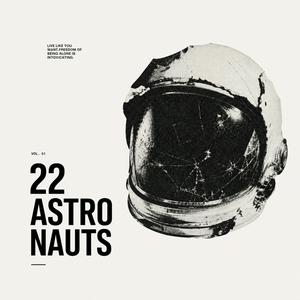
Over 22Astronauts
The world was built by people not different from you. We interview founders, operators and engineers, to show you they're just like you. Hosted by Ilir Aliu.
Podcast websiteLuister naar 22Astronauts, De Groene Nerds en vele andere podcasts van over de hele wereld met de radio.net-app
Ontvang de gratis radio.net app
- Zenders en podcasts om te bookmarken
- Streamen via Wi-Fi of Bluetooth
- Ondersteunt Carplay & Android Auto
- Veel andere app-functies
Ontvang de gratis radio.net app
- Zenders en podcasts om te bookmarken
- Streamen via Wi-Fi of Bluetooth
- Ondersteunt Carplay & Android Auto
- Veel andere app-functies

22Astronauts
Scan de code,
download de app,
luisteren.
download de app,
luisteren.
 Netherlands