
Luister gratis naar deze podcast in de app: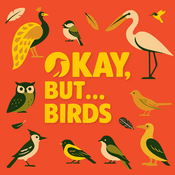 Gratis downloaden in de App Store
radio.net
Slaaptimer
Favorieten opslaan
47 afleveringen
Okay, but why are we obsessed with crows and ravens?
29-10-2026 | 36 Min.E46. Crows and ravens fill our oldest stories, and plenty of us want one as a friend. Dr. Claudia Wascher, professor of behavioral biology at Anglia Ruskin University, explains what makes corvids seem so clever, when clever turns out to be something simpler, and why befriending them is a bad idea.
In this episode, you'll hear about:
The crow named Hugo, and what his flock started saying once he was gone
Why a walnut dropped at a red light may be less clever than it looks
What a goose's heartbeat reveals about how birds feel
All audio, video, and images in this episode are either original to Okay, But... Birds (© Okay Media, LLC) or used under license/permission from the respective rights holders. Media from the Macaulay Library is used courtesy of the Cornell Lab of Ornithology as follows:
American Crow audio contributed by Bob McGuire, ML229089
Common Raven audio contributed by Gerrit Vyn, ML132161
Steller's Jay audio contributed by Wil Hershberger, ML539738
Hawaiian Crow video contributed by Timothy Barksdale, ML425081
Rook audio contributed by James (Jim) Holmes, ML635593051
Eurasian Jay audio contributed by James (Jim) Holmes, ML32278971
Carrion Crow audio contributed by Bob McGuire, ML231022
Australian Magpie audio contributed by Emma Greig, ML218159
House Crow video contributed by Raphaël Nussbaumer, ML241917321
Red-tailed Hawk audio contributed by David McCartt, ML229578
Graylag Goose audio contributed by Bob McGuire, ML233387Okay, but is the lyrebird a liar?
22-10-2026 | 31 Min.E45. Lyrebirds can copy a chainsaw, a car alarm and a camera shutter, so it is easy to call them liars. Dr. Anastasia Dalziell of Western Sydney University has spent years recording them in the wild, and she explains what the famous Attenborough clip left out and some of the most surprising evolutionary reasons for mimicry.
In this episode, you'll hear about:
Why a female lyrebird starts sounding like an eagle when you get too close to her nest
What a male does when the female he has been courting tries to walk away
The other lyrebird, and the hooked rainforest vine it plays like an instrument
All audio, video, and images in this episode are either original to Okay, But... Birds (© Okay Media, LLC) or used under license/permission from the respective rights holders. Media from the Macaulay Library is used courtesy of the Cornell Lab of Ornithology as follows:
Red-tailed Hawk audio contributed by David McCartt, ML229578
Killdeer audio contributed by Mike Andersen, ML129054
Superb Lyrebird audio contributed by Vicki Powys, ML229691
Albert's Lyrebird audio contributed by Robert C. Stein, ML309505
Gray Shrikethrush video contributed by Ramit Singal, ML641225345
Gray Shrikethrush audio contributed by Vicki Powys, ML229649
Golden Whistler video contributed by Ramit Singal, ML641948342
Golden Whistler audio contributed by Ramit Singal, ML272346391
Wedge-tailed Eagle audio contributed by Vicki Powys, ML223274
Gray Goshawk audio contributed by Ramit Singal, ML246142551
Albert's Lyrebird video contributed by Fiona Backhouse, ML615390207
Albert's Lyrebird audio contributed by Ramit Singal, ML141465291
Albert's Lyrebird video contributed by Fiona Backhouse, ML615390194
Albert's Lyrebird video contributed by Fiona Backhouse, ML615390209
Satin Bowerbird audio contributed by Newton Hobbs, ML16236
Albert's Lyrebird video contributed by Fiona Backhouse, ML615390211
Superb Lyrebird audio contributed by James (Jim) Holmes, ML463586881
Superb Lyrebird recordings (2024 films): Justin Welbergen, Jaden Thompson, Elle Heiser, Yoon Lee, Fiona Backhouse and Anastasia Dalziell, Hawkesbury Institute for the Environment, Western Sydney University, Australia, and Cornell Lab of Ornithology, Cornell University, USA.Okay, but what's threatening the apex predators of the sky?
15-10-2026 | 33 Min.E44. An adult eagle has no natural predators, so why are birds of prey declining? Dr. Todd Katzner, a wildlife biologist with the U.S. Geological Survey, explains the surprising dangers facing golden eagles and their kin, from spinning wind turbines to a threat small enough to fit on a grain of rice.
In this episode, you'll hear about:
Why an eagle that can clearly see a wind turbine still flies into one
How a hunter's choice of bullet ends up inside an eagle
The flap count that tells a vulture whether to risk crossing the sea
All audio, video, and images in this episode are either original to Okay, But... Birds (© Okay Media, LLC) or used under license/permission from the respective rights holders. Media from the Macaulay Library is used courtesy of the Cornell Lab of Ornithology as follows:
Bald Eagle audio contributed by Darrell Peterson, ML145265541
Golden Eagle audio contributed by W. Douglas Robinson, ML612942188
Golden Eagle audio contributed by Kathy Groschupf, ML57165
American Goshawk video contributed by Dan J. MacNeal, ML297994251
Harpy Eagle audio contributed by Curtis Marantz, ML81101
Ruby-throated Hummingbird audio contributed by Trenton Voytko, ML604314061
Ferruginous Hawk audio contributed by Gerrit Vyn, ML172487Okay, but how terrifying were terror birds?
08-10-2026 | 26 Min.E43. For millions of years, South America’s top predators weren’t cats or bears. They were birds, some taller than a person. Paleontologist Dr. Federico "Dino" Degrange of the Universidad Nacional de Córdoba joins us to ask whether terror birds really earned their name.
In this episode, you'll hear about:
The surprising weapon a terror bird actually used to bring down its prey
What left bite marks on one of the biggest terror birds ever found
Why the last terror bird standing was one of the smallest
All audio, video, and images in this episode are either original to Okay, But... Birds (© Okay Media, LLC) or used under license/permission from the respective rights holders. Media from the Macaulay Library is used courtesy of the Cornell Lab of Ornithology as follows:
Black-legged Seriema video contributed by Pablo Hernan Capovilla, ML662237304
Red-legged Seriema audio contributed by Matthew D. Medler, ML189557
Black-legged Seriema audio contributed by Steven L. Hilty, ML83854Okay, but what happens when a bird gets sick?
01-10-2026 | 33 Min.E42. Birds get sick too, and a lot of what happens next looks surprisingly familiar. Dr. Andrea Townsend of Hamilton College has spent two decades following American crows through outbreaks, and she walks Scott through what illness really does to a bird, from the family it belongs to down to the clever brain it depends on.
In this episode, you'll hear about:
The surprising way crows choose their partners, and what it costs them when disease comes around
What a stomach bug does to one of the cleverest birds you'll ever meet
Why going it alone can be the riskier move while a virus is spreading
All audio, video, and images in this episode are either original to Okay, But... Birds (© Okay Media, LLC) or used under license/permission from the respective rights holders. Media from the Macaulay Library is used courtesy of the Cornell Lab of Ornithology as follows:
American Crow video contributed by Jay McGowan, ML472843
Common Raven audio contributed by Gerrit Vyn, ML137574
Burrowing Owl audio contributed by Bob McGuire, ML188805
Meer Natuur podcasts
Trending Natuur -podcasts




Over Okay, But... Birds
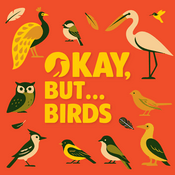
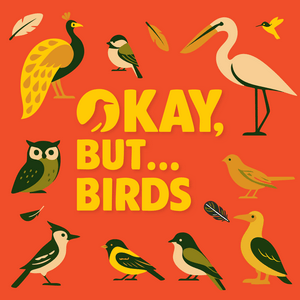
Hosted by evolutionary biologist Dr. Scott Taylor, Okay, But... Birds explores the drama, brilliance, and science behind bird life. Each snackable 30-minute episode blends smart storytelling, expert interviews, and a touch of humor to reveal how birds shape our world. No jargon. No binoculars required. Just real science, quirky insights, and bird-brained drama you’ll want to share at brunch. Because birds aren’t background. Birds are cool.
Podcast websiteLuister naar Okay, But... Birds, Kennis & Co en vele andere podcasts van over de hele wereld met de radio.net-app
Ontvang de gratis radio.net app
- Zenders en podcasts om te bookmarken
- Streamen via Wi-Fi of Bluetooth
- Ondersteunt Carplay & Android Auto
- Veel andere app-functies
Ontvang de gratis radio.net app
- Zenders en podcasts om te bookmarken
- Streamen via Wi-Fi of Bluetooth
- Ondersteunt Carplay & Android Auto
- Veel andere app-functies

Okay, But... Birds
Scan de code,
download de app,
luisteren.
download de app,
luisteren.
 Netherlands

