

Luister gratis naar deze podcast in de app: Gratis downloaden in de App Store
radio.net
Slaaptimer
Favorieten opslaan
181 afleveringen
#180 The Frontier Within and Finding Your Way Back with Mike Martin
18-09-2026 | 1 u. 26 Min.This episode isn't what you think it is, and it wasn't what I expected when I booked Mike for an interview. I expected a chat about Daniel Boone and how his life’s story inspired Mike to get outdoors, and while that’s kind of what happened, it’s not exactly that straightforward.
Mike is the author of The Honest Wilderness: Finding Daniel Boone and the Frontier Within, but his connection to Daniel Boone started during one of the hardest periods of his life. After his life fell apart, Mike began experimenting with journaling, meditation, and spending intentional time outside. Somewhere along the way, Daniel Boone kept showing up. What started as a simple curiosity became a new way of analyzing his own life.
We talk about using people from history as mirrors, why journaling can help us organize the noise inside our heads, what meditation can actually look like for someone who doesn't think of themselves as a meditation person, and why simply being quiet has become so difficult.
The conversation eventually turns toward a question I've been thinking about a lot lately: What is actually happening to us when we spend time outside?
Maybe the outdoors isn't just a place to recreate. Maybe it's a place where the noise drops away enough for us to hear ourselves again (if you let it).
This conversation is about getting lost, finding your way back, paying attention, and learning to trust the internal compass you've been building your entire life
Key Takeaways
Journaling doesn't need to be complicated. Sometimes simply putting thoughts onto paper creates enough space to understand what's happening inside your head.
Meditation can look like sitting quietly, walking slowly, paying attention, or simply allowing yourself to stop filling every moment with stimulation.
History can become a mirror. Mike used Daniel Boone's experiences with loss, uncertainty, failure, and forward movement to better understand his own life.
Spending time outside can create the quiet necessary to hear your own thoughts and reconnect with what Mike describes as an internal compass.
Progress doesn't mean never slipping back into old patterns. Sometimes slipping simply means you're still practicing.
Show Notes
Mike Martin's Story: Mike shares how a period of personal loss eventually introduced him to Stoicism, journaling, meditation, and a completely different relationship with the outdoors.
Daniel Boone as a Mirror: What started as an interest in Daniel Boone became something much more personal. Mike began visiting historical locations, reading biographies, studying maps, and asking what Boone's experiences could teach him about navigating his own life.
Finding the Internal Compass: We explore Mike's idea that our experiences slowly build an internal compass. When life becomes confusing, sometimes the answer isn't adding more information but becoming quiet enough to hear what is already there.
The Modern Wilderness of Overstimulation: Our phones, schedules, responsibilities, entertainment, and constant availability create an incredible amount of noise. We discuss whether one of the great challenges of modern life is simply losing the ability to sit quietly with ourselves.
Journaling as a Practice: Journaling doesn't require pages of polished writing. Mike started with scattered words and thoughts. Over time, the practice helped him organize what was happening internally and recognize patterns in how he talked to himself.
Meditation Without the Stereotypes: Meditation doesn't have to look a certain way. Mike discusses walking meditation, guided meditation, sitting quietly outside, and using natural objects and processes as prompts for thinking through our own lives.
Using Nature as a Mirror: A fallen tree, changing seasons, decay, growth, and regeneration can become ways of thinking through experiences in our own lives. Not because nature is giving us instructions, but because slowing down enough to observe it gives us something tangible to think about.
Why Does Being Outside Feel Different?: We explore one of the questions I'm increasingly interested in: why does spending time outside seem to change the way we feel and think? Maybe part of the answer is participation. In a natural environment, we're stepping back into a living system rather than observing life from behind a screen.
Forget the Metrics for Five Minutes: Not every experience needs to produce something measurable. Sometimes getting outside can be as simple as walking through the front door, sitting somewhere quiet, and paying attention.
The Outdoors Scales With You: You don't need a wilderness expedition to experience the outdoors. It might be a backyard, a neighborhood walk, a local trail, or a multi-day backcountry trip. The invitation is the same.
Boone Trace: Mike also shares his developing plans to explore and hike Boone Trace, the historic route associated with Daniel Boone's movement into Kentucky.
Links:
https://www.projectmindfullyoutdoors.com/
The Honest Wilderness: Finding Daniel Boone and the Frontier Within
The Honest Outdoors Podcast
The Wind Is My Mother
Meditations (Marcus Aurelius)
The book I mention that I couldn't remember is “Outsmarting Reality”
Text the show!
Support the show
Thanks for tuning in! Check out the links below to learn more, connect, and support the show.
www.byland.co
Join my NON-SPAM newsletter
Leave a Tip
emory@byland.co#179 Back to the Mountains with Tom French
14-08-2026 | 1 u. 29 Min.In this episode, I sit down with Tom French, author of The Gap Years: Climbing, Skiing, and the Journey Back, to talk about what happens when we step away from the expected path and make room for a different kind of experience.
Tom spent his pre-career years climbing, ski racing, and traveling around the world before leaving that life behind to build a career, get married, and raise a family. When he retired at 60, and before moving into the next stage of life, he decided to return to the mountains to see whether the interests that had shaped him as a young man still held meaning decades later.
As expected, our conversation became about much more than mountaineering. We talked about the seasons of life, accepting that parenthood and work will temporarily change how we experience the outdoors, and trusting that the mountains will still be there when we are ready to get back to them. Tom also explains why a gap year is not just time off, but a “conscious interlude”—an opportunity to step outside the normal flow of life and have experiences that may shape whatever comes next.
We also dive into the less visible sides of climbing: the long hours spent waiting inside a tent, the emotional discipline required to manage uncertainty, and the balance between physical ability, risk management, and mental resilience. Tom shares what it was like to return to Everest after his first attempt was cut short, climb Cholatse with his daughter, and rediscover a part of himself that had never completely disappeared.
This is a conversation about adventure, but it is also about identity, aging, parenting, and giving ourselves permission to return to the parts of life that continue to matter to us.
Key Takeaways:
The interests and hobbies we set aside during demanding seasons of life are waiting when we have the space to return.
A meaningful gap year is not about doing nothing; it is a conscious interlude filled with experiences that everyday life may not allow.
Success in mountaineering depends on more than physical strength. It also requires risk management and emotional discipline.
Parents can give their children an important gift by allowing them room to choose their own path rather than automatically following the expected one.
Returning to an old passion later in life can offer more than nostalgia; it can reveal what continues to provide meaning and direction.
Chapters and Links:
Growing up inside an outdoor store
Choosing a different path from his father
Why some interests move into the background
The mountains will still be there
Finding room to think again
The untold reality of expedition life
The three parts of successful mountaineering
What a gap year is really for
Giving children permission to choose
Returning to the mountains at 60
Climbing Cholatse with his daughter
Supporting the Himalayan Trust
Tom's Book: https://amzn.to/3QbYyO3
https://tomfrenchauthor.com/
https://himalayantrust.org/
Text the show!
Support the show
Thanks for tuning in! Check out the links below to learn more, connect, and support the show.
www.byland.co
Join my NON-SPAM newsletter
Leave a Tip
emory@byland.co#178 Rethinking How We Share Adventures with Nina Banducci of Polarsteps
18-05-2026 | 1 u. 26 Min.Nina Banducci from Polarsteps joins the podcast to talk about something I’ve been thinking a lot about lately; how we document our lives and why social media doesn’t always feel like the right way to do it.
We discuss the trending shift away from performative platforms like Instagram and why more people are craving something more personal and meaningful when it comes to capturing their life experiences. Nina shares her background as an outdoor guide and how that led her to Polarsteps, a travel app built around memory, not attention.
We also dive into the thru-hiking culture on the Appalachian Trail, what makes that community so unique, and why experiences like that strip you down to who you really are.
Throughout the episode, we talk about travel, discomfort, growth, and why the best moments aren’t always the ones you post. If you’ve ever questioned why you’re sharing your adventures, or who you’re sharing them for, this episode is right up your ally.
Key Takeaways:
Social media has shifted from connection to performance, changing how we experience travel
Real adventure includes discomfort, mistakes, and unpredictability, not just highlight moments
Tools like Polarsteps are emerging to prioritize personal memory over public validation
Thru-hiking culture creates a rare environment of equality, authenticity, and community
Growth happens when you step into the unknown, not when everything goes perfectly
Chapters/Show Notes:
Introduction to Polarsteps
Nina’s Background: From Idaho to Outdoor Guiding and Travel
The River Community and Earning Your Place Outdoors
The Problem with Social Media and Performative Sharing
What Polarsteps Is and Why It Exists
Travel as a Tool for Growth and Discomfort
The Reality of Thru-Hiking and Trail Culture
Appalachian Trail Community and Hostel Life
Why Brands Must Earn Trust in the Outdoor Space
How Polarsteps Is Entering the U.S. Market
The Future of Travel, Memory, and Storytelling
www.polarsteps.com
Text the show!
Support the show
Thanks for tuning in! Check out the links below to learn more, connect, and support the show.
www.byland.co
Join my NON-SPAM newsletter
Leave a Tip
emory@byland.co#177 Turning Setbacks Into Summits with Tia Banks
08-05-2025 | 1 u. 4 Min.In this episode, I sit down with Tia Banks, a former professional athlete turned mountaineer, resilience expert, and motivational speaker. Tia’s journey is one of resilience, self-discovery, and mental toughness, and in our conversation, she shares how learning to manage setbacks helped her transition into a new passion.
From growing up in Nebraska to inspiring thousands through her speaking tour, her story is proof that adversity can be a stepping stone to something greater. Tia explains that a "setback is the setup."
Key Takeaways:
The power of self-talk – What we tell ourselves matters in the hardest moments.
Resilience is built, not given – Hardship creates opportunities for personal growth.
The outdoors is transformative – Mountains provide a unique space for reflection and challenge.
Community is essential – Finding support in the hardest moments can make all the difference.
Show Notes and Links:
Introduction
Tia’s Background
Resilience & Overcoming Setbacks
Transition from Athlete to Speaker
Climbing Kilimanjaro
The Power of Self-Talk
Diversity in Mountaineering
Mind Over Mountains Tour
https://www.tiabanks.com/
https://www.instagram.com/thetiabanks
https://www.youtube.com/@thetiabanks1
Text the show!
Support the show
Thanks for tuning in! Check out the links below to learn more, connect, and support the show.
www.byland.co
Join my NON-SPAM newsletter
Leave a Tip
emory@byland.co#176 Fastpacking: How To Cover More Ground In Less Time with Tayson Whittaker
17-03-2025 | 1 u. 17 Min.In this episode, I sit down with Tayson Whittaker, founder of Outdoor Vitals, to dive deep into fastpacking—what it is, why it works when time is tight, and how to cover more ground in less time. Whether you’re a backpacker looking to move faster and lighter, or someone trying to maximize limited time on the trail, this episode is packed with tons of insights on how to make fastpacking a practical tool in your outdoor adventures.
Tayson shares his personal fastpacking strategies, including gear, hydration and nutrition planning, and how to structure your days for big miles without burnout. We also get into the evolution of Outdoor Vitals gear and how it’s designed with fastpackers and minimalist adventurers in mind.
If you’ve been curious about how fastpacking can fit into your life—or you just want to find smarter ways to adventure farther and faster—this episode is for you.
Key Takeaways:
Fastpacking is a tool to cover more ground in less time, opening up bigger adventures even when life is busy.
Dialing in your gear makes fastpacking possible—cut the weight without sacrificing comfort or safety.
Hydration and electrolytes are mission-critical, especially for high-mileage days. Don't underestimate your salt needs.
Nutrition strategy is everything—consistent fueling keeps your energy steady and prevents the dreaded calorie wall.
Planning your day around effort, rest, and fueling is the secret to consistent, high-mileage success.
Show Notes and Links:
Introduction
The Growth of Outdoor Vitals
Game-Changing Gear
Fastpacking vs. Traditional Backpacking
Nutrition & Hydration in the Backcountry
The Evolution of Down vs. Synthetic Insulation
Lessons Learned from Long Days on the Trail
What’s Next for Outdoor Vitals?
Outdoor Vitals
Tokes alcohol stove
Ventus Active Hoodie
Vario Jacket
Skyline Fastpack
Tushar Rain Jacket
Altitude Sun Hoodie
Re-Lyte
Text the show!
Support the show
Thanks for tuning in! Check out the links below to learn more, connect, and support the show.
www.byland.co
Join my NON-SPAM newsletter
Leave a Tip
emory@byland.co
Meer Maatschappij & cultuur podcasts
 De JortcastMaatschappij & cultuur
 De Grote PodcastlasMaatschappij & cultuur, Steden en reizen
 Aaf en Lies lossen het wel weer opKomedie, Maatschappij & cultuur, Relaties
 Zolang het leuk isEntertainmentnieuws, Maatschappij & cultuur, Nieuws
 MISCHA!Maatschappij & cultuur
 Teun en Gijs vertellen allesMaatschappij & cultuur
 NRC Het UurLevenswetenschappen, Maatschappij & cultuur, Relaties, Wetenschap
 De Ware JacobDocumentaire, Maatschappij & cultuur, Waargebeurde misdaad
 Nooit meer slapenKunst, Maatschappij & cultuur, TV & film, Uitvoerende kunst
Trending Maatschappij & cultuur -podcasts
 Steeds meer SinglesGeestelijke gezondheid, Gezondheid en fitness, Maatschappij & cultuur, Onderwijs, Wetenschap, Zelfhulp
 KibbelingKomedie, Maatschappij & cultuur, Relaties
 Onkruid in het paradijsDocumentaire, Maatschappij & cultuur
 De Nacht van...Maatschappij & cultuur
 Bergsma & BenninkMaatschappij & cultuur
 Modern LoveMaatschappij & cultuur
 ZINGezondheid en fitness, Maatschappij & cultuur, Relaties, Seksualiteit
 De Blankenberge TapesMaatschappij & cultuur
 Mysteries van VlaanderenDocumentaire, Maatschappij & cultuur
 If Books Could KillBoeken, Kunst, Maatschappij & cultuur, Nieuws, Politiek
Over By Land Podcast
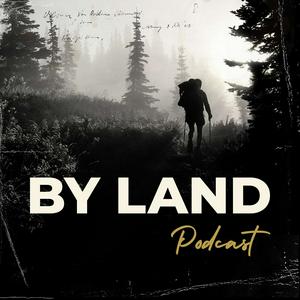
This podcast is about learning how to have better backcountry experiences and understanding why spending time outside matters in the first place.I have conversations with people from diverse outdoor backgrounds to learn from them and hear their personal stories. I cover everything from backpacking, hiking, hunting, conservation, and outdoor skills to the broader role the outdoors can play in our health, perspective, and everyday lives.Thanks for listening!-Emory, By Land
Podcast websiteLuister naar By Land Podcast, De Jortcast en vele andere podcasts van over de hele wereld met de radio.net-app
Ontvang de gratis radio.net app
- Zenders en podcasts om te bookmarken
- Streamen via Wi-Fi of Bluetooth
- Ondersteunt Carplay & Android Auto
- Veel andere app-functies
Ontvang de gratis radio.net app
- Zenders en podcasts om te bookmarken
- Streamen via Wi-Fi of Bluetooth
- Ondersteunt Carplay & Android Auto
- Veel andere app-functies

By Land Podcast
Scan de code,
download de app,
luisteren.
download de app,
luisteren.
 Netherlands