

Luister gratis naar deze podcast in de app: Gratis downloaden in de App Store
radio.net
Slaaptimer
Favorieten opslaan
241 afleveringen
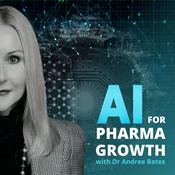
E239: How to Speed Up Drug Development Without Compromising Compliance
13-10-2026 | 35 Min.In this episode of AI For Pharma Growth, Dr Andree Bates speaks with Clara Bernardes, co-founder and CSO of Biorce, about how AI can accelerate clinical development without sacrificing compliance or scientific rigour.
Biorce was born from a deeply personal experience. After Clara's father-in-law received a terminal melanoma diagnosis, access to a clinical trial through compassionate use extended his life from an expected three months to more than a year. That experience shaped Biorce's mission: reduce the time it takes promising treatments to reach patients.
Clara explains why clinical trials are still slowed by protocol amendments, patient identification problems, poorly designed criteria and human-led errors that could often be caught much earlier.
The conversation explores how Biorce uses AI and almost one million annotated protocols to support protocol development, learn from previous trial amendments and provide clear rationale for recommendations. Clara also discusses why transparency, AI ethics and keeping humans in the loop are essential in regulated clinical development.
The key message is that speed and compliance do not have to be opposing forces. The goal is not to replace scientists or investigators, but to give them better information faster while preserving human judgement.
Topics Covered
Why clinical trials start late
Protocol amendments and avoidable human error
AI-generated clinical trial protocols
Learning from previous trial failures
Transparency and explainability
AI ethics and regulatory compliance
Keeping humans in the loop
Balancing quality with velocity
What sponsors should ask AI vendors
About Eularis
Eularis builds AI capability inside pharma and biotech — over 20 years applying AI to real pharmaceutical problems, inside real pharmaceutical and biotech companies.
Keynotes and live sessions — Working sessions for pharma teams where nobody leaves with notes. They leave with working prompts and real capability they've already run on their own work.
The AI Enablement Institute — Strategy and a workshop get you started; neither stays current. Most pharma companies already have a generic AI course library. None of it is written for a regulatory writer, an MSL or a market access lead trying to get today's work done. Training is an event; enablement is capability that stays current. The Institute runs shared foundations for the regulated constraints, then tracks by business unit function, with new content monthly, live office hours with Dr Andree Bates, and per-person records a sponsor can show an auditor. One price per business unit, no per-seat charges.
AI Strategic Blueprint and Governance — Board-ready strategy that links initiatives to commercial outcomes, with the sequencing, governance, capability and financial logic to survive scrutiny.
AI Custom Builds for BioPharma — Design and build of the AI solutions that make strategic sense in your operating reality, tied back to the Blueprint.
Start with the Institute → https://eularis.com/institute/
Everything else → https://eularis.com
About the Podcast
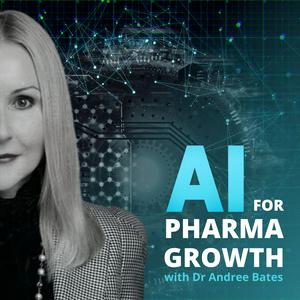
AI For Pharma Growth is the podcast from Dr Andree Bates, helping pharma, biotech and healthcare organisations understand how AI-based technologies can save time, grow brands and improve company results. The show demystifies AI for biopharma leaders, from start-up biotech through to Big Pharma.
Dr. Andree Bates LinkedIn | Facebook | XE238: The diagnostic room: The Fifteen Failures Only Human Judgement Catches
06-10-2026 | 39 Min.In this solo episode of AI For Pharma Growth, Dr Andree Bates explores one of the biggest blind spots in pharma AI: the failures that can survive a normal review process even when the output sounds polished, plausible and well grounded.
Dr Andree explains why better models and better retrieval do not remove the need for human judgement. In fact, as AI systems improve, people often scrutinise them less. Fluent prose can create a false sense of reliability, while automation bias and anchoring make reviewers less likely to challenge the underlying frame.
The episode introduces three broad families of failure: invented, distorted and misdirected. These include fabricated or misattributed citations, silent interpolation, dropped qualifiers, hedge-to-claim escalation, manufactured consensus, stale guidance and planted instructions. Many of these are harder to catch because the output reads better than the truth.
Dr Andree also shares practical checks teams can use, including tracing claims back to source, checking what is unsupported, looking for missing qualifiers, regenerating outputs for stability and deliberately testing the opposite case.
The key message is that prompting is only half the skill. In a regulated industry, teams also need to be trained to judge what comes back.
Topics Covered
Why better AI can lead to less scrutiny
Automation bias and anchoring
Invented, distorted and misdirected failures
Fabricated and misattributed citations
Dropped qualifiers and strengthened claims
Manufactured consensus
Prompt injection and planted instructions
Claim-by-claim verification
Why review methods must change for AI
The growing importance of the judgement layer
About Eularis
Eularis builds AI capability inside pharma and biotech — over 20 years applying AI to real pharmaceutical problems, inside real pharmaceutical and biotech companies.
Keynotes and live sessions — Working sessions for pharma teams where nobody leaves with notes. They leave with working prompts and real capability they've already run on their own work.
The AI Enablement Institute — Strategy and a workshop get you started; neither stays current. Most pharma companies already have a generic AI course library. None of it is written for a regulatory writer, an MSL or a market access lead trying to get today's work done. Training is an event; enablement is capability that stays current. The Institute runs shared foundations for the regulated constraints, then tracks by business unit function, with new content monthly, live office hours with Dr Andree Bates, and per-person records a sponsor can show an auditor. One price per business unit, no per-seat charges.
AI Strategic Blueprint and Governance — Board-ready strategy that links initiatives to commercial outcomes, with the sequencing, governance, capability and financial logic to survive scrutiny.
AI Custom Builds for BioPharma — Design and build of the AI solutions that make strategic sense in your operating reality, tied back to the Blueprint.
Start with the Institute → https://eularis.com/institute/
Everything else → https://eularis.com
About the Podcast
AI For Pharma Growth is the podcast from Dr Andree Bates, helping pharma, biotech and healthcare organisations understand how AI-based technologies can save time, grow brands and improve company results. The show demystifies AI for biopharma leaders, from start-up biotech through to Big Pharma.
Dr. Andree Bates LinkedIn | Facebook | XE237: Beyond the Pill: How AI is Unlocking the Preventative Medicine Opportunity Pharma Can't Afford to Miss
29-09-2026 | 30 Min.In this episode of AI For Pharma Growth, Dr Andree Bates speaks with cancer biologist and health educator Rebecca Maff about how AI could help shift healthcare from treating disease to preventing it.
Rebecca’s interest in prevention began after seeing women in her own family diagnosed with late-stage cancers and serious autoimmune conditions. Her subsequent work has included machine learning models designed to identify patients at higher risk of cancers and encourage overdue screening before disease progresses.
The conversation explores what prevention really means in practice, from early biomarkers and personalised risk modelling to screening, lifestyle, metabolic health and behavioural change. Rebecca explains how AI can help analyse electronic health records and large patient populations to identify signals that would be difficult for humans to find manually.
They also discuss the commercial opportunity for pharma. If late-stage disease becomes more preventable, the industry may need to think beyond treating established illness and consider new models built around earlier detection, intervention and maintaining health.
Trust remains a major challenge. Rebecca argues that patients and clinicians need to see credible, successful AI implementations before confidence grows, particularly when systems are using highly personal health, genomic and behavioural data.
Topics Covered
Moving healthcare upstream towards prevention
AI-powered cancer risk stratification
Early screening and disease detection
Biomarkers and personalised risk
Using electronic health records to identify signals
Prevention as a future pharma opportunity
Lifestyle, metabolic health and chronic disease
Patient data, privacy and trust in AI
Why proof of concept matters before scaling
About Eularis
Eularis builds AI capability inside pharma and biotech — over 20 years applying AI to real pharmaceutical problems, inside real pharmaceutical and biotech companies.
Keynotes and live sessions — Working sessions for pharma teams where nobody leaves with notes. They leave with working prompts and real capability they've already run on their own work.
The AI Enablement Institute — Strategy and a workshop get you started; neither stays current. Most pharma companies already have a generic AI course library. None of it is written for a regulatory writer, an MSL or a market access lead trying to get today's work done. Training is an event; enablement is capability that stays current. The Institute runs shared foundations for the regulated constraints, then tracks by business unit function, with new content monthly, live office hours with Dr Andree Bates, and per-person records a sponsor can show an auditor. One price per business unit, no per-seat charges.
AI Strategic Blueprint and Governance — Board-ready strategy that links initiatives to commercial outcomes, with the sequencing, governance, capability and financial logic to survive scrutiny.
AI Custom Builds for BioPharma — Design and build of the AI solutions that make strategic sense in your operating reality, tied back to the Blueprint.
Start with the Institute → https://eularis.com/institute/
Everything else → https://eularis.com
About the Podcast
AI For Pharma Growth is the podcast from Dr Andree Bates, helping pharma, biotech and healthcare organisations understand how AI-based technologies can save time, grow brands and improve company results. The show demystifies AI for biopharma leaders, from start-up biotech through to Big Pharma.
Dr. Andree Bates LinkedIn | Facebook | XE236: Why 90% of Trials Still Fail — and What AI Can (and Can't) Fix
22-09-2026 | 34 Min.In this episode of AI For Pharma Growth, Dr Andree Bates speaks with Raviv Pryluk, co-founder and CEO of PhaseV, about why so many clinical trials still fail and where AI can genuinely improve the odds.
Raviv argues that failure is often not because the drug itself is wrong. Trials can fail because of the wrong patient population, indication, dose, design, sites, monitoring or interpretation of the data. PhaseV uses causal machine learning, adaptive trial design and large-scale simulation to help sponsors make better decisions across those areas.
The conversation explores why explainability and validation matter in clinical development. Raviv explains that a 95% prediction is not enough on its own. Sponsors and regulators need to understand why a recommendation is being made, which evidence supports it, and whether the result is statistically and clinically defensible.
They also discuss using existing trial data to identify responder subgroups, stress-testing designs before patients are enrolled, adapting trials mid-flight and connecting protocol design more closely with clinical operations.
Topics Covered
Why clinical trials still fail
Causal ML versus predictive modelling
Patient selection and responder subgroups
Adaptive trial design
Simulating trials before enrolment
Site selection and recruitment
Validation, explainability and statistical guarantees
Go/no-go portfolio decisions
About Eularis
Eularis builds AI capability inside pharma and biotech — over 20 years applying AI to real pharmaceutical problems, inside real pharmaceutical and biotech companies.
Keynotes and live sessions — Working sessions for pharma teams where nobody leaves with notes. They leave with working prompts and real capability they've already run on their own work.
The AI Enablement Institute — Strategy and a workshop get you started; neither stays current. Most pharma companies already have a generic AI course library. None of it is written for a regulatory writer, an MSL or a market access lead trying to get today's work done. Training is an event; enablement is capability that stays current. The Institute runs shared foundations for the regulated constraints, then tracks by business unit function, with new content monthly, live office hours with Dr Andree Bates, and per-person records a sponsor can show an auditor. One price per business unit, no per-seat charges.
AI Strategic Blueprint and Governance — Board-ready strategy that links initiatives to commercial outcomes, with the sequencing, governance, capability and financial logic to survive scrutiny.
AI Custom Builds for BioPharma — Design and build of the AI solutions that make strategic sense in your operating reality, tied back to the Blueprint.
Start with the Institute → https://eularis.com/institute/
Everything else → https://eularis.com
About the Podcast
AI For Pharma Growth is the podcast from Dr Andree Bates, helping pharma, biotech and healthcare organisations understand how AI-based technologies can save time, grow brands and improve company results. The show demystifies AI for biopharma leaders, from start-up biotech through to Big Pharma.
Dr. Andree Bates LinkedIn | Facebook | XE235: AI created a trust crisis and nobody is talking about it
15-09-2026 | 31 Min.In this episode of AI For Pharma Growth, Dr Andree Bates speaks with Dan Pratl, founder and CEO of Quadron Inc, about a trust problem emerging as AI moves deeper into pharma: how do organisations preserve confidence when more work is generated, shaped and accelerated by machines?
Dan argues that verified output alone is not enough. Pharma already has human review, MLR, regulatory sign-off and quality controls, but trust also depends on understanding where data came from, which models were used, where human judgement entered the process and whether that chain can be audited.
The conversation explores why human expertise may become more valuable, not less, as AI spreads. Dan discusses shadow AI, the limits of forcing employees onto a single approved model, and why organisations need to reward people for curating, verifying and applying judgement across tools rather than treating AI usage itself as productivity.
They also examine the risk of losing the junior work that traditionally builds expertise, the need for stronger audit trails, and why redesigning systems around AI may matter more than simply adding another governance dashboard.
Topics Covered
AI and pharma's emerging trust problem
Why verified output is not the whole answer
Human judgement as a scarce resource
Shadow AI and unsanctioned models
Audit trails across humans, models and data
The danger of equating token use with productivity
Building future expertise in an AI-enabled workforce
Why trust requires incentives as well as governance
About Eularis
Eularis builds AI capability inside pharma and biotech — over 20 years applying AI to real pharmaceutical problems, inside real pharmaceutical and biotech companies.
Keynotes and live sessions — Working sessions for pharma teams where nobody leaves with notes. They leave with working prompts and real capability they've already run on their own work.
The AI Enablement Institute — Strategy and a workshop get you started; neither stays current. Most pharma companies already have a generic AI course library. None of it is written for a regulatory writer, an MSL or a market access lead trying to get today's work done. Training is an event; enablement is capability that stays current. The Institute runs shared foundations for the regulated constraints, then tracks by business unit function, with new content monthly, live office hours with Dr Andree Bates, and per-person records a sponsor can show an auditor. One price per business unit, no per-seat charges.
AI Strategic Blueprint and Governance — Board-ready strategy that links initiatives to commercial outcomes, with the sequencing, governance, capability and financial logic to survive scrutiny.
AI Custom Builds for BioPharma — Design and build of the AI solutions that make strategic sense in your operating reality, tied back to the Blueprint.
Start with the Institute → https://eularis.com/institute/
Everything else → https://eularis.com
About the Podcast
AI For Pharma Growth is the podcast from Dr Andree Bates, helping pharma, biotech and healthcare organisations understand how AI-based technologies can save time, grow brands and improve company results. The show demystifies AI for biopharma leaders, from start-up biotech through to Big Pharma.
Dr. Andree Bates LinkedIn | Facebook | X
Meer Ondernemerschap podcasts








Trending Ondernemerschap -podcasts





Over AI For Pharma Growth
AI For Pharma Growth is the podcast from pioneering Artificial Intelligence entrepreneur Dr. Andree Bates created to help Pharma, Biotech and other Healthcare companies understand how the use of AI-based technologies can easily save them time and grow their brands and company results.
This show blends deep experience in the sector with demystifying AI for biopharma execs from biotech start-ups right through to big pharma. In this podcast, Dr Andree will teach you the tried and true secrets to building results in a pharma company using AI and alert you to some fascinating new tools and applications to benefit you and your company.
As the author of many peer-reviewed journals in pharma AI, and having addressed over 500 industry conferences across the globe, Dr Andree Bates uses her obsession with all things AI, futuretech, healthcare and pharma to help you to navigate through the, sometimes confusing, but magical world of AI powered tools to achieve real-world results.
This podcast features many experts who have developed powerful AI-powered tools that are the secret behind some time-saving and supercharged revenue-generating business results. Those who share their stories and expertise show how AI can be applied to Discovery, R&D, clinical trials, market access, medical affairs, regulatory, market research, business insights, sales, marketing, including digital marketing, and so much more.
Podcast websiteLuister naar AI For Pharma Growth, Dutch Dragons en vele andere podcasts van over de hele wereld met de radio.net-app
Ontvang de gratis radio.net app
- Zenders en podcasts om te bookmarken
- Streamen via Wi-Fi of Bluetooth
- Ondersteunt Carplay & Android Auto
- Veel andere app-functies
Ontvang de gratis radio.net app
- Zenders en podcasts om te bookmarken
- Streamen via Wi-Fi of Bluetooth
- Ondersteunt Carplay & Android Auto
- Veel andere app-functies

AI For Pharma Growth
Scan de code,
download de app,
luisteren.
download de app,
luisteren.
 Netherlands