

Luister gratis naar deze podcast in de app: Gratis downloaden in de App Store
radio.net
Slaaptimer
Favorieten opslaan
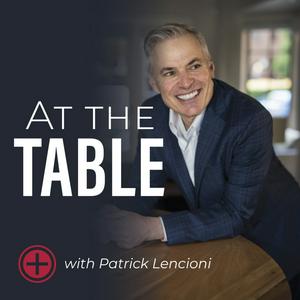
At The Table with Patrick Lencioni
Patrick Lencioni
Nieuwste aflevering
288 afleveringen
279. Utopia Is A Myth
13-10-2026 | 14 Min.How can you pursue excellence without becoming discouraged by imperfection?
Organizational health does not mean eliminating conflict, dysfunction, or difficult seasons forever. In episode 279 of At The Table, Pat Lencioni and Cody Thompson explain why leaders need to replace the pursuit of organizational perfection with resilience, learning to expect downturns while continuing to move toward greater health. When things get messy, the answer is not despair, but returning to what is true, recommitting to core principles, and getting incrementally better.
Topics explored in this episode:
(00:00) The Myth of the Perfect Organization
Pat explains why organizational health should never be confused with creating a perfect company, team, or family.
The pursuit of utopia can distort expectations and cause leaders to see normal struggles as evidence that something has gone fundamentally wrong.
(02:56) When Healthy Organizations Get Messy
Pat and Cody discuss the danger of believing an organization will eventually eliminate politics, silos, conflict, and other problems forever.
They argue that organizational health is better understood as resilience: the ability to work through inevitable problems instead of being defeated by them.
(06:02) Progress Is Not a Straight Line
Pat acknowledges that even after 29 years of focusing on organizational health, The Table Group still experiences real problems and difficult periods.
Cody describes organizational progress as a jagged line moving upward, where temporary downturns can look disastrous until leaders zoom out and see the larger trajectory.
(09:31) The Danger of Expecting Perfection
Cody explains how unrealistic expectations can turn temporary difficulties into damaging conclusions such as believing you are a bad leader or your company will fail.
Pat argues that leaders should continue striving to improve while simultaneously accepting that perfection will never actually be reached.
(12:42) Tomorrow Is a New Day
Pat and Cody encourage leaders and parents to return to what they know is true, recommit to their values, and begin again after difficult days.
Growth never really ends, and progress comes from accepting imperfection while continuing to learn, change, and get incrementally better.
This episode of At The Table with Patrick Lencioni is brought to you by The Table Group: www.tablegroup.com. We teach leaders how to make work more effective and less dysfunctional. We also help their employees be more fulfilled and less miserable.
Subscribe for more content from Patrick Lencioni @PatrickLencioniOfficial
Stay Connected with Patrick Lencioni
LinkedIn: https://www.linkedin.com/in/patrick-lencioni-orghealth
Instagram: https://www.instagram.com/patricklencioniofficial
TikTok: https://www.tiktok.com/@patricklencioniofficial
X: https://x.com/patricklencioni
At The Table with Patrick Lencioni
Apple: https://tablegroup.me/apple
Spotify: https://tablegroup.me/sptfy
YouTube: https://tablegroup.me/youtube
Be sure to check out our other podcast, The Working Genius Podcast with Patrick Lencioni, on Apple Podcasts (https://workinggenius.me/apple), Spotify (https://workinggenius.me/sptfy), and YouTube (https://workinggenius.me/wgyt).
Let us know your feedback via podcast@tablegroup.com.
This episode was produced by Story On Media: https://www.storyon.co.278. The Horse That Isn't Dead Yet (Are You Serious)
29-09-2026 | 14 Min.Are you treating teamwork as a real competitive advantage or simply something your company says it values?
In episode 278 of At The Table, Patrick Lencioni and Cody Thompson revisit the debate over remote work, arguing that there is an important distinction between hiring genuinely remote employees, offering reasonable flexibility, and allowing local teammates to avoid working together. They challenge leaders to consider whether policies built primarily around convenience are undermining trust, culture, productivity, and the competitive advantages that come from real human interaction. Ultimately, the episode asks leaders and employees to answer a more fundamental question: are they serious enough about their work and their teammates to prioritize being together when they can?
Topics explored in this episode:
(00:00) The Horse Still Isn’t Dead
Pat argues that teamwork requires people to actually know one another and spend meaningful time together.
Pat and Cody introduce the recurring remote-work debate and distinguish local work-from-home arrangements from truly remote employment.
(03:16) When Work Becomes “Unserious”
Cody explains why allowing nearby employees to avoid the office can feel inconsistent with a company that claims to prioritize excellence and teamwork.
They imagine comparing colocated and remote teams not only on productivity, but also on loyalty, relationships, health, and culture.
(06:07) Teamwork Requires Interaction
Pat compares workplace teams to sports teams, arguing that individuals cannot simply practice alone and expect the same team dynamics.
They discuss practical flexibility while maintaining that regular interaction is essential when people have the ability to work together.
(09:14) Convenience Versus Competitive Advantage
Pat connects employees’ attitudes toward coming to work with the idea of hunger and commitment while cautioning leaders against enabling habits that weaken the team.
Cody argues that trust, healthy conflict, culture, teamwork, and organizational health are all more difficult to develop when convenience consistently takes priority.
(11:46) Are You Serious?
Pat reframes the episode’s central question around whether people are genuinely serious about the work they are doing, comparing unnecessary remote work to taking an online class while already living on a college campus.
Pat and Cody close by encouraging organizations to maintain flexibility and hire remotely when necessary while choosing to work together whenever circumstances make it possible.
This episode of At The Table with Patrick Lencioni is brought to you by The Table Group: www.tablegroup.com. We teach leaders how to make work more effective and less dysfunctional. We also help their employees be more fulfilled and less miserable.
Subscribe for more content from Patrick Lencioni @PatrickLencioniOfficial
Stay Connected with Patrick Lencioni
LinkedIn: https://www.linkedin.com/in/patrick-lencioni-orghealth
Instagram: https://www.instagram.com/patricklencioniofficial
TikTok: https://www.tiktok.com/@patricklencioniofficial
X: https://x.com/patricklencioni
At The Table with Patrick Lencioni
Apple: https://tablegroup.me/apple
Spotify: https://tablegroup.me/sptfy
YouTube: https://tablegroup.me/youtube
Be sure to check out our other podcast, The Working Genius Podcast with Patrick Lencioni, on Apple Podcasts (https://workinggenius.me/apple), Spotify (https://workinggenius.me/sptfy), and YouTube (https://workinggenius.me/wgyt).
Let us know your feedback via podcast@tablegroup.com.
This episode was produced by Story On Media: https://www.storyon.co.277. The Heart of Accountability
15-09-2026 | 23 Min.Are you avoiding a difficult conversation because you care about someone, or because you are protecting yourself?
In episode 277 of At The Table, Pat Lencioni and Cody Thompson explore why accountability is consistently one of the hardest behaviors for teams and argue that avoiding difficult feedback is often selfishness disguised as compassion. They explain that real accountability comes from caring enough about another person to tell the truth, even when doing so risks discomfort, frustration, or temporary rejection. They also discuss the importance of trust, timing, leadership modeling, and practicing accountability until hard conversations become a normal part of a healthy team.
Topics explored in this episode:
(00:00) Why Accountability Is an Act of Love
Pat argues that avoiding difficult feedback is often selfishness disguised as compassion because it protects the person giving the feedback rather than helping the person who needs it.
Pat and Cody introduce the idea that genuine accountability requires caring enough about someone to risk discomfort, rejection, or an unpleasant reaction.
(04:39) Accountability Is More Than Consequences
Cody connects accountability to parenting and explains why loving someone sometimes requires doing something they may not appreciate in the moment.
Pat and Cody distinguish real accountability from simply punishing poor performance, explaining why leaders should address problems before they reach the point of firing or other consequences.
(09:43) Loving Someone Enough to Tell the Truth
Cody explains why accountability is ultimately about helping another person improve, both for the good of the team and for their own development.
Pat discusses the personal cost of leadership, including the willingness to be temporarily disliked, and describes a progression for addressing problems directly before escalating them.
(14:32) Trust, Timing, and Knowing When to Speak
Pat and Cody explore the role of vulnerability-based trust in making difficult conversations possible and discuss circumstances when someone may genuinely not be ready to receive feedback.
They explain why leaders should normally lean toward having the conversation while also recognizing that restraint and thoughtful timing can sometimes be the more loving choice.
(19:12) Run Toward the Red
Pat encourages leaders to examine their intentions, accept the inherent messiness of accountability, and move toward uncomfortable issues instead of avoiding them.
Cody explains how consistently modeling accountability can create a culture of peer-to-peer accountability, before Pat challenges listeners to identify a conversation they have been avoiding and consider having it.
This episode of At The Table with Patrick Lencioni is brought to you by The Table Group: www.tablegroup.com. We teach leaders how to make work more effective and less dysfunctional. We also help their employees be more fulfilled and less miserable.
Subscribe for more content from Patrick Lencioni @PatrickLencioniOfficial
Stay Connected with Patrick Lencioni
LinkedIn: https://www.linkedin.com/in/patrick-lencioni-orghealth
Instagram: https://www.instagram.com/patricklencioniofficial
TikTok: https://www.tiktok.com/@patricklencioniofficial
X: https://x.com/patricklencioni
At The Table with Patrick Lencioni
Apple: https://tablegroup.me/apple
Spotify: https://tablegroup.me/sptfy
YouTube: https://tablegroup.me/youtube
Be sure to check out our other podcast, The Working Genius Podcast with Patrick Lencioni, on Apple Podcasts (https://workinggenius.me/apple), Spotify (https://workinggenius.me/sptfy), and YouTube (https://workinggenius.me/wgyt).
Let us know your feedback via podcast@tablegroup.com.
This episode was produced by Story On Media: https://www.storyon.co.276. Your Team Needs More Workplace Drama
01-09-2026 | 21 Min.Are Your Meetings Too Comfortable?
Workplace drama has a bad reputation, but in episode 276 of At The Table, Pat Lencioni and Cody Thompson argue that genuine drama is often exactly what healthy organizations need. When teams allow real emotions, disagreements, fears, and convictions into the room, they can address difficult issues instead of letting them quietly grow. The challenge for leaders is learning to distinguish healthy drama from manufactured melodrama and then creating an environment where people can say what really needs to be said.
Topics explored in this episode:
(00:00) Why Workplaces Need More Drama
Pat and Cody challenge the assumption that all workplace drama is unhealthy, distinguishing genuine human emotion from exaggerated melodrama.
They argue that organizations become more interesting, engaging, and effective when people are willing to address the emotional reality behind important issues.
(04:03) Putting Real Stakes Back Into Work
Cody compares healthy organizations to compelling movies, explaining that meaningful stakes and interpersonal dynamics are what make both stories and workplaces engaging.
Pat explains how companies often drain emotion from strategic conversations even though excitement, fear, disappointment, conflict, and hope are naturally part of important decisions.
(08:47) Good Drama, Bad Drama
Pat and Cody explore how fear, disagreement, and other genuine emotions can help teams surface problems and address the elephant in the room.
They distinguish legitimate workplace tension from manufactured or unnecessary emotion that may point to a personal struggle or dysfunctional behavior.
(13:18) Leaders Have to Run Toward the Danger
Cody explains that the most valuable consulting moments occur when teams move beyond models and finally surface the real problem they have been avoiding.
Pat and Cody argue that leaders should become energized by meaningful tension and run toward important issues instead of quickly neutralizing or taking them offline.
(17:48) Mine for the Last Ten Percent
Pat shares a memorable prank involving a client team to illustrate how emotion and drama can make important organizational moments memorable and revealing.
Pat and Cody encourage leaders to ask whether people are withholding the final 10% of what they think and to actively mine for genuine emotion and conflict.
This episode of At The Table with Patrick Lencioni is brought to you by The Table Group: www.tablegroup.com. We teach leaders how to make work more effective and less dysfunctional. We also help their employees be more fulfilled and less miserable.
Subscribe for more content from Patrick Lencioni @PatrickLencioniOfficial
Stay Connected with Patrick Lencioni
LinkedIn: https://www.linkedin.com/in/patrick-lencioni-orghealth
Instagram: https://www.instagram.com/patricklencioniofficial
TikTok: https://www.tiktok.com/@patricklencioniofficial
X: https://x.com/patricklencioni
At The Table with Patrick Lencioni
Apple: https://tablegroup.me/apple
Spotify: https://tablegroup.me/sptfy
YouTube: https://tablegroup.me/youtube
Be sure to check out our other podcast, The Working Genius Podcast with Patrick Lencioni, on Apple Podcasts (https://workinggenius.me/apple), Spotify (https://workinggenius.me/sptfy), and YouTube (https://workinggenius.me/wgyt).
Let us know your feedback via podcast@tablegroup.com.
This episode was produced by Story On Media: https://www.storyon.co.275. Where Do You Really Work?
18-08-2026 | 17 Min.Where do you actually do your best and most important work?
Work does not always happen where, when, or how people expect it to happen. In episode 275 of At The Table, Pat Lencioni and Cody Thompson explore why thinking, brainstorming, reflecting, and solving problems should count just as much as the visible activity people typically associate with productivity. They challenge leaders to create cultures that measure people by meaningful contribution and results rather than how busy they appear at their desks.
Topics explored in this episode:
(00:00) Where Does Work Really Happen?
Pat questions whether traditional work hours and office spaces accurately reflect when people are actually doing their most valuable work.
Cody expands the conversation by asking a more fundamental question: what should actually qualify as work?
(03:43) Making Space for Different Kinds of Work
Pat explains why choosing to stay away from the office for an hour of focused creative thinking can sometimes be more productive than immediately sitting at a desk.
Pat and Cody discuss how personality, Working Genius, and the nature of a person's responsibilities can influence where and how that person works best.
(07:27) What Leaders Should Measure
Pat challenges CEOs to consider whether they want employees thinking about their work outside traditional work hours and argues that overly rigid boundaries can discourage that engagement.
Cody pushes the idea further by questioning why computer work and task completion are so often treated as more legitimate than meetings, conversations, and creative thought.
(10:57) The Four Types of Work
Pat introduces a two-by-two framework that divides work into thinking versus doing and collective versus solitary.
The conversation explores why each type of work may require a different setting and why organizations should deliberately create room for thinking rather than defaulting constantly to execution.
(14:32) Effectiveness Over Visible Productivity
Pat argues that healthy cultures can give people more freedom over how they work while still expecting meaningful results.
Pat and Cody conclude that organizations should judge contribution by the work that actually needs to be accomplished rather than whether productivity is visibly demonstrated through desk time and constant activity.
This episode of At The Table with Patrick Lencioni is brought to you by The Table Group: www.tablegroup.com. We teach leaders how to make work more effective and less dysfunctional. We also help their employees be more fulfilled and less miserable.
Subscribe for more content from Patrick Lencioni @PatrickLencioniOfficial
Stay Connected with Patrick Lencioni
LinkedIn: https://www.linkedin.com/in/patrick-lencioni-orghealth
Instagram: https://www.instagram.com/patricklencioniofficial
TikTok: https://www.tiktok.com/@patricklencioniofficial
X: https://x.com/patricklencioni
At The Table with Patrick Lencioni
Apple: https://tablegroup.me/apple
Spotify: https://tablegroup.me/sptfy
YouTube: https://tablegroup.me/youtube
Be sure to check out our other podcast, The Working Genius Podcast with Patrick Lencioni, on Apple Podcasts (https://workinggenius.me/apple), Spotify (https://workinggenius.me/sptfy), and YouTube (https://workinggenius.me/wgyt).
Let us know your feedback via podcast@tablegroup.com.
This episode was produced by Story On Media: https://www.storyon.co.
Meer Management podcasts

Trending Management -podcasts
Over At The Table with Patrick Lencioni
Real conversations and practical advice for everyday leaders. Sit across the table from one of the foremost experts in leadership and business. In his simple and approachable style, Pat tackles every topic related to the world of work (and some that aren’t). From culture to teamwork to building world-class organizations, Pat brings his wisdom, humor, and insight together to provide actionable advice for leaders everywhere.
For more on Pat and the Table Group, visit https://www.tablegroup.com
Podcast websiteLuister naar At The Table with Patrick Lencioni, MonkeyTalk en vele andere podcasts van over de hele wereld met de radio.net-app
Ontvang de gratis radio.net app
- Zenders en podcasts om te bookmarken
- Streamen via Wi-Fi of Bluetooth
- Ondersteunt Carplay & Android Auto
- Veel andere app-functies
Ontvang de gratis radio.net app
- Zenders en podcasts om te bookmarken
- Streamen via Wi-Fi of Bluetooth
- Ondersteunt Carplay & Android Auto
- Veel andere app-functies

At The Table with Patrick Lencioni
Scan de code,
download de app,
luisteren.
download de app,
luisteren.
At The Table with Patrick Lencioni: Podcasts in familie
 Netherlands