

Luister gratis naar deze podcast in de app: Gratis downloaden in de App Store
radio.net
Slaaptimer
Favorieten opslaan
Call and Response with Krishna Das
Kirtan Wallah Foundation
Nieuwste aflevering
128 afleveringen
Call and Response Podcast Special Edition | Mocha Lattes and Samadhi
03-08-2026 | 54 Min.Call and Response Podcast with Krishna Das | Special Edition – Mocha Lattes and Samadhi
SPECIAL OFFER:
This special edition comes with a special offer from our friends at SoHum Mountain Healing Resort ~
When life moves too fast, the body and heart begin to whisper for rest. Ayurveda is the science of life, teaching us how to live in balance with our true nature. SoHum mountain healing resort offers Ayurvedic Pancha Karma detoxification retreats in a calm, supportive environment.
You can learn more at SoHumhealing.com and use the code KrishnaDasPK2026 for $500 off on your PanchaKarma retreat!
“Stuff comes, stuff goes. But the more we practice remembering to let go, remembering to release and come home, come back home to ourselves, the less dependent we are on outside things for happiness, for joy, for pleasure, for peace of mind. We all look out there. Even we think God’s out there like some little blue baby flying up in the sky. That’s there to remind us to look. Everything is in here. Everything.” – Krishna Das
Cover photo: Via Arngrímur Fannar
TRANSCRIPT:
My guru had a very great disciple named Siddhi Ma, who was with him for 40 years. She was extraordinary. Now, when we used to sit with… My guru’s name was Neem Karoli Baba. We used to call him Maharajji. We used to sit with him, and he would look at us, he would say, “I have the keys to the mind. I could turn your minds against me.”
We would go, “No, don’t do that.” He would laugh, “Ha ha ha.” You know? But he meant it.
He used to say, “I’ll transfer you. Transfer ho jayega.” And he did. You know, he dragged us there, and he transferred us back home.
But anyhow, so many years after he left the body, I said to Siddhi Ma, I said, “Ma, Maharajji said he has the keys to the mind. So, to me, that means that I am where he wants me to be, where he’s put me, wherever that is.” That’s where, wherever I am, that’s where he has put me. Whatever I’m thinking, whatever I know, whatever I don’t know, that’s his business. He put me there.
So, I said to her, “Is it all his doing, or is it grace, or is my effort required, right?”
This is the famous question, grace or effort. She said, “Krishna Das, it’s all grace, but you have to act like it isn’t.”
That’s such a great answer. It’s all done. There’s no time. There’s nothing. Who we think we are isn’t who we are. That’s just thoughts. We’re all enlightened beings who forgot. But how do we remember?
Some effort is required because we think we are who we think we are, and that’s total insanity. But that’s the deal. You think you’re you, I think I’m me, so we’re fucked. Right from day one. But you can’t stop those thoughts. How do you stop those thoughts? You can’t stop a thought. It’s not like you’re going to shoot it while it goes by.
You practice letting go. That’s the kind of effort that’s required. Practice releasing the thought and coming back. And so, we add something to our daily life that we can come back to, like a mantra or the breath, something that is going to be there, and we know it’s going to be there. And as soon as we notice that we’re gone, we come back to that.
And that builds up this muscle called “the letting go muscle.” I discovered that. No one discovered it before me. “Letting go muscle.” It’s not something we’re taught to do. Nobody in my life growing up had anything to do with being here or letting go. Nothing. It was hold on to as much as you can, or as long as you can. Break your hands holding on to shit. Right? Relationships? Torture.
Stuff comes, stuff goes. But the more we practice remembering to let go, remembering to release and come home, come back home to ourselves, the less dependent we are on outside things for happiness, for joy, for pleasure, for peace of mind. We all look out there. Even we think God’s out there like some little blue baby flying up in the sky. That’s there to remind us to look. Everything is in here. Everything.
Maharajji once said, “Go on, sing your lying Ram Ram. One of these days you’ll say it right once.” And he said, “Say it when you’re angry, say it when you’re tired, say it when this, that.” Because if you don’t, if we don’t plant the seeds of the things we want, where are they going to come from? Nobody’s planting them for us. We have to plant those seeds.
That’s the good news and the bad news. Nobody can do it for us. Yeah, yeah, a great saint can kind of turn the light on for a second so you can see there’s a door, but we have to walk to that door because the light goes off again. But we know there’s a door now. That’s a different thing.
I’d been in India for two and a half years, and, he had actually kept me there. All the other Westerners had to go home. He sent me… I was going to have to go home too, but at the last minute, he sent me to one of his devotees who was a chief of police somewhere, and he stamped my passport, so I had another year.
So, then I’m sitting with him one day in a apartment building in Bombay, in Mumbai, and he looks at me and says, “America jao. Go to America. You have to go.” I said, “But I’m, I’m just learning Hindi.”
“Too bad. You have to go.” And he said, “You have attachment there.” Now, when I left America in August 1970, the previous yuga, I gave everything away. I sold my guitar, my car. I gave my jeans away. I was out of here. I was never coming back to the West. I didn’t tell my parents. But that was the deal. I never thought I would come back to the West. I was so at home in India. So, when he tells me, “You have attachment there,” I think, “What is he talking about?”
Now I know. Every single thing that’s happened, every thought I’ve had, every single thing that’s happened to me from that moment to this moment is what he was talking about There was so much stuff inside that had to come out, that had to be worked through, lived through, survived. Couldn’t happen in India. Also, I was so sick, it was ridiculous, you know. I had hepatitis. I had every kind of parasite known to man. Fun, you know. Yeah.
And it took a long time to kind of get with the program You know, we have this subtle program going on in us, some of us, that we’re trying to make ourselves like a better version of ourselves, a version of ourselves we could like, you know? One time I was at one of his old devotees’ houses and, it’s a long story, but it was at the Kumbha Mela in 1989, and we were going to stay in the mela at a camp… because I’d been hanging out with this baba who was 163 years old.
Really, he was. I remember one day he looked at us and said, “You’re from America, right?”
“Yeah.”
“You remember when Lincoln was shot?” And he goes, “Oh, no, no, no, you wouldn’t remember. We read about it in the paper,” he said. He really was 163. His older guru bhai was 250. You might have heard of Deora Baba. You ever hear of him?
Anything? He was over 250 years old, and this was his younger guru brother. He was 163. So, he had sent one of his sadhus to the house to lead us into the mela because otherwise we would never find him. And this guy was so full of himself. He was so, it was horrible. He was just so, so Dada, who… The old devotee grabs me. He takes me into the back room where Maharajji used to stay. He closes the door. He opens up this, cupboard. First, he reaches down under the cupboard and gets this key, and he opens the cupboard, and he reaches down on the bottom floor, the bottom shelf, and he pulls out something wrapped in old, funky, dusty newspaper, right? And he opens it up, and he holds it in front of me, and it’s this funky, cheap, rusty lota. You know, a lota is one of those metal cups that they… a small pot that they carry water in and do stuff. And he holds it up in front of me. He goes, “Do you see? Do you see?”
And I said, “No, Dada, I don’t see.”
“Do you see?”
And his eyes are like… He’s freaking me out, you know.
“Do you see? Do you see?”
I said, “No, Dada, I don’t see.”
He said, “You don’t have to sh…” He said, “Maharajji left this for me the last time he was stayed here. Do you see?”
“No.”
And he goes to me, and he says, “You don’t have to shine.” And he wrapped it up, put it on the shelf, locked the cupboard, put the key down.
You don’t have to shine. How much of time do we spend in our lives trying to shine in one way or another? So much time, so much effort, so much of our self-worth is tied up with trying to shine for one reason or another. You don’t have to shine.
We think if we shine, you know, we’ll attract stuff to us, these things we want. Maybe, but they don’t last. Because sooner or later the plug comes out, and you can’t shine forever. It’s hard work shining. That doesn’t stop us.
Q: Hi. I’m curious what Maharajji was like as a businessman.
KD: A businessman?
Q: Yeah, like finding balance in that area of life.
KD: I don’t know he did any business at all.
Q: Oh, I thought… Did he sell fruit? Or… I thought I heard… Like as a father, I’m just curious about like the balance there.
KD: He was just a sadhu. He had nothing. Although he inherited… His father was a landowner, and he inherited all this land, but he had left home when he was 10, I think. His mother had died, and his stepmother also had a son, and she didn’t feed him. She wanted her son to inherit everything. So, he just ran away at ten.
But he was engaged, first to a village girl, and later on, they found him when he was like eighteen or nineteen, and they brought him home, and he got married and had a family. But he never really, he didn’t stay around much. His daughter told me that he stayed around until she left for college. And the weird thing was he would stay in the house mostly, and sadhus would come and knock on the door, and they would ask to talk to him. How did they know he was there? It was weird.
But no, he didn’t do much business. In fact, in the summer of ’72, when I was living in the temple with him, at one point, he would go up on the roof of the Dharmsala in the back, and he wouldn’t let anybody come. And after he got to the roof, these two guys would drive up in a car. They’d come over the bridge, they’d walk into the temple, and they’d go right back to the back of the temple, up to the roof. They’d talk with him for a while, and then they’d leave. They wouldn’t look at anybody, wouldn’t even talk anybody. Years later, we found out that was his son and his nephew, and they were coming for instructions.
What to plant, when to plant, what to do this, what to do that. You know. So, he took care of business, but kind of not like usual people.
For instance, one of his old devotees told me they were, they were driving in a Jeep, and they stopped by this jungle. And the two of them got out of the Jeep, and they walked through the jungle to his village. When they got out of the Jeep and started walking, Maharajji was wearing his dhoti and a blanket. When they got to the village, he was wearing a uniform of the village headman, which he was the village headman. And he would walk, walked around, and everybody was waving, “Hey, how you doing? What’s up? Yeah, cool. See you around. Okay.”
And then they left, and halfway through the jungle, the guy looks again, and he’s wearing his dhoti and blanket again. I mean, what kind of business is that? You know?
One time there was this guy comes, this very poor man came, and he and his friend came. I don’t remember exactly what happened, but Maharajji says to him, “Oh, you want to be rich? Okay.” So, he pissed in a cup, and he gives it to the guy to drink. “Drink this, you’ll be rich.” So, the guy’s drinking the piss, and his friend says, “Come on, give me some of that. Give me some of that.” So, he gave his friend about half of the cup, right?
And the guy drank it. That guy became the richest, one of the richest guys in India. I don’t know what happened to his friend. Imagine if he drank the whole cup. Jesus. I mean, stuff like this was happening all day. It’s totally insane, you know. But he did take care of business, but it was everybody’s business he took care of.
I mean, everybody who came to him got something, whether you knew it or not at the time. That’s what he did. That’s what he did. That’s why he was here, to help people.
We didn’t know any of that stuff. We didn’t know he had a family until later. When we came back after he left the body, I was walking down the street in Vrindavan. Somebody said, “Oh, you see that guy in that car? That’s his son.” I said, “What?” So, I went over and I said hello, and he said, “Oh, you people are… you Westerners, you people are his real children. We didn’t know anything about him.”
They didn’t know.
Literally, he was in control of your mind. But you weren’t afraid because there was so much love. I mean, it wasn’t like anything to be afraid of. But whatever thoughts you had, you know, you kind of had to get used to that. It was weird. But after a while, you just kind of went with the flow, and everything was cool
Q: I have a question. But also, maybe just some thoughts. Because I’m curious as to your thoughts on bhakti and how we practice kirtan and singing, but also, like, this feeling of separation when we are chanting to yearn, like this. This yearning feeling I felt here all night. We’re singing and singing together. But then at the same time, we’re also cultivating the divine. And I’m just curious, how do I marry the idea of yearning for the divine? How, how do you cultivate or how do you marry the idea of yearning for the divine, but also realizing “I am the divine” and we’re all… Like, I’m just curious about the separation and the non-separation, and just your ideas on that.
KD: You don’t have to think about it. In terms of when you say, “I am the divine,” no. The one who’s saying isn’t. That’s the me. The ego saying, “I am the divine.” It’s a nice phrase, and it’s positive thinking. It’s better than thinking, “I’m a piece of shit.” But it’s not going to help you too much because you can’t maintain. It’s not rooted in anything real. It’s just another thought. But the practices of releasing that thought, you actually begin to touch that place inside of you that is, and the yearning or the longing is the saving grace. Without that, we’d just be watching serial killer murder mysteries all the time. But with that, it forces us to look for something and to try to find something real.
So, the separation hurts, but it’s only temporary, but it does hurt. But you can’t think your way out of it. You know, you can’t think your way out of a prison that’s made of thought. Every thought is the prison.
It’s nice to think, “I am the divine.” I mean, it’s cool, you know? Wear a T-shirt, “I’m the divine.” But you have to take that T-shirt off at night, or when you take a shower anyway.
So those things, those things are helpful at times because positive thoughts definitely take up space, and they don’t allow negative thoughts to come. But that’s like, you know, it’s the same level as the thought. What we want to do is recognize that we’re not present when we’re thinking. We’re thinking about this, we’re thinking about that. You’re still here, but you’re not aware you’re here. So, you just start your practice going, watch your breath, slow down, calm down. Sometimes you feel that sadness, and there’s a lot of reasons for sadness, you know?
Nobody told me at the beginning of this that it wasn’t required. Because I was depressed my whole life, you know? I used to mope around all day. You know what moping is? Do you mope here? Good. I should move here. I spent my whole life moping around, you know? And one of the fruits of practice is that you spend less and less time in negative states of mind, which you don’t notice.
But if I think back, I think, “I don’t mope as much as I used to.” I miss it. Don’t you miss it? You know, “Ah, fucking shit. Blah, blah, blah, blah, blah, blah,” you know? It just feels so good. But you don’t miss it, because what’s gone, what’s not there as much is that judger, the evaluator. “How am I now? How am I now? How am I now? Am I okay? Am I okay? Do we need more of this? I need less of that.”
That’s where the suffering comes from, the constant evaluating ourselves with- from our heads. And it will never cure anything, and it’ll never make anything go away. The sadness, there’s a lot of different reasons that we’re sad, you know. We have our emotional stuff. We’ve been beaten up by life enough times to feel it. But even that is something that is not our true nature. That’s covering up our true nature. So, the more we can practice and practice letting go, even if it’s just for a few minutes a day, that letting go thing starts to work by itself, you know.
And you don’t have to actually attack the sadness. If it’s emotional stuff and depression, you don’t have to attack it. You can be with it, and the less you fight it, the less control it has over you, which is one thing. One of the Tibetan lamas I study with, he talks about the handshake practice. It’s like he, he says, “There’s no use trying to fight with these negative emotions. But when you notice one coming, when you notice something coming, you go, “Oh, hi. Weren’t you just here yesterday? Oh, yeah. Well, how are you doing? Come on in. Have a seat.'”
Because the minute you notice the feeling, it’s not in you the same way. It can’t grab you the same way. But it does take a little bit of working on it, And the main work you do is when you do your practice. The rest of the day, you do the best you can. You try not to kill anybody. You try not to beat yourself up. There’s a lot of things you can try, but it’s the moments when you’re actually paying attention. Make a deal with yourself that, for the next period of time, I’m going to…anything I’m thinking, I’m going to let go. Anything I’m feeling, I’m going to release it and come back.
See, the problem, we don’t do that because we expect that we’re going to be levitating in ten minutes, you know? You know, “Wow, this is a really good meditation. I ought to write it down,” you know?
Yeah. No. You just sit, you do your thing, and you live your life. You do the best you can not to create suffering for yourself or for the people we meet.
The funny thing about spiritual practice, it’s not about “me.” It’s not about me. It’s just not about me.
What did that guy say? “Do unto others?” “Treat other people the way you want to be treated.”
If we could do that, what kind of a world…. In a second, this would be a different world. But no, we want bliss. “I want ecstasy.” You know, “I want to do this, I want that there.”
So do some drugs. Get over it. But when you sit, sit. Be there.
There’s so much nothing, it’s incredible. It’s so deep, but it isn’t me-ness. It isn’t about me. Your life isn’t even about you, but we think it is. We think, think, think, think, think it is, all life long, and then we keep going. So, with that sadness, try not to fight it, you know? And don’t be afraid of it.
It can’t hurt you. It may not be very pleasant, but it’s not always there also. So don’t be afraid of it. But we’re afraid of it. We’re afraid of those things, you know? I mean- I don’t know how much you know about me, but I’m pretty crazy.
Never mind. But anyway, ultimately, it can’t hurt you. And if you’re not afraid of it, if you kind of be with it, don’t try to solve it, don’t try to push it away, and don’t be afraid of it. Let it be what it is, and it’ll come, and it’ll go. Even the pleasures come and go. Even the things we want to hold on to, we can’t hold on to.
So, the things that make us feel bad also don’t last. But the deeper we can, the more we can commit to a practice on a regular basis… You’ve got to do it every day. I mean, even if it’s three minutes of just turning everything off for three minutes and just sitting there like a lump, that’s a good thing, because we are being washed away down the river towards the, the waterfall, and there’s not much we can do unless we start to pay attention.
And it doesn’t take much. It just takes developing a new habit, because the old habits are driving us crazy, literally. But we can develop new habits. It’s not easy. It’s not easy because there aren’t a lot of people helping, you know, supporting us, which is why satsang or sangha is very important.People who are looking for the same thing. But don’t go to an ashram. There’s nothing worse than an ashram for politics. I’ve been to a lot of them. Believe me, it’s the last place you want to go. It looks good for a few minutes, and then you see, you know, people who are sitting up a little straighter than other people, walking with a little bit of this and that, you know.
Oh, God, get out of there as fast as you can. Not every ashram, but almost every ashram. Especially if there’s not a realized being there. If there isn’t a realized being, it’s just another fucking insane asylum. So if you like that, fine. It’s up to you.
I’ll hear about that, I’m sure.
But really this longing It’s the thing that ruins your life, but it saves your life too, because nothing will ever be enough, ever, for more than, you know, a couple of minutes, if it’s really good. Nothing’s going to be enough, so get over it. Nothing’s going to be enough. Things are okay for short periods, but they don’t last. That’s what this world is. They don’t last. If you expect them to last, you suffer. Very simple. If you don’t expect them to last, you can watch them come and go. You can enjoy them when they’re here, and you can feel okay when they go. But we get glued to stuff. We get glued to stuff. We want it to last forever. We are not even going to last forever.
First of all, our bodies are going to go, and then this thing that people call ego, which is nothing but thoughts, once the body goes, poof, that’s gone too. But the heart, the mind, the soul, so to speak, that goes on. But it doesn’t look like you and me. It’s the source of all the different forms that we take over many lifetimes. Stuff don’t last.
What does last is this longing, and it gets mixed up with emotional pain and emotional suffering. But even that is touching this, the reality that we need to find something deep, deeper than our thoughts, deeper than our emotions. Which is not hard to do because it’s in there. It’s covered up. All we have to do is uncover it. It’s not like you’re getting something you don’t have. Everybody has it. It’s looking out of your eyes right now, hearing through your ears, feeling through the skin, tasting through the tongue. Everybody is exactly the same looking out of their eyes. The presence within each one of us is exactly the same. But we think we are who we think we are.
What are you going to do? That’s the way it is.
So, when we chant, we simply come back to the sound of the mantra, or the name, as you call it. That’s all that’s required. You don’t have to imagine anything. You don’t have to create everything in your mind. You don’t have to judge it. Is this good? Is this bad? You just come back again, and again, and again, and you can always come back. You can always come back. You can always let go, but it takes a little getting used to that, what that feels like.
Q: Hi. It’s an important question for me, for my son, so I wrote it down before. Krishna Das Ji. Yes. Thank you very much for being here. My son has been living in India. It’s exactly to the day I was in Vrindavan for three years ago.
He is, practicing Hare Krishna for, has devoted his life for six years or yeah, he’s been in India pretty much for six years.
KD: Who? Your son?
Q: Yeah. My son, yes. Yeah. Okay. And it’s, I mean, it’s transformed him in so many ways. It’s given him everything. He says it’s the highest high he’s ever had, and he’s tried a lot of stuff. I’ll get back to my question. So he’s a devoted to Krishna, and he’s been, he’s given everything he has, or at least he thinks so, he has. Lately, he’s been feeling very discouraged, like devotion hasn’t brought him what he’s hoped for, and he has yet to find a spiritual teacher and to be initiated.
KD: He, he hasn’t been initiated?
Q: No.
KD: And he’s in Vrindavan still?
Q: Yes. Okay. Yeah. he’s a bit different socially and sometimes struggles to find his place, but his devotion is very deep. Do you have any guidance for someone who wants their heart to, who wants to keep their heart open and maintain the trust of the path, even when it feels like devotion is unseen?
KD: Are you asking or is he asking? Are you asking for him?
Q: Well, I spoke to him today, and I just felt, there was a mystic that said he was going through a very hard time unusually, and I called him. Sure … and it was true. And he just said that I just… I felt like he was almost giving up, you know? It’s something that has given him everything. Absolutely everything, and all of a sudden, he just feels like he’s unseen, and it’s…
KD: So, he’s not officially in ISKCON?
Q: Yes. Well, yeah. He is in ISKCON.
KD: He’s in ISKCON?
Q: Yeah.
KD: But he hasn’t been initiated by…
Q: No.
KD: I thought you had to be to be.
Q: No. No. He’s been servicing a, what he thought would be a spiritual master, but somehow this didn’t quite fit, I guess.
KD: Well, I couldn’t really give specific advice for him, but I do know one person who I would certainly suggest that he go see if he wants to. His name is Sacinandana Swami.
Q: I’ve heard, I’ve heard him speak too.
KD: Yeah, he’s a German Swami, and he’s a god on earth as far as I’m concerned. He’s my good friend. He’s unbelievable. He’s totally good. No bullshit, no nastiness, no manipulation, no business, no nothing. He’s the real thing. And whether he’s going to initiate your son or not, I don’t know. But if your son has issues regarding…
He’s not an ISKCON either, Sacinandana. He’s left ISKCON.
Q: Okay.
KD: He does his own thing.
Q: Yeah. Okay. But, I think that could be a good thing for my son too.
KD: Yeah. Yeah. He’s, he’s just joy. He’s a wonderful being. Really is. Okay. And, he doesn’t pay me to say that either. So he’s not in Vrindavan now, unfortunately. But if you, I’ll give you a, an address to get in touch with him. With his secretary.
Q: Yeah. But I mean, I understand it. Giving yourself so… Your heart, everything. I mean, spending hours and hours and hours in service and service and service and living, owning nothing, having no money and it doesn’t seem like he’s going forward, no matter how much. And he’s really… This is his everything. And I’m so afraid that if the bottom falls out, where is he left then, you know?
KD: Yeah, well, maybe he should come home and get a job. Leave that Krishna shit in India. Find a girlfriend, get married, have a house.
Q: I’m not going to tell him this.
KD: Don’t ask me then.
Well, yeah, okay. So, it, this wouldn’t be… I can’t know what, who he is or what he’s going through from here, but let him get in touch with Sacinandana Swami, because that’s a path that he seems to be on, or wants to be on, and he’s the real thing. He’s a good being. He’s a very, very good, good person, and nothing bad could happen to him from that. So yeah. If you come later, I’ll give you the address.
Q: Okay. Thank you. Thank you.
KD: Sometimes when the bottom drops out, the bottom drops out. I dropped out on me a few times. But it ain’t fun.
Q: I was wondering, I might maybe have at least three questions. Start with the first.
KD: Okay.
Q: These mantras are Sanskrit words. Yes. And I am one of those that, you know, I haven’t delved into Sanskrit.
KD: Me neither.
Q: You neither?
KD: I don’t know anything about Sanskrit.
Q: Okay. But do you understand the words, what they mean?
KD: The few words I know, I know.
Q: Okay. So, my question is, does it really matter if it is a Sanskrit word or just a word that doesn’t mean anything that is being chanted? Does it mean anything? Could it be a gibberish word?
KD: Okay. Sanskrit is called a revealed language. What that means is, they say… And that’s what I say when I don’t know what I’m talking about. I say, “They say.” They say that it actually comes from reality, and that the sounds themselves are the thing itself.
If you could be, one-pointed and really get into it, you could get the thing itself from the sound. Some languages aren’t like that, they say. The meaning of the stuff that we sing here, what they call the names of God, the divine name, the meaning is beyond the conceptual mind.
Although there are storylines attached to these names, Rama, Krishna, Kali, Durga. They all have a storyline. You could say a myth or a story, a legend, but that’s not what the real, the deepest meaning of the sounds.
Like St. John of the Cross said, “In the beginning, the Father uttered one word. That word is His Son, and He utters Him forever in everlasting silence, and it is in silence that the heart must hear.”
That’s a Christian way of talking about it. But these sounds come from a place that’s deeper than our thinking and our emotions. They’re like doorways into a different, a deeper state of being.
Q: So, in your opinion, you go deeper into the state of being, chanting these Sanskrit words versus words that have no meaning. You go deeper…
KD: I don’t chant anything that doesn’t have any meaning, like blah, blah, blah, blah, blah, blah, blah, blah, blah.
Q: Like these words don’t have any meaning for me when I hear them, you know?
KD: Well, you don’t know the meaning, but they have a meaning. They have a connection to reality, which we don’t have at this point, which we’re not aware of at this point. So even though you don’t know the meaning…
When you take medicine, you don’t know how it works, but it works. So, this is medicine. It’s not necessary to understand that Rama was this guy who was a king, whose wife got kidnapped, who beat up the demons and all that. That’s not necessary. That meaning is not necessary. It’s fun for some people, some people it’s not. But the name of Rama, the name of Krishna, Kali, Shiva, Shambo, all those names, they were brought into this reality by beings that experienced what they are, by a human being of some kind that brought it to us as a path to get deeper into our self.
So, that doesn’t guarantee that if you sat and went Ram, Ram, Ram, Ram, like, you know, like in India you, you can walk around and these sadhus come up and they say, “Ram, Ram, Ram, Ram, Ram, Ram, give me some money, give me some money. Ram, Ram, Ram, Ram, Ram.” You know, that kind of Ram’s not going to help anybody.
And some people change, “om mani padme hum” to “om money, give me some.” You know, that ain’t going to help anybody. But, it might make your pocket a little heavier or something.
What we would like is to be released from this obsessive flow of thought and self-judgment and self-hatred and self-loathing- … which we can’t find a way to get free of. The repetition of these names will, over time, help us free ourselves from that kind of stuff, whether you know the actual meaning or not.
Because the real meaning of these names is you. It’s who we, we are underneath all the stuff we think. But to get underneath that stuff, you have to do something. It ain’t going to just happen by itself. So.
Q: People who don’t want to chant or just don’t trust, to let their voice be heard.
KD: Yeah, it doesn’t have to be vocal. It can be mental.
Q: But, yeah, it’s the same effect, just doing it mentally?
KD: Except that it’s a little bit harder to pay attention to, because when you sing out loud, you there’s breath, the body, the ears hear. So, there’s more to hold on to. Yeah. But it… otherwise, there’s no difference, as far as I understand.
Q: And my last question is samadhi. Is it possible to reach samadhi … chanting?
KD: Yeah, sure. No problema. Yeah. But what is samadhi? There are many different types of samadhi, different levels of samadhi.
But the answer is still yes. But, you know, there’s this great story of this yogi who is living by the river, has a nice hut by the river, and he sends his disciple down to the river to get some water. And while the disciple’s gone, he goes into what they call nirvikalpa samadhi, and it lasts like thirty years. And he opens his eyes, and he looks around, and the hut is gone, the disciple’s got grown children, you know, the whole thing. He says, “What’s going on here?” Because that type of samadhi is like sleep almost.
And Ramana Maharshi talks a lot about, well, he doesn’t talk a lot about anything, but he does mention that. Talks about the difference of sahaja samadhi, which is the natural state, and nirvikalpa samadhi, which is temporary. And when you’re there, no karma is burned in that state. It’s like, they say it’s like time off almost, you know. It’s like a kind of a sleep. I’ll take it though. I mean, if anybody wants to give me some of it, I’ll happy to take it.
I was in the jungle once in a place called Amarkantak, and with that Baba I told you about who was 163. And we went on a, a walk through the jungle, and we’re walking down the banks of the river, and there was a small little fenced-in place, like maybe twenty feet this way, with a little fence and a little hut.
And there was this beautiful old yogi sitting in front of the hut. And we said hello to him, and he said hello, and he realized that, who the Baba was that I was with, the old guy. And he said, “Oh, thank you for coming. I’ve been wanting to meet you for so long.” So, they were talking for a while, and this guy told the Baba I was with, he said, “You know, I’ve been going into samadhi for so long that I’ve instructed my disciples not to bury me or burn me until the ants move in.”
He said, “When the ants move in, you know I’m gone.” In the meantime, it was like, but he apparently he’d been going like for long periods of time, days and days, just not breathing, just, you know, in this kind of trance state.
But, You know, you can’t get a good mocha latte when you’re in that, you know?
Q: Have you reached that state?
KD: Mocha latte? Yeah. Definitely. Many times a day.
Yeah, no, I’d rather have a mocha latte than be asleep for a month. Thank you. You’re welcome. Thank you.
The post Call and Response Podcast Special Edition | Mocha Lattes and Samadhi appeared first on Krishna Das.Call and Response Podcast Special Edition | Figuring Out What Works
10-07-2026 | 1 u. 14 Min.Call and Response Podcast with Krishna Das | Special Edition – Figuring Out What Works
This special edition comes with a special offer from our friends at SoHum Mountain Healing Resort ~
When life moves too fast, the body and heart begin to whisper for rest. Ayurveda is the science of life, teaching us how to live in balance with our true nature.
SoHum mountain healing resort offers Ayurvedic Pancha Karma detoxification retreats in a calm, supportive environment.
You can learn more at SoHumhealing.com and use the code KrishnaDasPK2026 for $500 off on your PanchaKarma retreat!
“It’s interesting because in the old days, before radio, Newspapers were the only way people got their news, and to do that, they had to go out and get it in the morning or get it delivered. So, whatever happened from one morning to the next morning, twenty-four hours, was nobody knew, right? Then came radio, and I was reading about how much it changed life. It completely changed the world, radio, because now you could go like this and hear what was happening as it’s happening, reported every hour and this and that. Now, it’s like we’ve got a chip in our brain, and we’re getting twenty-four seven, three sixty-five, you know?
I don’t know if that’s useful in any way whatsoever, but each one of us has to figure out what works for us, you know? But don’t– I wouldn’t beat yourself up for not reading the news. There’s other things you can beat yourself up for, I’m sure. Much more juicy and much more real and much more, you know, hurtful.” – Krishna Das
TRANSCRIPT:
Q: Jai Shri Ram, Krishna Dasji. My question is, so, when I sit alone doing nothing and-
KD: How can you do that? You’re never doing nothing. You’re just wasting time …
Q: Just wasting time, right?
KD: So, there’s a big difference.
Q: Yeah.
KD: Doing nothing would be fantastic. But how do we do that? Go ahead, sorry.
Q: No. S,o I have zillions of thoughts in my mind besides all the comfort, food, shelter, basic necessities that we have, right? And it feels empty from inside. And when I follow spirituality, chanting, going to the temple, all the rituals, it fills me up from the inside.
KD: It what?
Q: It fills me up from the inside because I am empty, right?
KD: So, it fills you up from the inside even though it’s from the outside. The temple is not inside, it’s outside.
Q: Okay.
KD: So, it fills you up on the inside from going to the outside.
Q: Yeah.
KD: How does that work?
Q: So, my question is, so, to you that when you sit alone and not chanting, not remembering anything, and you have had discussions with different gurus, different spiritual leaders, et cetera, right? So, what’s your thought in the mind? Any learning, any teachings that you want to share?
KD: When’s the next game from the UConn’s women’s basketball? That’s my only thought about anything at ever… any time
What do you care what I think? It’s what you think that matters. And you say you have millions of thoughts. I don’t see millions of thoughts. You have one thought, me, me, me, me, me, me. Everything revolves around that. So, when you notice you’re thinking, what do you do? You let go and you come back to the name.
That’s all you have to do. You don’t have to think about it. You don’t have to figure it out. It’s impossible to figure it out. And it doesn’t matter what anybody else says about what they feel. It’s what you feel that’s important. So, when you say you get filled up– when you say you’re empty, you’re not empty.
That’s a feeling, and it’s not like there’s nothing there. No, there’s a feeling of being empty. That’s a big feeling. So, let it go or just start the name going along with the so-called emptiness and see what happens. You have to do something at those moments. If you want, you can do something, which is to remember the name and try to pay some attention to it.
Don’t try too hard, but just gently try to remind yourself that you’re actually here. And when you become aware of the feeling, you’re aware of the feeling, so, you’re not the feeling, right? In that moment, you’re feeling empty. I’m empty. I’m empty. I’m empty. No, you’re feeling emptiness. You’re aware of that feeling. There’s a separation. There’s you and the feeling. So, you come back to the you side again and again
Good luck.
Q: I am a little, a little nervous here.
KD: Me, too. I have no idea what you’re going to say.
Q: I’m going to I’m going to do some nervous rambling before I ask my question. And I just want to say, I grew up in a Hindu family, and my parents are pretty religious, and we used to go to the Masonic Temple where they set up their Hindu, you know, temple there when I was, eight years old.
KD: Where?
Q: In Flushing.
KD: Flushing.
Q: On, next to Main Street. And I used to think “Who is this flying monkey god, this cartoon?”
KD: That’s what I think all the time.
Q: And all the years of growing up, I just, poo-pooed, you know, Hinduism. And finally, about five or six years ago, I got into Ram Dass and Neem Karoli Baba and you.
And it was 2020 during the COVID epidemic, and I just… I’m a writer. I like to write, and I wrote a short story, got published. You’re in it. And, and I would love for you to read it. I’d love to send it to you.
KD: Okay.
Q: But basically, I want to thank you and Ram Dass for, teaching this Hindu respect for Hanuman and coming back to, you know- her.
KD: Thank you.
Q: And I want to ask you, in all seriousness, I’m the mother of a, a primary caregiver for an adult with autism, and I want to know what Neem Karoli Baba would say. He has severe autism. What he would say about individuals that are born here… I’ve come to peace with, you know, who my child is, and he’s special and he… It could be part of my karma and…
KD: It’s his karma, for sure.
Q: What would Neem Karoli Baba say about it?
KD: I have no idea. Yeah. But ask him next time you see him.
I don’t know what he would say. It’s unimaginable to me what he would say because I’m not him.
I have a friend who teaches yoga. She had an autistic child herself. So, she developed this yoga program, asana practice for kids like that, and she always plays the chants for the kids, and they zone right in, you know what I’m saying? But then she said to me, “But when it speeds up, they get, they get nervous, and they kind of…”
So, that’s why I made that last CD called Peace of My Heart. It doesn’t speed up. It’s just, boring, you know, the whole thing. That’d be a nice thing to play for him because it’s steady and easy, and it’ll allow him to kind of zone right in.
Q: Yeah, I’ve played your music for him, and he loves it.
KD: Good. Yeah. just love, you know? That’s all, and just more of it every day.
Q: Hi KD. So, 10 years ago I came across the Ram Dass book, Be Here Now, and 10 years later, now I’m here flying from Brazil. My wife flew us here just to see you.
KD: Wow. From where? Which place?
Q: São Paulo.
KD: São Paulo.
Q: And I was there in your workshop as an attendant, and I learned something from you. You said something that it really, you know, carried, which was when you left India and came to the States, you heard from your beloved that you should or you would sing for people, but it took you 20 years to do so. And I’m struggling with something that I feel deeply in my heart that I should be doing for the past eight years. So, when I heard you saying that, I was “Well, if it took, if it took him 20 years, I mean…”
KD: 21 years.
Q: 21 years. Okay, so, you know, I still have a lot of time to, to go.
KD: Yeah. Good. So, chill.
Q: But in the same way, if you heard from your guru, and yet you still, took 20 years, what chance do I have? Because I don’t have my… I have my own feeling, intuition. So, what I want to ask you is, looking back, why do you think, what was holding you for that 21 years and what did change? When did you realize, or what action did you take, did you take to actually, you know, be here for us now? Thank you.
KD: Well, it took really recognizing that I wasn’t going to make it if I didn’t start to sing with people, period. That was it. I had an epiphany that if I didn’t start singing with people, I would never be able to clean out the dark shadows in my own heart. So, if it was either I did it or I didn’t do it. If I didn’t do it…If I did it…
So, I made the choice to start doing it because it was live or die, essentially. It got to that point. So, I wouldn’t say it was much of a conscious decision. It was more like recognizing the way things were, which was if I didn’t do this, it was over for me. You know, I just had a lot of, you know, when Maharajji sent…
I’d been in India two and a half years. He kept me there. He got my visa extended and all that. And then after two and a half years, he looks at me, he said, “Okay, time to go back to America.” I said, “What?” “Yeah.” “I’m just learning Hindi.” “Too bad. You have to go. You have attachment there,” he said. I thought, “What is he talking about?”
I gave everything away when I left America. I sold my car, my guitar. I gave my jeans away. I had maybe a small little box of books in my mother’s basement. I had nothing in America. I never wanted to go back. What was he talking about? Now I know. Every single thing that’s happened to me from that moment to this moment is what he was talking about.
My stuff had to come up, had to come up. I had to live through all kinds of shit, and somehow I’m still here. I have no idea how. But he saved my ass so many times. I don’t know why, but he did. So, you have to recognize what’s important to you. That’s all. But you can’t do it in here, you know? It has to be come from here.
You know, that’s all. And it doesn’t matter. I don’t know what it is. Maybe it’s not the right thing. You don’t know until you try. If you don’t try, you try. You don’t try, you try. Who knows? But, you know, maybe it’s just a trip you land on yourself to make yourself unhappy. We’re good at that. What if you didn’t have that thought?
Would you be happy as you are? Don’t answer, please. But you know what I’m saying. Who knows? But let’s see what happens. Let’s see how it goes.
Q: Hi. I find myself here curious about breath. I’m curious what you’ve learned from Maharajji or Maa about breath
KD: Nothing. Or less. Yeah, no, you know, one thing is, it’s good to keep breathing if possible. Aside from that, I don’t know anything about breath.
I remember Shyama, we were in the room with, with Siddhi Maa and Shyama. Siddhi Maa told Shyama to do asana and pranayama. Let’s see if I’m remember correctly. And then Shyama said, “Ma, I can’t do those asanas,” you know. So, Maa said, “Okay, Shyama, just do the pranayama. Krishna Das.”
Like that. So, since that moment, I’ve been doing pranayama. Other than that, I don’t know anything. But I do pranayama every day.
Q: I will keep breathing for a while.
KD: You hope, but I hope so, too.
Thank you Is that accurate? Semi-accurate? It’s the way I remember it, which is, of course, the only thing that counts.
Q: Hi, KD. Thank you so much for all you do. I had a very simple question. How has the practice of chanting transformed you as a person over these years, and how does it continue to do so, even today?
KD: It’s been incredible, just incredible. Now I don’t care that I’m just the biggest fucking asshole in the whole world. Before, I really cared. Now, I don’t give a shit. It’s almost true, too.
Q: Hi, KD. Namaste. I’m Siddharth. Me and my wife moved to the States last year, and I come from a city north of India called Lucknow.
KD: Oh, I know Lucknow.
Q: So, Neem Karoli Baba established a Hanuman mandir in Lucknow in 1960s. And as kids, you know, when we were, growing up, we used to go there. But then we used to listen to the bhajans that were being performed on the temple, you know, inside the temple.
It was very recent, you know, during the pandemic that I discovered you, and you happened to just come on my YouTube all of a sudden, out of nowhere. Nobody introduced me to you. You just happened to come on my YouTube, and since then I’ve been following you, and I feel more connected to both Guruji as well as, you know, Hanuman. Even more connected. I have an incident to share with you. So, I lost my mom during pandemic, and that is when I, you know, I found my peace with your bhajans. And a lot of chanting that, you know, we were doing at that time as a family.
Before moving to the States, you know, I just thought when we were preparing, you know, to move here, I just wished that, you know, before finally, you know, getting on that flight, I get a chance to visit, visit Kainchi. And you will not believe, just a month before my flight, all of a sudden we made a plan and we visited Kainchi. And it has been magical since then, because you know, I never thought that somebody would call me like that. You know, I have my flight. I have my packing going on, no plans at all, and then we just, you know, get gas in the car and we are on the road, and we are in Kainchi.
It has been magical for all of us. And you, I feel that you are the path that has led me to a better devotion, better connection, as well as understanding of all of these things at a level that probably was much superficial to me earlier. Because I used to hear it but then never feel it. Now I feel it.
My question to you is, in this world where we are so, busy and we are surrounded by so, many gods, especially in India, as you see it, what is devotion to you? Like my father calls me from India and he’s “Did you pray today?” So, I tell him that I pray, you know, as soon as I get up. I do my stuff. I start my day, and I try to pray, you know, whenever I get a chance. But then he’s “No, but that’s important.” So, what is devotion according to you? does it have a structure? Does it have a format? how do we feel that we are devoted to a person, a god, or a feeling, and then we are not, you know, probably parting ways just because we are so, busy in our lives?
KD: You know, Maharajji didn’t make us Hindus. He didn’t make us wear the same clothes. Basically, we didn’t even like each other, you know, the Westerners. Some, you know, there were little cliques, you know?
The Indian people would come, and he’d say, “You people, you come here. Oh, you only come for yourselves. Look at these people. All they want is God.” We look around, “Who’s he talking about?” You know? We had no idea what he’s talking… But that’s how he, he said that, you know? And we just wanted to be with him.
We just wanted to be in that love. That was our puja, that was our practice. That’s what my practice is right now. Chanting is just another way of becoming, entering into his presence. So, there’s, for me, there’s no particular form for it.
But you come from a different culture, and there’s expectations on you from that culture. You just have to see if it fits or not, you know?
I don’t think you should let yourself be pushed around and made unhappy by not fulfilling other people’s expectations of what you should be doing. But it’s difficult. I mean, if your father’s going to call you every day, you can change your number. But then he’ll probably get on a plane with a lathi.
But yeah, you have to figure out what works for you. Nobody can tell you.
Q: And I have one more question. While, you know, after I lost my mom, I changed as a person, and this was not told to me by my brother or by my father or anybody else, but my wife told me. Because we dated for a long time, and then my mother was there, and then after my mother passed away, I got married. So, she tells me that I’ve changed a lot as a person. And then she tells me that, “I think, Sid, you need to address the grief that you have within you.”
And I feel that too, that I haven’t addressed that grief because nobody ever talked about how I felt, how I feel till date, and maybe there’s a lot inside me, but then I am just being told that I need to address the grief. And in one of the workshops, or rather in, on the YouTube sessions that you took, I did ask you about this, that how do we address the grief? But I still am still looking for answers, like how do we address a grief which is within, and I mean, should we address it?
KD: It should be addressed. It should be.
Who knows, you know? there’s grief because we feel we lost something. and on one hand, it certainly looks like that. But if you look around the room, everyone has lost something or someone, if not many people. None of our great-great-grandparents is alive, not one person here. Right? And sooner or later, we’ll be in the same situation.Our great-grandchildren will say, “Yeah, I remember that guy. He used to make noise with this whole, this little squeeze box.”
So, it’s natural to have grief. We’re human. But you can’t let it push you around, and making it into a big thing “I’ve got to deal with this grief.” It’s natural to have grief. You live with it.
It’s also presence. When you’re feeling that grief, you’re feeling that person and you’re feeling their presence. So, the grief is keeping you away from the presence. But it’s natural to feel that. It does pass in time usually, unless you really dedicated to keeping it going, which many of us are. But you don’t have to. You know, remember this, when you think of somebody like that, somebody who’s left the body They haven’t gone anywhere. It’s just the body that’s gone somewhere. But because we identify with the body, it feels like a real loss for us, and we have to deal with that, because we feel that, but that doesn’t mean it’s a true feeling.
I mean, there’s a difference between a true feeling and a real feeling. The grief is true. You feel it, but is it real? What is it based on? It’s based on attachment, on the fact that you think you are who you think you are. But that’s just what it looks like. So, you can’t push it away. You can’t get rid of it. It’s not like something you can take out and throw away. It’s, it’s a… it’s part of you. It’s not a bad part either. It’s, it’s… there’s a richness to it, a, a longing, a sweetness sometimes, a presence, you know. It’s not a bad thing, but we don’t like it. So, but, you know, just be with it, and don’t believe everything everybody tells you for Christ’s sake, or for somebody’s sake. For your sake.
Q: Thank you, KD. I have a picture of Hanuman Setu for you, and I’ll get it to you there
KD: Thank you. I’ve been there many times. Thank you.
The manager of Maharajji’s temple used to be the head of the prison, the big- biggest prison in Uttar Pradesh. And there was this thing that happened in Kainchi, and so, Maharajji sent this guy. He said, “I’m sending you to central jail,” and he sent him to Lucknow to stay with the guy in them prison there.
Thank you. Very nice. Yeah, this is s beautiful Hanumanji. Okay, good.
Q: Hi, KD. Good afternoon. My question is, sometimes when we sit down to meditate or, you know, do name repetition, some days it’s very nice. You feel connected and you know, it’s all harmonious. But then there are days when it feels like a drag in the sense…
KD: Those are the good days
Q: Yeah, so, there are days where it feels like just going through the motions and not really…
KD: Yeah, those are the good days. The other days suck. You’re just lost in some little pleasant feeling, just bullshit. When you’re really in the nitty-gritty and it feels like shit, those are the good days.
See? Don’t you wish you didn’t open your mouth?
But I am serious. Don’t be attached to a pleasant feeling. It has nothing to do with it. What you feel when you’re doing practice is completely irrelevant. It has nothing to do with it. Nothing. I don’t know what I feel when I sing. Why would I even care? I’m going to be with the name. That’s all. I don’t know what that feels like. I couldn’t even tell you.
Q: Right, but there are days when you…
KD: But …
Q: When the mind will basically…
KD: But.
Q: Mind will revolt with all of its power.
KD: And you believe your mind, right? You believe your thoughts, right? Why?
Q: I’ll try not to.
KD: Don’t try not to. Just look at them and notice that you do. You can’t try to change it. But see what it is. And you, you let your thoughts eat you up, eat you alive, like some kind of vampire bats or something, you know? So, that’s when you just let go again and you come back to the sound of the name for a millisecond, then you’re gone again. But if you don’t come back again and again, then what are you going to do? You’re going to spend the rest of your life being eaten by your thoughts It’s up to you to pay attention, to use your will, to use your inner strength, find that place, and keep coming back to the home, back, back, back.
And when you feel like shit, notice it and come back to the name. When you feel, “Wow, this is a really good meditation, I feel really good,” let it go and come back to the name, because it doesn’t matter what you feel in those moments. The rest of the day we can be really stupid and like what we feel and don’t like what we don’t feel. Okay. But when you’re sitting, what you feel is irrelevant. You do the practice, then you go watch a murder mystery
Q: Thank you.
KD: Okay
Q: Oh, hi. I also, want to thank you for coming to New York. It’s sort of a little bit related to the last question. I find that, you know, I live in New York City, do a lot of pranayama meditation.
I try to stay, and then I come here, and I see you, and I do kirtan, and I’m like, “Okay, I got it.” But then it’s New York City, and I’m interested in the whole way that you’re cranky today or whatever because, you know, I also, work as a therapist, and so, I see all this stuff. It’s just stuff. So, I get, “Okay, it’s just stuff. It’s not real,” but everyone thinks it’s real, and I just wonder how I can bring the name and the repetition of the name just to everyday New York.
KD: You know Mark Epstein? You know who he is?
Q: Yeah, Thoughts Without a Thinker.
KD: Yeah. And once I think he was talking to Ram Dass and asked him for advice, and Ram Dass said, “Just see your patient as perfect.”
Right. And from there, you don’t need to fix anything, right?
Q: Can I keep saying the name all the time? I mean, is it, is it all the time like with you?
KD Can you? That’s up to you. I have no idea if you can.
Q: Yeah.
KD: But it would be good.
Q: No, I think is the answer, but yeah
KD: But I mean, you just got to start where you start, where you are. You can’t pretend you’re somewhere where you’re not, you know? Just whenever you remember, you can be with that sound of the name. You can take little moments during the day where you just drop into it. Even though your thoughts are going to still eat you up alive, you’re still paying more attention in those short moments.
And little by little, you get more familiar with being there, more accustomed to to just being there with whatever’s happening and not judging the thoughts, not getting carried away by them, which is very hard. I’m mostly carried away by my thoughts, mostly.
Q: And sometimes I get excited, and I want to, I want to tell people, “This is not real. Stop it,” but I can’t, I can’t.
KD: Because you think that’s real. Yeah. Then what are you going to do? That’s like standing on butter and thinking you’re a piece of bread. Well, I’m sure that means something to somebody. Good luck.
Q: Thank you so, much for your lovely bhajans and reflections today. I actually have a question, two questions that sort of tied thematically what I noticed in the questions and the responses. My first one is, do you fear death, and when was the last time you felt fear of death? And the follow-up,,,
KD: What time is it?
Q: And a follow-up is how do you distinguish between purpose, rest, and distraction in your activities?
KD: This is too advanced for me, I’m sorry. I have no idea what you’re talking about.
As far as the first part of the question, I figure it’s going to happen someday. But in the meantime, I just try to do the best I can every day. And, you know, basically, if I stub my toe in the morning, like the next week is ruined So, I have no hope of ever dying in a good way. It’s not going to happen. You know, I’m going to be pissing and moaning and freaking out and yelling and screaming, so, I don’t expect anything good. So, who knows?
Q: But do you fear it?
KD: I’m not smart enough to fear it. I mean, that would really be intelligent to have a fear of death. I’m too stupid. I just figure I’ll deal with it when it, when it comes the best I can. What can I do? They say the way you live is the way you die, and they say the only thing you can take with you is your state of mind. So, I do the best I can with my state of mind now, and hopefully when now is then, I’ll do the best I can. More than that, I don’t know what to do
Q: Ram Ram, KD.
KD: Ram Ram.
Q: My question is less spiritual, more phonetic.
KD: Frenetic?
Q: Phonetic
KD: Oh, phonetic.
Q: Phonetic. In the last couple of… Well, last night and today, I’ve heard you use the F-bomb several times. That’s perfectly fine with me.
KD: You should see all the, the emails I get from these little old Indian ladies, you know. “You are spiritual people, don’t talk like that. You should not do that.” And I know I’m doing the right thing.
Q: Well, that’s my question. I’ve listened to, to hours of your kirtan.
KD: I actually haven’t been cursing that much lately, until today.
Q: Okay. That being said, I’ve never heard…
KD: I think it’s the European vibe. It’s just kind of like bringing it out of me. Yeah, go ahead.
Q: I’ve never heard in all all your kirtans, in mostly, you know, other people’s as well- Yeah … I’ve never heard the F syllable. Is it just absent from Hindi, Pali? I’ve never heard, heard the F syllable. I know Jagat Singh sings a lot of songs that have the “ff” sound in it, but have you ever sang the “ff” sound?
KD: Well, in, in Hindi, it’s, it’s a P-H. It’s not “ff,” it’s ph. Really. Okay. So, phuck you.
Q: Thanks. I really needed this, and so, did the rest of the room. Thank you.
KD: Thank you for my talk. You can’t take me anywhere. I don’t know what’s going on here. Thank you. I must have shot some coffee up this morning. Okay. Hey.
Q: Hari Om, Krishna Dasji. So, I had all these questions in my head, and every time a question would come, you would end up answering it already.
KD: That is one of my siddhis.
Q: I know. I know. I figured that out. I figured that out. I was up there on the balcony thinking about Bhagwan Das. You answered the question on Bhagwan Das. Then I’m thinking about why me? You answered that. And then I always listen to my wife. So, my wife comes by, and she goes, “Aren’t you going to ask a question?”
And I was like, “Okay, I’ll ask a question.” So, a little bit of background. I’m initiated disciple of Swami Chidananda Divine Life Society, Swami Sivananda. In 1995, when I was with Guru Maharaj and Gurudev Kutir… There is a picture of Neem Karoli Baba. I’m sorry.
KD: Don’t b.e
Q: And Guru Maharaj said, he goes, “He’s coming.” I never understood why he said that Then, just a couple years ago, when I’d be washing the dishes, I would always be listening to Bhagwan Das’ version of the Hanuman Chalisa, and I’d be singing Neem Karoli Baba’s name. And then my wife, Jyoti… Oh, and that was my daughter, by the way, Shiva, who came up here. You’ve met all of us in Tarrytown a few times. I saw.
KD: Okay.
All right. And then what ends up happening is, my wife, she sees Neem Karoli Baba’s picture, and she started to cry. And so, now Neem Karoli Baba’s come full force into our house.
And I’m a medical doctor, and I’ve been, you know, and then I went to Kainchi Dham, and ever since then, my life has changed. You’ve already answered all my questions, so, I just want to say thank you. Thank you for giving us the kirtan, the name. Thank you for bringing the blessings. Thank you for making me feel closer to Neem Karoli Baba. Thank you. Hari Om..
KD: When you, when you say Guru Maharaj, who, who are you talking about?
Q: Swami Chidananda Guru Maharaj.
KD: Chidananda. Chidananda. Yeah … you remember the story?
Q: Yes. He made, he made hot milk for your Gurudeva.
KD: Yeah. Sure. I was there. I know.
Well, I’ll tell you soon. Tell you the story, so.
Q: Sorry, one more thing.
KD: Yeah, go ahead.
Q: I saw pictures of you with Swami Vimalananda.
KD: Oh, yeah. Swami Vimalananda was the one on my prayer bag. the Guru Maharaja’s photo and Swami… He’s the one who gave that to me. He was so wonderful. For some reason, he really loved me. He used to call me Krishna Das Maharaj. He would go like that. He was so sweet. He used to sing Hanuman Chalisa with this little electronic keyboard. It was just fantastic, really.
Last time I saw him in at Shivananda Ashram, he said, “Krishnadas Maharaj, this will be the last time we meet in these bodies.” And it was. He was a beautiful man, beautiful being
So, I think I had met Ram Dass in the winter of ’68, ’69, and then I went to a weekend at, one day on a weekend at Ananda Ashram, where Swami Sacchidananda was giving a talk, and I’d been to his talks before. So, he finished the talk, and He used to go, “Hari Om,” at the end of the talk, you know? So, I had my eyes closed. There was this other Swami sitting with him, and I was waiting for the Hari Om, and instead I hear, “Sri Ram Jaya Ram,” you know?
And I went, “Aah” like this. It was like everything… I was completely electrified, every part, every cell in my body. But I didn’t know who it was. I didn’t know anybody. I didn’t know what to ask, right?
So, then four years later, pretty much, I’m in Kainchi now with Maharaji, and a car pulls up, and a bunch of Swamis get out of the car. They come into the temple, and they go right into Maharaji’s room, which was unusual, right? But they go right in, and I hear, “Sri Ram Jay…” The same Sri Ram Jaya Ram, and it was Swami Chidhananda, who was very close with Maharaji. Maharaji loved him very much.
The thing is, he already had been singing that to Maharaji before I met him. So, I got Sri Ram Jaya Ram from Maharaji through Swami Chidhananda the first time. And there’s a picture of him holding the, the book I wrote about Hanumanji, The Flow of Grace. He’s lying in bed, and he’s got the book up like this.
Swami Vimalananda was his attendant for many, many years. And when they came to New York, they were given one tiny little apartment. So, Vimalananda used to take a couple of books and go ride the subway all day long and all night long so, Chidanandaji could have his alone time. Then at night he’d go back. He was just such a beautiful being.
Q: Thank you, Krishna Dasji.
KD: You’re welcome.
Q: Swami Chidhananda knew I was a hardcore Hanuman bhakta. Now I understand why he told me he’s coming.
Q: Thanks for being here. It’s always lovely to spend time with you and just hear what you have to say and the community that you bring together. I have a question for you. Something that is important to me in my spiritual practice is to be present, not to drop anchor or get too stuck in things, and also, not to spiritually bypass what’s happening.
So, I go through this thing maybe a couple times a week where I just, I delete all the news apps. I can’t deal with it. And then it’s like I miss what’s actually happening in the world, and I feel like I need to drop back in and pay attention. I think that’s important. I hear a lot of times in yoga classes, “Oh, you just don’t look at the news.”
And I don’t agree with that. I think part of our spiritual practice in being present is being aware of what’s happening in the world. But how do we, how do we do that without just… it’s soul-sucking sometimes, and I wanted to know what your relationship with the news is.
KD: Well, I get all my spiritual teaching from Facebook Reels. So, I don’t get much news.
But really, I do. You know, if you … It depends on what you, you choose. Now I don’t get anything else but, this and that and, you know, Buddhist teachings and chanting and there’s … I get lost in it for hours.
I think it’s an individual choice, what you can deal with, what you want to deal with. If you’re going to have a nervous breakdown because of the stuff that’s happening in the world, what’s the sense? If you can deal with it, deal with it. If you don’t want to deal with it, you don’t have to deal with it. That’s the way I feel about it. But you still want to be a good person, and be open to individuals and meeting, and being the best person you can, and treating people well.
But if you’re watching the news and you’re going to go, you know, crush up your Valium and snort it, it’s not going to be good. So, you have to figure out what you can deal with and what you can’t, what you don’t want to deal with. It’s totally up to you, and it doesn’t matter. You shouldn’t judge yourself according to what you think you should be doing, what they say or who says or whatever says.
But don’t listen to me. Listen to you. You, you’re the one who has to live your life, and you can choose how you want to live that.
Sometimes I, you know, I’ll open up the New York Times app, and I’ll just kind of go through the, the headlines. Then when I get to the sports section, I start reading. Or the entertainment section, you know. The headlines just fuck me up. But it’s okay. If it gets me, then I have to deal with it. If it doesn’t, that’s okay, too. I don’t think that’s running away from life. I think each one of us has our own path through all this mess, and you know…
It’s interesting because in the old days, before radio, Newspapers were the only way people got their news, and to do that, they had to go out and get it in the morning or get it delivered. So, whatever happened from one morning to the next morning, twenty-four hours, was nobody knew, right? Then came radio, and I was reading about how much it changed life. It completely changed the world, radio, because now you could go like this and hear what was happening as it’s happening, reported every hour and this and that. Now, it’s like we’ve got a chip in our brain, and we’re getting twenty-four seven, three sixty-five, you know?
I don’t know if that’s useful in any way whatsoever, but each one of us has to figure out what works for us, you know? But don’t– I wouldn’t beat yourself up for not reading the news. There’s other things you can beat yourself up for, I’m sure. Much more juicy and much more real and much more, you know, hurtful.
Q: Thank you.
KD: You’re welcome.
Q: So, I was talking to Maharajji and I always talk to him, but I guess I’d been kind of annoyed at him because it’s just like same old, same old in my life. And you know, I thought about Hanuman. My mind went to Hanuman, and I get that. love the compassion and the service. And then I was like, “But Ram, who is this man? Who is this Ram?” I was raised Catholic. We have Jesus, right? And Ram is new for me. And I’m like, “Well, he, Isn’t he, into the war?” You know? I don’t, I realize I don’t know anything about Ram. And I know Ram is … Maharajji serves Ram. Hanuman serves Ram. Can you give me a little something about Ram?
KD: Ram is love. I mean, you can read about what, how these beings are defined But essentially from our point of view, you could say that Ram, Hanuman, all of that, Sita, this is a loving presence. This is our true nature, what lives within us as, as who we really are underneath our thoughts, underneath our emotions, underneath the stories we tell ourselves about ourselves.
All the stuff, everything you think about you, it’s underneath that. And when Jesus says, “I and my Father are one,” that one is Ram. Same, same. Every culture has a different name for that thing in the sky, that orange thing that gets warm, you know? Different name, same thing. That’s all. And you don’t need to adopt another culture’s way of seeing it, as long as you feel connected and can connect to that place inside of you.
That’s the only important thing. So, yeah, I mean, I don’t know.
I’ve lived in India like half of my life, but I can’t say that I know deeply what all these beings are in any way, you know? But there’s a beautiful, the way that love is expressed and the way that the path of love is opened up in those cultures is really, you know, wonderful.
In the West, there’s a lot of the good and evil stuff, good and bad stuff and judgments. There’s not a lot of that over there. It’s much less judgmental in a way, which is good for us because we do a lot of shit that could be judged.
There’s a beautiful phrase, “Ram only loves love, And those who know that know what needs to be known.” Where is that in the other stuff? You know, it’s somewhere, it’s there, but we don’t get that so, much
Q: Greetings. I was thinking about asking a question, but I was a little shy to come up, and then the previous woman who came up and asked about the news, you know, made me inspired me to hop up. So, I don’t watch the news, and I, of course, get the news just from social media, and I think that the rate that we are receiving news is way too much for humans to process in this time.
But in a world that is full of injustice, if our prayer is, you know, lokah samastah sukhino bhavantu, where is the balance in your perspective between taking inspired action and also, accepting that there is maybe not so, much that we can control?
KD: You’re here. We’re here. This is what I do. We still meet people. We still have interactions with people. We try to do the best we can not to create suffering. And more than that, I’m not sure what we can do, but we should do that. We could do that.
Yeah. I mean, you asked me what I do, to do that. Look around. This is what I do. And I don’t do it for that, because that would be a little grandiose. I do this to come into the presence of the love that is Maharajji, because that’s good for me, and I’m just using you all to help me get there.
See, now the truth comes out.
Q: Is it not, I don’t want to use the word duty, but I don’t have a better word right now. But as yogis, or as freedom-loving people who sincerely wish freedom and liberation for all beings, like are we, should we take inspired action, whatever that is, beyond our chanting and coming together, whatever that is to people?
KD: Protesting? I don’t, I don’t know. You should definitely do whatever you feel you should do. I mean, nobody, I can’t tell you what to do, or what you should do. Ram Dass used to, you know, get out there in the wheelchair and protest and do stuff. And so, yeah, I mean, it’s up to each one of us to see what, how, what works in our life and how we see it.
But as Sharon Salzberg always reminds us of the words of the Buddha, that you can search the whole universe and never find anyone more worthy of love and caring than yourself. So, if you start there and allow that to spread and open, that would be a good way of doing it. But if you’re going to go out and try to save somebody or change somebody and almost even help somebody, then it gets complicated because, because you think you’re the doer.
You’re creating karmas for yourself and for the person you think you’re helping, which okay, if the intention is good to help, that’s not a bad thing. But are you getting more locked in being who you, you delusively believe you are by doing that? Maybe, maybe not. Maybe by not doing it, you’re getting more locked. I don’t know. But you have to find out what works for you.
Maharajji was busy 24 hours a day, seven days a week, every breath of his life, doing things for people, taking on karmas, helping people. We’d be sitting with him and he’d just go like this. Just… And then he’d look, and he’d say, “The mind can travel a million miles in the blink of an eye.” And we knew he’d just gone somewhere and come back.
He did nothing, but every breath was dedicated to destroying suffering. So, we can’t really do that, but we can do the best we can. So, each one of us has to figure out what that is, you know? And it shouldn’t be a judgment thing. It shouldn’t be like a goody-goody thing. Nothing worse than the Salvation Army, you know?
Q: Hi, KD. I’m from a city in the eastern part of India called Kolkata, Calcutta. I first heard Kashi Vishwanath Gange when I was traveling around India in a train, and honestly, there’s been no looking back since. So, thank you so, much for everything you do, the music you compose, and what you create around us.
KD: Thank you.
My question is, I’m curious to know what your take is on how much of life is about living with yourself, your thoughts, processing your emotions, the darker side of you, versus living with others, let’s say friends, community, doing what you enjoy, versus finally doing something and living for others, which is service or seva, especially when you’ve been on the receiving end of so much grace, protection from the power above you.
KD: This world you talk about is simply your version of it. We don’t know reality. We all are in our own version of this, whatever it is. So, it’s up to us to kind of untangle it and get to the bottom of it and open it up and relieve the suffering involved with it. And each person does their own, does it their own way. I have no advice for you as what you should do or what you shouldn’t do.
But the first line of the Hanuman Chalisa is simply to clean the mirror of your heart first with the dust from the lotus feet of the guru, which is grace. So one should kind of have a little humility about one’s own, where one is before one goes out to save the world. But you don’t … You can walk around somebody sleeping in the street. You don’t have to kick them, you know? So, it’s all … You have to find out what works for you. Thank you.
Q: Thank you
KD: Hi, KD.
Q: Thank you for being here. so, my lady bought me a ticket to, to see you here today and today is my birthday.
KD: Happy birthday.
Q: Thank you. And it’s nice to see you again. I saw you last in Portsmouth, New Hampshire, many years ago. And so, my twin brother passed away 30 years ago, and I promised him I would honor him in some way special this year. So, Jason, I love you, and thank you for being here, and I’m going to sing to him tonight.
KD: Good.
Q: So, thank you for the opportunity.
KD: You’re welcome.
Q: So, my, my question, entirely different area, is as soon as you play the first note, everything in the world is perfect. It’s just at peace for me.
KD: Me too.
Q: And I also listen to the teachings of Jiddu Krishnamurti quite a bit, and even though I don’t understand most of what he’s saying.
KD: Nobody does.
Q: But when I listen to him, I feel the same sense of peace. So, you two are a beautiful marriage for me. And I’m just curious, actually, do you have any stories about him?
KD: Krishnamurti?
Q: Yeah.
KD: No.
Q: No?
KD: No. I listen to stuff on Facebook a lot, because that’s where I got my teachings. But, you know, after a few minutes of it, it just kind of turns into scrambled eggs. You know, I just, “Okay, next. Boop”
He had an interesting life, you know. He was found as a kid by the theosophist Annie Besant, and he was believed to be an avatar and taught, told that he was by these people, you know. Then he rejected all that. Yeah, I don’t know much about him really other than that.
That’s pretty interesting. Imagine, you know, somebody comes to your, your school, you’re in sixth grade on Long Island, and pull you out of class and say, “You know, you’re, you’re an incarnation of God.”
I think you’d call the police probably, you know? But yeah, he, I think he was… Oh, there’s a story about him and Maharaji actually, Tiwari told me. Tiwari, Mr. Tiwari, my Indian father and Maharaji was sitting in the back of the temple by the rocks, by the river, and Maharaji said to him, “Look, go over there behind that big rock down below and hide. Don’t let anybody see you.” So, he went down, and right after that Krishnamurti arrives with some of his people, and they knew each other already.
And so, as he’s arriving, he starts berating Maharaji. He said, “What is all these temples? What are all these murtis, these statues? What is all this nonsense?” You know. And Maharaji says, “Oh yeah, you’re right, you’re right, you know. But I have to eat, so, the people come here and they bring, you know, they think they’re feeding the deities, but I’m getting my food, you know, that way.”
So, Krishnamurti went like this, and then Maharaji starts on him, you know. He says, “But what about you? Giving lectures to the intellectuals? What kind of bullshit is that?” You know. Maharaji had this way of shocking you. He could just make your body go… you know. And that’s what happened, and then Maharaji said, “Oh, no, no, no, he’s really great. So, everybody touch his feet, touch his feet.” And, and then they left.
Q: Thank you.
KD: Tiwari was always, he was always seeing these things. Nobody recognized that he was aware of all these things that were happening, but he could see what was going on with Maharajji a lot of the time.
Q: Hi, KD. So, I have a question. What does following the heart mean when the mind gets in the way and it feels conflicting trying to differentiate between what the heart is saying and what the mind is saying?
KD: Well, on the very basic level, there’s not a lot of difference. What we usually say, what my heart wants is just what we want, and the mind saying, “Well, you, you should do this, you should do that.” It’s all part of the same level of stuff. But when we really talk about the heart, we’re talking about some kind of intuition, which is a different type of knowing that shows up sometimes when you have a feeling that something, you know, about something, about yourself or about a situation. It’s deeper than what we usually think about
You just know something, you know. Somethings you just know, and there’s no doubt about it. You just know. You might try to talk yourself out of it later, but you know you know, and you know you know you know, but you might still not believe you know, but you know you do. So, that’s really when you know something, you know?
It’s like… Like when I met Ram Dass the first time, I knew, this is it. What I was feeling was, “This is it,” and that’s never changed. And that was Maharajji, and that has not changed from that moment to this moment ever, not the slightest. So, that’s a knowing. That’s a certain kind of knowing which you can forget because, you know, we’re really busy, but it’s there, and it’ll pull you back to it also,
Thank you.
Q: Namaskar, Krishna Dasji.
KD: Thank you.
Q: I have grown up in India, spent 30 years of my life in India. And of course, growing up in India and being in a Hindu family, I always listened to Hanuman Chalisa, but during my childhood, it was just one verse, “Bhoota pishacha nikata nahi aave, mahavira jaba naam sunave,” only when I was scared.
KD: Yeah.
Q: And then when I moved to US, my kids are very small and I made sure that I actually made them learn Hanuman Chalisa because they were very small when they were in India. They were six years and seven years old.
KD: You could call that cruel and unusual punishment, you know.
Q: Right. So, when they were in middle school, I made them learn by rote. I used to chant. I used to have every verse of Hanuman Chalisa and have them repeat 10 times till they actually told it without me prompting them.
KD: Good. You’re scary.
Q: So, this was Hanuman Chalisa. So, this was Hanuman Chalisa for me, that I passed it on to my kids who were growing up in US.
KD: Good. That’s good.
Q: But yes, after all these years, I came across your chanting, your Hanuman Chalisa, and it actually went and and hit me in a way which all, all those years did not. And especially your Shri Ram Chalisa, I listen to it literally every day. I take my walks. When I’m completing my 10 kilometers, I make sure I’m playing that so, that I get that extra pump of energy.
KD: 10 kilometers? I can’t walk 10 feet.
Q: So, I just want your guidance to actually internalize Hanuman Chalisa in my life, not just use it as a tool to… In the childhood I used it to not get scared, then I used it as a tool to pass it on to my children, but now after listening to you, I want to internalize it, make a part of me. So, please guide me on that.
KD: May it be so.
What do you want from me? Just do it, that’s all. Don’t think about it so much.
Q: So, what should I think? Like I do get distracted. I do Hanuman Chalisa every day. But it’s a long one, so, by the time I reach half of it, my mind just wanders. But I complete it, just … You know, I really want to be in it throughout. I know you’ll say go back to it again and again. But how to, how to be really effective in that?
KD: You know, there’s a story about Gandhi. This mother brought her young child, and she said, “All he wants to eat is sugar. He won’t eat anything else but sugar. Sugar, sugar, sugar all the time. What can I do? Can you tell him to not eat sugar?”
So, Gandhiji says, “Come back tomorrow.” Right? So, she comes back tomorrow with the boy, and he looks at the boy and says, “Don’t eat sugar.” And she says, “Why did we have to come back from that?” He said, “I didn’t give up sugar until this morning.”
My point is, how can I help you? I can’t do it myself. You just do it. It, itself, the more you do it, the deeper it comes, the more real it becomes, the more it’s magnetized, the more the space opens up. You just got to do it.
At one time, my Indian father, Mr. Tiwari, told me that I had to do, every week I had to do 108 chalisas. Once a week. I did that for years. I hated it. I had to do it on Sundays, so I couldn’t watch football because you couldn’t record anything in those days. It was torture. So, what can I tell you? Do 108.
Q: Thank you for being so, simple, Krishnadasji.
KD: Yeah, but Hanumanji himself, you remember this, the name and what’s named are not different. We don’t experience that, but that’s the actual reality. The name and what is named. So, when we’re singing Ram, Ram is there, but we don’t see, we don’t feel it because of our stuff.
But that doesn’t mean it’s not true. So, the more we invoke the name and the more we gradually give more of ourselves to that invocation, the deeper and the more real it all becomes. It’s a practice. It’s a process. Good luck.
Q: Thank you.
KD: Yeah. Okay
Q: Hi. Could you talk a little bit more about that journey from that moment when Maharajji said, “Just do what you want,” and to us now sitting here 40 years later?
KD: 40 years. Is it really?
Q: I mean, Vague math.
KD: No, it’s 5:30. It’s over. Bye.
As, you know, what can I say? It took me a long time to kind of get with the program, but I had a lot of serious negative beliefs about myself, which were hurting me a lot, and continue, and still to this day. and there was a lot of destructive behavior on my part towards myself and others, a lot of suffering.
But what can I say? You know, He had a plan, and it just took me a while to get with it. So, here we are. You just have to live your life. It’s, you know, you don’t have to … There’s no meta story on top of that. Every day unfolds. You just do the best you can. That’s all you can do.
Thank you.
Yeah. Yes, miss.
Can I help you? Okay. We’ll see you all later, huh?
The post Call and Response Podcast Special Edition | Figuring Out What Works appeared first on Krishna Das.Call and Response Podcast Special Edition | Fierce Grace in NYC
18-06-2026 | 1 u. 1 Min.Call and Response Podcast with Krishna Das | Special Edition – Fierce Grace in NYC
This special edition comes with a special offer from our friends at SoHum Mountain Healing Resort ~
When life moves too fast, the body and heart begin to whisper for rest. Ayurveda is the science of life, teaching us how to live in balance with our true nature.
SoHum mountain healing resort offers Ayurvedic PanchaKarma detoxification retreats in a calm, supportive environment.
You can learn more at SoHumhealing.com and use the code KrishnaDasPK2026 for $500 off on your PanchaKarma retreat!
“We don’t know what we have to go through. We don’t know why we’re going through it, but we have to get through it the best we can. And so let’s try to have some gratitude for even being semi-conscious about who we are and what we’re doing and what we have, you know?- Krishna Das
photo: dj Pierce
TRANSCRIPT
You know, Maharajji said in Hindi, “Ram Nam Karn Se Sab Pura Ho Jata Hai.” From going on repeating these names, which we’ve been doing, everything’s accomplished. That’s, like, ridiculous.
And first of all, this is a person who knows what he’s talking about. Okay? And he just gave us a guarantee. Do this, and then that happens.
Do we do it? Yeah, between serial killer murder mysteries… sometimes Yeah, that’s our karmas. We, you know, we can’t do what we can’t do. We can’t see what we can’t see, and we can’t feel what we can’t feel. But the great beings who know tell us that if we do this, then that will happen.
But you know, this is New York. We don’t give a shit about anything. That doesn’t mean it’s not true.
Every time we do something or think something or act in one way or another, we plant a seed that will grow and bring fruit. But wouldn’t it be nice to plant the seeds of the things we want and the things we would like to have?
But if we go along blindly reacting to every little thing that happens to us, then we’re not planting seeds of any kind of happiness or love at all. So, sooner or later we have to kind of try to take some responsibility for the way we go through the day.
We can’t change the way other people are. I’m not even sure if we can change the way we are, but at least that’s a place to start.
Like my friend Robert Svoboda says, “If you don’t deal with reality, it will deal with you.” And that’s very true. So, while we seem to be semi-conscious and seem to be alive and seem to have some agency over how we go through the day, maybe we should try to clean our shit up a little bit. Because if we don’t do it, it’s not going to get done.
Every repetition of the name is a seed that we plant in our own hearts, and since all of our hearts are connected and actually one, it’s the best thing we can do for any– at any time for anyone, anywhere.
Maybe if I keep cursing, everybody will leave.
You’ve got to do something, you know what I mean? There was some, one of those bhajans that says, “I was, I was caught in the rapids helplessly heading towards the waterfalls, and on the shore I saw the guru, and the guru brought me to the shore and saved me.”
But if we’re not looking, we’re not going to see anything. But we have to find some space in our daily lives to slow down a little bit, take some time to just feel where we’re at.
I mean, forget about meditation. It would just be nice to slow down a little bit, wouldn’t it? But we sit down, “Okay, now I’m going to meditate,” and you immediately get tense, so no meditation’s going to happen.
Maharajji said, “If you bring your mind to one point, you’ll see God.”
Being God, that’s a whole other thing But I can’t get my mind to… I can’t even see the point where it’s, where it is. And I’ve been pretending to do this shit for so long. What to do? You’ve got to deal with the cards you’ve been dealt with. You got to play with those cards.
So yeah, something every day. Got to do something every day. I don’t care what it is. Just sit down for five minutes. Five minutes is enough for you to notice that you’re not there, and if you notice you’re not there, you’re there. But it’s very important to notice, and it’s a big thing to notice because we spend all day long completely lost in our daydreams Me, me, me, me, me, all day long.
But it’s hard to overcome the programming. It really is. There’s no question about it. So many programs are running from our childhood, from the place we grew up, the people we met, the teachers we had. So many programs. But even inside of all those programs, we’re here, and we can inflate that presence. Because every repetition of the name does that. It brings us back to our self for just a millisecond.
Yeah. Okay. Let’s do some Q&A. That’ll save me from my own mind.
Q: What was your favorite part of your recent trip to India? It looked like it was feature rich.
KD: My favorite part was that there was always a bathroom when I had to poop.
Q: Come on. I’m not accepting that.
KD: Have you been to India?
Q: Yes. Yes. Yes.
KD: Then?
Q: Now I understand. Okay. You’re right. And you brought toilet paper.
KD: Well, you know, the really, the most amazing part was the chanting with the people there. It was so incredible. I think they think I’m Bruce Springsteen. And that’s fine with me.
So yeah, the chanting was so wonderful. And, you know, they kind of… The feeling was like they owned me. You know what I mean? They were yelling out things they wanted to hear. I would say, “Shut the fuck up.” They would just laugh, you know?
It was like, “Hello, what’s going on here?” You know? It was so sweet. It was really wonderful. Well, some cranky classical musician wrote something in a paper down in Mumbai, I think. “Why do these, all these Indian people, what’s wrong with them going to hear, like, this Westerner sing?” You know?
That’s classical musicians, you know. Just jealous.
Q: Hey. Could you talk a little bit about Bhagavan Das and his connection, you know, bringing Ram Dass and Richard Albert, you know, to Neem Karoli Baba and, you know, just your experiences of him? I read his biography recently. It’s crackers. I mean, it’s so crazy.
KD: Yeah. I read his book and I said to him, “Yeah, I really learned something, uh…”
He said, “Oh, yeah? What?”
I said, “I didn’t know you were enlightened.”
Yeah. Bhagavan Das is a wonderful character. He’s really incredible. He lived in India for seven years, just wandering around, being like a sadhu and Ram Dass met him up in Kathmandu. And Bhagavan Das hustled him to drive him down to see Maharajji so he could get his visa extended, because he was getting thrown out of India and he had to get an extension on his visa. So he asked– he got Ram Dass to drive him down in this Land Rover that he was, Ram Dass was taking care of. And that’s what led to this moment, you know.
So, we have a tremendous debt of gratitude to him for hustling Ram Dass
And yeah, I haven’t seen much of him in the last many years. But, I don’t know more about it right now, what he’s doing. I hear he lives somewhere in the Midwest, but I don’t know what he’s doing. He had a bad car accident some years ago. I think he’s recovered now.
Q: You and Nina and Elizabeth, Ambika and the band are my daily spiritual companions, and I would hate myself if I didn’t say that. When Ram Dass first encountered the Hanuman Chalisa, he said he thought it would be too complex for Westerners. Now you do events where-
KD: He, he was obviously right.
Q: But now, you know, all these years later, you do events where invariably someone in the back of the room yells out, “Play the Hanuman Chalisa.” Yeah. So, I’m just curious to get your take on what has happened over this span of years.
KD: Well, it proves he wasn’t right about everything.
You know, the Hanuman Chalisa was given to us by Maharajji in his own way. In other words, he never said, “Learn this.” But we saw that the Indian people treated him as Hanuman and sang to him, and we wanted to get more time with him. So, we figured if we learned this, then we could sing it to him, and we’d be able to spend more time, and that’s what happened.
Maharajji said every line of the Hanuman Chalisa is mahamantra, the name, and that it can remove obstacles and change fate, and it’s a gift that he gave us, a way of connecting to the deepest reality. And it is hard to learn. It’s 40 verses. It takes some dedication, but it’s not that complicated.
There’s another chant to Hanuman called the Bajrang Baan, which means the arrow of Hanuman, the weapon of Hanuman. And Siddhi Maharaj told Ram Dass that if he learned that, he would be able to walk again So I recorded it for him, and you know, line by line, word by word. But he couldn’t… He was conflicted, actually, about it.
He tried to learn it, but after the stroke, his mind wasn’t really working that well. And he also was in this place of being okay with what was happening. You know, he was okay with the stroke. He accepted it as his karma. Not as Maharajji’s doing, but as his karma. You know that when he first had the stroke, he said, “This is fierce grace. Maharajji gave me the stroke. This is fierce grace.”
But when he went to India, the only time after the stroke, Siddhi Ma immediately said to him, “Ram Dass, Maharajji didn’t give you the stroke. He would never do that. The stroke is your karma.”
What Maharajji gives us is the strength to overcome the negative effects of that karma and the blessings and the grace to do that, and Ram Dass did that.
You know, in the old days, in those early days with Maharajji in the early ’70s with the Westerners there, Ram Dass basically hated the other Westerners because we had stolen Maharajji away from him. He had him all to himself, and then he couldn’t shut up, and then all of us came, you know? So, he was– he had to share us, share Maharajji with us.
So one day, Maharajji had said to Ram Dass, “Ram Dass, you’re a saint. You shouldn’t touch money.” So, Ram Dass gave his money to Lakshman, Raghu’s brother, to be his bag man, you know, buy him tickets and food, et cetera. And then he said, “You shouldn’t drive. Give him the keys.” That was me. So, I got the keys to the car, and I got my first name, “Driver.”
I thought, “Oh, that’s pretty cool. Yeah.”
So then, one day Ram Dass wakes up in Nainital, which in those days we were still staying in the town, and all the Westerners had left. We, you know, I had driven the bus loaded with like 20 people hanging off the Volkswagen bus. And he wakes up alone in Nainital with no money, no car, and he was pissed.
So, he had to walk to the temple over the mountains. It’s like four-hour walk, three and a half, four hours, and he’s fuming the whole way. And he walks in the temple, and the guy, one of the guys that he hated the most stood up and handed him a plate of food. We’re being fed in the courtyard. Maharajji’s sitting there, and we’re sitting on the other side of the courtyard, and they’re giving us prasad.
So, this guy stands up and gives Ram Dass a plate of food. Ram Dass takes the food and throws it in the guy’s face. Maharajji goes, “Ram Dass, something wrong? Come here.”
So, he goes and sits down. “What’s wrong?”
Ram Dass says, “I can’t stand impurity in other people, and I can’t stand it in myself.”
So, Maharajji looks him up and down a few times, and he says, “I don’t see any impurity.”
So, Ram Dass starts to cry. And Maharajji says, “Ram Dass, love everyone and tell the truth.”
Now Ram Dass says, “The truth is I don’t love everyone.”
Maharajji moved closer, nose to nose, eye to eye. “Ram Dass, love everyone and tell the truth.”
So, by the end of his life, that’s the state he was in. It was so extraordinarily beautiful. Really, it was so beautiful. The truth was he really was in that love with everyone. It was so beautiful. But it took him a long time, and he used to say, you know, “The stroke saved me.” He said, “The stroke saved my life.”
Because there was a core of stuff in there that he just couldn’t get to, and maybe none of us can get to it, but with him, because of his being kind of an older being in a sense, that core was holding him back, but the stroke just blew it up. It blew it up, and he never, he didn’t have any time off. You know, twenty-four-seven, three sixty-five, he’s in that chair, he’s in pain, he’s got diabetic neuropathy, he can’t move, he can’t this, he couldn’t, you know. But he surrendered fully, almost fully, ninety-nine percent.
One time, he used to go into the water on Monday mornings. They used to go down to the beach, and he’d go out in these floats, you know, with these tubes and float in the water, and it was the only time he could be free of the weight of his body, you know? So, I usually caught up with him a little later because I don’t get up so early. I’m walking down to the beach, and I see in the corner of the parking lot, he’s sitting alone in a car, and the door is open to the car, and he’s just sitting there. So, I walk over, and he’s fuming. He’s just like…
So, I just stood there, and he looks at me and he says, “I’m a fake, and you’re a fake too.”
So, I looked at him, and I said, “Yeah, but we’re real fakes.”
He almost fell out of the car laughing so hard.
We had a lot of fun together. But really by the end of his life, he was so deep into it. It was so beautiful. So sometimes, you know, we don’t know what we have to go through. We don’t know why we’re going through it, but we have to get through it the best we can. And so, let’s try to have some gratitude for even being semi-conscious about who we are and what we’re doing and what we have, you know? Because most of us have it pretty easy, despite all the emotional bullshit, which we all have.
Most of us. Some of us really have, are paying…. I have a very dear friend who’s very, very, very, very, very ill. Just what she goes through in 10 minutes, I don’t think I’ll go through in 20 lifetimes But she knows, she really knows that this is… she’s burning off a lot of negative karmas, and she’s okay with it. She’s so okay with it, sometimes it pisses me off. But she’s really okay with it, and it’s extraordinary, the inner strength that she has to get through the day and not give up. Whoa. It’s amazing. So, you know, all we can do is the best we can do.
Q: Hi. You talk a lot about just now being okay with what we’re going through, what’s happening and-
KD: I lie.
Q: And I think obviously that takes a great deal of surrender. I tend to have control issues, you know, with God, the universe, et cetera, when it comes to, “Hey, where’s my car?” Or, “Where’s my new job?” Or something. Do you have like, a how-to guide to surrender for someone that might have a control issue perhaps a little bit?
KD: Get over it. Look around, girl. What are you controlling? Nothing. Absolutely none, not even your thoughts, which is, like, the deepest thing that you are aware of right now, right? So just recognize it. Recognize how silly you are all the time, thinking you’re taking… You, you actually can do something about anything, other than letting go and being present and doing the best you can.
It’s a delusion. We have this delusion and, and that prevents us from actually working on ourselves, you know, because when the shit hits the fan, you’ve got to go through it, and you got to have the strength and the courage to do the best you can with it. There’s no option. So, while we’re kind of in this comfortable, semi-comfortable state… “Life’s not that bad. I don’t have any major diseases. I have food. I have a…” You know, we think we’re having issues. Wait till the shit hits the fan, then you see what issues you have. But in the meantime, you can do some practice, and practice letting go and coming back, letting go and coming back, because that’s what you’ll need. That’s what you need now, and that’s what you’ll need now later, because later will be now, later, and you’ll need this then later, now.
So good luck
Q: Hi, KD. I’m a big fan. Thank you for everything you do, your voice, your existence. And the question I have is, while you’re chanting, what is going on in your brain? What are you thinking about? I have thousands of thoughts. I want to know.
KD: Only thousands? Wow.
Q: Millions. I wanted to be nice.
KD: I have billions. Quintuple billions. I… You know, it’s not my job to, to know what’s going on when I’m chanting. There’s me, there’s the mantra, and there’s me and the mantra. And that’s… Then there’s just the mantra sometimes. And when I notice that I’m not paying attention, then I pay attention. I don’t write down what I was thinking about.
I don’t make mental notes, remember that later. I just come back, and you get the practice coming back more quickly, more easily. But that’s what you do. That’s what the practice is. You start that repetition going. When you notice you’re thinking, you come back. You’re already back because you noticed you’re not there.
So then where are you? You’re here. Then you rededicate yourself to the sound of the name again, and again, and again, and again, and again, Get the idea? Yeah. So that’s all.
Q: I’ll try that. It’s hard, but I’ll try.
KD: Okay.
Q: Thank you. Thank you.
Q: Hey, KD.
KD: Hi.
Q: I’m curious if you could share a story with us about Dada and the journal entry from the devotee of Anandamayi Ma, where Neem Karoli Baba visited them after he passed away
KD: Oh, that. Yeah, yeah
So, I was staying in Lucknow with the Tiwaris, and we all went to visit Dada in Allahabad. So, we’d been there for a night or two, I guess, and, we were getting ready to go back, and the Tiwaris were in the car when Dada called me in his room And, he pulls out this book and he says, “You see this book?” And I say, “Yeah.” He says, “It’s written by this Swami, okay? He’s a devotee of Anandamayi Ma, okay? And see this picture here? Here’s… He’s actually feeding Krishna, this murti of Krishna, and Krishna’s eating the milk or whatever, drinking the milk.”
I said, “Oh, wow. He’s a good Swami. Right. Okay.”
So then he keeps… He opens the book to, like, some place in the middle, and he says, “Read this.” So, I read. It said, “Mataji Anandamayi Ma and I were traveling around, and we went to visit Neem Karoli Baba, who.. in his cave, where he was hiding from his devotees. And, we spent some time there, and then he came back to Ma’s ashram for a few days before returning to his cave.”
And Dada pointed out that the book was written in the mid-’80s, okay? And about something that happened in the mid-’80s. So, I read this, and then, just then Tiwari comes in and he’s all pissed off because they’ve been sitting in the car. And he goes, “What are you doing? We’re waiting in the car.”
I said, “Baba, read this.” And he read it.
“Yeah, so? They knew each other.” I said, “Baba, this was in 1985.”
“Yeah, so?” I said, “Baba, he died in ’73.”
“Oh.”
That was that. Then Dada took the book and put it away, so…
Maharajji, you know, Siddhi Ma said no one can understand Maharajji’s lilas after leaving the body. No one. If he was even in a body in the first place, I’d be surprised. But it looked like that. But it’s– To these people, these beings, it’s, it’s not like it is for us.
It’s just different. Like when you go to sleep and you dream at night, doesn’t that feel real to you? Hello?
Q: Sometimes, yeah.
KD: Don’t give me that shit.
Q: I know, right?
KD: When you are dreaming at night asleep, you think it’s real in your dream.
Q: Yeah.
Right. Hello, this is also a dream, and we think this is real. For them, this is just another dream, and they can come and go. They can come into the past or what we call the past, or go into the future, what we call the future, or enter this moment, because it’s like that. So, it’s very liquid, very, very malleable from their point of view.
Q: Thank you.
KD: You’re welcome I’m a little cranky today. I think you can tell. Coffee’s not working. I don’t know what I’m going to do.
Q: Hey. I was wondering if there’s some teachings on the dying experience.
Could you share teachings about the dying experience? Or even after dying or are there any…. I never hear teachings about that.
KD: Yeah, well I really don’t know that much about it. Not having died yet, this life. There are some really wonderful books about those things and about what it’s like.
There’s a really great book that I read not too long ago called “Peaceful Death, Joyous Rebirth.” And it’s by a beautiful Tibetan lama who lived in America for a very long time. Tulku Thondup is his name. And it’s about these beings called delogs in Tibet, which are people, sometimes ordinary people, who die, and they might be dead for like three days, four days. And then they sit up, and like they’re back. And what happens is they go, and they, in this case, they meet the Lord of Death and his attendants. And the Lord of Death has a watch, probably an Apple Watch. And he looks and he says, “Uh, you know, you’re not supposed to be here yet. But since you’re here, take a look around, and when you go back, tell people how this works.”
So, it’s a very cool book. And he points out that he’s describing the Tibetan version of the experience. But in all different cultures, they have similar things. So, you might enjoy that book. “Peaceful Death, Joyous Rebirth.”
Q: Thank you.
KD: And there’s another really nice book called “Graceful Exits,” which was written by a woman, she’s a student of Tibetan Buddhism, but who was– had a fatal illness. She was dying, and she went around and collected stories from Lamas and other kinds of beings, and collected stories about how these advanced beings actually left the planet, and about how they left their bodies.
A very beautiful book, “Graceful Exits.”
Q: Hey, KD. Um, I’m wondering about the time that you spent with Siddhi Ma, and I’m curious if there are any leelas that come to mind during that time, maybe when you experienced Ma’s grace or if you had times where you felt her love.
KD: She was nothing but love. I mean, that’s all there was there. And of course, all kinds of wisdom
I remember one time Arjun, I always get this wrong, but I have the gist of it right. That there’s a line in the Hanuman Chalisa that says, ” Anta kaala Raghubara pura jaaee, Jahaan janama Hari bhakta kahaaee.” When you die, you go to Ram’s abode, where you get born as a devotee of Ram. So, Arjun said to Ma, “So that’s, that’s what happens?”
She just looked at us. She said, “Not exactly.”
She put up with more shit. I can’t tell you. The Westerners were so crazy. Ah. And all she did was love us. She never… One time we were going to Bhadrinath, which is way up in the mountains, and it was at the end of the season. There were only like a few days left before they close it for the winter. And we were in the room with her and she’s telling us, “Now, it’s a very dangerous drive. I want you to repeat, redo the Hanuman Chalisa all the way… Ah, never mind. You’re covered.”
I could just see Maharajji saying, “Ah, leave them alone. They’re covered,” you know? She just went, “Okay, never mind. You’re covered.”
So, here’s another story. So, she told me … I had never been there before. She said, “Out in front of the temple there’s a very hot pool, and it’s very hot. It’s almost boiling hot,” which I didn’t know. And she told me I should take a bath there.
So, we went to the temple and had darshan, and we came out of the temple, and I went over there, and I put my finger, so I did what they call a Ganga snaan, a Ganga bath. I took some water, and I sprinkled it on my wrist. “I’ve had my bath, thank you.” And then I went to sleep that night. I went to sleep. I didn’t tell anybody anything about it. We come back to Kainchi. Oh, and so that night I had this incredible dream. I was sitting at the edge of the kund with my feet dangling in the water, and Ma was swimming around in the water, and she swam over to me, and she started washing me like a kid, like I was a little kid. It was so sweet, so beautiful. I never told anybody about the dream. We went back to Kainchi, and I’m in the back of the temple with her hanging out, and she sent one of the women to get something from the room inside. The woman comes out with a, a bottle of water. She says, “Give it to Krishna Das. This is the water he was bathed with in Bhadrinath.”
Get it? Okay. Yeah, I mean, she was extraordinary But, you know, she didn’t want to be talked about. She didn’t want people going there. Even today, it’s hard to talk about her for me, because for 30 years or more, I just shut it down in terms of in public, you know? You know? I have that bottle of water.
Q: Namaste. Thank you for not drowning in the six inches river in Kainchi. I often say, “Krishna Das has saved my life many times.” I first saw you in 1996 at Mastery Yoga Academy, and that doesn’t make me any different than somebody who is here for the first time. But you got me through divorce, you got me through a lot of suicidal thoughts. You got me through my mom dying, my dad dying, and I want to thank you because the bhavana and the vibration of your voice does something to my heart chakra. And when I go into my story, and when I, you know, have the ego to go through the negative and chatter, I place either the iPod or iPhone on my chest, and it’s often in the middle of the night, has been a thousand nights in the past twenty-five, thirty years. And I don’t know if I would make it to this moment without you chanting, and me chanting along with you and everybody else. I do have a question, though. You say everything is accomplished by chanting the name.
KD: I didn’t say that. He said that.
Q: He said that. So you’re munching on the Ricola all the time, I wonder what would you be without your Ricolas. And if Neem Karoli-
KD: I’d have a lot more money, and my dentist would have a lot less.
Q: Okay. Well, did Neem Karoli Baba– And I was blessed to be in, you know, Kainchi, in his bedroom, and other temples. But did he ever spoke about, like, supreme detachment?
KD: He is supreme detachment, yeah.
Q: He is supreme detachment.
KD: Supreme detachment is supreme attachment to the One. In other words, he didn’t, he didn’t really give a lot of, kind of, teachings. Of course, he would say things, “You want the chai? Don’t take it.”
That’s too advanced. We want to take it. So, he gave up that kind of teaching for us. But, you know, detachment…Let’s become attached to the good stuff, the stuff that lasts, the real stuff, and the other stuff will fall away naturally. I don’t think you can’t– unless you’re ripe, you can’t peel your skin off, you know. A fruit has to be ripe and you can’t rip things away. But when, when we get in touch with the real love and, and we begin to feel what might be possible in life, then other stuff, the volume gets turned down a little bit on, of that stuff.
So, I mean, I’m just… For me, I’m not good at detachment, you know. I’m attached, and that’s the deal. But I’m also attached to other things which are deeper. So, as the years have gone by, those things have gone, you know, they don’t mean that much to me anymore. These days, basically all I want to do is chant with people. But this carcass is getting a little old and somebody’s going to have to carry me around soon, but still I could do it. Yeah.
Q: Thank you very, very, very much.
KD: Thank you. Yeah
Q: Hi, KD. My question revolves around surrender. How do we make sure that this surrender is coming from the faith but not from the escapism from the reality?
KD: You don’t. Next question.
Surrender happens by grace. We’re not going to surrender. Our egos are never going to surrender. They’re going to find all kinds of ways of maintaining this, this sense of a separate self, of being separate from everything. And, like Ramana Maharshi said, asking the mind or the ego to kill the mind or ego is like asking the thief to be the policeman. There’ll be a lot of investigation, but no arrest will ever be made.
So once again, we turn towards that place inside that’s more real than all the other stuff, and we gradually move towards that place, and the other stuff falls away. And, basically, what they say is you purify your heart, purify your mind, and wait for grace.
So, you know, Maharajji used to tease us. Actually, he used to torture us. He used to say, “I have the keys to the mind. I could turn your minds against me. Ha, ha, ha, ha.”
And we thought, “Oh, Jesus, we’ll wake up one day and go like, ‘What am I doing in India? I’m going to go back to New York.'”
Which is what happened. But anyhow, so I once said to Siddhi Ma, I said, “Ma, Maharajji said he has the keys to the mind, which to me means that I am where he put me, where he has put me right now. This is it. This is where he wants me to be. So, is my effort required or is it just all his grace?”
She said, “It’s all grace, but you have to act like it isn’t.”
That’s just so incredible. It’s all grace. Ultimate reality, nothing ever happened. There’s no one, there’s only one. But this is another place. This is relative reality, where you think you’re you, and I think I’m me, so we are fucked, so to speak. So, in that reality, we have a lot of work to do, and then maybe someday surrender will show up. But we have to do the work because we think we have to do the work.
Q: Hi. Ram Ram. I’m 15 years old. Okay. And, I’m trying to practice spirituality, right? But throughout my spiritual journey, I’ve made a lot of mistakes. Like, I’ve made oaths to Maharajji, and I’ve broken them. So, I feel like I’ve lost connection with Maharajji and God, and I don’t know if He’ll forgive me or not, because I feel like I’ve made a lot of mistakes. And how can I reconnect with Maharajji again?
KD: You haven’t made any mistakes. And besides that, He doesn’t give a shit. You do. That’s the mistake. He doesn’t care. He knows who you are. He’s always with you. It’s just your mind that’s eating you up. That’s your work. Get over it. That’s all. Who cares? Fuck up again, and again. The more you fuck up, the better it is. Get it out of your system.
Q: Thank you.
KD: Don’t worry. He would say, “Theek ho jayega. Bas.” That’s it. No problem. Just don’t let your mind eat you up. And if it does eat you up, make sure it spits you out so you can do it again.
Q: Thank you so much.
KD: Okay? Don’t, don’t be so hard on yourself. Practice not letting yourself be so hard on yourself. See where that comes from, okay? Where does that come from? Look at it. No, look at it. No, there’s no easy answer. Just keep looking. Say, “Why am I…? Where do these feelings come from? And why do I believe them?” Isn’t it weird we believe everything we think? That’s fucking craziness. Okay?
Q: Thank you
KD: Okay, big guy. Lay it on me.
Q: How you doing? Thanks for coming out. My question is, Do you have any advice on building a relationship with Hanuman and deepening it over time?
KD: Advice? You’re crazy asking me for advice. Ha. Let me see
You know, there’s a line in that prayer I sing at the beginning of every kirtan. Right now, I can’t remember it. It’s in there somewhere, but it’s almost like a visualization of Hanumanji. He said, “he sits at the foot of this tree called the Parijata tree, eyes filled with tears of love for Ram.”
Okay? That’s his natural state, and at the same time, whenever there’s something to do, he does it. But when I read that, it was really important for me when I read that. It really struck me, because– And another thing, so there’s a place in Chitrakoot, which is where Ram and Sita and Lakshman spent a long time. It’s It’s up on Hanuman Dhara, which is this hill, Hanuman’s hill, and it’s called Sita’s kitchen, and there’s a spring there. And one time, Maharajji was up there with Dada, and he said, “Dada, when after burning Lanka, Hanumanji came here, and he pounded the mountain, and a spring came out. He came here to cool off, to calm down,” he said, “because he had just burnt Lanka.” His whole body was, you know…”
But then quietly, kind of to himself, he said, “But Hanumanji was always at peace.” Even burning Lanka. So, this is the secret about Hanumanji. He always was with Ram. He’s always one with Ram.
Never fooled by separateness at all. No idea of a separate self. And yet he acted completely and fully and successfully, everything he did. So just think about that, and do Hanuman Chalisa.
Q:Thank you
Q: Hi, KD. How are you?
KD: I don’t know.
Q: Look, KD, I have two questions for you. One is like, when Maharajji left his body in 1973, and you were not there at his life’s last rites. So, do you feel regret that you didn’t get a chance to meet him for the last time? And second is for all those of us who feel connected to Maharajji through talking to his pictures, keeping his pictures as a wallpaper or keeping his pictures where we work, like a desk, et cetera. So, we feel connected to him by talking to his picture. Do you do the same, or he has given you any secret to talk to him directly?
KD: If it was a secret, you think I’m going to fucking tell you? I told you I’m cranky today.
I had this dream once. I was in this, some kind of lecture, and there was this woman psychologist giving this lecture. And I’m sitting in the back like, “What the fuck does she know?” You know, like this, you know? And all of a sudden, Maharajji’s standing there and looks at me and he says, “She talks to me and I don’t give her anything. I give you everything, and you never talk to me.”
I still don’t talk to him much.
He said, “When you think of me, I’m there.” It’s that simple. It’s just too simple. We think we’re separate. We think we are who we think we are, but he knows what the reality is. He’s not a separate being. He’s the indwelling presence in all beings, which there’s only one of. So, from his point of view, there’s no problem. The problems are on our side: our minds, our thoughts, our emotions, all the stories we believe about ourselves. So that’s our work, just to clean that stuff up And, I did see him for the last time, the last time I saw him.
And he told me… you know, he didn’t tell people what to do, much. I mean, he would tell you at times if he needed to save you from something, but he didn’t really tell… Like, he never told me to go forth and multiply, you know? He didn’t tell me to go sing with people. He told me to do what I wanted to do. And unfortunately, this is that. How horrible. This is that.
Q: Jai Hanuman. Can you describe in words when you first met Babaji in his physical body? And has he ever told anything about why are we all here? Why is there… if everything is one, why is there misery and sufferings all around?
KD: Is there?
Q: Yes.
KD: Oh.
It’s our minds that are creating the suffering. I– what we see in the world today is the minds of all of us. The minds and the emotions. The anger, the fear, the grief, the selfishness, shame. This is what’s creating the world as it is right now, people identified with negative emotions.
That’s us. There’s a lot of good things in the world too, because there’s a lot of people who are trying to become more harmonious with life, trying to serve others, trying to develop kindness and compassion. But he didn’t speak about those things much.
Although, someone once… There’s a story in “Divine Reality,” the book, “Divine Reality,” where somebody came to Maharajji. Some devotee said, “Baba, the world’s in such bad shape.”
This is like in the ’60s. Really? “The world is in such bad shape. I wish there was a king like Janaka,” you know, King Janaka, Sita’s father, who was a Raja Rishi, an enlightened king. He said, “I wish there was a king like Janaka who could take care of the world.”
Maharajji said, “There is a king much greater than Janaka, and if it has to go this way, let it go.”
Brutal from our point of view, but, you know, it’s cycles they say, and the sun comes up and goes down every day. So, what are you going to do? We do the best we can. That’s what we’re going to do, and that’s all we can do. But we should try to do the best we can.
Q: Thank you for being here. I would like to ask you about your chanting and music-making with Tulku Sherdor, and what surprised you or delighted you interacting with another musician, but from a different tradition. And what’s some of your takeaways for that in collaborating without collapsing it from both traditions?
KD: I don’t think about it that way. He’s a good friend, and a very deep practitioner. I respect his wisdom and awareness very much, so I always like to hang around with him. And he likes to sing, so let him sing. What do I care? More than that, there’s nothing to say. Just, he can be really, really fierce sometimes- which I love. He wrote a book, what is it called? “A Path Strewn with Bones and Ashes.” You know? Who wants to read a book like that? But it’s really good. So, he’s great.
He’s in Kathmandu now making a whole beautiful center for his guru, Kusum Lingpa. Really beautiful.
You know, what do you expect from a Jewish lawyer from Montreal? He sings good for a Jewish lawyer from Montreal. I love him very much. He and Surya are really close friends of mine. Jewish Lamas, what are you going to do?
The post Call and Response Podcast Special Edition | Fierce Grace in NYC appeared first on Krishna Das.Call and Response Podcast Special Edition | Removing the Triggers
26-05-2026 | 53 Min.Call and Response Podcast with Krishna Das | Special Edition – Removing the Triggers
cover photo: Lonnie Raffray
This special edition comes with a special offer from our friends at SoHum Mountain Healing Resort ~
When life moves too fast, the body and heart begin to whisper for rest. Ayurveda is the science of life, teaching us how to live in balance with our true nature.
SoHum mountain healing resort offers Ayurvedic PanchaKarma detoxification retreats in a calm, supportive environment.
You can learn more at SoHumhealing.com and use the code KrishnaDasPK2026 for $500 off on your PanchaKarma retreat!
“Through the name, you can actually remove the triggers for those thoughts. It’s a different practice. but pranayama is very useful in calming … It can calm the mind and the thoughts, slow down the thoughts, and give you a little hit. But there’s no destruction of the thinking mechanism or the triggers for those thoughts. It’s temporary, very temporary. But the name is different. That’s what they say. I can’t prove it to you.” – Krishna Das
Watch the video:
TRANSCRIPT
Q: Hi.
KD: Yeah
Q: Could you tell us about the saints that you met this summer?
KD: No. Yes, I can tell you, you’ll never find them. Yeah. Well, I’ll tell you about one baba that we met. He’s easily over 100. He looks like he’s over 100, too. He couldn’t sit up straight, and it … He was in this … his devotees built, like, a little, small little temple room for him, and he would sit in front of the murti and just give out prasad all day.
But we walked in, and then there’s, like, maybe 30, 40 people in this tiny room, people sitting on the floor, talking on their phones, dogs walking through, the ladies stalking the men, coming and going, and it was like, it was like walking through somebody’s living room, you know? And yet … But the guy was sitting there, you know? And, we brought some ladoos, and we held them. He couldn’t pick his head up. He’s, you know, he was just sitting like this, but he took a pinch from each tray of ladoo.
And his devotee said, “Oh, he accepted your prasad. That’s very good.”
And we just sat down on the bench there for about half an hour and just watched this crazy scene, like a circus, you know, people talking, coming in, the baba sitting there, you know. And then we left. It was great. There was a beautiful banyan tree just outside the little room, right on the banks of this river. So, he must’ve been, like, sitting under the tree for 50 years or so, you know. People started coming to him for this and that, and then they built him a room, a temple, and he just sits there. Fantastic.
Yeah. I mean, there’s a lot of beings like that all around. And when I was in this place called Amarkantak many years ago, the, the baba I was with was 163, and he was taking us through the jungle, and he was pointing out all these herbs and saying, “You know, this is a cure for this kind of cancer, and this is a cure for that, and this and that, and this and that.”
And then there was these little small hills, and he said, “You see those hills?” And he said … I said, “Yeah.” He said, “They’re not hills. Inside that hill, it’s all crystal, and in the center, there’s a yogi who’s been meditating for thousands of years.” Wow. And there were a few of them, you know. He pointed to this one and that one.
And then we were walking down the river, and we came to this little area that had a short fence around it, and it was a tiny little ashram, and there was this beautiful baba standing, sitting there, very old, long hair, and very thin, sitting very straight up. And we walked by, and we pranamed to him, and he pranamed to us, and somehow or other he recognized that this baba I was with, who he was. And he said, “Oh, I’m so happy to meet you. I’ve been wanting to meet you for so long,” and, you know, and he told us … He told us two things. He said, “I’ve been going into samadhi for so long these days that I told my devotees not to burn the body until the ants move in.”
Okay. Because he goes, “Who knows?”
He went weeks at a time. He may not be going … He was not breathing. He’s just gone, you know? And they’ll go, “Maybe he’s dead now? Or wait, did the ants move in? No, not yet. Okay, we’ll wait.”
But then he said, “On full moon nights, he’s a … There’s a hill, you know… This is like a little valley with a river, right? And we’re walking down the river. So, on either side, there’s these kind of … So he said on full moon nights, he’s sitting in samadhi facing the river, but from up the hill behind him, he said these two beings kind of float down. One is a male, a yogi about 16 feet tall, and the other one’s a yogini, and she was about 12 feet tall, and they silently float down. And as they pass where the ashram is, they open his eyes so he can see them, and they go down all the way to the river and bathe, and he’s sitting there, you know. And then they come back, and as soon as they pass him, his eyes close again. And he goes back into samadhi. They open his eyes so he can have their darshan.
You know, India. It’s just like, what is going on here?
Audience Member: You got some real good LSD.
KD: Say what?
Audience Member: I said you got some real good LSD.
KD: Yeah. Yeah, so things like that.
Q: So, speaking of samadhi…
KD: Where are you? Where are you? Oh, hi.
Q: In Flow of Grace, I think you talked about somebody who would, who went in front of you in samadhi, and you said you experienced it once while on LSD and the second time without it. But have you experienced it since then, and can you describe what does going into samadhi and what does that feeling even mean?
KD: What, somebody, you’re talking about somebody else?
Q: Yeah, in Flow of Grace- Yeah … you said somebody in front of you was teaching you how to go in to meditate and then go into samadhi, and they actually just, like-
KD: No, no. Mr. Tiwari was teaching me a prayerd, and he just went into samadhi singing it …
Q: Ah.
KD: Yeah, that’s it. Okay,
Q: Ok, sorry. So can you describe, like-
KD: No … what does that mean? I don’t know what it means. I’ve never been there myself, so what can I tell you?
Q: But you said you did, right? Like, once, what-
KD: Maybe I lied. I don’t know. Or maybe I’m lying now, I don’t know.
Q: You’re lying now.
KD: You think so? No, first of all, I don’t know. I don’t know what samadhi is. No. I don’t. I’ve had some experiences, but mostly they’re not, describable, actually. There’s been times when I’ve completely disappeared, as far as I know. And then, but I’m still here, so I couldn’t have completely disappeared. So, I don’t know what to tell you.
Q: What does disappearing mean? Like, what do you mean when you say, you know, “I completely dis-”
KD: You could say “unconscious.” You could say “unconscious,” but it’s not really exactly what it was. But it felt like, kind of… It’s, like, not… It’s like when you go to sleep, but you’re not asleep. You see, that’s why I don’t talk about it. It doesn’t make any sense.
Q: Does it happen while doing, the kirtan?
KD: It doesn’t happen while driving, as far as I know.
Q: Does it happen while doing kirtan?
KD: I don’t know. I don’t know what happens when I do kirtan. I’m doing kirtan. You want me to think about it? I won’t.
People ask me a lot of times, “What is it, what do you feel when you sing?” How the fuck am I supposed to know? I’m singing. I’m not writing down what happened… what’s happening. Whatever happens, I just let it go. I don’t make a note. Hello, goodbye, Ram, that’s it. And then, but you’re here, that’s the difference. You’re more present. You’re aware of the sound of the name, and, you know, that the bass player’s fucking up again. All kinds of things happening.
He can take it. Hello. I woke him up.
So, yeah. When you chant, anything you think, feel, if it’s not the name, you just let it go. Because, you see, intellectually, it doesn’t make any sense, because when I say if it’s not the name… okay, the name. But the implication is that that’s just another thing, but it isn’t.
That’s the problem with words. You come back home to yourself through the sound of the name, and when you’re home, you’re at ease. Anything can come and go. It makes no difference. You’re home. So, thoughts, emotions, memories, fears, all kinds of things come, but they come and they go. They just flow through. They’re not thinking you. It’s different.
It’s just, it’s a figure-ground relationship change, in a sense. You see, this is why we don’t talk about it, because now you’ll think about it while you’re singing. And you’ll think you really should be thinking about it, but you shouldn’t be. You just do it, and whatever you’re thinking, let it go. That’s all.
But we think so quickly. There’s so many thoughts that we let go, but we’re still thinking. But that’s why you just keep coming back to the sound of the name. Either outside or inside, it’s still a sound. The silent name is always going on within us, but we have to tune to that.
Q: What is the role of other people in all of this? What
KD: There are no other people.
Q: Well-
KD: Okay …
Q: We can react to people, we can need people, we can be each other. And in this process that you’re talking about, I wonder how you experience the people around you in the practice.
KD: You know, Ram Dass used to talk a lot about roles and souls. Basically, when you say “people,” there’s two levels to “people.” There’s the role of the person, who the person thinks they are. And then there’s the soul. And the soul is the same in every being. There’s no difference between souls.
Soul is pure light, pure clarity, pure being, pure awareness. That’s the same in everyone. What’s different is what’s laid over that. So, as we, as you go through your sadhana, your practice, what you see in other people changes, and also what you see in yourself changes. And so how you relate to the people that enter your awareness changes, too.
If you’re seeing souls, which is a very advanced state, you’re experiencing oneness, and you might be able to see what that person thinks, who they think they are. But you’re not fooled by that because you see their essence. But until you see your own essence, you can’t see anybody else’s essence. You’re just projecting. But when your essence is open, or when the mirror of the heart is clear of its stuff, then what’s reflected is accurate and deeper than the stuff, because… So, at first, we are always in reaction mode to other people’s stuff. Our stuff doesn’t like your stuff, you know.
“But I love you, but my stuff really doesn’t like your stuff, so get the fuck out of here.”
But, as you get less attached and identify with your own stuff, you see other people differently. You experience things differently. People who were bothersome before, it doesn’t bother you quite that way. Or who you identified as something before, you don’t see them the same way. You’re not stuck in that reactive mode. It opens up, and there’s much more space in it, and you could call that love. There’s much more acceptance. You can see people’s pain.
You can see why they do what they do to each other and themselves, and it opens your own heart, and you no longer judge and react against that because you see how people, what they do, and you see yourself. You know? Okay, we’re pretty… We think we’re on the path. We’re making some effort.
All the people… This is a very small percentage of people on the planet doing this.
Look what they’re doing. It’s horrific. But they can’t help themselves, and that’s horrific. It’s terrible. But we can barely help ourselves once in a while, and yet we’re ready to judge other people and react all the time. Right? So… not easy.
That’s why we cultivate things like kindness and compassion and loving kindness, because something’s going be going on in there all the time. If we just allow those habitual reactive things to go on unimpeded, they just create more of that. So, we try to, through practice, we try to kind of sneak in a little kindness, sneak in a little compassion. We kind of develop different habits of thinking, because it’s just habits all the time. Mindless, stupid, habitual, reactive habits. That’s how we go through the day, most of us, our whole lives. So, what we want to do is create different habits that will bring to us what we want, will free us from that other stuff. That’s what cultivating compassion is about, that’s what loving kindness practice is about, that’s what the repetition of the name is about. Reminding us to come home again and again.
Q: Hello.
KD: Hi.
Q: I have a question about, just the … I guess it’s more like a pragmatic question about arriving at the place that you were just speaking of in yourself, emptying your mind. We have the same thoughts over and over again every day. You know, tens of thousands that are the same as the day before, and letting that go has been really a lot of work for me for many years. And being able to just listen, you know, to nothing. My journey has been through, I think, chanting more than anything, aside from breathwork. And so, I’m just wondering, I don’t know how much breathwork you’ve done in your work with chanting, and how that relates, and if you have any advice on how breathwork and chanting work together, physically as well as just in the sense of letting go. For me, it’s been very helpful, more so than what the deities mean and-
KD: So, when, when you mean breathwork, what are you talking about?
Q: Well, when we’re chanting back and forth, doing breath holds, like really breathing in, belly breathing, and diaphragmatic breathing, and then holding when, bringing it to the top when, when you are singing, and then out breath when, when we’re chanting outwards- and using the breath to, you know, deepen the chant and allow the thoughts to stop. And just how … has that practice worked for you? Do you know … Like, what do you know about that, and how that works together?
KD: I know it ain’t chanting. That’s all I can tell you.
Q: You might just do it naturally, because you’re-
KD: Yeah, I’m not … I don’t think about that. But breathwork, you can suppress thoughts by calming them, the breathing. But they … You don’t kill them, they just come back. Through the name, you can actually remove the triggers for those thoughts. It’s a different practice. but pranayama is very useful in calming … It can calm the mind and the thoughts, slow down the thoughts, and give you a little hit. But there’s no destruction of the thinking mechanism or the triggers for those thoughts. It’s temporary, very temporary. But the name is different. That’s what they say. I can’t prove it to you.
Q: Thank you.
KD: But that’s what they say. So, whatever happens, I mean, if you’re chanting the way I chant, I don’t think about anything. I don’t worry about what my breath is doing. I might have to worry about what my stomach is doing, depending on where I’ve been, but, you know, because I have to sing for two more hours before I can get to a bathroom, so. But other than that, it’s pretty much, you know, I don’t really think about it. So, I would, I mean, if you’re … I would experiment a little bit without thinking about breath. Because if you’re thinking about the breath, you’re not remembering the name. You can’t … The mind cannot do two … It’s called “mind moments.” There’s, like, millions of mind moments in the blink of an eye, and the mind can only be in one place at a time, even though it’s, like, a billionth of a second. So, if you’re thinking about breath, you’re not aware of the name while you’re thinking about the breath.
You might think you are, but this is a Buddhist, you know, Abhidharma, the Buddhist psychology. They, they, you know, they got it together. They tell you. So, if you’re thinking about the breath, then you’re, you’re not aware of the sound of the name. So, you might want to just experiment a little bit and see how it goes.
Q: Thank you. Appreciate it.
Q: So, when you were with Maharajji, or the entire group was with Maharajji, did anyone ever ask this question? That, like, you know, in, let’s say in the year 1500, the human population was less than a billion. Now we are at eight billion.
KD: In 1970, it was 500, 500 million. Now it’s, it’s over a billion. In 1970 it was- 1970, we got there to India.
Q: You were probably at four-point-some billion, I’m pretty sure.
KD: Oh, the world’s population. World’s population. I’m talking about India. Yeah.
Q: No, no, no. Yeah. Not India.
KD: Sorry.
Q: So did anyone ask him, like, what the-
KD: No. Like, what- Nobody asked him anything. The only thing we wanted to know is- are you, are you going away? And if you’re going away, when are you coming back? Or how long can we spend with you today? That’s all. I mean, we had no other interest in the universe other than staying close to that man.
Q: No, but the question about what are we… just going be born and we’re going just die and?
KD: No. Did you ever fall in love? Just by mistake, you might have fallen in love once.
Q: Yeah, okay.
KD: Did you ask that person, you know, what they ate for breakfast? You don’t give a shit what they ate for breakfast. You just want to be with them, and that’s what it was like with him. We didn’t care about anything. We didn’t care about ourselves. We didn’t care about our families. We didn’t care about anybody. We just wanted to be in that presence, in that love, period. That’s it.
Q: Okay.
KD: Yeah, we didn’t ask him anything. He wouldn’t have told us anyway. Even though he knew everything, he wouldn’t tell us. But we didn’t care.
Q: Right. I, I could have told him that.
KD: You could’ve. Why didn’t he ask you?
Q: Yeah. So, I’m a person who’s had no profound experiences, no enlightenment. I don’t believe in much. I don’t buy into gods and gurus and all that stuff.
KD: You, you believe all that stuff you just said?
Q: I don’t- Not really. Not really.
KD: Thank you.
Q: Belief is my, is… Belief is very difficult for me to believe in anything, so…
KD: You think so, but you believe who you think you are.
Q: Well, you know, yeah, right. You can keep you know, going back and back in that. Why not? Yeah, I know, but where do you end up? And what do you do?
KD: Right here.
Q: You gotta take care of the kids. You gotta eat. You gotta drive the car. You gotta work, right?
KD: You wind up completely, it’s called Sat-Chit-Ananda. That’s where you wind up. Sat-Chit-Ananda. And you can still stop at the red and go on the green.
Q: What is Sat-Chit-Ananda again?
KD: Truth, consciousness, bliss. Truth, consciousness, bliss, awareness, reality, awareness …
Q: The bliss, the bliss is the, that’s the thing I don’t get a lot of. You know, because to me, life-
KD: Sorry to hear that …
Q: you know, life, life is-
KD: Try some drugs …
Q: Well, like you, it’s been a while, but I’m thinking about it again.
KD: I keep thinking maybe I should take some acid, you know, and then I thought- My arms and legs will probably fall off. I have no idea what’ll happen Yeah. I think I’ll wait.
Q: So I, I guess the question is when you, you have these, you know, 1% of life is wonderful, 1% of life is really, really bad. The rest of it is just kind of eh, meh, as they say. I-
KD: You sure of those percentages?
Q: I didn’t do a scientific study.
KD: Yeah, I figured.
Q: You know, I’m just, you know, spitballing. So even you, you seem to somehow, continue on and maintain both a sense of humor and a sense of love, or a sense of interest in life. How do you do that?
KD: I meet people like you.
I’m an atheist, I think. I don’t believe anything I haven’t experienced myself. I allow that it might be possible, but unless I experience it myself, I don’t believe it. I don’t fully accept it. I mean, I allow … Like, I don’t know what Maharajji’s experience is, but I know what my experience of him is, and that I believe.
That, why not believe that? I have that. That, you know, so … But that leads me to a lot of other things, because if that’s possible, then there are a lot of other things that are possible. I may not be tasting that at the moment, but I can allow for the possibility that it’s in there, and it’s only a question of my ripening, so to speak, before I can actually taste it.
And so, I do what I can do to help that ripening process, take my heart out into the sun as much as I can. It takes a lot of faith. Say what?
Q: It takes a lot of faith.
KD: I don’t think so. Right? What are the options? What are the alternatives?
Q: Well, get old and die anyway, so I might as well do what I want.
KD: Yeah. I mean, Faith, I don’t have faith. I have my experience. My experience. I believe my… I know what I know, and I … But I don’t know what I don’t know, and I don’t pretend to know what I don’t know. But what I do know is enough for me. So that’s pretty much it.
You know, it took a lot of suffering to get to that place. 20 years I didn’t sing. I wouldn’t wish that on anybody. So, I paid for my stupidity. I paid for my darkness, and I know I did, so I don’t have to keep paying for that. The bill is paid. Mostly. There’s still a bunch of bills in the mail, I think. But they don’t have the right address.
Q: Thank you. First of all, thank you so much for your gift of music that has brought me to my practice and my mat for decades. Thank you.
KD: I thought you were going say, “Brought me to my knees.”
Q: And that, yes, it has. So, thank you for that. So, my mother is turning 90, and I’ve found in the past few years this incredible new relationship that I have with her softening, I think sort of becoming nobody. And we spend a lot of time with Ma… laying next to her. She has peripheral neuropathy, but her brain is completely there. So, I just kind of almost spoon with her and read-
KD: No dementia?
Q: No dementia, and she’s so sharp. She can walk, but mostly she likes to lay around, and I read from a lot of these, you know, your books or Ram Dass books. I read her little sections and try to help her, you know, to just have some philosophy about what’s coming for her. But, because she doesn’t mind talking about it, talking about death. But for me, she’s almost become, like, a little guru to me. Like, I just want to be by her side, and even being here this weekend is hard for me not to be with her, because I don’t know when she’s going go. And I have this incredible fear building that I’m going not be there or not have spent enough time, or I’m teaching too many yoga classes. Well, why am I doing that? I should be laying by my mom. And, so I just wanted to… My question is, I know you experienced such an incredible deep loss when Maharajji left his body, and it took a while for you to find that. And I’m just trying to prepare myself, I guess, for as much as I read and know, that the soul is different than the body, I’ve– getting closer and closer to this, like, feeling of her body near me and feeling like it’s going… What’s, what… How am I going deal with that loss? So, I just thought you might be able to-
KD: Well, you’re dealing with it the way you’re going deal with it. It’s not going… You’re going have regret. You’re going have sadness. You’re going have all the things you’re feeling right now. So, if you allow yourself to enjoy these moments more, you’ll have less regret later that you didn’t, right? But, you know, it’s…
You know, how you live is how you die. And, the only thing we take with us is our state of mind. So that’s what we need to work on while we’re here, and we can. And what we share with other people also as they’re transitioning is, is our, our state of mind. So, the more you can kind of accept who you are and the inevitability of all the change, it’ll be- make it easier for her, too. She feels your tension. She feels your fear. So,yeah.
Q: I think it’s also really interesting that it’s taken this long for all the judgment and all the expectations and approval and all that stuff from child to parent. I don’t care how old you are, you still feel like you want to do that for your parent. And it’s all, like, melted away now, and there’s this beauty of this relationship. And I guess I feel like this process is helping me to do that now in my life- and not wait till I’m in my last couple years of my life- where I can just be so loving and accepting. So that’s- that’s been really helpful.
KD: Also, your mother’s probably lost a lot of her stuff, too, you know? Her attachment to her stuff and identification with that stuff, so that helps. So, there’s less, you know, stuff there.
Parents. Who invented parents?
Q: Well, my lesson is the earlier you can let go of that stuff- the better parent. And not that my parents weren’t good parents, but I certainly feel like the best relationship now when I barely have any time left- because they’re losing all that attachment, so…
KD: Well, be thankful for what you do have. Gratitude is a really big thing. Most people don’t get this. Either their parents go right away while they’re still alienated from them or angry at them or something else. So, you have this opportunity. So, whether you’re … And don’t give yourself such a hard time about, “Oh, I’m not doing the best I can.” You’re doing the best you can. It’s okay. Be grateful for it.
Q: Thank you
Q: I have another question. So, when I was moving from Singapore, I had a few options, right? So, the options were, I could go to Germany, to US, or back to India. One reason why I moved to US is because I was just intrigued by, you know, yourself and Ram Dass. I mean, they come from such a different culture, and still the internal journey you must have gone through, to be there in India and to connect and kind of articulate the wisdom. I just wanted to get a feel of what the culture here is firsthand.
KD: For me, Western culture is totally alien. I have no idea what it’s about. I’m at home in India. I was … The minute my feet hit the ground, I went, “Oh, finally. Made it.”
Q: In the process of making that decision, you know, when I was thinking of, should I move back to India, the answer I was getting was I was not ready.
KD: Bad internet. It’s getting better.
Q: I felt that I had to be kind of much more mature in my practice before I could get back, because just the day-to-day mundane things that happen, I didn’t feel I was prepared for it. Even if there was a lot happening, like my mother was going through cancer and stuff, but somehow I wanted to be on this journey before I could get back.
So now when I think … I mean, I’ve kind of at least known what it feels like to be here and what, you know, your journey must have been. Now when I think about, you know, when am I going to go back to India, I mean, I do have that longing, but my struggle is to understand whether, India symbolizes for me, going back to my past, or does it really symbolize going back to my roots? I really struggle with that and…
KD: Only you know. Nobody can tell you. This is the path, finding out what to do and figuring it out. That’s the whole path. You have to … Only you can do that. That’s the good news, by the way. Even Maharajji never told us what to do, except go away. And he knew everything. If you don’t figure it out yourself, it won’t be real.
He never told me to sing with people. If he had told me to sing with people, 100% guaranteed I wouldn’t be doing it. Really. It’s just, I’m that way. You tell me to stand up, I sit down. That’s another Springsteen song. It had to come from inside. It had to be what I needed to do for me. The whole path is just figuring out how to live your life in a good way. What else could it be?
Create as little suffering for yourself and others as you can. That’s the second bump. But first of all, we have to figure out how to feed ourselves, how to live a good life, how to do what we want to do. Nobody told us we can do what we want to do. It’s kind of a big thing to learn how to do what you want to do. First, you have to figure out what that is, and the only way you figure that out is making mistakes, one after the other, after the other, till you’re battered and bruised, and finally you go, “Oh, wait a second. Yeah.” And then something happens and it’s all good. The struggle is what it’s about. It’s supposed to be that way. Otherwise, you’d never know when there’s no struggle.
Q: Hi. This, I feel like this is maybe, I’m going ask a practical question, but in my mind it probably isn’t practical. I don’t know. I’ve been trying to plant seeds for like, 20 years, since I became aware of the ability to do so. But recently I was so triggered and, like, in my fear mind that I lost connection to all of that. And-
KD: So, what are you doing here?
Q: I’m taking notes. And literally you said, through the name-
KD: Don’t forget to plant the notes
Q: Through the name you can remove the triggers for those thoughts. I mean, what is … Can you just talk more about that? Like, what does that look like?
KD: No. You have to keep repeating the name, to find out what it means.
Q: But if those are the seeds, it’s like-
KD: Well, you don’t stand there. You don’t go, “I just planted the seed. They’re not growing. It’s been 32 seconds. What the fuck is going on here? Hey, grow goddammit.”
Q: I mean, I should have some trees by now. Like, what … You know?
KD: Oh, yeah. You say so. Right. When you plant a seed. You don’t stand over it and, “What the fuck? What you…”
Q: Well, I’m beating myself up over it.
KD: Just keep planting the seed. Yeah. So, you’re planting those seeds too. That’s nice. But it’s okay, because the more aware you are of it, the more shallow those seeds are planted, the easier they die, so to speak. But it’s not, we don’t just stop all of a sudden killing ourselves, but we don’t complete the job that easily. We live to plant more seeds. But the other part of it, you plant the seeds and then you live your life. You don’t stand there waiting for them to grow. You just do your practice, and you live your life. That’s all. You don’t demand that your practice make you happy. You don’t demand that your practice give you this. You don’t demand anything from your practice. The doing of the practice is enough. But we don’t like that, because we want this and we want that, and we want this, and we want that.
That’s not what it’s about.
And the motivation that you have, all the stuff you bring to every moment, that also goes with the seeds. So, your fear, the anxiety, the wanting this, the wanting that, that goes in there with the seed too. Everything goes into that So that’s why you just keep letting go and coming back.
That’s a seed. That’s the seed. The letting go is the seed. But that’s … It’s not like, “Okay, I’m planting a seed now.” No. You just let go, and you come back to the sound of the name. That’s it. That’s how the seed gets planted, the seed of coming home, coming back. it doesn’t say what it’s going feel like. It doesn’t say how long it’s going last. Doesn’t say if somebody’s going pat you on the back. Doesn’t say if your hair’s going uncurl itself or curl itself at that point. It just says, boop, you’re back, and then you’re gone again.
So, the rest of the day, what do you do? You just try to be, you know, you try not to hurt other people. You try to treat people the way you would like to be treated. You try to remember that next time you get cut off on the highway, and before you get your shotgun out of the back of the car. Right? That’s not easy to remember. But over time, there’s more space to it, more space. Less reactiveness, more spaciousness, more presence. Don’t give yourself such a hard time.
Q: I’ll try.
KD: If you can help it, but you can’t help it, so might as well enjoy it then. Oh, there she goes again. Oh. Why are you … Oh, go- it’s okay. You can do that. Yeah. Invite it in. Say, “Oh, you’re back again. Didn’t you just leave?” “Okay, have some tea. What did you have last time? Here.” You know. Just keep noticing how they go, they come, they go, they come, they go, they come. And through the day you can notice, too. You don’t have to write it down.
But you just can see how reactive you get, you know? But then there’s another reaction on top of that, judging yourself. That’s the stuff that really stings, because we’re so programmed to judge ourselves. But if, if we didn’t judge ourselves, if we didn’t have that internal dialogue, guess what? There’d be no place in the whole universe where it was. It’d be nowhere. So, if you don’t have that thought, it doesn’t exist anywhere.
We’re doing it to ourselves, and that’s the good news because if we’re doing it to ourselves, we can stop doing it to ourselves. Nobody else is doing it to us, regardless of what brought us to that point, the external realities. That’s already in the past. This is this moment, and it’s still going on. That’s the good news, believe it or not. If you didn’t see it, you just keep piling more shit on. But when you see it, some of the shit falls off to the side. Some percentage. Yeah.
So, just try to be good to people, and try to notice other people. You know, like the cashier at the supermarket. Look at the person. You can see their whole life. It’s scary. You know? Walk down the aisles of the supermarket, nobody’s home. You won’t see one present person, I guarantee you. It’s like empty space. Grabbing stuff up, throwing it in the cart, nobody’s there. These days, they’re probably listening to a podcast of Krishna Das, thinking that they’re really present.
Q: I first wanted to thank everyone who’s asked their really intimate questions, because I think I dismiss my own. Or I say, “Oh,” like, “I don’t need an answer from KD. I’ll find it inside.” And yet I still really love listening to your answers, so thank you, everybody, for asking those questions.
And the question I permit myself to ask feels really light. You know, when I sit and I listen to the cello or the violin or the bass, I often wonder … I’m really new to listening and knowing anything about you. It’s just been about a year, and I wonder, how has it happened that you’ve kind of collected either the instruments or the specific people to play with you? How has that evolved, or …
KD: I have no fucking idea where these people came from. I wonder how they got here. I didn’t even know who would be here, actually, to tell you the truth, this week, or whatever this is. Just bad luck, I guess, you know?
You know, actually, I love playing with these folks very much. It’s not easy to play with me, really, actually. Because it’s so much not about the music, that if somebody’s playing is more about the music, it just won’t work. You feel it. It gets too self-involved. So, everybody agrees to dumb down to my level. And they play with me. They sign the contract. “I agree to dumb down for three hours every night that we play.”
So yeah, I mean, first of all, I don’t, don’t know what I’m going play, so I can’t tell them beforehand, mostly. It’s very beautiful. Their dedication is to the practice, you know. They’re bringing their music to the practice. It’s not about the music, and so that’s really great.
Q: Thanks.
Q: So, after that question, are there things that you do when you’re singing all day every day or don’t do to-
KD: I don’t sing every day, all day. That’s the first thing I don’t do.
Q: What do you do to preserve your voice or keep it there or-
KD: Nothing.
Q: You don’t do it.
KD: Sometimes if I remember, I try to warm up a little bit before I sing. But I never remember. So sometimes I do. If I’m really out on the road singing a lot every night or every other night, I try to remember to warm up a little bit. I actually had to learn how to sing from an opera singer.
I went to this, … My … I was having a problem with my throat. I went to this doctor, and he said, “Oh, you have … You, you’re singing from too low in your throat.” I was singing like rock and roll, you know? So, he had me take vocal lessons from this woman who’s a opera singer, and she taught me how to sing up higher in the throat. So, without pushing. So I had to learn how to do that, or else I wouldn’t be singing anymore. I forgot about that, but that actually happened. Like this. You know, that kind of shit.
On that note, see you later.
The post Call and Response Podcast Special Edition | Removing the Triggers appeared first on Krishna Das.Call and Response Podcast Special Edition | Saint Junky
06-05-2026 | 54 Min.Call and Response Podcast with Krishna Das | Special Edition – Saint Junky
This special edition comes with a special offer from our friends at SoHum Mountain Healing Resort ~
When life moves too fast, the body and heart begin to whisper for rest. Ayurveda is the science of life, teaching us how to live in balance with our true nature.
SoHum mountain healing resort offers Ayurvedic PanchaKarma detoxification retreats in a calm, supportive environment.
You can learn more at SoHumhealing.com and use the code KrishnaDasPK2026 for $500 off on your PanchaKarma retreat!
“When we sit down to chant, the biggest obstacles are our expectations. We think something’s supposed to happen. Problem is, it already happened. We’re here, but we don’t know it. So, what we’re trying to do is come back home. We’re not looking for any particular kind of experience. You might be looking for bliss or ecstasy, but that actually might be just running away from suffering. And you can’t run away from things, nor can you hold onto things.” – Krishna Das
Cover photo: Lonnie Raffray
Watch the video:
TRANSCRIPT:
I remember when Ram Dass, we were at Brighton Bush. This is a long time ago. Soon after the stroke, a few years after the stroke he decided that he would try to talk with a group without smoking dope for the first time in 60 years, or something like that. So he was in total panic, right?
“What am I going to say? What do I do?” You know?
I say, “Look, just go out and say, ‘we will sit in silence until someone has something to say.’”
And he said, “oh, that’ll never work.”
I said, “just try it. Just try it.”
So, he came out and he said, “we will sit in silence until someone has something…”
Everyone, all the hands went up like in about a quarter of a second.
He was worried that, you know, nobody would say anything.
So, could be nappy time for the Das, too. You never know.
Q: So you didn’t smoke today?
KD: Huh? Did I smoke today? I, not only did I not smoke today, it’s probably been about 40 years or maybe more… What am I talking about? 50 years.
Hi.
Q: Hi. I hope this isn’t too silly, but…
KD: I hope it is. Turn it up. If it’s silly, I really want to hear it.
Q: Okay. I’ve always wondered, after Maharajji gave you the orders to sing, what you sounded like when you first started.
KD: You’ll never know. I just…
Q: Does she know? You know?
KD: No, she doesn’t know.
Q: Maybe she can do an impression
KD: Somewhere, actually… the first thing I recorded was probably about a year and a half or two years before One Track Heart was recorded. We recorded it out in Taos, New Mexico, and how should I put it? It’s cringe-worthy. It’s so horrible. I can’t even bear to think about it.
And even…. you don’t want to hear all this shit. Oh, you do? I even don’t like One Track Heart. I’m sorry. Except for the Devi Puja was very good. Because I can hear my mind, you see> I was thinking, how do you do this? What should I do? And I could hear my mind. Every time I listen to that, it’s like, ooh.
But by Pilgrim Heart, that was a whole other thing. And then from then on, God knows what it is, I hope. So, yeah.
There’s just so much less in between my ears these days. It’s scary sometimes.
Anybody else?
Yeah. It’s been a strange… long, strange trip. I mean, Ram Dass and I, in Maui, after breakfast, we would sit at the table together for hours and hours. Everybody else would go away, and we’d just kind of sit in silence, and talk, then silence, then talk. So, one day I turned the phone on… a recording and we sat there for hours. So, when it was over, I said, “you know, I recorded this.”
And he goes, “Oh.”
I said, “What should I call it?”
He said, call it, “Dick And Jeff’s journey to,” what did he say… Oh, “Dick and Jeff’s journey to Soul Land.”
Yeah, what a journey.
Q: Hello, Krishna Das. I’ve waited 20 years to say this. You’re on my bucket list and I’m sorry, I’m going to tell everybody how old you are right now, but…
KD: Don’t be sorry. I’m still alive. Be sorry if I wasn’t.
Q: Last year when I realized you were 75, I knew I had to come and see you after 20 years. Because I’m like, “he might be gone!”
KD: I’ve got at least 20 minutes left.
Q: I wanted to give you a hug. I’m like, “oh my God, you’re still alive. Thank you for breathing. Thank you for continuing to breathe. I know it’s an effort, but make that effort.”
KD: I’m actually not any more alive than I was before I had this body, but that’s okay.
Q: That’s good. That’s good. Actually, I have a question. I’ve been studying Sikhism, I’m sorry, and I noticed that the name’s Krishna Das…
KD: I’m sorry. No, I’m just teasing.
Q: Krishna Das and Ram Dass. I noticed that Ros. Was a name that came from the Sikh tradition and I was wondering if …
KD: It didn’t come from the Sikh tradition. It just means servant of God. It’s from all the traditions.
Q: Okay.
KD: All the same. There is Guru Ram Dass, of course, in the Sikh tradition. But the name itself is, it’s just like John or Frank or Tony in English.
Q: So, there wasn’t like a significance to why Neem Karoli Baba named you guys Krishna Das and Ram Dass?
KD: Well, the significance is that Maharajji is Hanuman. And that’s the Ram, the tradition of Ram, and Das means “servant.” Hanuman is the servant. So, part of that lineage. So Dasses and the non Dasses are all part of that with Maharajji.
Q: Thank you.
KD: You’re welcome. Was that worth 20 years waiting?
Q: One of them, one of the things. Just being in front of you is enough.
KD: Oh, really?
He can’t pay for that. I mean, how do you get something like that?
Q: So, God bless you. Thank you for all your music. Thank you for a lifetime of music. You’ve changed my life, and you’ll continue to change my life for the rest of my life, so I appreciate it.
Q: I was introduced to your chanting when I was 12 years old, and then…
KD: two years ago?
Q: no, no. Oh no, no. 15. And then about five years later I got involved, heavily involved in a spiritual institution where I did kirtan a lot, both leading and just being in the audience, responding, but it was an environment where there was, it was just very damaging and destructive and there was a lot of ego and spiritual bypassing.
And now that I’m out of it, I’m feeling that really damaged my relationship to the holy names of all kinds. And I still want, of course, to cultivate a relationship with them in my heart. But as I’m starting to be exposed to kirtan outside of that environment that I was in, I’m just feeling all of the blockages. And I’m wondering if you have any suggestions or advice on how to…yeah… repair that
KD: First of all, let’s just think about chanting for a second. When we sit down to chant, the biggest obstacles are our expectations. We think something’s supposed to happen. Problem is, it already happened. We’re here, but we don’t know it. So, what we’re trying to do is come back home. We’re not looking for any particular kind of experience. You might be looking for bliss or ecstasy, but that actually might be just running away from suffering. And you can’t run away from things, nor can you hold onto things.
So, when you sit down to chant or remember the name, silently or outwardly, you just… when you notice your thinking, whether it’s positive or negative, or fantasy or fear, you notice it, and you come back to the name.
You see, you can always come back. That’s the beauty of the name. You can always come back from whatever you’re thinking. You have to notice that you’re thinking. So, you notice you’re stuck. You have all these negative stories that are going on. Okay, so come back. That’s all you have to do. And the more you do that, the more often we come back, the less glued we are to those stories, and then they’ll eventually, they just come through like Indian food. Right through.
But they call it practice for a reason. It’s a repetition of training ourselves to let go again and again. And you might think, “oh, it’s unfortunate that I have all this negativity about the name,” but it doesn’t matter what the negativity is about. It’s not really about the name. It’s about your experience with that group and the names involved with that. But it doesn’t really matter what the subject matter is of the negativity. As soon as you notice that you’re stuck, you’re actually not stuck at that moment. I mean, the mist of the stuck might be around, but you actually, if you’re noticing, you’re no longer that stuck. That’s when you rededicate yourself just to the sound of the name.
You don’t push it away and you don’t grab onto the name. You just remember it. You see, inside, everything’s totally cool. It’s just the next bump out, we’re totally fucked. Everybody’s the same, you see. It doesn’t matter what the subject matter is. Everybody’s screwed up, one thing or another, but the letting go is exactly the same for everybody.
And here’s the other thing. So, you sit down, you’re going to practice and you, you know, all of a sudden, you’ve got all this stuff going on, and then you notice it. How did that happen? That you noticed you were stuck or that you noticed you were thinking? You woke up for a second.
Now nothing can happen without a cause. Can the cause of waking up be “asleepness?” No. The cause of waking up can only be that we planted seeds of waking up previously. So, that’s already working. Underneath what you think you are and what you think you’re doing, there’s a whole karmic flow going on. So, you just keep letting go into that again and again, and you don’t try to push away the negativity. Look at it. Allow it to be. You can really learn a lot.
You know, like one of the lamas I study with talks about the handshake practice. He says, “well, okay, you see something comes in, like some negative thing, a negative feeling, and you go, ‘oh, hi. How you doing? I know you, yeah, you weren’t you here just 10 minutes ago? I think you were, yeah. You know,’ so you say, ‘come on, come on in. Have a cup of tea. What do you like in your tea? Poison. Okay, I got some of that. Oh, okay. Never mind. I won’t give you poison. Just come in, have some something. How about sugar? That’s pretty bad for you.’”
But the thing is, don’t be afraid. You’re here. Whatever happened, happened, but you’re still here. You’re here now, and 10 minutes from now you’ll still be here now. And tomorrow and next week you’ll be here now. So, it’s just a matter of remembering to let go, and just be. Don’t try to make something happen. It already happened, and nothing we can create in our minds or you know, “I want this kind of feeling. I want to have this.”
None that could never last, because we created it.
This is why Groucho Marx is my guru. He used to say, “I’ll never join any club that I’m invited to to join.”
And that’s perfect, because I don’t want to join anything I can create in my mind, or my emotions. It won’t last. But what last is what is here now, and what will always be right here now, which is our true nature, who we really are.
So, it’s good. And then you have resentment for being stuck. But there’s a secret in that, and the secret is, the lesson of betrayal is trust. Not only other people’s betrayal, but we gave ourselves away.
So that’s how we learn to trust. We forgive ourselves for being, how should we put it… assholes, and needy and greedy, and wanting this and wanting that, and all the reasons we would join any kind of group, and be attracted to that underneath the surface. We have to forgive ourselves for that, because it’s just like everybody, we’re just like everybody else.
But the lesson that we learn, that’s imprinted on us from betraying our own hearts, is learning how to trust that heart, because that’s what you’re doing now. It’s just a little unfamiliar. That’s all. But that’s okay.
Q: Thank you.
KD: Yeah. I was in a cult myself, you know? So, I know what it’s like. Fun.
Q: Thank you. Hi.
KD: Hi.
Q: Two things. One may be silly. And then the other one’s more practical. The first one is, I think I remember seeing or reading that Maharajji threw fruit at you.
KD: Everybody.
Q: Right. If you were thinking?
KD: Anytime.
Q: Anytime?
KD: He needed no reason to throw fruit. He wasn’t throwing it at you. He was distributing Prasad in all directions, but if He wanted to, it could hit you right in the head, you know?
Q: Okay. Maybe I misunderstood.
KD: Yeah, it wasn’t a violent act.
Q: Okay. Oh, because then, yeah, I wanted to ask if it worked.
KD: Sometimes. No, it didn’t work. It could be a wake up call, you know, like bringing you back from outer space. Because you’re sitting in front of him thinking about, you know, some movie you saw back in New York three years ago. Boom.
Q: Okay.
KD: But very gentle. I mean, yeah.
However, I once got hit in the heart with a hard unripe guava from about 50 yards away by by a baba who was 270 years old.
Q: Wow.
KD: He hit me, and I turned away from it, and I went, what? And he was so far away I could hardly see him. You know, there were like a thousand people there, like, you know, and Maharajji, you just kind of….
Q: Oh, okay.
KD: Soft bananas. Usually not hard.
Q: I’m going to update my visual.
KD: Yeah. Okay.
Okay. And the other question was, I have a family. I have three kids, and many people in my house and I don’t really have like a sanctuary that I couldn’t go to and do this. And so, and I’m from Iceland, so I…
KD: That’s what the bathroom is for.
Q: True. And I’m from Iceland and I do the Thursdays a lot.
KD: Oh, I love Iceland. I’ve been there so many times. Did I see you there?
Q: No.
KD: No? I love it there.
Q: I found you after. But, and so it’s at like midnight or something and sometimes or 11 at night. And so I’ll go for walks in the empty cold tundra with my dog and so I’m walking and moving when I’m listening and chanting. Is that okay?
KD: Sure. Any, anytime you remember the name is good. Yeah. You’re planting a seed. You know, if you’re walking on a tight rope, 3000 feet off the ground, maybe you should pay attention more to the rope. But you know, if you fall, the name will be there.So that’s good.
Q: Thank you.
KD: Where, where in Iceland are you from?
Q: I’m from the north, but I live in Reykjavik now.
KD: Very good. I loved it there.
Q: will you come back?
KD: You know, this is a country that the government, they believe in gnomes and stuff like that, you know, and there’s these certain rock formations that they believe these gnomes live in. So, if the government’s building a road, they build the road around the foundation. Not like America where they destroy cities just to put a road up. You know? They move 50,000 people just to make a highway. In Iceland, they go around it like that. It was so cool.
Yeah, I had a great time there. I loved it. Was I there twice, or once? I don’t remember. Once maybe.
Q: What were we like?
KD: We were very nice.
Q: I’ve just never seen a harmonium or anything like this there, so I was just curious.
KD: This one group, this one spiritual group brought me over. But we sang, I sang in that beautiful new… I think it just built when I got there.
Q: And will you come back?
KD: Yeah. You know, it is. Iceland is amazing. We went down to the beach, it was like 110 degrees, and then we got into a car, and we drove maybe 15 minutes up to this canyon, and then we got into this machine. It had these paddles, but they’re like 15 feet wide, right? These big paddles going around like this, and we get up on this thing. And it starts going up the mountain. In 10 minutes we were in a blizzard and it was like 30 below. Unbelievable. We went up right into a glacier. It was extraordinary. Within like, you know, 10 minutes, you’re like on the beach, then you’re in a glacier. It was amazing. What a place. Yeah. Good.
Q: Thank you.
KD: Yeah. Nice place. I love that.
Q: I have a Haman Chalisa question. Um, So I enjoy chanting, and like today I loved it, but a lot of times I mumble through certain parts because I just can’t pronounce everything. And when COVID hit, then you talked about the Hanuman Chalisa, I decided I really needed to learn it. That it would be important, but I really struggled with it, and it caused a lot of stress. Because I thought, “I need to learn this so I can find some peace and I, and I wasn’t.”
And, so I think it was you that told the story about. Neem Karoli Baba put, that he put a song in someone’s head in India, and he was able to sing it and knew it perfectly.
KD: Oh yeah, yeah. That was the Bhagavad Gita. Yeah.
Q: And so I thought, you know, I’m going to ask if Neem Karoli Baba would put this in my head so I could just repeat it. And so I get down on my bicycle and I spin and I put like a YouTube of the Hanuman Chalisa, on or a cd and I just spin and I try to repeat it and learn it. And usually like I’ll listen to Nina’s, because she has that nice long one. And normally another Nina one pops up, But this time the, the next one that popped up was Neem Karoli Baba, who I’ve never Googled. And he’s just going, “Ram Ram Ram.” And I thought, “I can do that.”
You know, it kind of took me off the hook from learning it, and I feel like I can just “Ram Ram Ram.”
And I was just wondering what your thoughts were.
KD: My, my thoughts are you are the hook.
If we could repeat the name constantly, we would be, but it’s not so easy. We have a lot of other stuff going on, habitual patterns of thought, et cetera, et cetera. And the Hanuman Chalisa is a practice that purifies the heart, and the effort that it takes to learn it….
Now, it doesn’t have to be memorized. Nobody said you had to memorize it. Okay? Carry on a little piece of paper. You know, it’s not a test. But the Chalisa itself, the practice, Maharajji gave us that practice. And if you read the Chalisa, the translation, you learn a lot about Hanuman, and about a lot of things.
You know, and Maharajji said, “Go on saying your fake Ram Rams. One of these days the real, your call will come and the real Ram will come.” So it’s not that you can just go Ram Ram… and that because we say Ram…
But it’s said that the name and what is named, or God, are not different. But when we say “Ram,” you know, nothing happens.
So, we don’t have that awareness. We’re not open that way. Our bandwidth is still too constrained. So, repetition of the name is also purifying. No question about it. And Maharajji just said, do it whether you feel any devotion or not. Whether you’re angry, whether you’re tired, whatever. Just do it. Because if you don’t do it, then what? You don’t plant seeds, nothing will grow.
That being said, the practice of chanting the Hanuman Chalisa is very powerful, and it’s a direct connection with Maharajji, who is Hanuman himself. And so, if you want to learn it, there’s those two, you know, the Flow of Grace cd. And the second CD has every word or every phrase very slowly, easy to repeat. And you can just do it, just do it a thousand times. You’ll know it, it doesn’t have to be memorized. It’s just some kind of weird trip that we do to ourselves.
Q: Okay so it’s okay just to keep repeating it with you on the cd.
KD: Of course it’s okay. Right. Better than raping and killing, right? Then?
Q: My name’s Peter, and I’m kind of on this almost opposite journey of everybody else where I’m a Gen Z. So, I’m kind of very young, especially among this group, and I don’t have, sorry…
KD: Gen Z? What happens after z? You start back at A?
Q: And I’m sorry if I offended anybody. I just…
KD: I don’t even know what language you’re talking Go ahead, go ahead.
Q: So I’m in this specific situation where I feel a strong calling towards service and towards kind of a spiritual path. And that’s very new towards my family and specifically even me. And I feel this calling towards specifically service in any way I can find it, but I don’t see many outlets in my, my current life to find that.
And I always hear Ram Dass talking about the classic “be here now” and your next step is always right in front of you. But that can be a little hard to find and especially when there’s, there’s so many paths, especially for the younger generation to go, and there’s so many needs of this world when it comes to different societies, and I was wondering if you had any help with the ability to find that path when it comes to specifically a spiritual practice, but also just a pragmatic way to live life, I guess.
KD: Whatever else you do, sooner or later you’re going to have to calm your mind down. So, start there, see what happens. And there’s a million different practices to do that. You can just simply watch your breath come in and out. And if you do it well enough, you know, you can get enlightened just with that.
But start somewhere. I mean, start practicing calming yourself down a little bit, you know, and then see how things go. See what shows up in your life. I mean, the more open you are and receptive, the more you become aware of what shows up. A lot of things are there that you’re not aware of right around the corner.
You know, Krishna could be living next door, but until you look, you never see. Actually, he is. He’s actually living in your house, as you.
Yeah. So, you know, this is what’s called life and living. It happens. So, according to what you want in life and how you greet every day and every moment, you see what happens. It’s exciting. Sometimes it’s very depressing, but that’s what’s called an emotion. Let it go. Come back to your breath. Don’t believe what you think. Okay? That’s the definition of insanity.
We all believe what we think. Isn’t that crazy? I mean, there’s no reason for us to believe what we think, but we do. And I feel like shit today. Why? Why did I think that? I don’t feel like shit. Why did I think I did? That’s weird.
Okay, but calm your ass down. That’s the main thing. Every day. Just a couple of minutes at first, right? If you try too hard, if you ruin everything. Just chill. You know? Three minutes, four minutes. Set a timer so you don’t sit there too long. Maybe an alarm clock to wake you up when you fall asleep in 30 seconds.
Q: Thank you.
KD: Yeah. Oh, good advice. Really.
Q: Hi. I wonder if you could…
KD: Nah…
Q: No, probably not, because of your attitude towards your own stories now. But I was wondering if you could elaborate on a story from your autobiography where Maharajji asked you to have courage, and I’m not sure in the book, whether it, you go into detail of like later in your life when you thought that that. Like you looked back and said, oh, he’s addressing this moment. So I guess the question is can you continue that story and how did you find the courage and what sort of grace was involved?
KD: Well, he had just told me that he was sending me back to America, and I was sitting there, and my mind was totally spinning out. You know, I was thinking about chocolate chip cookies, and Wheaties and, you know, going to basketball games again, you know. I was just going crazy sitting there. Right? And I started to get worried. What am I going to do? I just didn’t know what I was going to do in America. And I still had January, I still had like three months in India.
He said when my visa was up, that’s when I had to go back. So, this was Christmas time, and my visa was up at the beginning of March, so I still had a couple of months.
So sitting there, all of a sudden he sits up and he looks at me really intensely and he says, “courage is a really big thing.” And the Indian guy goes, “Oh, Baba, God takes care of his devotees.”
“Courage is a really big thing.”
I was thinking, “what’s going to happen?” You know? So, I just remembered that, you know, because he put it in there pretty strongly and… there were a lot of times when all I had was the vague memory of that moment, which was just about enough to get me through whatever I was going through, internally or externally. There were a lot of, you know, horrible situations I found myself in over the years.
But it was interesting because, you know, we have all these ideas. “Oh, God does everything,” or “everything is karma” or “it doesn’t matter.” But he was telling me courage was really important. So that was a big thing. There’s not really much to elaborate about other than that. There were times that there was nothing but the memory of that.You know, there wasn’t any courage, but just remembering that moment kind of got me through to the next moment. Yeah.
Q: Thank you.
KD: Yeah.
Q: Namaste Krishna Dasji. You were introduced to me may be three, four years ago by a close friend of mine, and the first time I’ve heard you, the tranquility of your voice actually has taken me to a different plane. And since then, I’ve been a huge fan of you. So along with me, I brought about three, four friends of mine to attend this retreat.
So, the question to you, what has been your experiences or transformational journey to took you on this path of Bhakti Marga? I don’t think you’re born as a singer or probably you’re not born as a practicing singer. So, what took you, or what experiences led you to that path of Bhakti Yoga Marga?
KD: Bhakti, Jnana, Karma, it’s all the same. It’s your life. Bhakti means love. And when I met my guru, I fell in love, and I never fell out at that love. And that’s Bhakti. It’s also wisdom because Guru is everything. The whole universe. So, when you’re in a loving relationship with the universe, everything changes. So, I don’t know if there’s been much transformation, to tell you the truth. I mean, really, I just, you know. I just cut myself a break every once in a while now, when I didn’t use to, and as a result, I cut other people a break once in a while. Because everybody’s guru. When I can see that, when I live in that space, then it’s a very different universe, and that’s the way it really is.
Guru is not a physical person and not limited to a body, a physical body. We think that, because we think we are physical bodies. That’s what we identify with. And so, when somebody says guru, you think of somebody out there. That’s not what it is at all. Guru is like the space of the sky. Inside, everything is inside of that. There’s nothing outside of that vast space, that vast presence.
But we, our minds, our stuff is focused on stuff, on little things, on forms and shapes and egos and psychology, and all this stuff. So, we miss the space. We don’t see this. We don’t experience that presence in which we all live. When we do, then everything’s fine. That’s real devotion and that’s a mature devotion, a ripe devotion.
But it starts very simply, you know, with a loving connection with either yourself or a being. You don’t have to meet that being physically to feel the love. I felt the love from Maharajji when I met Ram Dass, and I didn’t know what it was at first, you know. I thought it was Ram Dass, but he very quickly abused me of that thought, disabused me, or whatever the word is.
Q: You beautifully explained that in your book though, by the way. That was very nice.
KD: Yeah. And he liked that too.
But you know, so one has to experience these things oneself. But we hear about them from other people. We hear about what’s possible, but it’s up to us to plant those seeds in our lives of the things that we want to experience. If we don’t plant the seeds, nothing can grow.
The Hanuman Chalisa is a very powerful practice for cleaning the mirror of the heart. The mirror is covered with crud, all our stuff. So, when we look into the mirror, all we see is the crud. We don’t see what really could be reflected, but as the crud is polished off, we see more clearly and more accurately what’s reflected in that mirror.
So, on one hand we’re looking in a mirror ourselves, and when the mirror is all our stuff, all the me, me, me stuff, all the ego stuff, all the greed, the selfishness, the shame, the fear, all that stuff, the anger… all that stuff. However, this is the mirror.
Right now, what you’re looking into is a mirror, and you’re seeing your stuff, all your, all our, our ideas, all our interpretations, all our likes and dislikes, all our frustrations, all our neediness, all our beauty, all the everything. So, as we clean our hearts, everything we see changes. It’s like you’re born with glasses on that are the wrong prescription, but you don’t know that.
So, you look around and everything, kind of what it is, doesn’t seem weird to you because it’s what you were born with. Little by little, that those glasses start, the prescription changes. It self-corrects and little by little, things come into clarity. And clear. Everything becomes clear and you see things as they are. I mean, you see yourself as you really are, and that’s the result of practice, spiritual practice, in a very general sense.
So, we’re all in our own little version of the universe. But we share a bandwidth, so we can talk to each other, and we can see all these bodies and all these minds and all this stuff. But when the mirror of the heart is perfectly clear, everything’s very different. And that’s when you, you experience the oneness of it all. And on the way to that oneness, a lot of different qualities arise, compassion and kindness, equanimity, happiness, just for no reason. Just because that’s who we are.
And Maharajji said, “from going on, repeating these names, everything is accomplished.” Whatever it is, it’s accomplished. It’s made full and complete.
Q: I like, I’ve had…
KD: Dysentery?
Q: Not yet. A long way to go, though. It’s probably going to happen.
So I’ve had, like, I’ve had these deep and profound awakening experiences in my life, and I used to be a person who sought ceaseless pleasure.
KD: Good luck,
Q: Right? And so I recognize that that’s a fool’s errand. And I no longer seek that. I want to be here for all of life. That includes all of it, the horror, pain, love, beauty, all of it. And so, like I feel this resistance to the possibility of enlightenment. Partially because I don’t believe, I guess I question if there would even be a me there to experience it, like this idea of enlightenment being a transcendence of being human, being here, being here in this form. I love that you’re making these faces at me.
KD: It is totally the opposite of that, of course. You’re totally here and there’s nothing in your way. Everything is experienced because there’s nothing to filter or to push away or to judge or evaluate. It’s wide open total presence, which is who you are already. So, there’s no sense fighting it. That’s who you are. All this other stuff is just stuff. Let it go.
By saying you want to be here for all of it. You’re actually narrowing it down pretty fiercely. Don’t say it. Don’t even think it. Just be here. But that’s not so easy. Because we’re always thinking all this stuff.
When, when the me is not functioning, you’re completely present with everything and everyone and everything completely. Absolutely. There’s no fear, there’s no distance. You’re out of your own way. It is just exactly the way you know it is. But you can’t get there yet. And it’s just another storyline that you’re identifying with, which is gotta go anyhow, so let it go.
Q: Thank you. I had a, another question.
KD: He’s, he’s, he’s saying something. Oh, okay.
Q: So, you’ve lived this amazing life with these amazing experiences.
KD: You think so?
Q: And these awakenings, we’re being….
KD: falling asleeps
Q: A guru, right? And so I’m curious about your current experience. Like we all, we’re all coming starry-eyed, looking at you, and if there’s a need for you, like, do you look outward for something, to a person, a discipline? And is your current experience, is there a deepening, a deeper awakening? And or what, like what challenges you now in, in life? I’m curious about your current experience.
KD: I am just hanging out. I don’t have much of an agenda. I signed the line and said I’d be here for a few days, so I drove over from my house. Other than that, I didn’t make any commitments to be especially holy or anything. I just said I’d be here with y’all.
What did you ask? We could roll the tape back.
Q: Oh, like there, well, I asked like a shitload of questions. That’s really the problem here. But like, one, if you’re seeking inspiration elsewhere, is there like a current deepening or awakening, or like, what is showing up as challenging or like in the way for you these days?
KD: Having to get here at two in the afternoon is really hard. Okay. So, I love, yeah. I get inspiration. I love to find saints, yogis. I met a couple of really great yogis in India this time. Wow. They’re still here. It’s unbelievable. Let me tell you, they’re here. It’s extraordinary. So that’s what I am. I’m a Saint junkie. That’s what I am.
And it’s all Maharajji. Everything that happens, happens inside of him. So, I don’t worry about that. But I love, I love finding, you know… I just love saints. You know, I love the beings that, that shine so much. It’s great. That’s very inspiring. Just knowing that they’re here is very inspiring. Because we get, you know, we see the world going down the toilet and we wonder is there any use or any hope and how could it get like this? But there are beings who know exactly what’s going on, who are doing what has to be done. And it’s all…
Maharajji used to say, “It’s all perfect.”
It’s a hard one. That’s a really hard one. Ram Dass wanted to take his van and go be a, like an ambulance out in in Bangladesh when all this bad stuff was happening. Maharajji said, “Ram Dass, don’t you understand? It’s all perfect.”
That’s really hard, because people are suffering. That means suffering is also perfect, but we don’t like suffering. So how could it be perfect? Well, that’s a good question.
So that’s very inspiring to me. And the only thing in the way for me, is me. So, I’m working on it. I’m not in a particular hurry, but I’m working on it. Time goes by though. Things happen.
The post Call and Response Podcast Special Edition | Saint Junky appeared first on Krishna Das.
Meer Religie en spiritualiteit podcasts
 Timothy Keller Sermons Podcast by Gospel in LifeChristendom, Religie en spiritualiteit
 KUKURUAlternatieve gezondheid, Geestelijke gezondheid, Gezondheid en fitness, Onderwijs, Religie en spiritualiteit, Spiritualiteit, Zelfhulp
 KloostercastReligie en spiritualiteit
 De Verwondering PodcastReligie en spiritualiteit
 Een preek voor elke dagChristendom, Onderwijs, Religie en spiritualiteit
 Christine en Gerjanne weten het (ook niet)Christendom, Religie en spiritualiteit
 Dit is de BijbelChristendom, Religie en spiritualiteit
 Eerst ditReligie en spiritualiteit
 De Ongelooflijke PodcastChristendom, Religie en spiritualiteit, Spiritualiteit
 Bijbel in een jaarChristendom, Religie en spiritualiteit
Trending Religie en spiritualiteit -podcasts
 Back on the Broomstick: Old Witchcraft, New PathFilosofie, Maatschappij & cultuur, Religie en spiritualiteit, Spiritualiteit
 Frontrunners Ministries // Tom de WalChristendom, Religie en spiritualiteit
 Dick en Daniël Geloven het WelChristendom, Religie en spiritualiteit
 ЖутьFilosofie, Maatschappij & cultuur, Religie en spiritualiteit, Spiritualiteit, Waargebeurde misdaad
 Niet VerzonnenReligie en spiritualiteit, Sociale wetenschappen, Spiritualiteit, Wetenschap
 Heilige GrondChristendom, Religie en spiritualiteit
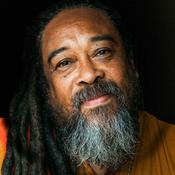 Satsang with MoojiReligie en spiritualiteit
 Adieu GodReligie en spiritualiteit
 Dit Is Mijn LiedChristendom, Religie en spiritualiteit
 2819 ChurchChristendom, Religie en spiritualiteit
 Yasir QadhiIslam, Maatschappij & cultuur, Religie en spiritualiteit
 LuisterBijbel HSVChristendom, Religie en spiritualiteit
 Brandstof podcastReligie en spiritualiteit
 KloostergesprekkenChristendom, Religie, Religie en spiritualiteit
 Yasser Al DossariGeschiedenis, Islam, Religie en spiritualiteit, Spiritualiteit
 De JodcastJudaïsme, Religie en spiritualiteit
 De wonderen van manifesterenReligie en spiritualiteit
 Ibrahim Al AkhdarGeschiedenis, Islam, Religie en spiritualiteit, Spiritualiteit
Over Call and Response with Krishna Das
Devotional yogic chanting with a Western influence. CDs and cassettes for sale, artist background, schedule of live appearances.
Podcast websiteLuister naar Call and Response with Krishna Das, Timothy Keller Sermons Podcast by Gospel in Life en vele andere podcasts van over de hele wereld met de radio.net-app
Ontvang de gratis radio.net app
- Zenders en podcasts om te bookmarken
- Streamen via Wi-Fi of Bluetooth
- Ondersteunt Carplay & Android Auto
- Veel andere app-functies
Ontvang de gratis radio.net app
- Zenders en podcasts om te bookmarken
- Streamen via Wi-Fi of Bluetooth
- Ondersteunt Carplay & Android Auto
- Veel andere app-functies

Call and Response with Krishna Das
Scan de code,
download de app,
luisteren.
download de app,
luisteren.
 Netherlands