

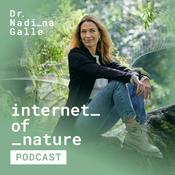
72 afleveringen
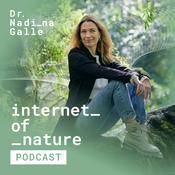
S7E10: "How's Your Matrescence Going?" — The Word for the Metamorphosis of Motherhood — and Why Our Built Environment Is Failing It, with Lucy Jones
17-05-2026 | 1 u. 16 Min.Lucy Jones is a journalist and the author of Losing Eden — an investigation into what nature does for the human psyche, written from inside her own recovery from depression — and Matrescence, a memoir-meets-neuroscience of the developmental transition into motherhood. The word was coined in the 1970s by anthropologist Dana Raphael and brought back into circulation in 2017 by reproductive psychiatrist Alexandra Sacks. Most cultures across human history have marked this transition with rites and rituals. Contemporary Western societies, broadly, do not.
In this episode, Lucy and I talk about why the word matters, and why the built environment is a maternal mental health issue — narrow pavements, dominant cars, playgrounds without benches, libraries closing under austerity. Why Bogotá's manzanas del cuidado (care blocks) might be the most underrated urban infrastructure in the world. Why nearby nature — the cemetery five minutes from the door, the pocket forest at the bottom of the walk-up — is not a consolation prize but the entire point. How a community bioblitz, iNaturalist, and the City Nature Challenge can give a beloved patch of land enough teeth to survive a planning meeting. And the question I have been quietly reorganising my whole intellectual life around: what if we stopped asking how nature heals us, and started asking how to design communities that don't require us to heal constantly?
Find Lucy at lucyfjones.com. Matrescence and Losing Eden are available wherever you buy books.S7E9: "If You Want to Hear From 14-Year-Olds, Bring Pizza" — How Real Public Engagement Actually Works, with Gil Penalosa of 8 80 Cities
10-05-2026 | 52 Min.At ten, Gil Penalosa tried to convince his parents to let him quit school and turn pro. He was ranked second in tennis in Colombia. The catch: 99% of tennis in Colombia was played in private clubs — and Gil's family wasn't a member of any. He played on a public park court across from his house, and routinely beat the wealthy kids on their own courts.
You can see the rest of the life unfolding from there. Former Parks Commissioner of Bogotá, where he helped build more than 1,000 new parks and grew the Cyclovía program from 17 km to 130 km — now adopted in 350+ cities worldwide. Founder of 8 80 Cities. Two-term chair of World Urban Parks. Runner-up in the 2022 Toronto mayoral race after entering 100 days out and pulling 100,000 votes against an entrenched political establishment.
In this episode — recorded in person at the Toronto Botanical Gardens during the Urban Ravine Summit, where I'd just delivered the opening keynote — Gil and I dig into what cities already know how to do, and the courage most are missing to actually do it. We talk about why public engagement is broken in most cities, and what real listening looks like (hint: it involves pizza, juice, and a school at 3 p.m.). Why tree canopy averages mask brutal equity gaps — and the unprecedented redistribution Gil would push for if he were mayor. Why walking is the most underrated urban idea on Earth, and why "becoming a bicycle city" is the most overrated. And why elections, more than any master plan, are what actually change cities.
We also talk about the dying Cyclovía he inherited as commissioner and grew tenfold; Janette Sadik-Khan's pedestrianization of Times Square; Anne Hidalgo's car-free schoolyards in Paris (350 and counting); the Texas border towns where every public school is locked at 4 p.m. while one in three children doesn't have a park within walking distance; what Tirana, Malmö, and Rotterdam are doing that more famous cities aren't; and the simple thing Gil does mid-run when his heart rate hits 145 — which I have since tried, and which works.
Plus the line I haven't been able to stop replaying since we sat down: "Engagement shouldn't be tokenism. It should be real listening."
Find Gil at gpenalosa.ca and 880cities.org. Sign up for his free Cities for Everyone webinar series — every other Tuesday at 11 a.m. ET.S7E8: “A Nature-Blind Society Is a Sick Society” — On Ecological Illiteracy, Biophobia, and the Children We’re Raising Without Nature, with Prof. Hans Van Dyck of UCLouvain
03-05-2026 | 1 u. 15 Min.Fewer than 23% of Flemish children between 8 and 17 can identify a blackbird. Less than 5% can name a peacock butterfly. The mole scores highest — not because of nature education, but because it's a beloved character in children's stories.
Nature isn't just disappearing from our landscapes. It's disappearing from our minds.
In this episode, I sit down with Prof. Hans Van Dyck, behavioral ecologist at UCLouvain and head of the Behavioural Ecology and Conservation group, to talk about what happens to a species — and a society — when children grow up without meaningful contact with the living world.
We get into the winners and losers of human-altered landscapes, and where Homo sapiens really sits on that spectrum. We talk about niche construction and its hidden cost — how we built a world for ourselves, and what we quietly subtracted in the process. Hans walks me through Robert Pyle's devastating 1978 concept of the "extinction of experience," and why disconnection compounds across generations. We get into shifting baselines — why each generation inherits a smaller idea of what "normal" nature looks like, without knowing it. And we talk about the move from nature blindness to biophobia: the teacher who brought tissues for children to clean their hands after touching plants, the teenagers who fled a butterfly on a café terrace, the children in hazmat suits at a tree-planting (a story Adrian Wong from SUGi first told me in S6E7).
Hans also makes a compelling case for school yards as one of the highest-leverage interventions available to us — for biodiversity, for reduced bullying, and as an equalizer for children whose families can't drive to the countryside on weekends. And he reminds us that you don't need to know the name of a single species to do this work. Curious children are already doing it for us.
Hans's December 2025 op-ed in De Standaard — "Children can no longer tell a blackbird from a sparrow" — is a wonderful companion to this conversation. He's also the author of Het orakel van de bosnimf. Van vlinders en mensen (Lannoo), and his scientific work is available on Google Scholar and ResearchGate.S7E7: “Public Space is the Secret Sauce” — Reimagining Fifth Avenue, 26 Blocks in Jackson Heights, and the Fight for a Culture of Yes with Ya-Ting Liu, New York City’s First Chief Public Realm Officer
26-04-2026 | 42 Min.Ya-Ting Liu became New York City's first-ever Chief Public Realm Officer in 2023 — a role created from scratch to focus City Hall's attention on the parks, plazas, streets, and sidewalks that make a dense city livable.
Recorded inside NYC City Hall in November 2025, just after Zohran Mamdani's election as New York's next mayor but before his inauguration, this conversation traces how the job came to exist, why the Fifth Avenue redesign won't break ground until 2028 ("utility spaghetti" is the answer), and how 26 blocks of Jackson Heights became Paseo Park — one of the most ambitious community-led open streets anywhere in the world.
We also talk about finding the "public realm Avengers" inside government, why "1% for Parks" isn't a rallying cry most New Yorkers can picture, and Ya-Ting's three favorite public spaces in the city (spoiler: one is under the Brooklyn Bridge).
Since this recording, Ya-Ting has joined NYU Tandon as Chief of Staff and Director of Strategy in the Office of the Dean.S7E6: "The Child Who Never Goes Outside Won't Fight to Save It." — On Children, Nature & the Long Game with Laís Fleury of the Alana Foundation
19-04-2026 | 55 Min.What does a nine-month Amazon expedition have to do with a public school playground in São Paulo? More than you'd think.
This week, Nadina speaks with Laís Fleury — original story architect behind the Netflix documentary The Beginning of Life 2: Outside and children-and-nature lead at the Alana Foundation — about why urban children may be the planet’s most underestimated conservation strategy.
They cover: nature deficit in megacities, why Rio schools aren’t using the national park in their backyard, how one teacher with no extra budget built a natural playground that became municipal policy, and the single most clarifying argument for why this work matters — for children and for the planet.
No national park required.
 Dutch DragonsInvesteren, Ondernemerschap, Zaken en persoonlijke financiën
 The Game with Alex HormoziOndernemerschap, Onderwijs, Stap voor stap, Zaken en persoonlijke financiën
 Mijn eerste miljoenOndernemerschap, Zaken en persoonlijke financiën
 De Ben Tiggelaar PodcastGeestelijke gezondheid, Gezondheid en fitness, Maatschappij & cultuur, Ondernemerschap, Onderwijs, Religie en spiritualiteit, Spiritualiteit, Zaken en persoonlijke financiën, Zelfhulp
 The Tim Ferriss ShowOndernemerschap, Zaken en persoonlijke financiën
 DenkTankManagement, Ondernemerschap, Onderwijs, Zaken en persoonlijke financiën, Zelfhulp
 Doorzetters | met Ruud Hendriks en Richard BrossOndernemerschap, Onderwijs, Zaken en persoonlijke financiën, Zelfhulp
 My First MillionOndernemerschap, Zaken en persoonlijke financiën
 De deal van je levenOndernemerschap, Zaken en persoonlijke financiën
 FoundersGeschiedenis, Ondernemerschap, Technologie, Zaken en persoonlijke financiën
 Good Bad BillionaireDocumentaire, Maatschappij & cultuur, Ondernemerschap, Zaken en persoonlijke financiën
 Leiderschap in Onzekere TijdenCarrières, Ondernemerschap, Zaken en persoonlijke financiën
 Open Book with Anthony ScaramucciBoeken, Kunst, Ondernemerschap, Zaken en persoonlijke financiën
 Law TalkManagement, Ondernemerschap, Zaken en persoonlijke financiën
Luister naar Internet of Nature Podcast, Dutch Dragons en vele andere podcasts van over de hele wereld met de radio.net-app
Ontvang de gratis radio.net app
- Zenders en podcasts om te bookmarken
- Streamen via Wi-Fi of Bluetooth
- Ondersteunt Carplay & Android Auto
- Veel andere app-functies
Ontvang de gratis radio.net app
- Zenders en podcasts om te bookmarken
- Streamen via Wi-Fi of Bluetooth
- Ondersteunt Carplay & Android Auto
- Veel andere app-functies

Internet of Nature Podcast
download de app,
luisteren.
 Netherlands