
Luister gratis naar deze podcast in de app: Gratis downloaden in de App Store
radio.net
Slaaptimer
Favorieten opslaan
449 afleveringen
Middle East elections and escalation, with Brett McGurk
24-10-2026 | 27 Min.As Israel and the US head toward elections, the Middle East faces the prospect of further escalation. The Iran war has no clear endpoint, Houthi attacks are threatening US partners, and governments across the region are questioning whom they can count on.
On the GZERO World podcast, Ian Bremmer speaks with Brett McGurk, former White House Middle East coordinator, about Washington’s objectives and the difficult choices ahead. Drawing on his experience negotiating with Iran, McGurk explains why economic pressure needs to serve a realistic diplomatic goal. But he is skeptical that an agreement is close: “They will wait out the Americans.”
McGurk also considers what an Israeli government led by Gadi Eisenkot could change, particularly in the West Bank, and shares a personal encounter that shaped his understanding of the former military chief. He explains why Israel’s security doctrine after October 7 is likely to endure regardless of who becomes prime minister.
With American voters weary of foreign entanglements, McGurk argues that pulling back can create new dangers. The challenge is to maintain partnerships and diplomatic engagement without repeating the mistakes of past interventions.
Subscribe to the GZERO World with Ian Bremmer Podcast on Apple Podcasts, Spotify, or your preferred podcast platform, to receive new episodes as soon as they're published.
Hosted by Simplecast, an AdsWizz company. See pcm.adswizz.com for information about our collection and use of personal data for advertising.2026 Midterms and the battle for Congress, with Amy Walter and Liam Donovan
17-10-2026 | 33 Min.Could a blue wave be coming in November? With the 2026 midterms approaching, Democrats are hoping to flip both chambers of Congress, while Republicans are fighting to hold onto their narrow majorities. But the battle for the House and Senate looks very different, and even with voter frustration mounting, the outcome is far from certain.
On the GZERO World podcast, Ian Bremmer sits down with Amy Walter, editor-in-chief of the Cook Political Report, and Republican strategist Liam Donovan to examine the state of the midterm races. They discuss why the Iran war and rising gas prices have become major political liabilities for Republicans, whether Trump can mobilize his base despite his declining popularity, and why Democrats are focusing on affordability, corruption, and voter frustration rather than cultural issues.
But the stakes extend well beyond November. What would a Democratic-controlled Congress actually mean for the final two years of Trump's presidency? Could a major Democratic victory change the party's direction, or simply reinforce its opposition to Trump? And as both parties look toward 2028, is JD Vance positioned to inherit the Republican nomination, and what kind of candidate could emerge for Democrats?
Subscribe to the GZERO World with Ian Bremmer Podcast on Apple Podcasts, Spotify, or your preferred podcast platform, to receive new episodes as soon as they're published.
Hosted by Simplecast, an AdsWizz company. See pcm.adswizz.com for information about our collection and use of personal data for advertising.Three years after October 7, with Aaron David Miller
09-10-2026 | 1 u. 8 Min.Three years after the October 7 attacks, Gaza remains divided and without a clear path forward. Hamas has been severely weakened militarily but retains significant influence, while Palestinians continue to face difficult humanitarian conditions and little prospect of a political breakthrough.
On the GZERO World Podcast, Ian Bremmer sits down with former US Middle East negotiator Aaron David Miller to take stock of Israel and the region three years later. They discuss why Hamas has proven so difficult to dislodge, what Israel’s October 27 election could actually change, and why a new government may look different at home without dramatically changing Israel’s approach to Gaza, Lebanon, and Iran.
They also examine the changing US-Israel relationship as bipartisan support erodes, Israel’s shifting image among Americans, and a regional balance increasingly shaped by Israel, Turkey, and Iran. Miller argues that changing leadership could improve Washington’s relationship with Israel – but that the broader Middle East remains deeply fragmented, with few signs of an easy way out.
Host: Ian Bremmer
Guest: Aaron David Miller
Subscribe to the GZERO World with Ian Bremmer Podcast on Apple Podcasts, Spotify, or your preferred podcast platform, to receive new episodes as soon as they're published.
Hosted by Simplecast, an AdsWizz company. See pcm.adswizz.com for information about our collection and use of personal data for advertising.The great US-China superpower rivalry, with Elizabeth Economy
03-10-2026 | 25 Min.President Trump and China’s Xi Jinping traded handshakes, toasts, and pandas at a diplomatic summit at the White House last week, but beneath all the pageantry, the rivalry between the world’s two most powerful countries is only getting more intense. Hoover Institution Senior Fellow Elizabeth Economy joins Ian Bremmer on the GZERO World podcast for a look at what’s really driving the relationship between the US and China right now, where each side has leverage, and whether the US is falling behind in the race for global influence and technological dominance.
From Beijing's perspective, the second Trump administration has handed China some useful opportunities as well as challenges. On one hand, Washington is no longer pressing Beijing about human rights issues and has stepped back from its leadership role in global institutions, giving China an opening. On the other, the Trump administration still views China as its biggest strategic competitor, both in terms of tech competition and national security. Bremmer and Economy look at the state of the US-China rivalry—from computer chips to AI to space dominance—and where it goes from here.
Host: Ian Bremmer
Guest: Elizabeth Economy
Subscribe to the GZERO World with Ian Bremmer Podcast on Apple Podcasts, Spotify, or your preferred podcast platform, to receive new episodes as soon as they're published.
Hosted by Simplecast, an AdsWizz company. See pcm.adswizz.com for information about our collection and use of personal data for advertising.The UN at a crossroads, with Secretary-General António Guterres
26-09-2026 | 32 Min.This week on the GZERO World Podcast, Ian Bremmer sits down with UN Secretary-General Antonio Guterres on the sidelines of the General Assembly for the final time in his official capacity as UN chief. After a decade as the UN’s top diplomat, the former Portuguese Prime Minister is leaving his position at a moment of great global instability. Wars grind on in Ukraine and Iran with no end in sight. Humanitarian crises in Gaza and Sudan have exposed how little leverage the international system has when powerful states and their partners act with impunity. With faith in global institutions at an all-time low, does the world’s most ambitious experiment in multilateralism still have a place?
While Guterres will be the first to acknowledge that the UN is weakened, he says it is far from obsolete. The old superpowers are discovering their limits, while middle and rising powers are demanding more influence. Those countries need a place to negotiate rules, build coalitions, and keep competition from becoming confrontation. For all its failures, the United Nations is still the only table where all 193 member states still have a seat. Guterres and Bremmer discuss all of that, as well as the erosion of international law, limits of superpowers, and why he believes AI is the most urgent challenge facing humanity.
Host: Ian Bremmer
Guest: António Guterres
Subscribe to the GZERO World with Ian Bremmer Podcast on Apple Podcasts, Spotify, or your preferred podcast platform, to receive new episodes as soon as they're published.
Hosted by Simplecast, an AdsWizz company. See pcm.adswizz.com for information about our collection and use of personal data for advertising.
Meer Nieuws podcasts










Trending Nieuws -podcasts














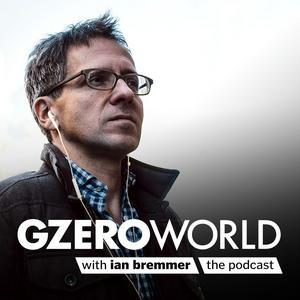
Over GZERO World with Ian Bremmer
The United States will no longer play global policeman, and no one else wants the job. This is not a G-7 or a G-20 world. Welcome to the GZERO, a world made volatile by an intensifying international battle for power and influence. Every week on this podcast, Ian Bremmer will interview the world leaders and the thought leaders shaping our GZERO World.
Podcast websiteLuister naar GZERO World with Ian Bremmer, NRC Vandaag en vele andere podcasts van over de hele wereld met de radio.net-app
Ontvang de gratis radio.net app
- Zenders en podcasts om te bookmarken
- Streamen via Wi-Fi of Bluetooth
- Ondersteunt Carplay & Android Auto
- Veel andere app-functies
Ontvang de gratis radio.net app
- Zenders en podcasts om te bookmarken
- Streamen via Wi-Fi of Bluetooth
- Ondersteunt Carplay & Android Auto
- Veel andere app-functies

GZERO World with Ian Bremmer
Scan de code,
download de app,
luisteren.
download de app,
luisteren.
GZERO World with Ian Bremmer: Podcasts in familie
 Netherlands