

Luister gratis naar deze podcast in de app: Gratis downloaden in de App Store
radio.net
Slaaptimer
Favorieten opslaan
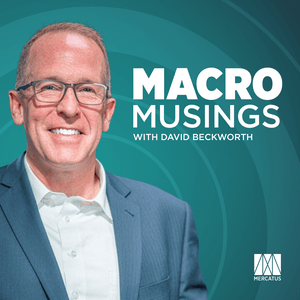
Macro Musings with David Beckworth
Mercatus Center at George Mason University
Nieuwste aflevering
571 afleveringen
John Rolle on The Bahamas' Fixed Exchange Rate and the First Nationwide Central Bank Digital Currency
12-10-2026 | 52 Min.John Rolle is governor of the Central Bank of The Bahamas and is the second sitting central bank governor to appear on Macro Musings. In his first appearance on the show, John joins the program to discuss what it's like to manage a central bank in a small open economy with a fixed exchange rate, the economic vulnerabilities of a tourism-dependent economy, the SandDollar, the future of digital payments and financial resilience, and much more.
Watch the full length video on our new YouTube Channel!
Check out the transcript for this week's episode, now with links.
Recorded on September 8th, 2026
Subscribe to David's Substack: Macroeconomic Policy Nexus
Follow David Beckworth on X: @DavidBeckworth
Follow the show on X: @Macro_Musings
Check out our Macro Musings merch!
Timestamps
00:00:00 - Intro
00:02:02 - Central Bank of the Bahamas
00:18:02 - The Economy of the Bahamas
00:24:56 - Financial Stability in the Bahamas
00:39:29 - Dollar-Based Stablecoins in the Bahamas
00:42:50 - Tokenized Deposits in the Bahamas
00:44:14 - Future of the Financial System and Economy in the Bahamas
00:49:41 - Small Open Economy Central Banks
00:52:04 - OutroGeorge Selgin on the New Deal and the History of Banking Crises
05-10-2026 | 54 Min.George Selgin was a senior fellow and director emeritus at the Center for Monetary and Financial Alternatives at the Cato Institute and professor emeritus of economics at the University of Georgia. George returns to the show to discuss the New Deal's record on economic recovery, the Fed's balance sheet and operating system, the Main Street Lending Program, and the history of banking crises, and much more.
Watch the full length video on our new YouTube Channel!
Check out the transcript for this week's episode, now with links.
Recorded on July 28th, 2026
Subscribe to David's Substack: Macroeconomic Policy Nexus
Follow David Beckworth on X: @DavidBeckworth
Follow George Selgin on X: @GeorgeSelgin
Follow the show on X: @Macro_Musings
Check out our Macro Musings merch!
Timestamps
00:00:00 - Intro
00:01:35 - George's Book on the New Deal
00:03:31 - Fed's Balance Sheet Policy Task Force
00:25:59 - The Fed's Main Street Lending Program
00:32:58 - Myths and Fallacies
00:54:06 - OutroErik Thedéen on QE, Central Bank Independence, and Digital Payments
28-09-2026 | 53 Min.Erik Thedéen is governor of Sweden's Riksbank, the world's oldest central bank, Chairman of the Executive Board, and the first sitting central bank governor to appear on Macro Musings. In his first appearance on the show, Erik joins to discuss the history and operation of the Riksbank, the lessons learned from QE, the future of digital payments, and much more.
Watch the full length video on our new YouTube Channel!
Check out the transcript for this week's episode, now with links.
Recorded on September 4th, 2026
Subscribe to David's Substack: Macroeconomic Policy Nexus
Follow David Beckworth on X: @DavidBeckworth
Follow the show on X: @Macro_Musings
Check out our Macro Musings merch!
Timestamps
00:00:00 - Intro
00:01:41 - Erik's Career
00:03:03 - History of the Riksbank
00:13:04 - Riksbank's Inflation Target
00:15:28 - Riksbank's Operating Framework
00:25:09 - Riksbank's Experiences with QE
00:30:26 - Deposit Facility at Riksbank
00:39:31 - Digital Payments
00:47:27 - Dollar-Based Stablecoins and Sweden
00:50:09 - Tokenization
00:52:37 - OutroEllen Correia Golay on All-to-All Trading and Treasury Market Liquidity
21-09-2026 | 47 Min.Ellen Correia Golay is a lead Treasury advisor in the markets group at the Federal Reserve Bank of New York. Ellen returns to the program to discuss the lessons of the March 2020 "dash for cash," how all-to-all trading and other market structure reforms could strengthen Treasury market liquidity and resilience, the rise of principal trading firms, and the future of the Fed's standing repo operations, and much more.
Watch the full length video on our new YouTube Channel!
Check out the transcript for this week's episode, now with links.
Recorded on August 19th, 2026
Subscribe to David's Substack: Macroeconomic Policy Nexus
Follow David Beckworth on X: @DavidBeckworth
Follow the show on X: @Macro_Musings
Check out our Macro Musings merch!
Timestamps
00:00:00 - Intro
00:01:20 - Ellen's Career and Responsibilities
00:09:29 - The Treasury Market
00:17:15 - All-to-All Trading
00:25:19 - Treasury Market Liquidity
00:32:59 - Treasury Borrowing Advisory Committee
00:39:28 - Central Clearing
00:44:51 - Ellen's Policy Wishes
00:46:20 - OutroNellie Liang on Stablecoins After GENIUS, Private Money, and the Global Dollar
14-09-2026 | 50 Min.Nellie Liang is a former Treasury and Federal Reserve official and a senior fellow at the Brookings Institution. In Nellie's first appearance on the show, she discusses the future of stablecoins following the GENIUS Act, what stablecoins mean for private money and illicit finance, Fed master accounts, the global role of the dollar, and much more.
Watch the full length video on our new YouTube Channel!
Check out the transcript for this week's episode, now with links.
Recorded on August 18th, 2026
Subscribe to David's Substack: Macroeconomic Policy Nexus
Follow David Beckworth on X: @DavidBeckworth
Follow the show on X: @Macro_Musings
Check out our Macro Musings merch!
Timestamps
00:00:00 - Intro 00:01:23 - Nellie's Career 00:05:48 - The GENIUS Act 00:11:31 - Stablecoins as Private Money 00:27:32 - Fed Master Accounts 00:29:53 - Dollar as Global Reserve Currency 00:35:42 - Stablecoins and US Debt 00:46:49 - Nellie's Policy Recommendations 00:50:11 - Outro
Meer Onderwijs podcasts








Trending Onderwijs -podcasts










Over Macro Musings with David Beckworth
Hosted by David Beckworth of the Mercatus Center, Macro Musings pulls back the curtain on the important macroeconomic issues of the past, present, and future.
Podcast websiteLuister naar Macro Musings with David Beckworth, The Mel Robbins Podcast en vele andere podcasts van over de hele wereld met de radio.net-app
Ontvang de gratis radio.net app
- Zenders en podcasts om te bookmarken
- Streamen via Wi-Fi of Bluetooth
- Ondersteunt Carplay & Android Auto
- Veel andere app-functies
Ontvang de gratis radio.net app
- Zenders en podcasts om te bookmarken
- Streamen via Wi-Fi of Bluetooth
- Ondersteunt Carplay & Android Auto
- Veel andere app-functies

Macro Musings with David Beckworth
Scan de code,
download de app,
luisteren.
download de app,
luisteren.
Macro Musings with David Beckworth: Podcasts in familie
 Netherlands