
Luister gratis naar deze podcast in de app: Gratis downloaden in de App Store
radio.net
Slaaptimer
Favorieten opslaan
176 afleveringen
Chris Smaje - What does a fair food system look like?
18-10-2026 | 56 Min.This episode is a supplementary full interview with Chris Smaje from Episode 6 of the Edible Empire podcast series. Here, we explore visions for a fairer food system that support producers, ensure diverse food choices, and challenge the intensive nature of current supply chains.
Having heard about the deep history of extraction and exploitation inherent in globalised food supply chains, what does a fair food system look like? How could we ensure sufficient, diverse food choices for all whilst supporting those who produce it? This episode dives into proposed futures that challenge the intensive nature of traditional agrifood systems and the supply chains that deliver it, eventually, to our homes.
We now shift focus toward practical frameworks, hopeful visions, and grassroots models for establishing a more equitable, localised, and sustainable global food system. Here, the discussion moves from macro-level economic theory to community-led action. Author and smallholder Chris Smaje makes a compelling case for a decentralised network of diverse smallholdings, arguing that a return to small-scale agroecological farming is a modern necessity capable of restoring degraded landscapes, revitalising rural economies, and breaking the entrenched grip of transnational agribusiness.
Make sure you subscribe so you don’t miss out on the next episode!
Resources from this interview:
https://chrissmaje.com
To view all the links to the websites and documents, visit the show notes on our website.
Please support our work and enable us to deliver more content by buying us a coffee or becoming a member of Athletes for Nature.
Follow us on Instagram and Facebook, subscribe to this podcast, and share this episode with your friends and family.Alison Thomas - What does a fair food system look like?
13-10-2026 | 37 Min.This episode is a supplementary full interview with Alison Thomas from Episode 6 of the Edible Empire podcast series. Here, we explore visions for a fairer food system that support producers, ensure diverse food choices, and challenge the intensive nature of current supply chains.
Having heard about the deep history of extraction and exploitation inherent in globalised food supply chains, what does a fair food system look like? How could we ensure sufficient, diverse food choices for all whilst supporting those who produce it? This episode dives into proposed futures that challenge the intensive nature of traditional agrifood systems and the supply chains that deliver it, eventually, to our homes.
We now shift focus toward practical frameworks, hopeful visions, and grassroots models for establishing a more equitable, localised, and sustainable global food system. Here, the discussion moves from macro-level economic theory to community-led action. Turning to localised solutions within the United Kingdom, Shrewsbury Food Hub co-founder Ali Thomas demonstrates the power of volunteer-led redistribution networks that intercept supermarket surplus to foster social solidarity and tackle the systemic absurdity of food waste.
Make sure you subscribe so you don’t miss out on the next episode!
Resources from this interview:
https://www.shrewsburyfoodhub.org.uk/
To view all the links to the websites and documents, visit the show notes on our website.
Please support our work and enable us to deliver more content by buying us a coffee or becoming a member of Athletes for Nature.
Follow us on Instagram and Facebook, subscribe to this podcast, and share this episode with your friends and family.Dr Million Belay - What does a fair food system look like?
11-10-2026 | 37 Min.This episode is a supplementary full interview with Dr Million Belay from Episode 6 of the Edible Empire podcast series. Here, we explore visions for a fairer food system that support producers, ensure diverse food choices, and challenge the intensive nature of current supply chains.
Having heard about the deep history of extraction and exploitation inherent in globalised food supply chains, what does a fair food system look like? How could we ensure sufficient, diverse food choices for all whilst supporting those who produce it? This episode dives into proposed futures that challenge the intensive nature of traditional agrifood systems and the supply chains that deliver it, eventually, to our homes.
We now shift focus toward practical frameworks, hopeful visions, and grassroots models for establishing a more equitable, localised, and sustainable global food system. Here, the discussion moves from macro-level economic theory to community-led action. Dr Million Belay, General Coordinator of the Alliance for Food Sovereignty in Africa, explains how reclaiming community control over seeds, land, and traditional knowledge allows populations to resist corporate dependency and build resilient agricultural systems.
Resources from this interview:
https://ipes-food.org/people/million-belay/
https://afsafrica.org/meet-the-team/
https://www.agroecologyconference.eoai-africa.org/Dr_million.html
https://afsafrica.org/14083/
To view all the links to the websites and documents, visit the show notes on our website.
Please support our work and enable us to deliver more content by buying us a coffee or becoming a member of Athletes for Nature.
Follow us on Instagram and Facebook, subscribe to this podcast, and share this episode with your friends and family.Professor Anitra Nelson - What does a fair food system look like?
06-10-2026 | 41 Min.This episode is a supplementary full interview with Dr Anitra Nelson from Episode 6 of the Edible Empire podcast series. Here, we explore visions for a fairer food system that support producers, ensure diverse food choices, and challenge the intensive nature of current supply chains.
Having heard about the deep history of extraction and exploitation inherent in globalised food supply chains, what does a fair food system look like? How could we ensure sufficient, diverse food choices for all whilst supporting those who produce it? This episode dives into proposed futures that challenge the intensive nature of traditional agrifood systems and the supply chains that deliver it, eventually, to our homes.
We now shift focus toward practical frameworks, hopeful visions, and grassroots models for establishing a more equitable, localised, and sustainable global food system. Here, the discussion moves from macro-level economic theory to community-led action. Degrowth scholar Professor Anitra Nelson details how dismantling profit-driven corporate commodity markets can create needs-based local economies that respect ecological boundaries.
Resources from this interview:
https://anitranelson.info/food-for-degrowth/
https://www.routledge.com/Food-for-Degrowth-Perspectives-and-Practices/Nelson-Edwards/p/book/9780367436469
To view all the links to the websites and documents, visit the show notes on our website.
Please support our work and enable us to deliver more content by buying us a coffee or becoming a member of Athletes for Nature.
Follow us on Instagram and Facebook, subscribe to this podcast, and share this episode with your friends and family.Dr Crystal Bennes - New Zealand dairy and Western Sahara phosphate
04-10-2026 | 45 Min.This episode is a supplementary full interview with Dr Crystal Bennes from Episode 5 of the Edible Empire podcast series. Here, we explore the social impacts of phosphate extraction from Western Sahara, illegally occupied by Morocco, and its place in the wider machinery of food imperialism.
Phosphate, mined from occupied Western Sahara, makes its way into the farming production systems of a number of major industrialised nations, including dairy farming in New Zealand. This episode traces how global agriculture reshapes distant economies through trade in phosphate fertiliser from the illegally occupied territories in West Africa. Through the story of “white gold”, we uncover how even the purest landscapes are bound into the machinery of food imperialism.
We discuss the environmentally destructive and geopolitically fraught supply chains connecting industrialised agrifood production, like the intensive dairy production in New Zealand, with phosphate mining in the illegally occupied territory of Western Sahara. Researcher and artist Dr Crystal Bennes traces the physical journey of this phosphate rock, revealing how Western agricultural high yields rely heavily on wealth extracted under colonial conditions from the Boo Cra mine, highlighting the profound human and environmental costs borne by displaced Sahrawi populations.
To view all the links to the websites and documents, visit the show notes on our website.
Please support our work and enable us to deliver more content by buying us a coffee or becoming a member of Athletes for Nature.
Follow us on Instagram and Facebook, subscribe to this podcast, and share this episode with your friends and family.
Meer Wetenschap podcasts





Trending Wetenschap -podcasts





















Over Edible Empire
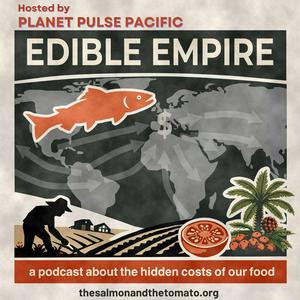
Planet Pulse Pacific—your go-to podcast for conversations about people and planet—is proud to host a special series: Edible Empire. As the climate and global health crises intensify, the need for meaningful change has never been more urgent. This six-episode series brings together leading voices from around the world to explore the concept of food imperialism, uncover the hidden social and environmental costs of what we eat, and examine how we can build a more just and sustainable food system. Join your hosts, Ben Eitelberg and Emma Strutt, alongside special series co-host Dr Neal Haddaway, as they dive into the complex and often unseen world of food—how it is produced, traded, and consumed across the globe. Kelly Allum edits the series.
Podcast websiteLuister naar Edible Empire, Zimmerman en Space en vele andere podcasts van over de hele wereld met de radio.net-app
Ontvang de gratis radio.net app
- Zenders en podcasts om te bookmarken
- Streamen via Wi-Fi of Bluetooth
- Ondersteunt Carplay & Android Auto
- Veel andere app-functies
Ontvang de gratis radio.net app
- Zenders en podcasts om te bookmarken
- Streamen via Wi-Fi of Bluetooth
- Ondersteunt Carplay & Android Auto
- Veel andere app-functies

Edible Empire
Scan de code,
download de app,
luisteren.
download de app,
luisteren.
 Netherlands