

Luister gratis naar deze podcast in de app: Gratis downloaden in de App Store
radio.net
Slaaptimer
Favorieten opslaan
23 afleveringen
Your Brain Questions Answered: Lion’s Mane, Pets and Doodling
08-10-2026 | 38 Min.Can a growth mindset help you cope with exam pressure? Does writing by hand help you remember more? And what does the science really say about lion’s mane and pets?
In this special listener Q&A, Cat de Lange and Helen Thomson bring series two of Change Your Mind with New Scientist to a close by answering questions from the inbox. Drawing on neuroscience research, they explore effective studying, stress, memory and the claims surrounding popular brain-health supplements.
Along the way, they consider why the way we take notes might matter, what doodling could be doing for your attention, and whether having a pet can benefit your brain.
Change Your Mind will be back with two shorter episodes of brain-boosting tips, before returning for series three with new expert guests and discoveries.
We want to hear your thoughts, so leave a comment or send your ideas and questions for future episodes to changeyourmind@newscientist.com.
Produced by Emily Bird.Exercise - What’s the right dose for your brain?
01-10-2026 | 42 Min.Exercise is often framed as a way to get fit, but what if its biggest benefits are happening in your brain? In this episode of Change Your Mind, Health Journalists Cat de Lange and Helen Thomson explore why movement matters for our mood and long-term brain health, and why making exercise part of everyday life can feel like such a challenge.
Joining them is Brendon Stubbs, a leading researcher in physical activity and mental health. Together, they look at what science is beginning to reveal about exercise and the brain, whether some kinds of movement might be better than others, and how much you need to do to make a difference.
Produced by Emily Bird
Got a topic you'd like us to cover? Email us at changeyourmind@newscientist.com
Find out more about the brain benefits of exercise at New Scientist:
https://www.newscientist.com/article/2589563-short-bursts-of-exercise-can-boost-your-cognition/
Sources:
Astrocytes - ttps://www.newscientist.com/article/2586505-exercise-may-create-new-neurons-by-making-other-brain-cells-contract/
Depression as good as antidepressants
ttps://www.newscientist.com/article/2510492-exercise-may-relieve-depression-as-effectively-as-antidepressants/
Endorphins: ttps://www.sciencedirect.com/science/article/abs/pii/S0306453021000470?via%3DihubAdolescence - What's going on with teenage mental health?
24-09-2026 | 38 Min.Is now really the worst time in history to be a teenager? This week, health Journalists Cat de Lange and Helen Thomson take on a topic that worries many parents: teenage mental health.
Helping them wade through the misinformation is Lucy Foulkes, a psychologist at the University of Oxford who specialises in teenage mental health and social development. She explains why adolescence is such a vulnerable time for the brain, and why it lasts much longer than you might expect. She also shares a surprising idea about whether all our talk about mental health might have unexpected downsides.
Are smartphones really villain they're made out to be, or is something bigger going on? Cat and Helen come away with practical ideas for supporting the teenagers in their lives, and a few habits they need to change themselves.
Got a topic you'd like us to cover? Email us at changeyourmind@newscientist.com
If you're struggling with any of the issues discussed in this episode, support is available from the UK Samaritans and the US Suicide and Crisis Lifeline.
Produced by Emily Bird.
Find out more about Adolescent Mental Health at New Scientist:
https://www.newscientist.com/article/2443636-is-youth-mental-health-really-worse-today-than-it-was-decades-ago/
https://www.newscientist.com/article/2495265-matt-richtel-grapples-with-how-modern-life-is-warping-adolescence/
Lucy’s reading list:
https://www.amazon.co.uk/Its-Their-World-Adolescence-ParentingTM/dp/B0DJHQJXVH/
https://www.amazon.co.uk/Screensaver-Judgement-Free-Guide-Childs-Smartphone/dp/1805226479
https://www.amazon.co.uk/Smartphone-Solution-bestselling-clinical-psychologist/dp/0008773920
https://www.amazon.co.uk/Unlocked-Pete-Etchells/dp/0349432937/
Lucy’s podcast:
https://open.spotify.com/show/5kWA0hyOrlRAKpAC27Dk2e
Lucy’s books:
https://www.lucyfoulkes.co.uk/books
Lucy’s research:
https://www.lucyfoulkes.co.uk/researchThe Vagus Nerve - Could this be the key to reducing your inflammation?
17-09-2026 | 41 Min.Feeling tempted by social media tips to “reset” your vagus nerve, fix your anxiety and banish inflammation? In this episode, Health Journalists Cat de Lange and Helen Thomson dig into the science behind vagus nerve stimulation.
With neurosurgeon and researcher Kevin Tracey, they explore how this a modern wellness obsession came about, what FDA‑approved implants can really do for conditions like rheumatoid arthritis, and why most DIY hacks may be running ahead of the evidence.
Produced by Emily Bird
We want to hear your thoughts, leave a comment or send in your ideas for future episodes to changeyourmind@newscientist.com
Find out more about The Vagus Nerve at New Scientist: https://www.newscientist.com/article/2388223-unravelling-the-secrets-of-the-vagus-nerve-will-revolutionise-medicine/
Sources:
The Great Nerve book by Kevin Tracey
https://www.penguin.co.uk/books/470370/the-great-nerve-by-tracey-dr-kevin/978140597850
Linda Watkins paper:
https://pubmed.ncbi.nlm.nih.gov/7746479/
Kevin’s original paper triggering the discovery of inflammation and vagus nerve: https://pubmed.ncbi.nlm.nih.gov/9361344/
Testing the inflammation-vagus nerve theory:
https://pubmed.ncbi.nlm.nih.gov/10839541/
Earlobe experiment:
https://jasontsukahara.com/publications/2021-ijp-vagus-pupil/2021-ijp-vagus-pupil.pdf
Small human study recording non invasive vagus stimulation and brain response
https://pubmed.ncbi.nlm.nih.gov/28648089/
POTS: https://pubmed.ncbi.nlm.nih.gov/37999672/Blue Spaces - How Spending Time Near Water can Boost your Mental Health
10-09-2026 | 46 Min.Why do so many of us feel calmer, clearer and more creative by the sea, a river or a lake? In this episode, Cat de Lange and Helen Thomson dive into the science of blue spaces. Picking apart the theories behind why water captures our attention and how time spent near water can change how we feel pain, our stress levels and even long-term physical health.
They’re joined by psychologist Dr Mathew White, whose large-scale studies are revealing why time near water might give our brains an extra boost over green spaces alone, and how much you really need each week to feel the effects.
Produced by Emily Bird
We want to hear your thoughts, leave a comment or send in your ideas for future episodes to changeyourmind@newscientist.com
Find out more about Blue Spaces at New Scientist:
https://www.newscientist.com/article/2328003-why-spending-time-near-water-gives-us-a-powerful-mental-health-boost/
https://www.newscientist.com/article/2272260-green-spaces-arent-just-for-nature-they-boost-our-mental-health-too/
Sources:
https://bluehealth2020.eu/people/mathew-white/
https://www.theguardian.com/lifeandstyle/2024/oct/06/best-walk-hike-for-mental-health-uk
Attention Restoration theory
https://www.tandfonline.com/doi/full/10.1080/10937404.2016.1196155
Wales study:
https://www.thelancet.com/journals/lanplh/article/PIIS2542-5196%2823%2900212-7/fulltext
Large England study:
https://www.sciencedirect.com/science/article/pii/S0160412024002538?via%3Dihub
Moving urban to rural
http://pubs.acs.org/esthag/article/48/2/1247/1481535/Longitudinal-Effects-on-Mental-Health-of-Moving-to
Lake and electric shocks https://www.nature.com/articles/s41467-025-56870-2
Lake and dentist https://journals.sagepub.com/doi/full/10.1177/0013916517710077
19 country study of blue spaces:
https://natureandhealth.uw.edu/publications/the-restorative-power-of-blue-spaces-a-19-country-study/
Meer Gezondheid en fitness podcasts
 Leven Zonder StressGeestelijke gezondheid, Gezondheid en fitness, Onderwijs, Religie en spiritualiteit, Spiritualiteit, Zelfhulp
 Rust in je hoofdGeestelijke gezondheid, Gezondheid en fitness
 Die podcast over routinesGezondheid en fitness, Onderwijs
 Let's go mentalGeestelijke gezondheid, Gezondheid en fitness
 GRAPES PodcastGeestelijke gezondheid, Gezondheid en fitness, Maatschappij & cultuur, Onderwijs, Seksualiteit, Zelfhulp
 De Gierende Hormonen ShowAlternatieve gezondheid, Eetwaar, Geestelijke gezondheid, Gezondheid en fitness, Kunst, Maatschappij & cultuur
 De RouwdouwersGeestelijke gezondheid, Gezondheid en fitness, Kind en gezin, Maatschappij & cultuur, Opvoeding, Persoonlijke dagboeken
 Huberman LabGezondheid en fitness, Levenswetenschappen, Wetenschap
 Het SpreekuurGezondheid en fitness, Wetenschap
 On Purpose with Jay ShettyGeestelijke gezondheid, Gezondheid en fitness, Zaken en persoonlijke financiën
Trending Gezondheid en fitness -podcasts
 Lobke Faasen PodcastFitness, Gezondheid en fitness, Voeding
 Leven met post-COVIDGeneeskunde, Gezondheid en fitness
 But You Look So GoodGeestelijke gezondheid, Gezondheid en fitness
 Liefde Zonder MaskerGeestelijke gezondheid, Gezondheid en fitness
 Met volle angst vooruitGeestelijke gezondheid, Gezondheid en fitness
 Guided Sleep Meditation & Sleep Hypnosis from Sleep CoveGeestelijke gezondheid, Gezondheid en fitness
 Therapy in a NutshellGeestelijke gezondheid, Gezondheid en fitness, Onderwijs, Zelfhulp
 Best Hour of Their Day | PodcastGezondheid en fitness
 De TRIbune podcastGezondheid en fitness, Sport
 Figuring It OutGeestelijke gezondheid, Gezondheid en fitness, Maatschappij & cultuur, Onderwijs, Persoonlijke dagboeken, Zelfhulp
 PiemelpraatGezondheid en fitness, Seksualiteit
 Nieuwe blik op zorgGezondheid en fitness
 Peace of MindGeestelijke gezondheid, Gezondheid en fitness, Onderwijs, Religie en spiritualiteit, Zelfhulp
 The CrossFit Max PodcastFitness, Gezondheid en fitness, Voeding
 Herstellen van burnoutGeestelijke gezondheid, Gezondheid en fitness
Over Change Your Mind with New Scientist
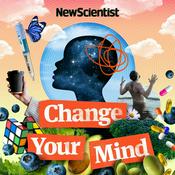
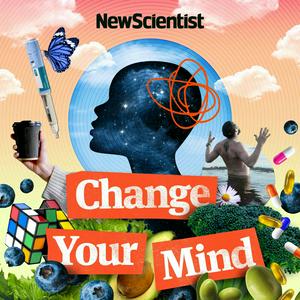
Change Your Mind from New Scientist brings you the brain health advice you really need to know. Every week, award‑winning science journalists Cat de Lange and Helen Thomson cut through wellness hype to find out what actually keeps your mind sharp, your mood steady and your memory strong. As friends, they’ve spent decades swapping stories, testing trends and exploring the latest neuroscience, and thought it was about time to share the tips and tricks that have genuinely changed their own lives. From cold plunges to coffee, supplements to sleep, Ozempic and AI they speak to leading experts and ask: does this really work? Expect smart conversations, clear answers, and practical takeaways - with plenty of laughs along the way. Because when you understand your brain, you really can change your mind - for the better.
New Episodes every Thursday.
Luister naar Change Your Mind with New Scientist, Leven Zonder Stress en vele andere podcasts van over de hele wereld met de radio.net-app
Ontvang de gratis radio.net app
- Zenders en podcasts om te bookmarken
- Streamen via Wi-Fi of Bluetooth
- Ondersteunt Carplay & Android Auto
- Veel andere app-functies
Ontvang de gratis radio.net app
- Zenders en podcasts om te bookmarken
- Streamen via Wi-Fi of Bluetooth
- Ondersteunt Carplay & Android Auto
- Veel andere app-functies

Change Your Mind with New Scientist
Scan de code,
download de app,
luisteren.
download de app,
luisteren.
Change Your Mind with New Scientist: Podcasts in familie
 Netherlands