
Luister gratis naar deze podcast in de app: Gratis downloaden in de App Store
radio.net
Slaaptimer
Favorieten opslaan
123 afleveringen
S4 Ep.19 - How to Explore Art in Venice with Venice Art In
22-10-2026 | 33 Min.In this episode of Venice Talks, Monica sits down with Regina Maksimova and Alexandra Zagrebelnaia, the team behind Venice Art Insider, a platform created to help people discover and understand the extraordinary art world of Venice.
From historic masterpieces and museums to foundations, galleries, independent spaces and the Biennale, Venice Art Insider looks at the city as one vast cultural landscape. Regina and Alexandra explain how they select what to feature, how they build curated routes and how they help visitors navigate a city where art is quite literally everywhere.
The conversation also explores the relationship between art and place, the impact of the Biennale on Venice, the role of social media in the way we experience exhibitions and the challenge of making art accessible without oversimplifying it.
This is an episode about looking at Venice differently, slowing down and learning how to notice what is often hidden in plain sight.
Show Notes
Who Regina and Alexandra are and how Venice Art Insider began
Why Venice needed a clearer way to navigate its immense art scene
How they choose exhibitions, museums, galleries and cultural spaces to feature
The importance of connecting art with the neighbourhoods and architecture of Venice
How the Biennale changes the city and what remains once it is over
Discovering Venice beyond the major museums and famous masterpieces
The different perspectives Regina and Alexandra bring to the project
How social media is changing the way people discover and experience art
Making art more accessible without losing depth or context
How to approach Venice as one enormous, layered art experience
A conversation about art, Venice, discovery and the many layers of a city where masterpieces, galleries, museums and unexpected cultural spaces are waiting around almost every corner.
If you enjoy Venice Talks, follow the podcast and subscribe on your favourite platform so you never miss a new episode. And if you enjoyed this conversation, share it with someone who loves Venice, books and a good mystery.
Remember to follow and subscribe to Venice Talks so you never miss a new conversation with the people who make Venice the extraordinary, complex and endlessly fascinating city it is.
🎧 Listen now on Spotify, Apple Podcasts, or wherever you tune in.
✨ Credits:
Hosted by Monica Cesarato
Produced by Monica Cesarato, Vivace Media
Guest: Regina Maksimova and Alexandra Zagrebelnaia from Venice Art Insider
If you love hearing the voices of Venice, subscribe and leave a review — it helps others discover these stories too.
💌 Want to share your own Venice?
Send me a short audio clip (1 minutes max) telling me what you loved most about the city — at info@monicacesarato.com.S4 Ep.18 - Inside Venice Noir: Crime Writing Comes to Venice
15-10-2026 | 38 Min.In this episode of Venice Talks, Monica sits down with Gregory Dowling, Philip Gwynne Jones and David Hewson, the three writers behind Venice Noir, Venice’s international festival dedicated to crime writing, noir and the darker side of storytelling.
What began as an ambitious literary idea has grown into a distinctive festival bringing together Italian and international authors, historians, journalists and readers in the heart of Venice.
We talk about how Venice Noir has evolved, how the programme is shaped, the relationship between Italian crime writing and the international noir scene and what happens when three crime writers have to agree on what actually belongs in a noir festival.
There is also plenty of discussion about growth, identity, literary festivals, dream guests and, inevitably, a little friendly disagreement.
Key Notes from This Episode
How Venice Noir has evolved from an idea into an international literary festival
The role of Italian authors within an international programme
The relationship between Italian giallo and English-language crime fiction
How Gregory, Philip and David choose writers, themes and events
How broad the definition of “noir” can really become
The festival’s relationship with the international crime-writing world
What organising a literary festival teaches writers about being guests themselves
How the three founders balance different tastes and ideas
The challenges of growing while keeping the festival intimate
The authors they would love to invite in the future
A conversation about books, murder, Venice and the dark literary creature that Gregory Dowling, Philip Gwynne Jones and David Hewson continue to shape year after year.
If you enjoy Venice Talks, follow the podcast and subscribe on your favourite platform so you never miss a new episode. And if you enjoyed this conversation, share it with someone who loves Venice, books and a good mystery.
Remember to follow and subscribe to Venice Talks so you never miss a new conversation with the people who make Venice the extraordinary, complex and endlessly fascinating city it is.
🎧 Listen now on Spotify, Apple Podcasts, or wherever you tune in.
✨ Credits:
Hosted by Monica Cesarato
Produced by Monica Cesarato, Vivace Media
Guest: Gregory Dowling, Philip Gwynne Jones and David Hewson From Venice Noir
If you love hearing the voices of Venice, subscribe and leave a review — it helps others discover these stories too.
💌 Want to share your own Venice?
Send me a short audio clip (1 minutes max) telling me what you loved most about the city — at info@monicacesarato.com.S4 Ep.17 - The Forgotten Women of Venice with History of Venice Podcast
08-10-2026 | 51 Min.In this episode of Venice Talks, Monica speaks with Simon and Jess from The History of Venice Podcast about the women who lived, worked and helped shape Venice across the centuries.
Moving beyond the better-known stories of noblewomen and courtesans, the conversation explores what everyday life was really like for Venetian women from different levels of society. From work and family life to money, independence, marriage and social expectations, Simon and Jess bring to light the stories of women whose contribution to Venice has often remained in the background.
The episode also looks at lesser-known female figures, the kinds of jobs women carried out and what historical records can reveal about their lives. A fascinating journey into another side of Venetian history: the city seen through the experiences of its women.
Show Key Notes
Simon and Jess from The History of Venice Podcast on telling the story of Venice through the people who lived it.
Lesser-known women whose stories deserve a place alongside Venice’s more famous female figures.
What everyday life looked like for women from different social classes.
The jobs and trades carried out by Venetian women.
Women as artisans, shopkeepers, servants, market sellers and workers.
Money, property and the economic independence available to women.
Marriage, widowhood and the options open to women outside traditional family structures.
The differences between the lives of noblewomen and working women.
Women from Venice’s different communities and backgrounds.
What archives, legal records and other historical sources can tell us about women’s lives.
How women contributed to the economic and social life of the Venetian Republic.
Why so many of these stories have remained less visible in traditional accounts of Venetian history.
Tune in for a journey beyond the familiar names and discover the women whose work, choices and everyday lives were part of the fabric of Venice.
Listen now and subscribe to Venice Talks for more stories about Venice, its history, its people and its culture.
And remember to follow and subscribe to Venice Talks so you never miss a new conversation with the people who make Venice the extraordinary, complex and endlessly fascinating city it is.
🎧 Listen now on Spotify, Apple Podcasts, or wherever you tune in.
✨ Credits:
Hosted by Monica Cesarato
Produced by Monica Cesarato, Sentire Media
Guest: Simon & Jess from History of Venice Podcast
If you love hearing the voices of Venice, subscribe and leave a review — it helps others discover these stories too.
💌 Want to share your own Venice?
Send me a short audio clip (1 minutes max) telling me what you loved most about the city — at info@monicacesarato.com.S4 Ep.16 - The Drinking Culture of Venice - A chat with Susan L. Schwartz
20-08-2026 | 38 Min.n this episode of Venice Talks, Monica speaks with drinks writer, podcaster and author Susan L. Schwartz about her new book, A Guide to Drinking in Venice.
Venice is a city where drinking is never just about what is in the glass. It is about ritual, place, history and the people behind the bar. Susan takes us through the research and stories behind the book, from traditional bacari and Venetian drinking habits to cocktails, wine, coffee and the changing bar scene of the city.
We also talk about what surprised her while researching the book, how Venice’s drinking culture differs from what visitors often expect and why understanding where and how Venetians drink can reveal so much about the city itself.
Key Notes from This Episode
How the idea for A Guide to Drinking in Venice began
What inspired Susan to dedicate an entire book to Venice’s drinking culture
The research behind the book and the people she met along the way
Why Venice is about much more than just Spritz
Bacari, wine bars, cocktail bars and the different ways of drinking in the city
The role of tradition in Venetian drinking culture
How Venice’s bar and cocktail scene has evolved in recent years
What visitors often misunderstand about drinking in Venice
Some of Susan’s favourite discoveries while researching the book
How a drink can become a way of understanding the history and identity of a place
If you love Venice, food, wine, cocktails and the stories hidden behind everyday Venetian rituals, this is an episode to listen to with a glass in hand.
Remember to follow and subscribe to Venice Talks so you never miss a new conversation with the people who make Venice the extraordinary, complex and endlessly fascinating city it is.
🎧 Listen now on Spotify, Apple Podcasts, or wherever you tune in.
✨ Credits:
Hosted by Monica Cesarato
Produced by Monica Cesarato, Vivace Media
Guest: Susan L. Schwartz from A Lush Life Manual
If you love hearing the voices of Venice, subscribe and leave a review — it helps others discover these stories too.
💌 Want to share your own Venice?
Send me a short audio clip (1 minutes max) telling me what you loved most about the city — at info@monicacesarato.com.S4 Ep.15 - Uncovering the Real History of Venice with Simon & Jess from History of Venice Podcast
13-08-2026 | 51 Min.What happens when two history lovers decide to tell the story of Venice from the very beginning?
In this episode of Venice Talks, Monica Cesarato is joined by Simon and Jess, the creators and hosts of The History of Venice Podcast, a chronological journey through the people, politics, conflicts and extraordinary events that shaped the Venetian Republic.
Simon and Jess share how their mutual fascination with Venice inspired them to begin the podcast, and what it is like to research, write and present such an ambitious historical project together.
We talk about the challenge of separating historical fact from legend, especially in a city where myths have been repeated for centuries. They explain how they approach conflicting sources, complex political events and the colourful personalities who brought Venetian history to life.
The conversation also explores how studying Venice’s past changes the way we experience the city today. Behind every bridge, campo and palace lies a story—and the deeper we look, the more Venice reveals itself as far more than a beautiful destination.
From the origins of the lagoon settlements to the rise of one of Europe’s most powerful republics, Simon and Jess invite listeners to discover the real history behind the Serenissima.
Key Notes from This Episode
In this episode, we talk about:
How Simon and Jess created The History of Venice Podcast
Their personal connection with Venice and its history
What it is like to produce a podcast together as a couple
How they divide the research, writing and presenting
The difficulties of separating Venetian history from legend
How they make complex historical events accessible
The personalities and stories that have surprised them most
Common misconceptions about the Venetian Republic
How historical research has changed the way they see Venice
What Venice’s past can teach us about the city today
Listen to The History of Venice Podcast to follow Simon and Jess on their chronological journey through more than a thousand years of Venetian history.
And remember to follow and subscribe to Venice Talks so you never miss a new conversation with the people who make Venice the extraordinary, complex and endlessly fascinating city it is.
🎧 Listen now on Spotify, Apple Podcasts, or wherever you tune in.
✨ Credits:
Hosted by Monica Cesarato
Produced by Monica Cesarato, Sentire Media
Guest: Simon & Jess from History of Venice Podcast
If you love hearing the voices of Venice, subscribe and leave a review — it helps others discover these stories too.
💌 Want to share your own Venice?
Send me a short audio clip (1 minutes max) telling me what you loved most about the city — at info@monicacesarato.com.
Meer Maatschappij & cultuur podcasts







Trending Maatschappij & cultuur -podcasts





















Over Venice Talks
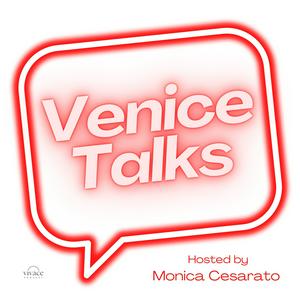
🎙️ Venice Talks — Voices, stories, and secrets from the world’s most fascinating city.
Hosted by Monica Cesarato, Venetian author, podcaster, and culinary guide, the show explores the real Venice through the people who shape it — artisans, chefs, historians, dreamers, and custodians of tradition.
Each conversation reveals a side of Venice rarely seen: authentic, creative, and deeply human.
Whether you are exploring the lagoon or simply dreaming from afar, Venice Talks invites you to listen, learn, and fall in love with Venice — one story at a time.
📍New episodes weekly.
🎧 Tune in and discover the soul of Venice through its voices.
Podcast websiteLuister naar Venice Talks, Schuilen in Schoonheid en vele andere podcasts van over de hele wereld met de radio.net-app
Ontvang de gratis radio.net app
- Zenders en podcasts om te bookmarken
- Streamen via Wi-Fi of Bluetooth
- Ondersteunt Carplay & Android Auto
- Veel andere app-functies
Ontvang de gratis radio.net app
- Zenders en podcasts om te bookmarken
- Streamen via Wi-Fi of Bluetooth
- Ondersteunt Carplay & Android Auto
- Veel andere app-functies

Venice Talks
Scan de code,
download de app,
luisteren.
download de app,
luisteren.
Venice Talks: Podcasts in familie
 Netherlands