
Luister gratis naar deze podcast in de app: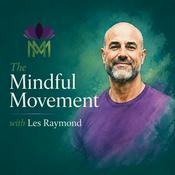 Gratis downloaden in de App Store
radio.net
Slaaptimer
Favorieten opslaan
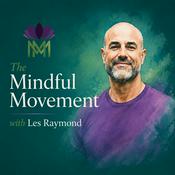
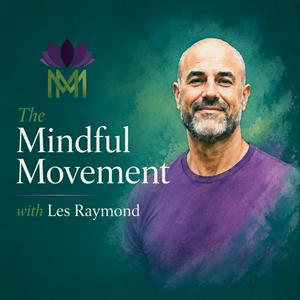
The Mindful Movement Podcast and Community
Sara and Les Raymond
Nieuwste aflevering
427 afleveringen
The Hidden Power of Your Voice (Most People Ignore This) | John Di Domenico
07-11-2026 | 1 u. 4 Min.What if one of your most powerful tools for connection, confidence, and self-expression is something you've barely thought about
?Your voice is with you in nearly every meaningful conversation of your life. Yet most of us spend far more time thinking about how we look than how we sound.
In this episode of The Mindful Movement Podcast, Les Raymond welcomes John Di Domenico, a renowned celebrity impressionist, entertainer, and voice expert whose career has included appearances on Conan O'Brien, Howard Stern, Jimmy Kimmel, and other major shows.
John shares his remarkable journey from a childhood speech impediment and eight years of speech therapy to a successful career bringing famous voices to life. Now, after decades of becoming other people, he's turning his attention toward helping people discover and develop their own authentic voices.
Together, Les and John explore the relationship between voice, identity, breath, nervous system regulation, and human connection. They discuss why hearing your recorded voice can feel so unfamiliar, how small changes in vocal expression may improve communication, and why humming and singing can be such meaningful practices for emotional well-being.John also shares practical exercises you can try to become more aware of your voice and communicate with greater ease.
In this conversation:
- Why your voice may be one of your most overlooked communication tools
- How John's childhood speech impediment shaped his extraordinary career
- Why your recorded voice sounds different from the voice you hear when speaking
- How pitch, pacing, tone, and articulation influence communication
- The relationship between breath, voice, and emotional expression
- Why humming, chanting, and singing can feel calming and restorative-
John's five-minute vocal warm-up routine
- Simple tongue twisters and articulation exercises
- How to become more aware of filler words and use pauses confidently
- The role of voice in relationships, attraction, and everyday conversations
- What professional impersonation taught John about vocal control
- The growing influence of AI-generated voices and the importance of human connection
- Why it's never too late to learn, grow, and develop new abilities
Connect with John Di DomenicoWebsite: https://thejohnnydshow.com
A question for you:Have you ever listened to a recording of your own voice and been surprised by how you sound? Or noticed how someone's tone of voice can immediately change the way you feel?
We'd love to hear your experience in the comments.
Thank you for being part of The Mindful Movement community. We hope this conversation encourages you to become more curious about your voice and the ways it can support authentic connection
.#TheMindfulMovement #JohnDiDomenico #Voice #CommunicationSkills #SelfExpression #Mindfulness #Confidence
TheMindfulMovement.com
Some of our Favorite Affiliates...
Dial down that stress with The Apollo Use Discount Code: MINDFUL
Our Favorite Vagus Nerve Stimulator
The Absolute BEST Lightbulbs
Sweat it out with an Infrared Sauna from Sunlighten
Sleep Well on these Grounding Mats from Ultimate LongevityAre You Carrying Trauma That Isn't Yours? | Isabella Skrypczak
31-10-2026 | 1 u. 12 Min.What if some of the fears, beliefs, and patterns shaping your life began long before you were born?
In this conversation, Les Raymond welcomes Isabella “Iza” Skrypczak, author of "A Polish Girl in Siberia: Surviving and Transcending Exile", for a thought-provoking exploration of generational trauma, family history, emotional healing, and the stories we inherit.I za shares the extraordinary story of her grandmother, who was deported to Siberia as a six-year-old during World War II. Despite surviving starvation, forced labor, and displacement, and later building a remarkable medical career, her grandmother's experiences continued to shape family life in ways that Iza only came to understand years later.
Together, Les and Iza explore:
- How experiences of war, displacement, and scarcity can influence family patterns across generations
- Why we may experience fear or insecurity even when our present circumstances are safe
- The relationship between family narratives, identity, and our sense of belonging
- Les's personal reflections on food security and his family's history
- What epigenetics can and cannot tell us about inherited stress
- Iza's approach to ancestral healing through somatic practices, visualization, inner child work, and energy-based modalities
- How cultural narratives can shape our beliefs about ourselves and others
- Why questioning inherited stories can be uncomfortable and liberating
- The role of self-awareness, compassion, and personal responsibility in interrupting cycles of conflict
- How small individual changes might contribute to greater understanding between people and communities
One of the most powerful questions in this conversation is whether everything we carry truly belongs to us. While the science of intergenerational trauma is still developing, and some of the spiritual and energetic interpretations discussed reflect Iza's personal approach rather than established scientific findings, this conversation offers an invitation to explore your family history with curiosity and compassion.
Connect with Isabella Skrypczak:
Website: https://izaclarahealing.com
Substack: Never BrokenBook: A Polish Girl in Siberia: Surviving and Transcending Exile
Join the conversation:
Have you ever recognized a fear, belief, or pattern in yourself that seemed connected to your family's history? Share your experience in the comments.
#GenerationalTrauma #AncestralHealing #NervousSystem #FamilyPatterns #EmotionalHealing #MindfulMovement
TheMindfulMovement.com
Some of our Favorite Affiliates...
Dial down that stress with The Apollo Use Discount Code: MINDFUL
Our Favorite Vagus Nerve Stimulator
The Absolute BEST Lightbulbs
Sweat it out with an Infrared Sauna from Sunlighten
Sleep Well on these Grounding Mats from Ultimate LongevityCan Breathwork Help You Release Emotions You've Been Holding? | Jamie Janko
24-10-2026 | 1 u. 9 Min.What if your breath could help you find calm, process emotions, and experience yourself in an entirely different way?
Most of us breathe without thinking about it. Yet the way we breathe can influence how we feel, how we respond to stress, and how connected we feel to ourselves.
In this conversation, Les Raymond sits down with Jamie Janko, founder of Rewild Breathwork, to explore the spectrum of breathwork, from simple everyday breathing practices to deeper conscious connected breathwork experiences.
Jamie shares how burnout and chronic stress led her away from a successful career in Major League Baseball and toward a new understanding of the nervous system, emotional well-being, and the power of the breath.
Together, Les and Jamie explore:
- How chronic stress can go unnoticed, even when you love your work
- The relationship between breathing patterns, physical tension, and nervous system regulation
- Why paying attention to your exhale may help you settle during stressful moments
- Simple breathing techniques for calming yourself or improving focus
- How habitual bracing and holding in the belly may affect breathing
- What conscious connected breathwork is and how it differs from everyday breathing practices
- Why some people experience strong emotions, unusual perceptions, or altered states during breathwork
- The importance of choice, safety, and trauma-informed facilitation
- How breathwork can create space for stillness, creativity, and self-reflection
- Les's personal experiences with breathwork, emotional awareness, and parenting
- Why more intense breathwork isn't appropriate for everyone
- How to develop a flexible, sustainable daily breathing practice
One of the most meaningful themes in this conversation is the space between stimulus and response. When we become more aware of our internal experience, we may find greater freedom in how we respond to the people and situations around us.Jamie also shares her philosophy of approaching breathwork with curiosity rather than force, allowing the practice to meet you where you are.
Whether you're completely new to breathwork or have explored it for years, this conversation offers a thoughtful look at the relationship between breathing, the nervous system, and our capacity for self-awareness.
Learn more about Jamie Janko and Rewild Breathwork:
https://rewildbreathwork.com
A note on safety:
The intensive breathwork experiences discussed in this episode are not appropriate for everyone and can carry physical and psychological risks. Certain medical conditions, pregnancy, and mental health histories may require avoiding these practices.
This conversation is educational and is not a substitute for individualized medical guidance or appropriately qualified facilitation.
Join the conversation:
Have you ever experienced an emotional shift, unexpected insight, or profound stillness through breathwork?
We'd love to hear about your experience in the comments.
#Breathwork #NervousSystemRegulation #SomaticHealing #Mindfulness #StressRelief #ConsciousBreathing #EmotionalWellbeing #TheMindfulMovement
TheMindfulMovement.com
Some of our Favorite Affiliates...
Dial down that stress with The Apollo Use Discount Code: MINDFUL
Our Favorite Vagus Nerve Stimulator
The Absolute BEST Lightbulbs
Sweat it out with an Infrared Sauna from Sunlighten
Sleep Well on these Grounding Mats from Ultimate LongevityIs Modern Convenience Making Us Less Capable? | Dr Robert Carter III
17-10-2026 | 1 u. 9 Min.What if some of the conveniences making our lives easier are quietly making us less capable?
From artificial intelligence and smartphones to food delivery, GPS navigation, and instant access to information, modern technology has changed nearly every aspect of daily life. These tools can save us time, reduce effort, and create extraordinary opportunities. But what happens when we begin relying on them for things we once knew how to do ourselves?
In this conversation, Les Raymond sits down with Dr. Rob Carter III, physiologist, researcher, military officer, and author of "The Convenience Trap: How to Regain Control in a World of Instant Gratification", to explore the hidden costs of convenience and how we can preserve our independence, resilience, and ability to think critically.
Rob introduces the concept of "strategic inconvenience", the intentional choice to preserve meaningful challenges in our lives rather than automatically choosing the easiest path. One of the most important questions in this conversation is how to recognize when convenience genuinely improves our lives and when it quietly takes something valuable away.
Technology isn't going away, and it doesn't have to be the enemy. The challenge is learning to use these tools intentionally while continuing to develop the skills, relationships, and inner resources that make us capable, adaptable human beings.
Learn more about Dr. Rob Carter and his work:
https://theconveniencetrap.comJoin the conversation:
Do you think technology is making us more capable or more dependent? What's one convenience you couldn't imagine living without, and one you might be better off using less?
Share your thoughts in the comments
.#TheConvenienceTrap #ArtificialIntelligence #Mindfulness #Resilience #InstantGratification #CriticalThinking #PersonalGrowth #TheMindfulMovement
TheMindfulMovement.com
Some of our Favorite Affiliates...
Dial down that stress with The Apollo Use Discount Code: MINDFUL
Our Favorite Vagus Nerve Stimulator
The Absolute BEST Lightbulbs
Sweat it out with an Infrared Sauna from Sunlighten
Sleep Well on these Grounding Mats from Ultimate LongevityYour Nervous System Doesn't Need a Reset. It Needs Retraining. | Jane Ollis
10-10-2026 | 53 Min.In this conversation, Les Raymond sits down with biochemist and entrepreneur Jane Ollis to explore the science of chronic stress, the autonomic nervous system, the vagus nerve, and the emerging field of non-invasive neuromodulation. Jane explains why nervous-system regulation is better understood as a process of retraining and recalibration, using different tools to help build greater capacity and resilience over time.
In this episode..
• Why chronic stress can make it harder for the nervous system to return to baseline
• The sympathetic and parasympathetic branches of the autonomic nervous system
• Why the vagus nerve plays such an important role in regulation
• How the ear provides access to a branch of the vagus nerve • Why nervous-system regulation isn't as simple as hitting a “reset” button
• How we may be able to gradually retrain and recalibrate our response to stress
• Why different nervous systems respond differently to the same practices
• Heart rate variability, or HRV, and what it can tell us about resilience and recovery
• Why your individual HRV trends may matter more than comparing your number with someone else's
• The relationship between chronic stress, sleep, energy, and recovery
• Why stress can contribute to difficulty falling asleep or staying asleep
• Jane's experience with menopause, disrupted sleep, and nervous-system regulation
• How vagus nerve stimulation works
• Why stimulation doesn't necessarily need to feel strong to have an effect
• The emerging science of pairing vagus nerve stimulation with breathing, meditation, movement, or learning
• Neuroplasticity and the nervous system's ability to adapt
• What researchers are still learning about neuromodulation
• Why there may never be one nervous-system tool that works equally well for everyone
• Simple ways to support regulation, including breathing, meditation, music, humming, connection, and other practice
s • How technology may become another tool in a much larger nervous-system toolkit
Les also shares his experience using Sona and what he has noticed after experimenting with several different vagus nerve stimulation devices.
One of the most important ideas in this conversation is that regulation isn't necessarily about eliminating stress.It's about developing greater "capacity". The goal is to help the nervous system become more flexible so that stress can rise when it's needed and settle when the challenge has passed.And that process may look different for each of us. Meditation, slow breathing, sleep, movement, relationships, time for recovery, and emerging technologies such as vagus nerve stimulation can all become pieces of a larger toolkit for supporting the nervous system.
Les and The Mindful Movement have an affiliate relationship with Sona. If you choose to purchase through our link, we may receive a commission at no additional cost to you.
CHECK OUT THE SONA DEVICE HERE
*This conversation is for educational purposes only and is not medical advice. Research into non-invasive vagus nerve stimulation and neuromodulation continues to evolve, and some potential applications discussed in this episode remain preliminary or anecdotal. Talk with a qualified healthcare professional about your individual circumstances.*#NervousSystem #VagusNerve #ChronicStress #StressRelief #NervousSystemRegulation #Sleep #HRV #Neuroplasticity #Mindfulness #TheMindfulMovement
Themindfulmovement.com
Thanks so much for all of your support!
With gratitude,
Les and Sara
_________________________________________________________
Some of our Favorite Affiliates...
Dial down that stress with The Apollo Use Discount Code: MINDFUL
The Absolute BEST Lightbulbs
Sweat it out with an Infrared Sauna from Sunlighten
Sleep Well on these Grounding Mats from Ultimate Longevity
Meer Alternatieve gezondheid podcasts







Trending Alternatieve gezondheid -podcasts

Over The Mindful Movement Podcast and Community
Welcome to the Mindful Movement Podcast! We have a robust catalog of guided meditations for you to add some peace in your life. We also have interviews with a broad range of folks to help empower you to play a larger role in your sense of well-being. Thanks for stopping by - we hope you enjoy!
Podcast websiteLuister naar The Mindful Movement Podcast and Community, Get Sleepy: stories for sleep en vele andere podcasts van over de hele wereld met de radio.net-app
Ontvang de gratis radio.net app
- Zenders en podcasts om te bookmarken
- Streamen via Wi-Fi of Bluetooth
- Ondersteunt Carplay & Android Auto
- Veel andere app-functies
Ontvang de gratis radio.net app
- Zenders en podcasts om te bookmarken
- Streamen via Wi-Fi of Bluetooth
- Ondersteunt Carplay & Android Auto
- Veel andere app-functies

The Mindful Movement Podcast and Community
Scan de code,
download de app,
luisteren.
download de app,
luisteren.
 Netherlands

