

Luister gratis naar deze podcast in de app: Gratis downloaden in de App Store
radio.net
Slaaptimer
Favorieten opslaan
58 afleveringen
#E68 Best of Hyperscale Season 3
10-06-2026 | 1 u. 17 Min.After three years, dozens of episodes, and some of the most interesting conversations of my life, I am closing the chapter on my podcast series HYPERSCALE.
I started the show with nothing but a cheap webcam in my office and one question I couldn’t shake: where is humanity actually heading? At the time, I couldn’t find anyone hosting that conversation the way I wanted to hear it.
It was either too academic and cold, or too hype-driven and empty. So I figured, fine, I’ll start it myself.
HYPERSCALE became a place to ask bigger questions about where technology is taking us, and what kind of future we want to build.
Each episode shifted my worldview at least a little bit, and the episodes will stay on Spotify and YouTube where they will be continue to be enjoyed. With Dr. Aubrey de Grey, we looked at aging as something that could one day be brought under medical control. With Lisa Bodell, we spoke about the cost of busyness and why we need more time to think, create, and imagine. With Dr. Natasha Vita-More, we explored how transhumanism and human augmentation could change the way we think about the body, the mind, and the future of human potential. To all of my incredible guests - thank you for making this show so amazing.
The HYPERSCALE chapter is closing, but the questions that started it are bigger than ever. I am taking everything I have learned and building something much bigger .. The conversion I feel compelled to explore next.
I cannot wait to show you what's ahead.
FOLLOW ►
Instagram
LinkedIn
TikTok
Website#E67 The Future Should Adapt to Us, Not the Other Way Around, With Phnam Bagley
24-03-2026 | 1 u. 8 Min."The moon is basically grayscale. It's dark gray or light gray. There's no atmosphere, which means that the sky is completely black. There's no sunsets and sunrises. And on mars everything is very orange because the regolith is very rich in iron. The atmosphere is very thin on mars and the sunsets on mars are blue."
I sat down with Phnam Bagley a few days after we met at the Dubai Future Forum, and this turned out to be one of the most interesting conversations I've had in a while.
Phnam is a designer, space architect, and founder of Nonfiction. Her work spans brain implant systems that, in early clinical trials, are showing real potential for people with treatment-resistant depression, with some patients experiencing meaningful change in just five days, all the way to designing for human life in space. She even served as commanding officer on an analog astronaut mission on one of the most remote islands on the planet.
She made the point that we've spent so long designing for the masses and for the elite, but the real challenge is designing technology that adapts to every single person. Not just in space, but everywhere. If you're disabled, elderly, a child, the environment should adjust to you, not the other way around. That principle runs through all of her work, from the brain implant system to the sleep device to the renewable energy batteries in East Africa.
She also told me this story about an executive coach who works with CEOs. The coach met a former child soldier in Uganda who'd been through everything but was full of hope. When she asked his secret, he said, 'Because I believe in myself.' She went back to her clients who had every advantage and couldn't shake the contrast. This episode covered a lot of ground, from neuroscience to space architecture to what it actually takes to believe in yourself.
FOLLOW ►
Instagram
LinkedIn
TikTok
Website#E66 Joy, Dancing, and the Science of Living Longer With Tina Woods
26-02-2026 | 56 Min.“Lots of money is being made in chronic diseases. And I have to say pharma is one of them… The food industry is another one. They make a lot of money making us sick.”
Tina Woods is back on Hyperscale, and honestly, this one stuck with me.
She went viral around the world after learning to DJ at 60. She’s been documenting her biological age reduction through HRT, intermittent fasting, dancing, joy, and genuine human connection. But the thing that really got me was her radical vision for a longevity revolution and why she believes the entire healthcare system needs a complete overhaul.
We talked about loneliness killing more people than smoking. We talked about how ancient Chinese medicine’s approach to healthcare challenges the modern system. She told me about going from foot surgery to becoming a viral DJ sensation, and why joy and connection are measurable longevity tools that can have a powerful impact on the body, far beyond what most people assume.
Tina is the Founder and CEO of Collider Health, Executive Director of the International Institute of Longevity, and a steering committee member of the Human Exposome Project, a global scientific initiative that could be even bigger and more complex than the Human Genome Project. Her City of Longevity initiative also recently won the Foresight Award (People’s Category) at the Dubai Future Forum.
I walked away from this conversation thinking differently about what health actually means. I think you will too.
FOLLOW ►
Instagram
LinkedIn
TikTok
Website#E65 AI Is Your Personal Assistant, Not Your Email Tool, With Alaa Dalghan
27-01-2026 | 57 Min.“AI is not your email tool. AI is your personal assistant. Each and every one of you now is a CEO of your own small company, and you have an assistant that does all the stuff for you.”
On this episode of HYPERSCALE, Briar Prestidge is joined by Alaa Dalghan, a computer engineer and founder of Cognit DX, whose career has spanned smart homes, smart buildings, and smart cities.
Alaa explains why most people still use AI like an “email tool,” then introduces Layla, his voice-enabled AI assistant, and shows how voice (and even vision) can change the way we work and live.
We also unpack the surprising shift in how people use AI, why companionship has become a leading use case, along with the risks that come with it.
Finally, we talk about the “middle ground” between regulation and innovation, and why Alaa believes the UAE has the ingredients to become the next Silicon Valley—if it can continue attracting and building talent.
FOLLOW ►
Instagram
LinkedIn
TikTok
Website#E64 The Code to Living Longer Already Exists in Our Biology, With Dr. Federico Von Son
30-09-2025 | 1 u."We are understanding now that this code is there, amazing, but now how can I make this code behave in different ways?"
On this episode of HYPERSCALE, I am joined by Dr. Federico, a physician specializing in genomics and regenerative medicine who founded one of Latin America's first direct-to-consumer genomics companies while still in medical school.
Dr. Federico brings a unique perspective to longevity medicine, having worked with everyone from professional athletes to indigenous communities, gathering crucial health data from underrepresented populations. His approach combines cutting-edge science with a deep commitment to making precision health accessible to all.
Join us as we explore how your genetic code interacts with your environment, why recovery matters more than we think, the real science behind stem cells and peptides, and why the basics of health might add 25 years to your life before we even touch advanced therapies.
FOLLOW ►
Instagram
LinkedIn
TikTok
Website
Meer Technologie podcasts
 Hard ForkTechnologie
 Apple EventsNieuws, Technisch nieuws, Technologie
 Waveform: The MKBHD PodcastHobby's, Nieuws, Technisch nieuws, Technologie, Vrije tijd
 Tech Update | BNRTechnologie
 AI ReportFilosofie, Maatschappij & cultuur, Technologie
 Bright PodcastNieuws, Technisch nieuws, Technologie
 Dwarkesh PodcastTechnologie, Wetenschap
 De Technoloog | BNRTechnologie
 Tweakers PodcastTechnologie
 De Grote Tech Show | BNRTechnologie
Trending Technologie -podcasts
 The Robot Brains PodcastOnderwijs, Technologie, Wetenschap
 Aviation Week's Check 6 PodcastLuchtvaart, Nieuws, Technologie, Vrije tijd, Zakelijk nieuws
 Everyday AI Podcast – An AI and ChatGPT PodcastNieuws, Ondernemerschap, Technisch nieuws, Technologie, Zaken en persoonlijke financiën
 HackedTechnologie, Waargebeurde misdaad, Zaken en persoonlijke financiën
 "The Cognitive Revolution"Maatschappij & cultuur, Ondernemerschap, Technologie, Zaken en persoonlijke financiën
 The InterfaceNieuws, Technisch nieuws, Technologie
 Silicon Valley Girl: AI, Tech and Career GrowthOndernemerschap, Technologie, Zaken en persoonlijke financiën
 What's New in Microsoft 365 and Copilot? A Super Simple 365 Podcast.Technologie
 Smashing SecurityKomedie, Nieuws, Technisch nieuws, Technologie
 C Programming for Everybody (cc4e.com)Technologie
 Daily Minutes PSTechnologie
 Book OverflowTechnologie
 Angry Nerds PodcastTechnologie
 The Talk Show With John GruberTechnologie
 Bits & AtomenTechnologie, Wetenschap
 Signals and ThreadsCarrières, Investeren, Technologie, Zaken en persoonlijke financiën
 TED Radio HourMaatschappij & cultuur, Sociale wetenschappen, Technologie, Wetenschap
 Wookash PodcastTechnologie
 How I AITechnologie
- Waveform: The MKBHD PodcastHobby's, Nieuws, Technisch nieuws, Technologie, Vrije tijd
 Daily Tech News ShowNieuws, Technologie
 De Legende van Satoshi Nakamoto | BNRTechnologie
 Galaxy BrainMaatschappij & cultuur, Nieuws, Technologie, Zaken en persoonlijke financiën
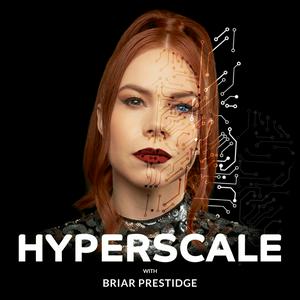
Over Hyperscale by Briar Prestidge
Welcome to HYPERSCALE, the Podcast of the Future.
No one has completely pegged down what precisely the future of technology holds, but we’re starting to see some incredibly fascinating ideas transitioning into reality.
Tune in for exclusive discussions with CEOs, tech experts, scientists, futurists, and philosophers.
No answer lasts forever, but we shape the future by asking all the right questions.
We’re curious. We’re adapting with the times. We’re enjoying the discovery.
Instagram: briar_prestidge
LinkedIn: Briar Prestidge
TikTok: briarprestidge
Podcast websiteLuister naar Hyperscale by Briar Prestidge, Hard Fork en vele andere podcasts van over de hele wereld met de radio.net-app
Ontvang de gratis radio.net app
- Zenders en podcasts om te bookmarken
- Streamen via Wi-Fi of Bluetooth
- Ondersteunt Carplay & Android Auto
- Veel andere app-functies
Ontvang de gratis radio.net app
- Zenders en podcasts om te bookmarken
- Streamen via Wi-Fi of Bluetooth
- Ondersteunt Carplay & Android Auto
- Veel andere app-functies

Hyperscale by Briar Prestidge
Scan de code,
download de app,
luisteren.
download de app,
luisteren.
 Netherlands