

Luister gratis naar deze podcast in de app: Gratis downloaden in de App Store
radio.net
Slaaptimer
Favorieten opslaan
401 afleveringen
I’m Excited to Be Writing Again
03-10-2026 | 59 Min.October has finally arrived, and I’ve been looking forward to it for quite some time.
I deliberately cleared as much as possible from my calendar. No big recording trips. No looming podcast deadlines. No administrative projects. For once, I want most of my days to revolve around one thing: writing.
Getting here was not particularly relaxing. Over the past two weeks, I produced around thirty episodes of my Dutch saints podcast, finished the paperwork for the audit of our foundation, and spent more than four hours on trains to record another ten episodes in a basilica in the south of the Netherlands.
By the time October arrived, I was exhausted. But the blinking lights in my head had finally gone out.
When everything keeps blinking
I’ve noticed this about myself before. I can have plenty of time to write, but if there are five other things demanding my attention, I find it almost impossible to really disappear into a story.
An email I still need to answer. A recording that has to be scheduled. A problem someone else is waiting for me to solve. None of those things may take much time on their own, but together they create a kind of white noise in my head.
Producing a daily podcast has created a lot of that noise this year. I’ve loved making it, but it also asks for a constant stream of creative energy. Spending your working day telling stories doesn’t necessarily make it easier to sit down afterwards and tell another one.
Last year, I was constantly dreaming up new stories. This year, much of that came to a halt.
I missed it more than I realised.
Three days into October
On October 1, I started writing again.
I’m back to rewriting my fantasy novel, and the year away from it may actually have helped. The world is much clearer to me now. I understand the characters better, and I have a stronger sense of why I want to tell this story in the first place.
At the same time, another idea came back to life.
A couple of months ago, while walking through Utrecht, I had a very simple thought: what if an old monk had a magical cat?
The cat soon acquired nine lives, each lasting a century. The monk became a former story mage who had lost confidence in his abilities. Something hidden beneath the monastery should probably have remained there.
This week I wondered whether I could combine that idea with Inktober, the annual drawing challenge with a different prompt for every day in October. Three days later, I had the outline for a 31-chapter story.
I’m still tired, and I’m already behind on the drawings. But my brain is making things again.
That is the difference.
Keeping it playful
I’m deliberately keeping this second project small.
The novel gets the serious writing hours. The story about the monk and his cat gets my lunch breaks. One short chapter, one small illustration, then back to the novel.
I’ve learned that tiny side projects have a habit of turning into enormous undertakings if I’m not careful. This time, I want the lunch breaks to remain playful. I want to make something because the idea makes me smile, not because it has to become part of some larger strategy.
Ireland can wait
I still haven’t booked my trip to Ireland.
A few years ago, that probably would have made me panic. Instead, I looked at the possibilities and realised that travelling immediately would be unnecessarily expensive.
So I’m not going yet.
My first job this month isn’t to maximise every available day. It’s to recover from the sprint that got me here, to walk, sleep, settle into a rhythm, and write every day.
Ireland can wait another week or two.
For once, I’m not particularly worried about how much I’ll accomplish by the end of the month. Three days in, something more important has already happened.
I’m excited about writing again.
And I’ve missed that feeling.
P.S. This article grew out of this week’s episode of The Walk. You can hear more about my plans for October, the stories I’m working on, and why I may end up in Ireland, Scotland, or both by hitting play on the audio player at the top of this page.
Get full access to Father Roderick at fatherroderick.substack.com/subscribeYou Don't Have to Finish Everything You Start
27-09-2026 | 50 Min.At the beginning of this year, I decided I was going to read 100 books.
It seemed perfectly reasonable at the time. I’d read even more than that in previous years, and although I knew 2026 would be busy, surely I could manage 100?
We are now approaching October.
I recently looked at my Goodreads account and discovered that, to reach my goal, I’d pretty much have to read a book every single day until the end of the year.
Part of my brain immediately went: Challenge accepted!
Fortunately, another part asked a much more sensible question.
Why?
When goals become obligations
There’s nothing wrong with setting goals. I love goals.
The problem starts when circumstances change but the goal doesn’t.
When I decided to read 100 books, I didn’t know quite how demanding producing a daily podcast would become. I didn’t know how much time I’d spend recording, editing, traveling and doing everything else around it.
And yet there was still a little voice telling me that I’d failed because I wasn’t keeping a promise I’d made to myself nine months ago.
I recognize exactly the same voice when I look at my writing.
At one point, I wanted to publish eight books this year. Then I meet another author who published their first novel last year and already has their second book out, and immediately I think:
I’m so far behind.
Behind whom?
Nobody is waiting outside my house with a stopwatch.
The deadline mostly exists in my own imagination.
The Halloween project
I ran into the same problem again this week.
I had come up with an idea for a special series of seven episodes of my Dutch saints podcast leading up to Halloween. There are some surprisingly eerie stories about saints, demons and supernatural encounters, and I thought it would be fun to tell them almost like horror stories, complete with music and sound effects.
I loved the idea.
Then I tried writing them.
It was hard.
I’ve never written horror before. I’m actually rather impressionable myself, so I tend to avoid it. The first attempts felt cheesy. I couldn’t find the right voice. After struggling with it for a couple of days, I realized that doing this properly might consume another two weeks.
A few years ago, that wouldn’t have stopped me.
I’d had the idea. I’d committed to it in my head. Therefore I had to finish it.
This time I asked myself another question.
Why?
Nobody had asked for these seven episodes. We already have interviews recorded that can fill those slots perfectly well. The Halloween series was something I’d invented because it sounded fun.
So I parked it.
Maybe I’ll return to it someday. Maybe I’ll have learned enough about writing horror by then to make it work.
For now, letting it go gave me something much more valuable: room to breathe.
Goals can change. Priorities don’t have to.
I’m slowly learning to distinguish between my goals and the reasons I set those goals in the first place.
Reading 100 books was a goal. Loving books and wanting to read more is the priority.
Publishing eight books was a goal. Becoming a better writer and bringing my stories into the world is the priority.
Creating a Halloween series was a goal. Telling good stories is the priority.
Once I look at it that way, changing a goal doesn’t feel nearly as much like failure.
Sometimes the circumstances simply changed.
And sometimes I changed.
That doesn’t mean giving up on the things that matter. Quite the opposite. It means protecting them from all the arbitrary targets, deadlines and expectations that can gradually make them feel like obligations.
My desire to write hasn’t disappeared because I haven’t published eight books this year.
If anything, it’s stronger.
And now that I’ve cleared a few things from my October calendar, I’m getting ready to return to Ireland.
This time, I don’t have a target for how many chapters I need to finish while I’m there.
I just want to write.
That seems like a pretty good goal to me.
P.S. This article grew out of this week’s episode of my podcast The Walk. You can listen to the full episode by hitting play on the audio player at the top of this page.
Get full access to Father Roderick at fatherroderick.substack.com/subscribeHow to deal with a disturbance in the Force
18-09-2026 | 1 u.I knew exactly what I wanted to work on this week. I was going to continue rewriting my fantasy novel. I had made some good progress on the worldbuilding and the magic system, and I was finally getting back into a rhythm.
Then a letter arrived from the Dutch tax authorities.
Our non-profit foundation, Trideo, had been selected for a routine check. Nothing alarming, as far as I can tell. But they need documents. Annual reports. Plans. Financial information. Details about what we’ve been doing and what we’re planning to do.
And they need it before the end of the month.
There went my carefully planned September.
A disturbance in the Force
As I walked through the woods this week, I called it a disturbance in the Force.
You can have your priorities perfectly organized and diligently work through them every day. Then something appears that you didn’t plan for but can’t ignore.
I initially tried to keep everything else going alongside it. The novel. My podcast work. Preparations for a possible research trip in October. Fantasyfans. All the other projects already occupying little corners of my brain.
That didn’t work particularly well.
I stopped taking my daily walks. I didn’t sleep as well. I became agitated. There was a knot in my stomach.
The funny thing is that the paperwork itself isn’t particularly frightening. The problem is uncertainty. When something suddenly lands on my desk with lots of different parts and no obvious first step, my brain wants to solve all of it at once.
So I eventually did the opposite.
For the next two weeks, the paperwork gets priority. The contractual work still gets done. Everything else can wait.
Getting lost
There was a certain irony to explaining all this while recording the podcast.
I decided to take a path through the woods that I hadn’t walked before.
Except it wasn’t really a path.
Soon I was climbing over fallen trees, crawling underneath branches and trying to work out whether I had accidentally wandered into someone’s backyard. At one point I found an enormous cobweb and decided that awakening Shelob would not improve my week.
Eventually I found a real path again.
Then the thunder started.
Within minutes, the blue skies disappeared, rain was pouring through my flimsy running jacket and cold water was trickling down my spine.
So much for planning.
But perhaps that’s why I need these walks especially when life gets busy.
For about a week I had skipped them because I thought I didn’t have time. In reality, walking is one of the things that makes everything else sustainable. The same goes for keeping my evenings free, going to bed on time and occasionally doing something creative that doesn’t have to become another project.
Even drawing medieval miniatures can become work if I’m not careful. Before long I’m imagining a book, a video series and twelve social media posts about them.
Sometimes a drawing should just be a drawing.
There will always be more work
By the time I found my familiar walking route again, the storm had passed. The sun even came back.
My plans for the next couple of weeks haven’t magically become less complicated. There is still a pile of paperwork waiting for me. There are podcast episodes to produce. I’m going to Elfia this weekend. And somewhere beyond all that, my unfinished novel is patiently waiting for me.
But I’ve also made one decision that I’m rather happy about.
In October, I want to return to Ireland.
I had been considering Scotland, but Ireland makes more sense right now. It gives me a chance to write, revisit some of the places that inspired my stories and gather more material for the books I’m already working on.
More importantly, putting the trip on the calendar protects it from all the work that will inevitably try to take its place.
Because there will always be more work.
There won’t always be another autumn in which I can go to Ireland.
P.S. These reflections began during this week’s episode of The Walk. If you’d like to hear the original (and hear me get lost, caught in a thunderstorm and eventually find my way home) you’ll find the audio player at the top of this page.
Get full access to Father Roderick at fatherroderick.substack.com/subscribeWhat Season of Life Are You In?
13-09-2026 | 1 u. 1 Min.One of the unexpected gifts of this past week didn’t happen while writing my novel or recording a podcast. It happened while walking through the woods.
As autumn slowly announces itself here in the Netherlands, the first mushrooms are appearing among the fallen branches. They’re easy to miss, but every year they remind me that life has its own seasons. Some things disappear. New things quietly emerge in their place.
I’ve noticed something similar happening in my own life.
For years I’ve tried to hold on to every version of Father Roderick that ever existed. The Star Wars enthusiast. The television presenter. The priest. The podcaster. The documentary maker. The YouTuber. The writer. I kept wondering whether I should still be all of those things at once.
Lately I’ve begun to suspect that the question itself is wrong.
Finding my place
Last weekend I spent a day at a small fantasy festival, recording interviews for my new Dutch podcast, Fantasyfans.nl. It was a much smaller event than Castlefest, which made it possible to have real conversations with artists, writers and visitors.
What struck me most wasn’t the costumes or the music.
It was the kindness.
Again and again I met people eager to encourage each other, share their creativity and celebrate each other’s stories. I came home with hours of interviews, but also with a growing conviction that this community is exactly where I need to be right now.
Not because everyone thinks the same way, quite the opposite.
It’s because I can simply show up as myself: a priest who loves stories. A storyteller who happens to be a priest.
Letting go of old roles
That has also made me think about the things I’m slowly letting go of.
This week I started clearing out one of the cupboards in my office. It was filled with microphones, cameras, old phones and equipment I bought for projects I once imagined I would make.
I realised I wasn’t really sorting electronics.
I was sorting through old versions of myself.
Some of those dreams were worth pursuing because they brought me exactly where I am today. Others have simply run their course. Keeping hold of them doesn’t honour the past. It only clutters the present.
The same is true for the roles we assign ourselves.
There comes a moment when you have to stop asking, “Who am I supposed to be?” and start asking, “Who has God actually made me to be?”
Trusting the journey
That question has made returning to my fantasy novel much easier. I’m no longer trying to become “an author” as quickly as possible. I’m simply writing the story that has been growing inside me for years.
The same goes for podcasting, for building this new fantasy community, and for everything else that currently fills my days.
I don’t need to keep proving that I can still do everything I used to do. I only need to be faithful to the work I’ve been given today.
Perhaps that’s what vocation looks like: not becoming someone else.
But gradually becoming more fully yourself.
Fr. Roderick VonhögenP.S. This week's newsletter is based on the latest episode of The Walk. You can listen to it by pressing play on the audio player at the top of the page.
Fantasyfans.nl update
A warm welcome if you recently discovered this newsletter through Fantasyfans.nl!
Last weekend I recorded the latest episode of the podcast live at the Evermore Fantasy Festival. It turned into a wonderful collection of conversations with artists, writers, cosplayers and fantasy fans about creativity, community and why these festivals feel like coming home for so many people.
🎙️ You can listen to the live festival episode (in Dutch) here:
Get full access to Father Roderick at fatherroderick.substack.com/subscribeBack in Medieval Ireland
06-09-2026 | 57 Min.Home again
Every weekday morning this week, I’ve found myself back in early medieval Ireland.
The morning mist still hangs over the valley as monks make their way across the monastery grounds. The bell has just called the community to prayer. In the scriptorium, novices bend over their desks, learning to shape letters and illuminate manuscripts. Outside the walls, old legends are stirring, and somewhere in the distance a young novice is about to stumble into a story much bigger than he could ever imagine.
Then I look up from my laptop.
For the first time in months, I’m genuinely looking forward to sitting down every morning to rewrite my first fantasy novel.
Not because I’m making spectacular progress. Quite the opposite. Some mornings I rewrite a single page. Others I don’t write anything at all. Instead, I listen back to old voice notes, rethink the history of a monastery or spend an hour trying to understand one of my characters a little better.
And I’m having the time of my life.
Exploring instead of producing
Only a few weeks ago, this felt completely different.
Rewriting the novel had become a mountain I kept avoiding to climb. Every new story idea seemed more exciting than returning to the manuscript I’d already written. I felt guilty about that, convinced I simply needed more discipline.
Now I think something else was going on…
Last week I wrote about letting go of the imaginary version of myself who always had enough time to do everything. Once I stopped measuring myself against that impossible person, something unexpected happened. The pressure disappeared.
I no longer felt I had to prove I could write a novel, I could simply take the time to learn how to write one. And that tiny shift changed everything.
Instead of trying to produce pages as quickly as possible, I’ve started treating these mornings as an opportunity to explore. Sometimes I end up reading about medieval pigments. Or I draw a map of the monastery grounds. Sometimes I realise an entire chapter needs to happen somewhere else.
None of that feels like wasted time anymore. It’s part of building a world I’d actually want to visit myself.
Becoming a storyteller
As I mentioned last week, Tolkien once described writers as sub-creators. I’ve always loved that expression. We don’t create out of nothing. We receive the world as a gift, then patiently shape it into stories of our own.
Perhaps that’s what I’ve been rediscovering this week: writing isn’t simply producing words… It’s learning to see. Learning to listen. Learning to inhabit a world until it begins to feel real enough for someone else to step inside.
Will it take longer to finish this novel than I’d hoped a year ago?
Almost certainly.
But that no longer bothers me.
Because every morning I return to medieval Ireland, I leave my desk with something much more valuable than another completed chapter.
I close my laptop with the feeling that, little by little, I’m becoming the writer this story has needed all along.
Fr. Roderick Vonhögen
P.S.: This article is based on the latest episode of my podcast The Walk. If you’d rather hear the story in my own voice, you’ll find the podcast player at the top of this page.
Fantasyfans.nl update
It’s been exciting to watch my new Dutch fantasy podcast and community slowly find its audience. Just over a month after launching, Fantasyfans.nl has grown to around 350 Instagram followers, while the Facebook and YouTube communities are steadily growing as well. What I enjoy most, though, is the interaction. Every week I record a community podcast, and it’s wonderful to see the discussions continue long after the microphones have been switched off.
Last week I published an interview with fantasy author G.J.G. Klaassen, whom I quite literally bumped into while walking the Four Day Marches of Nijmegen. We talked about his debut novel, writing fantasy and finding inspiration in unexpected places. You can read or listen to the interview here.
This weekend I also spent a day at the Evermore Fantasy Festival in Ede, where I recorded a new community podcast and spoke with visitors, authors and creators. I’m editing those conversations now, along with plenty of photos from the festival, and I’ll start sharing them later this week. If you’re curious about the Dutch fantasy community, keep an eye on Fantasyfans.nl!
Get full access to Father Roderick at fatherroderick.substack.com/subscribe
Meer Christendom podcasts
 De LeerlingenChristendom, Religie en spiritualiteit
 Zij Lacht - Elke DagChristendom, Religie en spiritualiteit
 Heilige van de DagChristendom, Geschiedenis, Religie en spiritualiteit
 De Ongelooflijke PodcastChristendom, Religie en spiritualiteit, Spiritualiteit
 Dick en Daniël Geloven het WelChristendom, Religie en spiritualiteit
 De Stem - Inspirerende verhalen van vervolgde christenenChristendom, Religie en spiritualiteit
 Christine en Gerjanne weten het (ook niet)Christendom, Religie en spiritualiteit
 Christenen voor IsraëlChristendom, Religie en spiritualiteit
 PauscastChristendom, Religie en spiritualiteit
 Een preek voor elke dagChristendom, Onderwijs, Religie en spiritualiteit
Trending Christendom -podcasts
 Bijbellezen met JanBoeken, Christendom, Cursussen, Kunst, Onderwijs, Religie en spiritualiteit
 ScheppingsdriftBeeldende kunst, Boeken, Christendom, Kunst, Maatschappij & cultuur, Religie en spiritualiteit
 LuisterBijbel HSVChristendom, Religie en spiritualiteit
 2819 ChurchChristendom, Religie en spiritualiteit
 Heilige GrondChristendom, Religie en spiritualiteit
 The Gospel TruthChristendom, Religie en spiritualiteit
 Credo PodcastChristendom, Religie en spiritualiteit
 Dagelijkse overdenking met Joyce MeyerChristendom, Onderwijs, Religie en spiritualiteit, Zelfhulp
 Podcast JubileeChristendom, Religie en spiritualiteit
 The River Church NL PodcastChristendom, Religie en spiritualiteit
 Frontrunners Ministries // Tom de WalChristendom, Religie en spiritualiteit
 Levensvragen | Een goed beginChristendom, Religie en spiritualiteit
 Ask NT Wright AnythingChristendom, Geschiedenis, Religie en spiritualiteit
 KloostergesprekkenChristendom, Religie, Religie en spiritualiteit
 Bible TimeChristendom, Religie en spiritualiteit
 DiepZinnigChristendom, Religie en spiritualiteit
 Rethinking God with Tacos PODCASTChristendom, Religie en spiritualiteit
Over The Walk
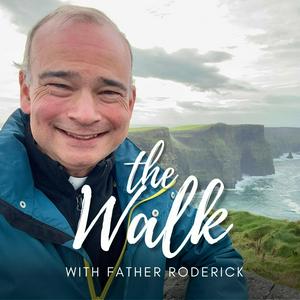
A weekly walk with Fr. Roderick during which he shares his thoughts as a priest on the struggles and challenges as well as the joys and surprises of day-to-day life. fatherroderick.substack.com
Podcast websiteLuister naar The Walk, De Leerlingen en vele andere podcasts van over de hele wereld met de radio.net-app
Ontvang de gratis radio.net app
- Zenders en podcasts om te bookmarken
- Streamen via Wi-Fi of Bluetooth
- Ondersteunt Carplay & Android Auto
- Veel andere app-functies
Ontvang de gratis radio.net app
- Zenders en podcasts om te bookmarken
- Streamen via Wi-Fi of Bluetooth
- Ondersteunt Carplay & Android Auto
- Veel andere app-functies

The Walk
Scan de code,
download de app,
luisteren.
download de app,
luisteren.
The Walk: Podcasts in familie

 Netherlands