
Luister gratis naar deze podcast in de app: Gratis downloaden in de App Store
radio.net
Slaaptimer
Favorieten opslaan
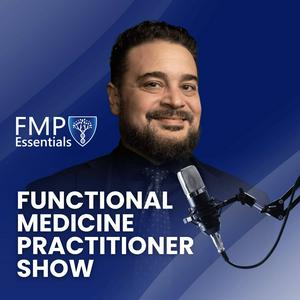
FMP Essentials: Functional Medicine Practitioner Show
Dr. Yousef Elyaman
Nieuwste aflevering
31 afleveringen
Functional Medicine Approach to Low Testosterone in Men with Dr. Yousef Elyaman
13-11-2026 | 38 Min.Episode Description
In this FMP Essentials episode on low testosterone in men and functional medicine, Dr. Yousef Elyaman explores why testosterone levels should not be interpreted in isolation and what practitioners should investigate before considering testosterone replacement.
Low energy, decreased libido, erectile dysfunction, changes in mood, increased body fat, reduced muscle mass, and poor exercise response may point toward low testosterone. But Dr. Elyaman explains why symptoms and a total testosterone result are only the beginning of the clinical investigation.
From total and free testosterone to SHBG, LH, FSH, estrogen, inflammation, insulin resistance, vitamin D, and PSA, this episode walks through the broader clinical picture. Dr. Elyaman explains how metabolic dysfunction, excess estrogen, inflammation, sleep apnea, and other underlying factors may influence testosterone levels and why identifying those drivers matters.
The conversation also explores lifestyle and supplementation considerations, testosterone creams, injections and pellets, monitoring, prostate considerations, and what practitioners should investigate when a patient receives testosterone but still does not feel better.
The central principle is simple: don't just treat the number. Find out why the number is abnormal.
Key Questions We're Answering
What are the potential root causes of low testosterone in men?
Why can total testosterone alone give an incomplete clinical picture?
Which labs can help practitioners investigate low testosterone more comprehensively?
How are insulin resistance, estrogen, inflammation, and sleep apnea connected to testosterone?
When should testosterone replacement be considered, and what should practitioners continue monitoring?
Why You Can't Miss This Episode
Low testosterone may be more than a hormone problem. It can be a signal of a deeper metabolic imbalance.
Dr. Elyaman explains that some of the underlying factors associated with low testosterone are also associated with cardiovascular disease. His clinical emphasis is therefore not simply on replacing testosterone, but on investigating and addressing the underlying imbalances contributing to the patient's overall health picture.
For practitioners, this episode provides a framework for thinking beyond a single lab value. For patients and functional medicine champions, it explains why finding the "why" behind low testosterone can matter just as much as identifying the low level itself.
What Listeners Will Learn
Key Insight:
"Don't just treat the number. Look at the patient, get to the root of disease."
Top Takeaways:
Symptoms matter alongside labs. Dr. Elyaman questions diagnosing low testosterone solely from a low laboratory result when the patient does not have corresponding symptoms.
Total testosterone isn't the entire story. SHBG can affect how much testosterone is actually available to the body, which is why free or bioavailable testosterone deserves consideration.
Investigate the hormonal signaling system. LH, FSH, estradiol, and estrone can provide additional clues about why testosterone production may be altered.
Look beyond reproductive hormones. Insulin resistance, inflammation, vitamin D status, metabolic health, and other clinical markers can contribute to the broader picture.
Replacement doesn't end the investigation. If a patient receives testosterone and still doesn't improve, Dr. Elyaman recommends revisiting factors including insulin resistance, estrogen levels, SHBG, and the patient's presenting symptoms.
Bonus Clinical Insight
For younger men concerned about fertility, Dr. Elyaman discusses HCG as a clinical consideration because exogenous testosterone can decrease sperm production and testicular size. He describes situations in which HCG may be considered either before or alongside testosterone replacement based on clinical judgment.
Shareable Quotes
"Low testosterone is more of an alert that there's a deeper imbalance."
"Don't just treat the number. Look at the patient."
"More is not always better. You start low, you go slow."
This Episode’s Sponsors
FMP Essentials – The #1 Resource for Functional Medicine Practitioners
www.fmpessentials.com
Practitioners: Want to level up your functional medicine game? Sign up for our Bronze Mastermind:
https://www.fmpessentials.com/mastermind-founders-launch
Connect with Us
FMP Essentials
Instagram: https://instagram.com/fmpessentialshq
Website: https://www.fmpessentials.com
Dr. Yousef Elyaman
Instagram: https://instagram.com/drelyaman
Disclaimers
This podcast is for educational purposes only and does not constitute medical advice. No doctor-patient relationship is established by watching. Supplement discussion is educational and not intended to diagnose, treat, cure, or prevent disease. Always consult a qualified healthcare provider before making changes to your care plan.
Don’t Just Listen—Transform Your Practice
Share This Episode – Forward it to a colleague or friend
Leave a Review – Tell us your biggest takeaway
Subscribe for More – Get exclusive resources inside the FMP Essentials Mastermind
Music Credit: "Heroes Approaching - Extended" by tunes2go
The FMP Essentials Show – Where Functional Medicine Meets MasteryThe Delegation Trap: AI, Staff & Legal Risk in Functional Medicine | Scott Rattigan
05-10-2026 | 1 u. 11 Min.Host & Guest Details
Host: Dr. Yousef Elyaman, Functional Medicine Primary Care Physician
Guest: Scott Rattigan, JD, Founder of Functional Lawyer
Episode Overview
As functional medicine continues to evolve, practitioners have more opportunities than ever to expand their impact through telemedicine, online education, AI, and larger clinical teams. But growth also brings new legal responsibilities that many providers overlook until a problem arises.
In this episode of FMP Essentials, attorney Scott Rattigan joins Dr. Yousef Elyaman to discuss the legal realities of running and scaling a modern functional medicine practice. From delegation and health coaching to telemedicine regulations, AI implementation, and informed consent, Scott explains where practitioners unknowingly increase their legal risk and how thoughtful systems can protect both patients and providers.
Whether you're building your first practice or leading a growing team, this conversation provides practical guidance to help you expand confidently while protecting your license, your business, and your reputation.
Key Questions We're Answering
When does delegation become practicing medicine without a license?
What legal mistakes are practitioners making with telemedicine?
Can AI safely assist with patient care and documentation?
How should functional medicine practices use health coaches and virtual assistants?
What policies and documents should every growing practice have in place?
Why You Can't Miss This Episode
Every new system you introduce into your practice, whether it's AI, telemedicine, delegation, or online education, creates new opportunities and new legal responsibilities. Understanding these boundaries before problems arise can help protect your patients, your business, and your professional license while allowing you to grow with confidence.
What Listeners Will Learn
Key Insight
"Your medical license is one of your most valuable professional assets. Every decision to delegate, expand, or adopt new technology should strengthen your practice without putting that license at unnecessary risk."
Top Takeaways
1. Delegation Requires Clear Boundaries
As practices grow, delegation becomes essential. However, practitioners must clearly define what team members, health coaches, and virtual assistants can and cannot do. Allowing staff to unintentionally cross into clinical decision-making can create unnecessary legal exposure.
2. Telemedicine Is More Regulated Than Many Practitioners Realize
Telemedicine has created tremendous opportunities for functional medicine, but state licensing requirements still apply. Understanding where patients are located, when additional licensure may be required, and how to manage interstate care is critical for long-term compliance.
3. AI Should Support Clinical Judgment, Not Replace It
Artificial intelligence can improve efficiency by assisting with documentation, administrative tasks, and workflow. However, practitioners remain responsible for every clinical decision and should never rely on AI-generated recommendations without professional review.
4. Strong Documentation Protects Both Patients and Providers
Well-designed informed consent forms, patient intake documents, and clearly communicated practice policies create better patient experiences while reducing legal uncertainty as practices expand.
5. Growth Should Never Come at the Expense of Compliance
Successful practice owners build systems that allow them to serve more patients while protecting their reputation, business, and professional license. Sustainable growth requires balancing innovation with responsible risk management.
Bonus Clinical Pearl
One of the most practical concepts discussed is viewing online courses and educational programs as a way to expand access to your expertise without replacing individualized medical care. When structured appropriately, education can increase impact while helping practices maintain appropriate clinical boundaries.
Shareable Quotes
"Scaling your practice isn't just about serving more patients. It's about building systems that protect your patients, your team, and your license."
"AI is an excellent assistant, but it should never become your clinical judgment."
"The goal isn't simply to avoid legal problems. It's to build a practice that can grow with confidence."
This Episode's Sponsors
FMP Essentials
The #1 Resource for Functional Medicine Practitioners
www.fmpessentials.com
Practitioners looking to level up your functional medicine game?
Join the Bronze Mastermind:
https://www.fmpessentials.com/mastermind-founders-launch
Connect with Us
Scott Rattigan
Instagram: @functionallawyer
Website: https://functionallawyer.com
FMP Essentials
Instagram: @fmpessentialshq
Website: www.fmpessentials.com
Dr. Yousef Elyaman
Instagram: @drelyaman
Music Credit: "Heroes Approaching - Extended" by tunes2go
Don’t Just Listen - Transform Your Practice
Share This Episode – Forward it to a colleague or friend
Leave a Review – Tell us your biggest takeaway
Subscribe for More – Get exclusive resources inside the FMP Essentials Mastermind
Disclaimers
Educational Purpose Only – This podcast is for informational purposes only and does not constitute medical advice.
No Doctor-Patient Relationship – Listening does not establish a doctor-patient relationship.
Supplement Use Disclaimer – Any supplement recommendations are not intended to diagnose, treat, cure, or prevent disease. Consult your provider.
Professional Responsibility – Practitioners should use their professional judgment before applying strategies discussed.
Liability Disclaimer – The host, guest, and affiliated organizations assume no liability for the use or misuse of the information shared.
The FMP Essentials Show – Where Functional Medicine Meets MasteryWearables, Metabolic Flexibility & Functional Medicine with Dr. Lara Zakaria
07-09-2026 | 1 u. 51 Min.Host & Guest Details
Host: Dr. Yousef Elyaman, Functional Medicine Primary Care Physician
Guest: Dr. Lara Zakaria, Integrative Pharmacist & Nutritionist
Episode Overview
What can your wearable actually tell you about your metabolic health?
In this FMP Essentials episode on functional medicine, metabolic flexibility, and wearable health technology, Dr. Yousef Elyaman sits down with Dr. Lara Zakaria, an integrative pharmacist and nutritionist, to explore how practitioners can use data from continuous glucose monitors, HRV trackers, sleep technology, and other wearable devices to better understand patterns in metabolism, stress, recovery, and overall health.
Dr. Lara explains that metabolic health goes far beyond blood sugar or how quickly someone burns calories. It reflects how efficiently the body converts food into fuel and shifts between carbohydrates and stored fat for energy.
The conversation also explores an important clinical distinction: wearable data is not the diagnosis. Instead, it can provide another layer of information that helps practitioners recognize patterns, ask better questions, and connect everyday behaviors with physiology.
Key Questions We’re Answering
• What does metabolic flexibility actually mean, and why does it matter?
• Can wearables provide useful clues about inflammation and metabolic dysfunction?
• What can continuous glucose monitors reveal that fasting glucose and A1C may miss?
• How should practitioners interpret HRV, sleep, recovery, and glucose trends without creating data overload?
• How do digestion, insulin, thyroid function, stress, inflammation, and environment influence metabolic health?
Why You Can’t Miss This Episode
More health data does not automatically mean better clinical decisions.
The real value of wearable technology comes from understanding which measurements matter, recognizing trends over time, and connecting those trends back to the patient's physiology, behaviors, and health goals.
Dr. Lara breaks down how practitioners can move beyond simply collecting scores and begin using wearable data as part of a broader functional medicine assessment.
What Listeners Will Learn
Key Insight:
“It’s not just getting the score. It’s how do you use that?”
Top Takeaways:
• Metabolic flexibility reflects the body's ability to efficiently shift between carbohydrates and fat as fuel.
• Digestive function, the microbiome, insulin signaling, thyroid function, inflammation, stress, and environmental exposures can all influence metabolic health.
• CGMs can help reveal glucose patterns related to meals, activity, sleep, and stress, but individual readings should not be interpreted in isolation.
• HRV, heart rate, sleep, and recovery data can provide additional context about physiological resilience and stress.
• Wearable data should complement clinical assessment and appropriate laboratory testing rather than replace them.
Bonus Insight:
When choosing wearable technology for patients, accuracy is only part of the equation. Affordability, accessibility, and whether practitioners can efficiently review and integrate the data into their clinical workflow also matter.
Shareable Quotes
“Metabolic health is the ability for your body to turn food into fuel efficiently.”
“It’s not just getting the score. It’s how do you use that?”
“You are the captain of your ship. You know what your body feels like.”
This Episode’s Sponsors
FMP Essentials – The #1 Resource for Functional Medicine Practitioners
www.fmpessentials.com
Practitioners: Want to level up your functional medicine game? Sign up for our Bronze Mastermind:
https://www.fmpessentials.com/mastermind-founders-launch
Connect with Us
Dr. Lara Zakaria
Instagram: https://instagram.com/foodiefarmacist
Website: https://larazakaria.com/
FMP Essentials
Instagram: https://instagram.com/fmpessentialshq
Website: https://www.fmpessentials.com
Dr. Yousef Elyaman
Instagram: https://instagram.com/drelyaman
Disclaimers
This podcast is for educational purposes only and does not constitute medical advice. No doctor-patient relationship is established by watching. Supplement discussion is educational and not intended to diagnose, treat, cure, or prevent disease. Always consult a qualified healthcare provider before making changes to your care plan.
Don’t Just Listen—Transform Your Practice
Share This Episode – Forward it to a colleague or friend
Leave a Review – Tell us your biggest takeaway
Subscribe for More – Get exclusive resources inside the FMP Essentials Mastermind
Music Credit: "Heroes Approaching - Extended" by tunes2go
The FMP Essentials Show – Where Functional Medicine Meets MasteryUnderstanding the PMOS and MASLD Connection: Early Detection of Fatty Liver Disease Through Functional Medicine
10-08-2026 | 1 u. 18 Min.PMOS, Insulin Resistance & Fatty Liver: Detecting MASLD Before Advanced Liver Disease
A patient can live with metabolic dysfunction for years while liver disease progresses quietly in the background. For women with PMOS, formerly PCOS, the connection between insulin resistance, hormonal dysfunction, and fatty liver may be especially important.
This episode is deeply personal. Dr. Ellie Campbell joins Dr. Yousef Elyaman to share the story of her lifelong friend Nancy Hartmann, whose experience with PMOS, diabetes, and advanced liver disease became the catalyst for this conversation.
Together, they explore a critical clinical question:
What clues can help us recognize metabolic liver disease earlier, before fibrosis and cirrhosis become advanced?
WHY THIS EPISODE MATTERS
PMOS is much more than an ovarian condition. The metabolic dysfunction associated with PMOS can extend beyond reproductive symptoms and involve insulin resistance, inflammation, metabolic health, and the liver.
In this episode, Dr. Campbell and Dr. Elyaman connect PMOS, insulin resistance, metabolic dysfunction, oxidative stress, MASLD, and liver fibrosis, while examining practical ways clinicians can identify risk earlier.
The conversation moves from basic laboratory clues to tools such as FIB-4, FibroScan, ELF testing, HOMA-IR, GGT, platelet count, homocysteine, iron studies, thyroid testing, and uric acid, followed by practical strategies for addressing metabolic dysfunction.
WHAT YOU’LL LEARN
• Why the shift from PCOS to Polyendocrine Metabolic Ovarian Syndrome (PMOS) better reflects the systemic metabolic nature of the condition
• How insulin resistance can contribute to androgen excess, hormonal dysfunction, inflammation, and fatty liver
• Why patients with PMOS or diabetes may warrant a lower threshold for evaluating liver health
• What ALT, AST, GGT, platelet count, homocysteine, and the neutrophil-to-lymphocyte ratio may add to the clinical picture
• Why an AST greater than or equal to ALT can deserve a closer look in the appropriate clinical context
• Why GGT may provide additional information about oxidative stress and liver risk even when patients feel well
• How age, AST, ALT, and platelet count are incorporated into the FIB-4 assessment for liver fibrosis
• When clinicians should consider FibroScan, ELF testing, ultrasound, or hepatology referral
• Why iron status, thyroid dysfunction, uric acid, environmental exposures, gut dysbiosis, and bile physiology may also matter when evaluating MASLD
• How HOMA-IR and continuous glucose monitoring can help characterize metabolic dysfunction
• The discussion around myo-inositol and berberine for insulin resistance
• Why Mediterranean-style nutrition, resistance training, cardiovascular exercise, weight reduction when appropriate, sleep, and stress management matter
• The discussion around CoQ10, phosphatidylcholine, GLP-1-based therapies, and individualized treatment strategies
• Why identifying fibrosis changes the clinical pathway and when collaboration with a hepatologist becomes important
GUEST: ELLIE CAMPBELL, DO
Dr. Ellie Campbell is a Functional Medicine physician who is board certified in Family Medicine and Integrative Medicine. She has operated a solo concierge medical practice for more than 20 years and lectures nationally on oral-systemic health and its connections to cardiovascular and whole-body health.
She is the author of The Blood Pressure Blueprint: The Holistic Guide to Defeating Hypertension and host of the Sleep, Sex, and Senility podcast.
Connect with Dr. Campbell
Instagram: @dr.elliecampbell
Website:
https://campbellfamilymedicine.com
Book:
The Blood Pressure Blueprint
Podcast:
Sleep, Sex, and Senility
HOST: YOUSEF ELYAMAN, MD, IFMCP
Dr. Yousef Elyaman is the Founder and Medical Director of Absolute Health, an insurance-based Functional Medicine primary care practice in Ocala, Florida, and the Founder of FMP Essentials, a clinical education platform for Functional Medicine practitioners.
He is board certified in Internal Medicine, is an Institute for Functional Medicine Certified Practitioner (IFMCP), and practices Integrative and Functional Medicine. He serves as teaching faculty for the Institute for Functional Medicine, Medical Director of HumanN, and Medical Director of The Guest House Ocala.
His work focuses on translating Functional Medicine into practical, evidence-informed clinical care, with an emphasis on metabolic health, cardiovascular risk, complex chronic disease, and real-world clinical implementation.
Instagram:
@drelyaman
FMP Essentials:
https://www.fmpessentials.com
CLINICAL TOPICS & RESOURCES MENTIONED
• Polyendocrine Metabolic Ovarian Syndrome (PMOS) / PCOS
• Metabolic Dysfunction-Associated Steatotic Liver Disease (MASLD)
• Insulin resistance and HOMA-IR
• ALT and AST
• GGT
• Homocysteine
• CBC with differential
• Neutrophil-to-lymphocyte ratio
• Platelet count
• FIB-4
• FibroScan
• ELF testing
• Ferritin and iron studies
• Comprehensive thyroid testing
• Uric acid
• Gut dysbiosis and the gut-liver connection
• Environmental exposures
• Continuous glucose monitoring
• Mediterranean-style nutrition
• Resistance and cardiovascular exercise
• Myo-inositol
• Berberine
• CoQ10
• Phosphatidylcholine
• GLP-1-based therapies
THIS EPISODE’S SPONSOR
FMP Essentials is the #1 Resource for Functional Medicine Practitioners.
https://www.fmpessentials.com
For serious practitioners ready to go further, the FMP Essentials Mastermind offers advanced mentorship, practical clinical education, exclusive resources, and a trusted peer network.
Learn more:
https://www.fmpessentials.com/mastermind
GO DEEPER: MASTERING MASLD
Fatty liver disease was one of the first major clinical topics developed inside FMP Essentials.
Practitioners who want to take a deeper dive into the evaluation and Functional Medicine approach to MASLD can explore additional clinical education through FMP Essentials.
https://www.fmpessentials.com
HONORING NANCY HARTMANN’S LEGACY
This episode is dedicated to the memory of Nancy Hartmann.
Nancy’s story reminds us that metabolic liver disease can progress silently and that disease severity is not always fully captured by a single laboratory value or scoring system.
Nancy was evaluated by IU Health and was on the liver transplant list. Her MELD score did not adequately reflect how sick she had become.
Nancy’s husband, Jim Hartmann, has emphasized that the most important goal of sharing her story is awareness: helping patients, families, and healthcare professionals recognize the relationship between metabolic dysfunction, PMOS, and liver disease earlier.
For those wishing to make a tribute gift in Nancy’s memory, her family requested that the IU Foundation Liver Research Fund be listed as the primary memorial option.
IU Foundation – Liver Research Fund
In memory of Nancy Hartmann:
https://tinyurl.com/darfknex
American Liver Foundation Memorial Giving:
https://liverfoundation.org/how-you-can-help/tribute-gift/
Another powerful way to honor Nancy is simply to share this episode with clinicians, patients, and families who may benefit from understanding the PMOS-MASLD connection.
GIVING BACK THROUGH MEDICINE
The episode closes with Dr. Campbell describing the giving model built into her medical practice.
A portion of practice profits is directed toward charitable giving, while scholarship patients can contribute community-service hours in place of traditional payment.
Her model reflects a larger principle behind FMP Essentials: clinical knowledge has its greatest impact when practitioners use it to improve the lives of others.
DON’T JUST LISTEN – TRANSFORM YOUR PRACTICE
• Share This Episode – Send it to a colleague, patient, or friend who should understand the PMOS-MASLD connection
• Leave a Review – Tell us your biggest clinical takeaway
• Subscribe for More – Continue your education through FMP Essentials and the FMP Essentials Mastermind
DISCLAIMERS
Educational Purpose Only – This podcast is for informational and educational purposes only and does not constitute medical advice.
No Doctor-Patient Relationship – Listening to this podcast does not establish a doctor-patient relationship.
Supplement Use Disclaimer – Discussion of supplements is educational and is not intended to diagnose, treat, cure, or prevent disease. Patients should consult an appropriately qualified healthcare professional before starting or changing supplements or treatment.
Professional Responsibility – Healthcare practitioners should use their own professional judgment, training, scope of practice, and the individual clinical circumstances of each patient before applying strategies discussed in this episode.
Liability Disclaimer – The host, guest, and affiliated organizations assume no liability for the use or misuse of information presented in this podcast.
MUSIC CREDIT
“Heroes Approaching - Extended” by tunes2go
The FMP Essentials Show – Where Functional Medicine Meets Mastery
Yousef Elyaman, MD, IFMCP
Author of the upcoming book: Ignite Your Healing Power
www.AbsoluteHealthOcala.comBeyond Birth Control: A Functional Medicine Approach to Teen Hormone Health with Dr. Wendy Warner
02-08-2026 | 1 u. 56 Min.Host & Guest Details
Host: Dr. Yousef Elyaman, Functional Medicine Primary Care Physician
Guest: Dr. Wendy Warner, MD, Board-Certified OB-GYN, Functional Medicine Physician, IFM Educator, Herbal Medicine Educator, and Women's Hormone Health Expert.
Episode Overview
Many teenage girls are prescribed birth control pills as the first treatment for painful periods, acne, irregular cycles, and mood changes. But are we truly addressing the root cause of these symptoms, or simply suppressing them?
In this FMP Essentials episode, functional medicine physician and OB-GYN Dr. Wendy Warner joins Dr. Yousef Elyaman to explore how adolescent hormone health shapes a woman's long-term wellness. Together, they examine the physiology of ovulation, the unintended consequences of suppressing natural hormone development, and why a root cause approach can lead to healthier outcomes throughout life.
Rather than relying solely on symptom management, this conversation walks practitioners through the clinical reasoning behind evaluating nutrition, insulin resistance, inflammation, stress physiology, mineral deficiencies, and hormone balance before reaching for pharmaceutical interventions. Dr. Warner also shares practical clinical pearls for assessing dysmenorrhea, irregular cycles, early PCOS patterns, and supporting teenage patients through individualized functional medicine care.
Whether you are a functional medicine practitioner, primary care physician, nurse practitioner, OB-GYN, health coach, or a parent searching for better answers, this episode offers a thoughtful discussion on helping young women build healthier hormonal foundations for the future.
Key Questions We're Answering
Why has birth control become the default treatment for teenage hormone problems?
What happens when ovulation is suppressed during adolescence?
How can functional medicine uncover the root causes of painful periods and irregular cycles?
What laboratory testing provides meaningful clinical insight before prescribing hormones?
How do nutrition, blood sugar, inflammation, stress, and lifestyle influence hormone health in young women?
Why You Can't Miss This Episode
Many women spend years managing symptoms without ever addressing why those symptoms developed in the first place.
This episode provides a practical framework for evaluating adolescent hormone health through the lens of functional medicine, helping practitioners move beyond symptom suppression toward individualized, root cause care that may improve long-term reproductive and metabolic health.
What Listeners Will Learn
Key Insight
"Suppressing symptoms isn't the same as restoring health. When we help the body develop normal hormone function instead of simply replacing it, we create better outcomes for the future."
Top Takeaways
1. Birth control should not always be the first answer.
Many adolescents receive oral contraceptives for painful periods, acne, or irregular cycles before anyone investigates why these symptoms developed in the first place. Functional medicine begins by identifying and addressing the underlying physiology.
2. Adolescent hormone health influences lifelong wellness.
The teenage years are a critical period for establishing healthy communication between the brain, ovaries, and uterus. Supporting normal ovulation and hormone development may have long-term implications for fertility, bone health, muscle development, and overall hormonal resilience.
3. Blood sugar and inflammation play a larger role than many clinicians realize.
Dr. Warner explains how insulin resistance, inflammation, stress, and diet can contribute to estrogen imbalance, menstrual pain, and early hormone dysfunction. Identifying these patterns often reveals opportunities for intervention before medication becomes necessary.
4. Laboratory testing should support clinical reasoning.
Instead of relying solely on hormone panels, practitioners can gain valuable insight by evaluating fasting glucose, fasting insulin, RBC magnesium, cortisol patterns, DHEA, and other functional markers while considering each patient's clinical presentation.
5. Lifestyle remains foundational medicine.
Nutrition, movement, sleep, stress management, and individualized patient education are essential components of improving adolescent hormone health. Sustainable lifestyle changes often address the underlying drivers of menstrual symptoms more effectively than symptom suppression alone.
Bonus Clinical Pearl
One of the most practical insights from this discussion is the importance of evaluating fasting glucose alongside HbA1c and fasting insulin. A normal fasting glucose with a disproportionately low HbA1c may reveal recurring hypoglycemia, providing an early clue to metabolic dysfunction that contributes to hormone imbalance.
Shareable Quotes
"Birth control may suppress symptoms, but it doesn't always solve the reason those symptoms developed."
"Healthy hormone function begins long before pregnancy. It begins during adolescence."
"The goal isn't simply to regulate a cycle. It's to restore the physiology that creates a healthy cycle."
Think About It
If a teenage patient presents with painful periods or acne, are you treating today's symptoms, or helping build the hormonal foundation she'll depend on for the next 30 years?
This Episode's Sponsors
FMP Essentials
The #1 Resource for Functional Medicine Practitioners
www.fmpessentials.com
Practitioners looking to level up your functional medicine game?
Join the Bronze Mastermind:
https://www.fmpessentials.com/mastermind-founders-launch
Connect with Us
Dr. Wendy Warner
Instagram: @wendywarnermd
Website: https://www.wendywarnermd.com/
FMP Essentials
Instagram: @fmpessentialshq
Website: www.fmpessentials.com
Dr. Yousef Elyaman
Instagram: @drelyaman
Music Credit: "Heroes Approaching - Extended" by tunes2go
Don’t Just Listen—Transform Your Practice
Share This Episode – Forward it to a colleague or friend
Leave a Review – Tell us your biggest takeaway
Subscribe for More – Get exclusive resources inside the FMP Essentials Mastermind
Disclaimers
Educational Purpose Only – This podcast is for informational purposes only and does not constitute medical advice.
No Doctor-Patient Relationship – Listening does not establish a doctor-patient relationship.
Supplement Use Disclaimer – Any supplement recommendations are not intended to diagnose, treat, cure, or prevent disease. Consult your provider.
Professional Responsibility – Practitioners should use their professional judgment before applying strategies discussed.
Liability Disclaimer – The host, guest, and affiliated organizations assume no liability for the use or misuse of the information shared.
The FMP Essentials Show – Where Functional Medicine Meets Mastery
Meer Geneeskunde podcasts


Trending Geneeskunde -podcasts




Over FMP Essentials: Functional Medicine Practitioner Show
Welcome to the Functional Medicine Practitioner (FMP) Essentials Podcast, hosted by Dr. Yousef Elyaman, a leading expert in primary care functional medicine. This podcast serves as the premier educational resource for functional medicine practitioners worldwide, offering unparalleled insights and strategies to enhance practitioner success through mastery of functional medicine.
Each episode dives deep into specific health conditions or topics. Dr. Elyaman conducts insightful interviews with top-tier practitioners and thought leaders or delivers powerful solo episodes filled with cutting-edge research, case studies, and practical applications. Our mission is to equip you with the tools, knowledge, and confidence to excel in your practice and transform patient outcomes.
Exclusive bonus content, including extended interviews and special topics, is available only to FMP Essentials Mastermind members. Visit www.FMPessentials.com to learn more, join our global network of practitioners, and take your place at the forefront of functional medicine. Together, we are redefining the future of healthcare—one episode at a time.
Podcast websiteLuister naar FMP Essentials: Functional Medicine Practitioner Show, Antroposofie Podcast en vele andere podcasts van over de hele wereld met de radio.net-app
Ontvang de gratis radio.net app
- Zenders en podcasts om te bookmarken
- Streamen via Wi-Fi of Bluetooth
- Ondersteunt Carplay & Android Auto
- Veel andere app-functies

 Netherlands

