

Luister gratis naar deze podcast in de app: Gratis downloaden in de App Store
radio.net
Slaaptimer
Favorieten opslaan
97 afleveringen

Ep. 97 - Russell Long: Stop Blaming AI. Your Data is the Problem
24-07-2026 | 32 Min.Every CIO I talk to wants to know how to get AI ready. But according to Russell Long, co-founder and CEO of Authentica Solutions, most institutions are asking the wrong question. The real bottleneck isn't choosing the right AI model—it's unifying the data that feeds it.
In this episode, host Jeff Dillon sits down with Russell, who has spent two decades building the data infrastructure that sits quietly underneath education technology. He's taken a company through acquisition by BrightBytes (later acquired by Google), seen his DataSense platform find a second home inside Microsoft, and rebuilt Authentica around a modern education intelligence platform backed by a $6.2 million Series C round.
Russell shares hard-won lessons from the classroom, the enterprise, and global scale. He explains why "technical turn-on" doesn't equal adoption, why universities need to re-evaluate who they actually serve, and how a state-level nursing shortage was really a data problem in disguise. He also introduces the Adoption Improvement Method (AIM)—a framework for ensuring new technology actually gets used, not just purchased.
For anyone leading digital strategy, data governance, or AI adoption in higher ed, this episode is a grounded, practical look at what it actually takes to build the foundation for intelligent systems.
Key Takeaways
AI Readiness Starts with Data Unification, Not the Model: You can't trust AI answers if you don't trust the data behind them. Institutions need to unify their data into a "gold layer" of trusted information before they can confidently explore AI. Garbage in, garbage out—at scale.
Technical Turn-On Is Not Adoption: Just because a system is available doesn't mean it's being used. Many institutions confuse "turned on" with "adopted." Real adoption requires consistency, training, and ongoing engagement—not just a contract signature.
The Adoption Improvement Method (AIM) Is a Framework for Success: Authentica's AIM methodology includes 11 components for implementing enterprise technology, measuring impact, and revisiting change management. If adoption is low, it may be the wrong tech, the wrong onboarding, or just a bad fit.
Bad Data Leads to Bad Policy: Russell shares the story of a state nursing program that thought it was nearly full—until unified data revealed it was short by 2,000 spots annually and that 72% of nursing students were dropping out by sophomore year, not the assumed 36%. Acting on assumed data leads to bad decisions.
Data Belongs to the Student: Schools, districts, and universities are proxies for student data. The ultimate goal should be giving students ownership of their own information so they can share it with employers, certifications, or institutions as they choose.
K-12 and Higher Ed Have More in Common Than We Think: The challenges around data, interoperability, and technology adoption are surprisingly similar across both sectors. Some of the best ideas for higher ed come from looking across the K-12 divide.
The Rise of the Community College Is Real: Major companies like Microsoft and Google are investing dedicated teams in community colleges, separate from their state and local government sales teams. That signals a shift worth paying attention to.
Higher Ed Needs to Re-Evaluate Who It Serves: Many professors still treat 18–21-year-olds like they're in high school—but those students are paying for a service. The power dynamic is shifting, and institutions that don't adapt will struggle.
Special Education Support Shouldn't End at K-12: Students who receive support in K-12 often lose it when they transition to higher ed. Russell argues that universities should be req...
Chapters
(00:00:00) - The future of learning is professor-centered
(00:00:45) - Meet the Connectors of Higher Ed: Russell Long
(00:02:12) - Top Executives: The power of AI in the classroom
(00:06:40) - Authentica: Connecting K12 & Higher Ed Data
(00:09:53) - What's the Big Picture of Data Preparing for AI?
(00:12:01) - Data readiness: The hard part
(00:17:47) - What did that experience teach you about building a scalable education business?
(00:22:04) - Microsoft's Adoption Improvement Method
(00:25:04) - WSJD Live: K12 and Higher Ed
(00:29:49) - What's Your Biggest Win?
(00:32:07) - The Signal: Higher Ed Tech InsightsEp. 96 - Troy Holaday: 52,000 Degrees Were Already Earned. They Just Hadn't Been Found.
17-07-2026 | 34 Min.Transfer credit is one of higher ed's most persistent headaches. Students lose credits, take longer to graduate, and navigate a labyrinth of institutional policies that often feel designed to frustrate rather than help. But according to Troy Holaday, president of CollegeSource, the narrative that "transfer is broken" is outdated—and it's getting in the way of real progress.
In this episode, host Jeff Dillon sits down with Troy, a former academic advisor and professor who spent 16 years inside Ball State University before leading one of the most widely used transfer technology platforms in the country. Troy brings a rare perspective: he's been the advisor sitting across from students, the faculty member designing curriculum, and the technologist building systems to make transfer work.
Troy challenges the conventional wisdom that transfer is a disaster, pointing to recent data showing that most students now have their credits evaluated automatically and are largely satisfied with the process. He argues that the real problem isn't broken systems—it's that we're not telling the right stories. Instead of fixating on horror stories, we should be studying and scaling best practices.
The conversation covers CollegeSource's suite of products and how they work together to mirror the transfer journey. Troy also shares the story of Louisiana's statewide expansion of TES across all public institutions, and the remarkable "degree discovery" work that has helped institutions award more than 200,000 degrees to students who had stopped out.
For any enrollment leader, registrar, advisor, or policymaker trying to make transfer work better, this episode offers a grounded, evidence-informed perspective on what's already working—and where technology can actually move the needle.
Key Takeaways
Transfer Is Normal—Not an Oddity: An overwhelming majority of students now earn credit from more than one institution. Transfer should be treated as a standard part of the educational journey, not a disruption or a problem to be solved.
The "Transfer Is Broken" Narrative Is Outdated: Much of the alarming data about credit loss comes from studies looking at transcripts from 2004–2009. More recent research shows that most students have their credits evaluated automatically and are largely satisfied with the process. Horror stories are real, but they don't represent the whole picture.
Earlier Planning Is Critical: Students who can see how their credits will apply before they transfer are more likely to make informed decisions and avoid taking courses that won't count. Transparency builds confidence and reduces wasted time and money.
The Louisiana Statewide Initiative Is a Model for Collaboration: Getting 28+ institutions to work together on transfer is no small feat. Louisiana's expansion of TES creates a unified public-facing portal for transfer students and signals that the state is serious about serving transfer students well.
Degree Discovery Is Transformative: College Source's degree discovery work—running millions of audits to identify students who have earned enough credits for a degree—has helped institutions award more than 200,000 degrees to stop-outs. Ivy Tech alone increased degree output by 20,000, forcing the state to reformulate its funding model based on completion rates.
Policy and Technology Both Matter: Technology can make a good process better, but it can't fix broken policies. Institutions need clear vision, good champions, and grassroots people in the trenches who will actually use the tools available to them.
Change the Stories We Tell:
Chapters
(00:00:00) - Transfer Is Broken: The Fix isn't in
(00:02:07) - Teaching and Building Academic Systems at College Source
(00:05:52) - Transfer Credit: Hard to Solve
(00:10:37) - TransferOmni and the degree-planner system
(00:17:21) - Louisiana's Transfer Student Visibility
(00:21:50) - TESS: The Transfer Credit Evaluation System
(00:24:35) - College Source: Serving 2,000+ Institutions
(00:27:15) - Transfer Credit: AI in the College Field
(00:30:59) - Transfer Credit: The Need to Change the Story
(00:33:29) - The Signal: Higher Ed Tech InsightsEp. 95 - Jeff Meade: Why Paul Quinn College Made Entrepreneurship a Graduation Requirement
10-07-2026 | 32 Min.What if a college degree required not just passing classes—but launching a real business?
In this episode, host Jeff Dillon sits down with Jeff Meade, Founding Director of Entrepreneurship at Paul Quinn College, where "Every Quinnite Is an Entrepreneur" isn't a slogan—it's a graduation requirement. Every student, regardless of major, must start and launch a venture before they leave campus.
Jeff brings over 20 years of agency and consulting experience to higher ed, and he's using that builder mindset to reimagine what a college education can produce. He shares the story of the hike in Japan that led him to ask "what makes me happy?"—and how that question pulled him out of a successful consultancy and into the classroom.
The conversation covers Paul Quinn's venture-based learning model, a six-week boot camp where students identify problems, pitch solutions, and then build real businesses with real stakes. Jeff explains how securing six-figure seed funding changed the way students show up—turning dreams into tangible ventures. He also introduces the concept of acquisition entrepreneurship, where the college itself is exploring equity partnerships in businesses to diversify revenue streams and give students hands-on operating experience.
For any institutional leader wondering if this model could work beyond Paul Quinn, Jeff offers a practical path: culture starts at the top, and you need people who see the world differently. This is a must-listen for anyone who believes higher ed must do more than teach theory—it must create value.
Key Takeaways
Every Student Must Launch a Business to Graduate: At Paul Quinn, entrepreneurship isn't an elective or a major—it's a graduation requirement for every student, regardless of their field of study. The goal is to help students think and act like entrepreneurs in any career they pursue.
Venture-Based Learning Has Real Stakes: Unlike traditional entrepreneurship courses that end with a graded pitch, venture-based learning requires students to actually go to market. Students must talk to real customers, face rejection, and pivot. That experience is often harder—and more valuable—than getting an A.
Real Money Changes Student Mindset: Paul Quinn secured six-figure funding for a student seed fund. When students know there's actual capital behind their ideas, they dream bigger and take the work more seriously. A $5 sale can feel like a breakthrough when it leads to an investment.
Technology Must Reduce Friction, Not Add It: Supporting hundreds of students launching real businesses requires a different tech stack. Paul Quinn partnered with Canoo to create a marketplace where students can display and sell products or services—eliminating the heavy lift of building a website from scratch.
Partnerships Start with Shared Values: Paul Quinn's goal is to eradicate intergenerational poverty. That mission attracts partners like Babson, Wharton, and the Sean Carter Foundation—not because of fancy pitches, but because they see the world the same way. Find people who share your vision and start a conversation.
Acquisition Entrepreneurship: A New Frontier: Beyond starting businesses, Jeff is exploring acquisition entrepreneurship—helping students acquire and operate existing small businesses. The college is also exploring equity partnerships to diversify its own revenue streams while giving students hands-on operating experience.
Bring Companies in Early and Often: Jeff argues that higher ed doesn't involve companies soon enough. But the ask doesn't have to be big—invite executives to a roundtable, host a lunch, bring them into a clas...
Chapters
(00:00:00) - What's the Toughest Part of Starting a Business?
(00:00:39) - This college is reimagining what a college degree is actually supposed
(00:02:01) - Paul Quinn College Alumnus on Why He Pivot
(00:05:39) - What Does a Student's Journey to Starting a Venture
(00:10:14) - How to Launch a Business on Campus
(00:14:35) - In expanding access to entrepreneurship education
(00:16:49) - The Future of Learning: Technology in Higher Education
(00:24:35) - Higher Ed's Future of Venture-based Learning
(00:28:47) - Paul Quinn College's Vision for Venture Based Learning
(00:32:00) - The Signal: Higher Ed Tech PodcastEp. 94 - Elysia Labita: Marketing Can't Out-Optimize Misalignment
03-07-2026 | 31 Min.What if the biggest barrier to enrollment growth isn't your marketing budget—but your program portfolio itself?
In this episode, host Jeff Dillon sits down with Elysia Labita, Executive Director of Portfolio Strategy and Marketing at EdPlus at Arizona State University. Over the past decade, Elysia has helped scale ASU Online from roughly four programs to more than 400, serving over 118,000 students. She brings a provocative and practical lens to one of higher ed's most uncomfortable conversations: programs are products.
Elysia explains why "if you build it, they will come" is a dangerous myth, and why great intentions don't create demand. She shares how her team uses funnel data, market signals, and program life cycle analysis to make decisions about what to launch, modernize, or sunset—without alienating faculty. She also offers a guide to having difficult conversations about underperforming programs, using data not as a weapon but as a tool to uncover systemic friction.
From the insight that high-enrolling campus programs consistently become high-enrolling online programs, to the revelation that AI is most valuable as a listening tool rather than a content generator, this episode is packed with actionable frameworks for any institutional leader trying to build a healthier, more sustainable academic portfolio.
Key Takeaways
Great Intentions Don't Create Demand: Marketing can't out-optimize misalignment. If a program isn't positioned correctly, if the value proposition isn't clear, or if demand simply doesn't exist, no amount of ad spend will fix it. The problem isn't marketing—it's the portfolio.
Programs Are Products—And That's Not a Dirty Phrase: When Elysia says "programs are products," she's not saying education is a commodity. She's acknowledging that students have more ways to learn than ever. The question institutions must answer is: what unique value do we bring? It's not the information—it's the faculty, the research, the credibility, the mentorship, and the outcomes.
Online Students Were Never Going to Relocate: The fear that online programs will cannibalize campus enrollment is misplaced. Online students are working adults, parents, military, or place-bound. The question isn't whether they'll choose online over campus—it's whether they'll have access to higher education at all.
High-Enrolling Campus Programs Become High-Enrolling Online Programs: This pattern has held so consistently at ASU that it's the strongest signal Elysia looks for. Those students aren't waiting to come to campus—they're waiting for access.
Not Every Program Has the Same Job: Roughly 40% of programs drive about 80% of enrollment. That doesn't mean the other 60% should be cut. Some programs are growth engines; others are mission programs serving specific community needs. Understanding each program's role in the portfolio changes how you resource and market it.
Programs Follow Life Cycles: The first couple of years show explosive growth (capturing pent-up demand), then level off, then plateau or decline. Institutions that assume 200% growth will continue often over-hire faculty and over-plan budgets. Setting realistic expectations early prevents panic later.
Before Sunsetting, Try Modernizing: Most underperforming programs aren't dead—they're outdated. Sometimes it's a single course refresh, a repositioned career list, or updated degree description. Only after trying incremental fixes should institutions move to sunsetting conversations.
AI's Real Power Is Listening, Not Generating: At ASU, the bi...
Chapters
(00:00:00) - The Signal: Portfolio Strategy and Marketing
(00:01:49) - Getting it out there: How to grow a degree
(00:03:49) - WSJD Live: ASU Online's Scale
(00:07:25) - Programs are products: The future of higher ed
(00:15:03) - Program Life Cycle, Reinvestment
(00:17:38) - How to Fix Program Misalignment
(00:24:33) - New Programs Needed to Enhance Current Programs
(00:27:15) - How AI is changing the way we do portfolio strategy
(00:29:15) - Alicia On Higher Ed: The Future
(00:30:43) - The Signal: Higher Ed Tech InsightsEp. 93 - Dave Tucker: The Note Taker's Dilemma — Why Lectures Are Mostly Wasted
26-06-2026 | 33 Min.What if the biggest barrier to student success isn't ability—but the belief that effort is even worth it?
In this episode, host Jeff Dillon sits down with Dave Tucker, founder and CEO of Genio, a learning technology company that's been quietly transforming how students study, learn, and persist for nearly two decades. What started as an assistive note-taking tool for students with dyslexia has evolved into a platform used by over 900 institutions worldwide, supporting more than 160,000 learners—including first-generation students, working adults, veterans, and neurodivergent learners.
Dave shares the company's origin story: creating a visual interface for lecture recordings so students wouldn't have to re-listen to hours of audio. But along the way, he discovered something deeper—the "note taker's dilemma," the cognitive overload of trying to capture information while simultaneously processing it, and the devastating impact of students internalizing failure as a personal flaw.
The conversation covers Genio's recent independent research showing a 3.6% GPA increase and a 28% reduction in dropout rates, the company's ESSA Level 3 validation, and Dave's thoughtful, cautious approach to AI. He argues that the real opportunity lies not in replacing effort but in scaffolding the learning process—capture, organize, refine, apply—so that students develop the confidence and skills to learn independently.
For any enrollment leader, dean of students, or ed tech decision-maker trying to separate genuine impact from marketing noise, this episode offers a grounded, evidence-informed perspective on what actually moves the needle for student success.
Key Takeaways
Learning Is a Process, Not an Event: Genio's framework—capture, organize, refine, and apply—scaffolds the entire learning journey, helping students move from simply recording information to truly synthesizing and applying it. Understanding this process is the foundation of effective study.
The "Note Taker's Dilemma" Is Real: Students struggle to capture information while simultaneously understanding it. Recording lectures and creating a visual, interactive interface allows them to focus during class and engage deeply afterward—reducing cognitive overload and wasted effort.
Small Interventions Can Be Life-Changing: Dave shares the story of a community college student who thought she was "stupid" until she used Genio and realized she wasn't the problem—the environment was. Simple tools that address core friction points can transform a student's self-belief and trajectory.
Confidence Is the Real Product: If students don't believe that effort will pay off, they won't invest it. The goal of learning technology should be to build self-efficacy and agency—not just to deliver content faster.
Trust Is Built Over Time, Not Through Claims: Independent research, student testimonials, research partnerships, and consistency all contribute to trust. The question isn't just "does it work?" but "does this company have the best intentions for learning?"
Accessibility Should Be Built In, Not Bolted On: Accessibility is not about compliance checkboxes—it's about access to the learning process itself. When done well (like the iPhone's built-in accessibility features), it benefits everyone, not just a subset of users.
Learner-Centered Design Is the Future: Higher education has traditionally been teaching-centric, focusing on pedagogy and classroom design. But most learning happens outside the classroom, through independent study. The biggest opportunity is designing tools that support learners in those environments.
Good Learning Is Effortful—But It Doesn't Have to Be Wasteful: Like going to the gym, learning requires struggle. But w...
Chapters
(00:00:00) - The Fix to Student Academic Struggles
(00:00:44) - Meet Dave Tucker Diaz
(00:02:29) - Genio: The Story of Note Taking
(00:07:54) - Quora's Core Learning Process: Capture, Organize, Ref
(00:09:31) - Genio: The accessibility of learning
(00:13:22) - How Genio Stabilizes its Learning System
(00:15:34) - Genio on the Relationship between Technology and Student Success
(00:22:01) - ADvocacy on Accessibility
(00:24:54) - The EdTech market's focus on learning science
(00:28:57) - ESSA Level 3 validation and more
(00:31:01) - Higher Ed: The Future of Learning and Support
Meer Onderwijs podcasts
 The Mel Robbins PodcastGeestelijke gezondheid, Gezondheid en fitness, Maatschappij & cultuur, Onderwijs, Relaties, Zelfhulp
 HELD IN EIGEN VERHAALMaatschappij & cultuur, Onderwijs, Waargebeurde misdaad
 Keuringsdienst van WaardeOnderwijs
 Nooit GewetenDocumentaire, Geschiedenis, Maatschappij & cultuur, Onderwijs, Wetenschap
 Peace of MindGeestelijke gezondheid, Gezondheid en fitness, Onderwijs, Religie en spiritualiteit, Zelfhulp
 Coffee Break SpanishCursussen, Onderwijs, Taalonderwijs
 Knoester & KwintMaatschappij & cultuur, Nieuws, Onderwijs
 Een Beetje NederlandsOnderwijs, Taalonderwijs
 De Podcast PsycholoogGezondheid en fitness, Onderwijs, Wetenschap
 Omdenken PodcastOnderwijs, Zelfhulp
Trending Onderwijs -podcasts
 Easy French: Learn French through authentic conversations | Conversations authentiques pour apprendre le françaisCursussen, Maatschappij & cultuur, Onderwijs, Steden en reizen, Taalonderwijs
 Leven vanuit ZelfliefdeOnderwijs, Zelfhulp
 HellitalkOnderwijs, Zelfhulp
 De ErfrechtadvocaatOnderwijs, Stap voor stap
 General PhilosophyOnderwijs
 Reimagining Ancient Greece and Rome: APGRD public lecturesOnderwijs
 Focus BitesOnderwijs, Zelfhulp
 Inburgering.org A2Onderwijs, Taalonderwijs
 Boeken & Series Dialogues - B1Onderwijs, Taalonderwijs, Vrije tijd
 Jazeker Podcast.Onderwijs, Stap voor stap
 With IntentionFitness, Gezondheid en fitness, Onderwijs, Zelfhulp
 Coffee Break GermanCursussen, Onderwijs, Taalonderwijs
 TechkwadraatOnderwijs
 Learn Japanese | JapanesePod101.com (Audio)Maatschappij & cultuur, Onderwijs, Steden en reizen, Taalonderwijs
 Mufti Menk PodcastIslam, Maatschappij & cultuur, Onderwijs, Religie en spiritualiteit, Zelfhulp
 The Montessori MethodGeschiedenis, Maatschappij & cultuur, Onderwijs
 Good Life ProjectGezondheid en fitness, Onderwijs, Stap voor stap, Zaken en persoonlijke financiën, Zelfhulp
Over The Signal
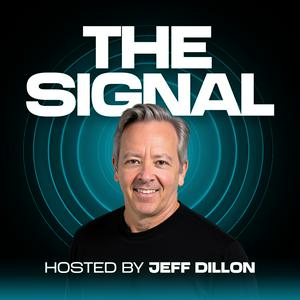
With more than 450,000 downloads, The Signal is the podcast for higher education’s innovative leaders.
Hosted by Jeff Dillon, The Signal cuts through the noise of the "status quo" to bring you the strategic intelligence needed to reshape how institutions recruit, support, and retain students. Every Friday, we sit down with the practitioners and technology builders who are actively defining the next decade of campus life.
Why Higher Ed Leaders Listen:
In one of the most consequential periods for academia, we move past the hype to focus on Human-Centered Innovation. Our episodes feature deep-dive interviews with guest experts focusing on the "real work" of institutional evolution.
Core Topics & AI Strategy:
* Artificial Intelligence: Practical AI adoption, governance, and the "Human in the Loop" mindset.
* Enrollment Marketing: Modern recruitment strategies and GEO (Generative Engine Optimization).
* Student Success: Data-driven retention, mental health, and digital engagement.
* Institutional Transformation: Navigating digital transformation with a focus on workforce readiness and AVPs reimagining student care.
Whether you are a C-suite leader, IT Director, or Faculty member, join our community of 100,000+ professionals and subscribe to The Signal Newsletter at EdTechConnect.com to stay ahead of the curve.
Podcast websiteLuister naar The Signal, The Mel Robbins Podcast en vele andere podcasts van over de hele wereld met de radio.net-app
Ontvang de gratis radio.net app
- Zenders en podcasts om te bookmarken
- Streamen via Wi-Fi of Bluetooth
- Ondersteunt Carplay & Android Auto
- Veel andere app-functies
Ontvang de gratis radio.net app
- Zenders en podcasts om te bookmarken
- Streamen via Wi-Fi of Bluetooth
- Ondersteunt Carplay & Android Auto
- Veel andere app-functies

The Signal
Scan de code,
download de app,
luisteren.
download de app,
luisteren.
The Signal: Podcasts in familie
 Netherlands