
Luister gratis naar deze podcast in de app: Gratis downloaden in de App Store
radio.net
Slaaptimer
Favorieten opslaan
401 afleveringen
I Made $2 My First Day In America, Then I Built A $300M Company | Nick & Markar Agakanian
13-11-2026 | 40 Min.Daniel sits down with Nick and Markar Agakanian to explore how Quetico grew into a $300 million business while remaining committed to its people and long-term independence. Nick reflects on immigrating to America at 14, his father's lessons about hard work and integrity, and the decisions that helped the company survive more than three decades of industry disruption.
The conversation also examines how Markar earned his leadership role, why the family rejected opportunities to sell, and how they plan to expand through vertical integration, strategic partnerships, and brand acquisitions while preserving the culture that helped build the business.
Key Discussion Points
The immigrant journey from $2 to a $300 million business: Nick recalls arriving in America at 14 and watching his father borrow a screwdriver and wrenches to find work. After returning home with two dollars, his father declared that they could make money in America. Nick shares how that experience inspired him to pursue every opportunity, from pumping gas and managing a McDonald's at 18 to starting small businesses before building Quetico.
Why successful family businesses don't simply hand over leadership: Markar explains how he grew up inside Quetico, building a makeshift desk beside his father's before eventually working on the warehouse floor. He discusses the pressure of being the owner's son and why earning employees' respect required working harder, learning the business from the ground up, and proving he could contribute.
Surviving 30 years of recessions, disruption, and uncertainty: Nick reflects on navigating Y2K, the dot-com era, the 2008 financial crisis, COVID, tariffs, and supply chain challenges. He explains why he views problems as opportunities and believes excessive hesitation can cause companies to miss important moments. The family also discusses how an unexpected opportunity to establish foreign trade zone capabilities at its Arizona facility became strategically valuable.
The Costco relationship and the strategy of doing everything under one roof: Nick shares how Quetico developed relationships with major retailers, including helping Costco with apparel barcode tracking. He also challenges conventional advice to specialize, explaining why the company integrates warehousing, distribution, transportation, and brand operations to reduce costs and simplify the supply chain for customers.
Why Quetico reinvests profits instead of chasing an exit: Nick discusses the financing challenges involved in operating a large logistics company, particularly when interest rates rise. He explains why the owners prioritize keeping capital in the business rather than spending it on luxury purchases, and why he has resisted acquisition offers that could jeopardize employees and the company's culture.
The plan to grow from $300 million to $1 billion: Markar shares his ambition to expand Quetico through additional warehouse locations, deeper vertical integration, brand partnerships, acquisitions, and licensing opportunities. He explains how the next generation can preserve the company's relationships and values while pursuing significantly greater scale.
Takeaways
The smallest opportunities can become the foundation of extraordinary success. Nick's entrepreneurial journey began with a simple lesson from his father: work hard, take initiative, and recognize opportunity wherever it appears. That mindset eventually helped him build a company generating approximately $300 million in annual revenue.
A family business survives when the next generation earns its position. Nick believes children should be introduced to the business early rather than suddenly given leadership roles. Markar's experience demonstrates how learning the operation from the bottom creates credibility, respect, and a stronger understanding of employees.
Fear and overthinking can cause entrepreneurs to miss opportunities. Nick believes business owners must learn to make decisions without becoming paralyzed by endless analysis. His approach is to recognize promising opportunities, act decisively, and learn from the outcome.
Reinvesting profits creates financial strength and long-term flexibility. Rather than withdrawing earnings to fund an extravagant lifestyle, Nick and his partners prioritize strengthening the business. He believes retaining capital and investing in people improves the company's ability to navigate difficult markets and secure financing for growth.
Customer relationships are more valuable than maximizing every transaction. Nick credits Quetico's longevity to treating customers, employees, and business partners with integrity. His philosophy is that success should create value for everyone involved, not just the company's owners.
A lasting legacy requires more than a profitable exit. Despite receiving acquisition interest, Nick has chosen to maintain the company's independence and protect the people who helped build it. Markar shares that commitment while pursuing a much larger vision for the business.
Closing Thoughts
Nick and Markar Agakanian's Founder’s Story episode is a conversation about immigrant entrepreneurship, family leadership, and building a business designed to outlast its founders.
From watching his father earn two dollars with borrowed tools to growing Quetico into a $300 million logistics operation, Nick's journey demonstrates the power of hard work, decisive action, and long-term relationships. Yet what makes the story particularly compelling is his belief that financial success should never come at the expense of employees, customers, or family.
For Markar, the challenge is carrying those values forward while transforming an established family company into an even larger business. His ambition to reach $1 billion reflects a new generation of leadership that respects the foundation while refusing to become complacent.
Together, their story reminds entrepreneurs that building something valuable is an achievement, but building something that continues to create opportunities for people across generations may be an even greater one.
Today's Sponsor:
Build the real thing with Base44. Describe the software you need in your own words and get a working build. Get 30% off the Builder plan for your first year: Go to base44.com/FOUNDER.
Stay focused and productive with the Dell Pro, powered by Intel Core Ultra with vPro, featuring optimized battery life and built-in intelligence that helps minimize distractions. Built for those who stay in the flow. Learn more at Dell.com/Dell-Pro.
Stop guessing which marketing campaigns are working. CallRail tracks calls, texts, and form submissions back to the ads that generated them, while helping you qualify leads, automate follow-ups, and turn more conversations into customers. Start your free trial at callrail.com/founder.
Hosted by Simplecast, an AdsWizz company. See pcm.adswizz.com for information about our collection and use of personal data for advertising.Vivian Tu got 100K followers in one week, then turned it into a real business, here’s how
11-11-2026 | 40 Min.Daniel Robbins and Kate Hancock sit down with Vivian Tu to explore why earning more money doesn't always lead to financial freedom and how her upbringing shaped her journey to becoming a millionaire at 27. Vivian shares the childhood experience that changed her relationship with money, her transition from Wall Street to entrepreneurship, and why she believes ownership matters more than income alone.
The conversation also explores the rise of Your Rich BFF, her seven-figure investment in Ask Dolly, the financial mistakes that keep people from building wealth, and how couples, entrepreneurs, and families can make smarter decisions about money.
Key Discussion Points
The childhood moment that shaped her relationship with money: Vivian recalls growing up in a Chinese immigrant household where saving was essential. She shares the story of buying expensive ripped jeans as a teenager and hearing her mother explain why their family couldn't afford the same things as her friend's family, a moment that motivated Vivian to pursue financial independence.
Why the traditional American dream is becoming harder to achieve: Vivian challenges the belief that working hard, earning a salary, and staying loyal to an employer will automatically lead to financial success. She discusses rising living costs, housing affordability, and why building ownership in assets is increasingly important for long-term wealth.
From one viral video to a financial education empire: Vivian explains how her first financial education video, posted on January 1, 2021, helped her gain 100,000 followers in one week. She shares why timing mattered, how she maintained a daily posting schedule for more than five years, and how she expanded into books, podcasting, speaking, brand partnerships, and technology.
Betting seven figures on Ask Dolly without venture capital: Vivian reveals why she invested more than seven figures of her own money to bootstrap Ask Dolly rather than raise outside capital. She discusses building financial guidance tools, connecting users with Certified Financial Planners, and why she believes AI should complement, not replace, human expertise in sensitive financial decisions.
The money mistakes that keep people from getting wealthy: Vivian explains why lifestyle inflation, buying things to impress others, failing to invest, and relying entirely on earned income can prevent financial progress. She also shares how she would approach turning $10,000 into long-term wealth by first investing in skills and earning potential.
Relationships, financial independence, and generational wealth: Vivian discusses why couples shouldn't automatically split expenses 50/50, the importance of maintaining personal financial independence, and how parents can structure inheritances responsibly. She explains why wealth is ultimately about freedom rather than luxury possessions.
Takeaways
You cannot build lasting wealth through earning alone. Vivian believes one of the biggest misconceptions about money is that a higher salary automatically creates financial security. Her philosophy is that earning money is important, but owning investments and assets that can generate income is what helps build long-term wealth.
Your childhood money experiences can shape your financial decisions for decades. Vivian's upbringing taught her to be careful with every dollar, but it also created a scarcity mindset that followed her into adulthood. Recognizing those patterns helped her develop a healthier relationship with spending, saving, and wealth.
A creator becomes an entrepreneur by building beyond their audience. Vivian didn't stop after her first viral video. She expanded into podcasting, publishing, speaking, and technology, building diversified revenue streams that reduce dependence on brand sponsorships or any single platform.
The cheapest option is not always the smartest financial decision. Vivian explains how repeatedly buying inexpensive, low-quality items can end up costing more than investing in something durable. She applies this same principle to building businesses, choosing to invest in quality upfront rather than paying more to fix problems later.
Lifestyle inflation can destroy the benefits of earning more. Vivian warns that as income rises, spending often increases alongside it. She encourages people to maintain their existing lifestyle after significant pay raises and use the additional income to strengthen their financial foundation.
Real wealth means owning your time. Vivian admits that earlier in her career, she associated being rich with designer goods and expensive purchases. Today, she defines wealth as having the freedom to make her own decisions, spend time how she wants, and live without depending on someone else's schedule.
Closing Thoughts
Vivian Tu's Founder’s Story episode challenges many of the assumptions people have about making money, achieving success, and building lasting financial independence. From growing up with a scarcity mindset to working on Wall Street, becoming a millionaire at 27, and building Your Rich BFF into a major financial education brand, Vivian's journey demonstrates the power of financial knowledge, strategic ownership, and entrepreneurship.
Her story also reveals that achieving financial success requires more than earning a higher salary or cutting expenses. It means understanding how money works, avoiding the temptation to spend simply to appear successful, building multiple income streams, and investing in assets that create opportunities for the future.
Through Well Endowed and Ask Dolly, Vivian is continuing her mission to make financial education more accessible and help people move beyond surviving financially toward building genuine independence.
Her central message is simple: being rich is not about what you can buy. It's about having the financial freedom to decide how you want to live.
Today's Sponsor:
Build the real thing with Base44. Describe the software you need in your own words and get a working build. Get 30% off the Builder plan for your first year: Go to base44.com/FOUNDER.
Stay focused and productive with the Dell Pro, powered by Intel Core Ultra with vPro, featuring optimized battery life and built-in intelligence that helps minimize distractions. Built for those who stay in the flow. Learn more at Dell.com/Dell-Pro.
Stop guessing which marketing campaigns are working. CallRail tracks calls, texts, and form submissions back to the ads that generated them, while helping you qualify leads, automate follow-ups, and turn more conversations into customers. Start your free trial at callrail.com/founder.
Hosted by Simplecast, an AdsWizz company. See pcm.adswizz.com for information about our collection and use of personal data for advertising.Ex Sequoia Investor: The Real Reason VCs Say No To Your Startup | Rose Ni
09-11-2026 | 32 Min.Daniel sits down with Rose Ni to explore why she left venture capital to build MossCode and what investors really look for in founders. Rose shares how her experience at Sequoia China shaped her approach to identifying meaningful problems, developing products, and building a company that can compete against established technology brands.
The conversation also explores the challenges of hardware development, why consumers are overwhelmed by fitness devices, the importance of product-led marketing, and how conviction, team alignment, and endurance can help founders navigate the uncertainty of building a startup.
Key Discussion Points
The real reason venture capitalists reject founders: Rose explains why many startups fail to identify problems that are real, solvable, and valuable enough to justify investment. She discusses how investors evaluate founder conviction and why being passionate about technology is not the same as building a product customers actually need.
Leaving Sequoia China to challenge the hardware giants: Rose shares why she believes hardware offers opportunities for innovation despite the dominance of established brands. She explains how larger companies can lose direct contact with users and why smaller startups can compete by iterating quickly and responding to unmet customer needs.
Why hardware takes longer but may create a competitive advantage: Rose breaks down the reality of building physical products, from spending three months refining an idea to creating molds, prototyping, testing, and preparing for mass production. She explains why complex hardware products can take more than 12 months to reach production and how that difficulty can make products harder to replicate.
The fitness device problem that inspired MossCode: Rose describes experiencing device fatigue as a cyclist, spending too much time charging, syncing, and preparing multiple wearables before exercising. She explains MossCode's modular approach, including hot-swappable GPS functionality, and why consumers should not need several overlapping devices for different activities.
Why explaining features can hurt your marketing: Rose reveals how MossCode initially struggled to communicate modularity through advertising. The company discovered that showing customers why they needed the product, rather than explaining its technical design, created stronger engagement. She also discusses why some people mistake MossCode's real product demonstrations for AI-generated content.
What investors really mean when they ask for more data: Rose shares insights from her investment career, explaining why requests for additional information can sometimes indicate a lack of conviction rather than a simple need for numbers. She also discusses bringing her founding team into early investor meetings, hiring people who believe in the mission, and pacing entrepreneurship like an endurance race.
Takeaways
Investors want meaningful problems, not just exciting technology. Rose believes one of the biggest mistakes founders make is creating a solution before identifying a real customer need. A compelling startup must address a problem that matters, can realistically be solved, and offers enough value to justify the resources required.
A great product can be a stronger advantage than moving fast. Rose argues that software features are increasingly easy to copy, particularly with AI-assisted development. Hardware takes longer to build, but thoughtful design, engineering, and a superior user experience can create meaningful differentiation.
The best opportunities often come from your own frustrations. MossCode grew from Rose's experience juggling multiple fitness devices. By recognizing how much time athletes spend managing technology instead of exercising, she identified a problem that established companies were not fully addressing.
Show customers why they need your product before explaining how it works. Rose learned that audiences responded better to demonstrations of everyday problems than technical explanations of modularity. Effective marketing connects the product to a recognizable frustration and makes the benefit immediately clear.
Conviction and trust matter when building a founding team. Rose believes successful teams need clear decision-making responsibilities, mutual trust, and honest conversations about what happens when things go wrong. She also emphasizes hiring people who believe in the mission and can grow with an innovative company.
Entrepreneurship is an endurance race, not a sprint. Rose draws on her experience as an endurance athlete to explain why founders must pace themselves, manage resources, and avoid treating every obstacle as a life-or-death situation. Long-term success requires adaptability, patience, and the ability to continue making decisions under uncertainty.
Closing Thoughts
Rose Ni's Founder’s Story episode offers a perspective on entrepreneurship from someone who has experienced both sides of venture capital. After evaluating hardware startups at Sequoia China, Rose made the transition from investor to founder, choosing to compete in an industry dominated by established technology companies.
Her journey building MossCode demonstrates that innovation is not always about creating more technology. Sometimes it is about removing complexity and making existing experiences simpler, more useful, and more intuitive.
Through her insights on fundraising, product development, team building, and marketing, Rose challenges founders to think beyond what can be built quickly and focus on what is truly worth building. Her message is that conviction matters, but it must be supported by a real problem, a product people need, and the patience to build something that lasts.
Today's Sponsor:
Build the real thing with Base44. Describe the software you need in your own words and get a working build. Get 30% off the Builder plan for your first year: Go to base44.com/FOUNDER.
Stay focused and productive with the Dell Pro, powered by Intel Core Ultra with vPro, featuring optimized battery life and built-in intelligence that helps minimize distractions. Built for those who stay in the flow. Learn more at Dell.com/Dell-Pro.
Stop guessing which marketing campaigns are working. CallRail tracks calls, texts, and form submissions back to the ads that generated them, while helping you qualify leads, automate follow-ups, and turn more conversations into customers. Start your free trial at callrail.com/founder.
Simplify your wellness routine with Blueprint’s Longevity Mix, a science-backed, third-party-tested formula designed to support energy, focus, sleep, and healthy aging in just one daily scoop. Get 20% off plus free shipping at blueprint.brianjohnson.com with code FOUNDERS, or shop their bigger Black Friday discounts when available.
Hosted by Simplecast, an AdsWizz company. See pcm.adswizz.com for information about our collection and use of personal data for advertising.Dane Cook: I Sold Out Madison Square Garden, Then My Own Brother Took Everything
06-11-2026 | 37 Min.Daniel sits down with Dane Cook to explore his journey from an anxious, insecure kid in Massachusetts to one of the biggest names in stand-up comedy. Dane reflects on his first time on stage, building a loyal following before social media became mainstream, selling out massive arenas, and the unforgettable moments that defined his career.
The conversation takes a deeply personal turn as Dane opens up about discovering that his own brother had betrayed his trust while managing his business. He shares the financial and emotional consequences, the lessons he learned about protecting himself, and why he believes betrayal can become a defining moment rather than the end of your story.
Key Discussion Points
Overcoming social anxiety to become a stand-up comedian: Dane shares how insecurity and fear nearly prevented him from performing. He recalls his first stand-up appearance in 1990 at Catch a Rising Star in Cambridge, Massachusetts, and why simply stepping on stage remains one of the proudest moments of his life.
The rise from selling CDs out of his trunk to sold-out arenas: Dane explains how he created the artwork and packaging for his first comedy album, Harmful If Swallowed, sold copies directly to fans, and eventually landed on the Billboard charts. He also reflects on selling out Madison Square Garden, performing for 20,000 people at Boston Garden, and receiving the call to host Saturday Night Live.
The family betrayal behind the fame: Dane discusses his relationship with his older brother, who worked alongside him during the peak of his career. He reveals how discovering financial wrongdoing destroyed his sense of security, forced him to reconsider their relationship, and left him trying to rebuild both his business and personal life.
The financial lessons that changed how he operates: Dane admits he once felt intimidated by financial statements, taxes, and the business details behind his career. He explains why entrepreneurs and artists must understand their own finances, ask questions, and recognize when someone they trust is deliberately keeping them uninformed.
How Dane Cook became an original social media influencer: Dane reflects on building a massive fan community through MySpace, where he says he had approximately seven million followers. He shares how he used the platform to connect directly with fans, reward their loyalty, and build a community long before today's influencer economy existed.
Turning betrayal and pain into purpose: Dane discusses his documentary Funny Money, why he wanted to tell his story through both humor and vulnerability, and how the experience helped him become more compassionate, confident, and intentional about the people he allows into his life.
Takeaways
The first breakthrough is often overcoming your own fear. Dane considers his first stand-up performance in 1990 one of the greatest achievements of his career. Before the arenas, television appearances, and Hollywood roles, the most important victory was finding the courage to step onto a stage.
Building a direct relationship with your audience creates lasting value. Dane recognized the power of online communities before most entertainers. His use of MySpace, direct fan interactions, and grassroots album distribution helped him build an audience that supported his rise to major venues.
Never give up complete visibility into your own finances. Dane's experience taught him that trusting someone does not mean surrendering responsibility. Founders, artists, and entrepreneurs need to understand their finances and surround themselves with people who welcome transparency.
The people closest to you can sometimes create the greatest business risk. Dane explains how his brother's involvement in his career made the betrayal especially devastating. He believes trustworthy partners should help you understand your business rather than discourage you from asking questions.
Pain does not automatically create great art, but overcoming it can. Dane challenges the stereotype that comedians are funny simply because they have suffered. He believes creativity often comes from the desire to move beyond painful experiences and reconnect with happiness, connection, and joy.
Your worst experience does not have to define your future. Although the betrayal permanently changed his understanding of trust, Dane believes it also made him more aware, compassionate, and capable of recognizing unhealthy relationships. He now sees that experience as an important chapter in his personal growth.
Closing Thoughts
Dane Cook's Founder’s Story episode reveals the extraordinary contrast between public success and private struggle. From an insecure young performer to a comedian selling out Madison Square Garden, Dane built his career through creativity, relentless effort, and an unusually close connection with his fans. Yet even at the height of his success, the person he trusted with his business was putting everything he had built at risk.
Through his documentary Funny Money, Dane is finally sharing a story that extends far beyond comedy or financial loss. His experience offers an important lesson for founders, entertainers, and anyone building something meaningful: protect what you create, never stop learning the business behind your talent, and remember that betrayal does not have to determine the rest of your life.
For Dane, the greatest legacy is not simply making millions of people laugh. It is helping them believe that even after losing something important, they can rebuild, grow, and become something greater.
Today's Sponsor:
Turn live shopping into a real business with Whatnot, where sellers build relationships, move inventory in real time, and reach buyers across collectibles, electronics, luxury, beauty, and more. Search Whatnot in the App Store and start selling today.
Build the real thing with Base44. Describe the software you need in your own words and get a working build. Get 30% off the Builder plan for your first year: Go to base44.com/FOUNDER.
Stay focused and productive with the Dell Pro, powered by Intel Core Ultra with vPro, featuring optimized battery life and built-in intelligence that helps minimize distractions. Built for those who stay in the flow. Learn more at Dell.com/Dell-Pro.
Hosted by Simplecast, an AdsWizz company. See pcm.adswizz.com for information about our collection and use of personal data for advertising.Robert Herjavec: Why Most Founders End Up Broke (And Why I Walked Off Shark Tank)
04-11-2026 | 32 Min.Daniel sits down with Robert Herjavec to explore why successful entrepreneurs can still struggle with money, how obsession fuels business growth, and what it really takes to build a company from nothing. Robert reflects on getting fired, bootstrapping his businesses, selling companies, and the surprising challenges that came with having access to significant capital.
The conversation also explores behind-the-scenes disagreements on Shark Tank, including his reaction to MrBeast's $50,000 giveaway, the sacrifices founders make for success, and why Robert believes ambition without purpose can lead to unhappiness.
Key Discussion Points
Why successful founders still end up broke: Robert explains that entrepreneurship and wealth management require fundamentally different skills. Building a company demands risk-taking, speed, and conviction, while preserving wealth requires patience, diversification, and long-term thinking.
From getting fired to building a $200 million company: Robert recalls losing his job and starting a business because he needed to make his mortgage payment. He shares how he relied on credit cards and multiple mortgages, eventually building a company to $200 million before taking a bank loan.
The Shark Tank disagreement that made him walk off set: Robert reveals how he and Mark Cuban walked off the set after fellow Sharks agreed to invest in a founder without examining the business numbers. He also discusses why MrBeast's decision to give a contestant $50,000 for zero equity bothered him and how it challenged his understanding of what Shark Tank represents.
Why bootstrapping can eventually hold founders back: Robert explains how the financial discipline that helped him build successful companies became a disadvantage after selling to a major investment firm. He struggled to adjust from spending a few million dollars carefully to investing significantly more capital to accelerate product development and growth.
The hidden sacrifices behind entrepreneurial success: Robert reflects on the early years when the business consumed nearly every minute of his life, including vacations and family time. He explains why building something meaningful often requires more than passion and why obsession plays such a powerful role in entrepreneurship.
Money, happiness, and the immigrant mindset: Robert discusses growing up with very little, his early dream of owning and paying off a home, and how financial success changes the way people think about security. He also opens up about raising children who have everything he lacked growing up and why sharing life with loved ones matters more than material success.
Takeaways
Being a successful founder doesn't make you a good investor. Robert explains that the skills required to create wealth are often the opposite of those required to preserve it. Entrepreneurs must learn when to transition from taking concentrated risks to protecting what they've built.
Obsession matters more than passion when building a business. Robert recalls Mark Cuban challenging a founder's passion by asking about their obsession. In Robert's experience, early-stage entrepreneurship requires a level of commitment that goes beyond simply loving an idea.
The habits that build a company can eventually limit its growth. Robert's ability to stretch every dollar helped him bootstrap successful businesses. But when larger financial resources became available, his reluctance to spend aggressively sometimes slowed down opportunities.
Financial security means something different to everyone. For Robert, his earliest goals were to own a home, earn a comfortable income, and afford a used Corvette. Achieving those milestones helped him overcome the fear of losing everything that had shaped his early entrepreneurial journey.
Ambition without purpose can become destructive. Robert has met extraordinarily wealthy people who remain deeply unhappy because they continue chasing more without understanding what they're working toward. He believes happiness cannot always be defined by what someone still lacks.
Success means nothing if you have no one to share it with. Despite his financial achievements, Robert says his happiest experiences come from spending time with his wife and children. He believes meaningful relationships ultimately matter more than money, recognition, or material possessions.
Closing Thoughts
Robert Herjavec's Founder’s Story episode offers a rare look at the mindset behind a successful entrepreneur who has experienced poverty, business ownership, major exits, and decades of investing on television. His journey from getting fired and struggling to pay his mortgage to building multimillion-dollar companies reveals how ambition, discipline, and obsession can create extraordinary opportunities. But Robert's most important lessons go beyond making money. He challenges founders to understand the difference between building wealth and keeping it, recognize when ambition becomes unhealthy, and define success before the pursuit consumes their lives. His message is that entrepreneurship can give you incredible freedom, but true success comes from having a purpose and people you love to share it with.
Today's Sponsor:
Turn live shopping into a real business with Whatnot, where sellers build relationships, move inventory in real time, and reach buyers across collectibles, electronics, luxury, beauty, and more. Search Whatnot in the App Store and start selling today.
Build the real thing with Base44. Describe the software you need in your own words and get a working build. Get 30% off the Builder plan for your first year: Go to base44.com/FOUNDER.
Stay focused and productive with the Dell Pro, powered by Intel Core Ultra with vPro, featuring optimized battery life and built-in intelligence that helps minimize distractions. Built for those who stay in the flow. Learn more at Dell.com/Dell-Pro.
Hosted by Simplecast, an AdsWizz company. See pcm.adswizz.com for information about our collection and use of personal data for advertising.
Meer Ondernemerschap podcasts



Trending Ondernemerschap -podcasts




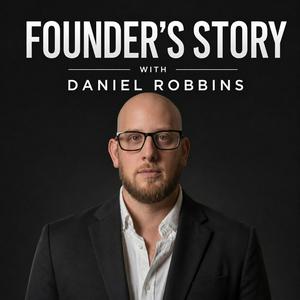
Over Founder's Story
"Founder's Story" by IBH Media isn't a business show. It's the conversation founders don't get to have anywhere else.
Think 60 Minutes, but for entrepreneurs. We sit down with the most interesting people in business and go past the highlight reel, past the pitch, past the polished version they give every other podcast. We go into the mud with them. The 2 a.m. doubts. The bet that almost ended everything. The moment they wanted to quit and didn't.
You'll hear from household names like Gary V, Codie Sanchez, Rob Dyrdek, and Tom Bilyeu, and just as often from founders you've never heard of who are building something the world needs to know about. Either way, the goal is the same: a real conversation that makes you laugh, makes you think, and sometimes catches you off guard with how much it makes you feel.
This is where the story behind the success finally gets told. This is "Founder's Story."
Podcast websiteLuister naar Founder's Story, Doorzetters | met Ruud Hendriks en Richard Bross en vele andere podcasts van over de hele wereld met de radio.net-app
Ontvang de gratis radio.net app
- Zenders en podcasts om te bookmarken
- Streamen via Wi-Fi of Bluetooth
- Ondersteunt Carplay & Android Auto
- Veel andere app-functies

Founder's Story: Podcasts in familie
 Netherlands

