Luister gratis naar deze podcast in de app: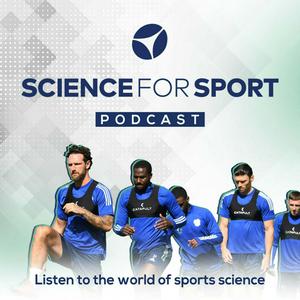 Gratis downloaden in de App Store
radio.net
Slaaptimer
Favorieten opslaan
303 afleveringen
304: Uncommonly Consistent: Football to Formula One with John Noonan
26-1-2026 | 36 Min.In this episode of the Science for Sport Podcast, host Richard Graves is joined by John Noonan, a highly experienced performance coach whose career spans elite football, rugby league and union, Winter Olympic sports, and the world of Formula One.
John describes himself as a “gypsy of sport” driven by curiosity, problem-solving, and a deep interest in what actually moves the needle in elite performance. From his early days in football and rugby to supporting drivers in the most intense performance environment in global sport, John shares how his thinking has evolved beyond programmes and protocols, towards relationships, skill execution, and consistency under pressure.
The conversation explores how elite performers prepare for the biggest moments, why world-class athletes are “uncommonly consistent,” and how performance staff can better integrate physical, technical, and psychological elements to support athletes when it matters most. John also lifts the lid on working in motorsport, a sport decided by millimetres, milliseconds, and mental control, and reflects on burnout, travel fatigue, and managing performance across relentless global calendars.
This is a thoughtful, experience-led discussion for practitioners working at the top end of elite sport, as well as anyone fascinated by what separates the very best from the rest.
In this episode you will learn
Why elite performance is ultimately a people business, not a programming problem
How working across multiple sports shapes better decision-making as a performance coach
What “uncommon consistency” really looks like in world-class athletes
Why skill execution, not physical capacity, often determines success at the highest level
How performance staff can influence athletes who don’t need to listen to them
Lessons from Formula One on pressure, precision, and decision-making under fatigue
How interdisciplinary teams can improve performance communication in real time
Practical insights into managing burnout, travel, jet lag, and long competitive calendars
About John Noonan
John Noonan is a performance coach and sports scientist with over two decades of experience working across elite sport. His background includes roles in professional football, rugby league and union, Winter Olympic sports, and long-term work within Formula One.
Now the founder of Noonan Performance, John works with elite athletes and teams to improve performance through smarter physical preparation, better communication, and a strong emphasis on skill execution and decision-making under pressure. He is known for his relationship-led approach, his ability to work across disciplines, and his focus on solving the right performance problems.
FREE 7d SCIENCE FOR SPORT ACADEMY TRIAL
SIGN UP NOW: https://bit.ly/SFSepisode241
Learn Quicker & More Effectively
Optimise Your Athletes' Recovery
Position Yourself As An Expert To Your Athletes And Naturally Improve Buy-In
Reduce Your Athletes' Injury Ratese
Save 100's Of Dollars A Year That Would Otherwise Be Spent On Books, Courses And More
Improve Your Athletes' Performance
Advance Forward In Your Career, Allowing You To Earn More Money And Work With Elite-Level Athletes
Save Yourself The Stress & Worry Of Constantly Trying To Stay Up-To-Date With Sports Science Research303: Periodised Nutrition in Practice: Delivering the Plan Away From the Club
19-1-2026 | 42 Min.This week on the Science for Sport Podcast, Richard Graves is joined by Rachel Muse, one of the leading performance chefs working with elite athletes across professional sport.Rachel is the founder of Talk Eat Laugh, a specialist performance-chef service supporting athletes in their own homes. Her work bridges the gap between performance nutrition science and real-life eating habits, ensuring athletes follow precise nutritional plans without meals becoming clinical, restrictive, or culturally disconnected.In this episode, Rachel shares her unconventional journey from mathematics graduate to elite performance chef, and explains how chefs, nutritionists, and sports science teams work together to deliver periodised nutrition away from the training ground. The conversation explores how macronutrient targets are delivered in practice, how food preferences and cultural background shape compliance, and why fuelling the brain is just as important as fuelling the body.This is a rare insight into a part of the performance system that is often overlooked, but critical to recovery, consistency, and late-game performance.
In this episode, you will learn
What periodised nutrition actually means in practice, beyond the theory
How performance chefs work from nutritionist-led macro prescriptions
Why chefs should not act as nutritionists, and where the professional boundaries sit
How to deliver exact macronutrient targets without meals becoming boring or restrictive
The role of carbohydrates in sustaining physical and cognitive performance late in matchesHow cultural background and food identity influence nutritional compliance
Why elite performance nutrition is as much about psychology and trust as it is science
What “success” really looks like when supporting elite athletes away from the club environment
About Rachel Muse
Rachel Muse is a performance chef with a background spanning elite hospitality, private households, and professional sport. After an unconventional route into the culinary world, she founded Talk Eat Laugh, a performance-chef business supporting elite athletes across football, rugby, swimming, and motorsport.Rachel works closely with performance nutritionists and sports science teams to deliver highly specific nutritional strategies in athletes’ home environments. Known for her emphasis on collaboration, precision, privacy, and cultural understanding, Rachel specialises in translating complex nutrition plans into meals athletes genuinely want to eat, consistently and compliantly.You can follow Rachel on LinkedIn or find Talk Eat Laugh on Instagram for insights into performance food done properly.
FREE 7d SCIENCE FOR SPORT ACADEMY TRIAL
SIGN UP NOW: https://bit.ly/SFSepisode241
Learn Quicker & More Effectively
Optimise Your Athletes' Recovery
Position Yourself As An Expert To Your Athletes And Naturally Improve Buy-In
Reduce Your Athletes' Injury Ratese
Save 100's Of Dollars A Year That Would Otherwise Be Spent On Books, Courses And More
Improve Your Athletes' Performance
Advance Forward In Your Career, Allowing You To Earn More Money And Work With Elite-Level Athletes
Save Yourself The Stress & Worry Of Constantly Trying To Stay Up-To-Date With Sports Science Research302: Creatine and the Evolution of Performance Nutrition
12-1-2026 | 32 Min.Creatine is now one of the most widely used and well-researched supplements in elite sport — but few people know the story of how it first made its way into Olympic performance programmes.
In this episode of the Science for Sport Podcast, Richard Graves sits down with Steven Jennings, one of the key figures behind the early adoption of creatine in elite sport, to unpack a remarkable story that begins long before creatine was common knowledge.
Steven takes us back to the early 1990s — a pre-internet era where sports nutrition research travelled slowly, secrecy mattered, and a single kilogram of creatine played a role in reshaping performance preparation ahead of the Barcelona 1992 Olympic Games. From working directly with pioneering researchers at the Karolinska Institute to navigating Olympic-level scrutiny, this is a rare, first-hand account of how science moved from the lab to the field.
Beyond performance sport, the conversation also looks forward. Steven shares why he believes we are only just beginning to understand creatine’s wider potential — from cognition and ageing to plant-based diets and long-term health.
This is an essential listen for practitioners who want to understand not just what works in performance nutrition, but how evidence, trust, regulation, and timing shape real-world impact.
In this episode you will learn
What creatine actually is and how it works at a cellular level
How early research in the early 1990s changed elite sport preparation
Steven’s role in bringing creatine into Olympic sport ahead of Barcelona 1992
Why creatine was (and still is) legal, safe, and fundamentally different from banned substances
How creatine became associated with repeated high-intensity performance and recovery
Why creatine research is now expanding beyond sport into cognition, ageing, and health
Why we may still be “scratching the surface” of creatine’s full potential
About Steven Jennings
Steven Jennings is a sports nutrition entrepreneur and former professional cyclist who played a pivotal role in the early commercialisation of creatine for elite sport. In the early 1990s, he worked directly with leading researchers from the Karolinska Institute to help translate groundbreaking creatine research into real-world Olympic performance programmes.
Over the past three decades, Steven has remained closely connected to the evolution of creatine research, from elite performance applications to emerging work in health, cognition, and ageing. Today, he continues to focus on education, innovation, and the future direction of creatine science.
FREE 7d SCIENCE FOR SPORT ACADEMY TRIAL
SIGN UP NOW: https://bit.ly/SFSepisode241
Learn Quicker & More Effectively
Optimise Your Athletes' Recovery
Position Yourself As An Expert To Your Athletes And Naturally Improve Buy-In
Reduce Your Athletes' Injury Ratese
Save 100's Of Dollars A Year That Would Otherwise Be Spent On Books, Courses And More
Improve Your Athletes' Performance
Advance Forward In Your Career, Allowing You To Earn More Money And Work With Elite-Level Athletes
Save Yourself The Stress & Worry Of Constantly Trying To Stay Up-To-Date With Sports Science Research301: Training for the Unknown: Olympic BMX Freestyle with Brian Roy
05-1-2026 | 24 Min.This week on the Science for Sport Podcast, Richard Graves is joined by Brian Roy, a strength and conditioning coach who has spent the past decade working at the sharp end of action and lifestyle sports, including Olympic BMX Freestyle.
BMX Freestyle is still a relative newcomer to the Olympic programme, but its physical demands, injury risks and performance challenges are unlike almost any traditional sport. In this episode, Brian shares his unconventional journey into elite sport, from personal training and postgraduate study to travelling the world with BMX athletes on the global stage.
Together, Richard and Brian explore what it really takes to prepare athletes for a sport defined by explosive power, aerial skill, high-impact landings and constant travel. Brian offers a refreshingly honest perspective on athlete buy-in, bespoke programming, and why traditional strength testing and rigid systems don’t always transfer to non-traditional sports.
This is a fascinating conversation for sports scientists, strength and conditioning coaches, and anyone interested in how performance support adapts when the sport doesn’t fit neatly into a textbook.
In this episode you will learn
The unique physiological and biomechanical demands of BMX Freestyle competition
How to prepare athletes for repeated 60-second, maximal-effort runs across a full competition day
Why traditional strength testing and gym-based metrics don’t always translate to action sports
How Brian adapted training around constant travel, limited gym access, and athlete preferences
Practical strategies for building resilience and reducing injury risk in high-impact sports
Why athlete buy-in often comes from listening, adapting, and being present rather than enforcing systems
How emerging video and motion-analysis technology could shape the future of training in BMX Freestyle and similar sports
About Brian Roy
Brian Roy is a strength and conditioning coach with over 10 years’ experience working in action and lifestyle sports. He holds a Master’s degree in Kinesiology and Exercise Science and is currently undertaking further postgraduate study in Applied Sports Science Analytics.
Brian has worked closely with elite BMX Freestyle athletes on the international stage, including those competing at the Olympic Games, and has developed a reputation for adaptable, athlete-centred training approaches. His work focuses on performance, resilience, and real-world transfer rather than rigid adherence to traditional testing models.
Brian regularly shares insights from his work on LinkedIn and Instagram, where he discusses training philosophy, emerging technology, and lessons learned from working in non-traditional sports environments.300: Training Through Disruption: Managing Load, Time, and Performance in Winter with Michael Fennell
29-12-2025 | 26 Min.In this episode of the Science for Sport Podcast, host Richard Graves welcomes back Michael Fennell for a deep dive into one of the most misunderstood periods of the performance calendar: winter training.
With the competitive season behind us and Christmas disruptions in full swing, Michael shares a practical, experience-led perspective on how elite athletes and practitioners should approach December and the early winter months. From managing training load and avoiding premature peaks, to maintaining performance standards through smart programming, this episode is packed with real-world insight from the track, the runway, and the training ground.
Drawing on his work across elite athletics, football, rugby, and para sport, Michael breaks down how training priorities shift between individual and team sports, why fundamentals still matter in an age of performance technology, and how micro-sessions can be used to maintain progress when time and facilities are limited.
This is an honest, grounded conversation about perspective, planning, and patience, and why doing the basics exceptionally well still underpins elite performance.
In this episode you will learn:
How elite athletes should approach December training without peaking too early
Why maintaining performance is more important than chasing PBs in winter
How to structure micro-sessions when time, facilities, or routine are disrupted
The key differences in winter training for team sports vs athletics
How and when to prioritise plyometrics, speed, strength, and conditioning
Why fundamentals like ground contact time, elasticity, and movement quality still matter
How to balance data, technology, and coaching eye in modern performance environments
The importance of coach collaboration and open-minded learning
What elite preparation looks like heading into major championships and qualification periods
About Michael Fennell
Michael Fennell is an experienced performance coach working across elite athletics, team sports, and para sport. With close to two decades of coaching experience, he has supported athletes at national and international level, including British champions and elite performers progressing toward major championships.
Michael’s coaching philosophy blends technical excellence, physical fundamentals, and athlete-centred planning, with a strong emphasis on sprint mechanics, jumping performance, plyometrics, and long-term development. He is known for his collaborative approach, regularly working alongside other coaches, strength and conditioning practitioners, and support staff to ensure athletes are prepared for the demands of elite competition.
FREE 7d SCIENCE FOR SPORT ACADEMY TRIAL
SIGN UP NOW: https://bit.ly/SFSepisode241
Learn Quicker & More Effectively
Optimise Your Athletes' Recovery
Position Yourself As An Expert To Your Athletes And Naturally Improve Buy-In
Reduce Your Athletes' Injury Ratese
Save 100's Of Dollars A Year That Would Otherwise Be Spent On Books, Courses And More
Improve Your Athletes' Performance
Advance Forward In Your Career, Allowing You To Earn More Money And Work With Elite-Level Athletes
Save Yourself The Stress & Worry Of Constantly Trying To Stay Up-To-Date With Sports Science Research
Meer Onderwijs podcasts
 Zeg het in het NederlandsOnderwijs
 HELD IN EIGEN VERHAALOnderwijs, Maatschappij & cultuur, Waargebeurde misdaad
 AI, je nieuwe collegaZaken en persoonlijke financiën, Onderwijs, Ondernemerschap, Stap voor stap
 Dai Carter: Missie Mentale KrachtOnderwijs, Gezondheid en fitness, Geestelijke gezondheid, Zelfhulp
 Something For EverybodyOnderwijs, Gezondheid en fitness, Maatschappij & cultuur, Geestelijke gezondheid, Zelfhulp
 De ZestigersOnderwijs, Maatschappij & cultuur, Persoonlijke dagboeken, Zelfhulp
 De Podcast PsycholoogOnderwijs, Gezondheid en fitness, Wetenschap
 Women Road WarriorsZaken en persoonlijke financiën, Onderwijs, Gezondheid en fitness, Carrières, Geestelijke gezondheid, Zelfhulp
 Een Beetje NederlandsOnderwijs, Taalonderwijs
 Keuringsdienst van WaardeOnderwijs
Trending Onderwijs -podcasts
 Duolingo French PodcastOnderwijs
 Wat nou ADHD?!Onderwijs, Gezondheid en fitness, Geestelijke gezondheid, Zelfhulp
 Español con JuanOnderwijs, Cursussen, Taalonderwijs
 Duolingo Spanish PodcastOnderwijs
 Podcast ItalianoOnderwijs, Taalonderwijs
 Wie is de Narcist?Onderwijs, Gezondheid en fitness, Geestelijke gezondheid, Zelfhulp
 Inburgering.org A2Onderwijs, Taalonderwijs
 Japanese podcast for beginners (Nihongo con Teppei)Onderwijs, Taalonderwijs
 Omdenken PodcastOnderwijs, Zelfhulp
 Leef Je Mooiste Leven PodcastZaken en persoonlijke financiën, Onderwijs, Gezondheid en fitness, Ondernemerschap, Zelfhulp
 English Learning PodcastOnderwijs, Taalonderwijs
 Tijdens de Pauze - De podcast die je alles vertelt over perimenopauze en menopauzeOnderwijs, Gezondheid en fitness
 Swedish podcast for beginners (Lätt svenska med Oskar)Onderwijs, Taalonderwijs
 Kaarten op TafelOnderwijs, Zelfhulp
 The Real Work with Maggie SterlingOnderwijs, Gezondheid en fitness, Geestelijke gezondheid, Zelfhulp
 100% Inspiratie PodcastZaken en persoonlijke financiën, Onderwijs, Zelfhulp
 Human Design voor beginnersOnderwijs, Zelfhulp
 SOLVED with Mark MansonOnderwijs, Zelfhulp
 King Dems Podcast | Growth Mindset, Leadership, AI and Business InsightsOnderwijs, Zelfhulp
 de Manifestatie PodcastOnderwijs, Zelfhulp
 EindbazenOnderwijs
 Coffee Break FrenchOnderwijs, Cursussen, Taalonderwijs
 The Rich Roll PodcastOnderwijs, Gezondheid en fitness, Maatschappij & cultuur, Zelfhulp
 anything goes with emma chamberlainOnderwijs, Maatschappij & cultuur, Persoonlijke dagboeken, Zelfhulp
 SlaaptijdOnderwijs, Zelfhulp
 Blij Alcohol VrijOnderwijs, Zelfhulp
 Conversations with TylerOnderwijs, Maatschappij & cultuur
Over Science for Sport Podcast
Discover the Secrets Behind Elite Performance.
Join us on the Science for Sport Podcast, where every episode dives into the cutting-edge world of sports science and the untold stories behind the best athletes and teams on the planet.
Hosted by Richard Graves, we bring you exclusive insights from elite athletes, world-class coaches, and leading sports scientists who are shaping the future of global sport.
This isn’t just another sports podcast—this is your backstage pass to:
- The science powering record-breaking performances.
- The trends, challenges, and breakthroughs redefining the game.
- Mastering the balance of art and science in coaching.
Whether you’re a sports scientist, coach, physio, nutritionist, teacher, or just a passionate sports fan, this is your chance to learn from the pros and stay ahead of the curve.
Tune in every Monday and uncover what it takes to make the best, better.
Podcast websiteLuister naar Science for Sport Podcast, Zeg het in het Nederlands en vele andere podcasts van over de hele wereld met de radio.net-app
Ontvang de gratis radio.net app
- Zenders en podcasts om te bookmarken
- Streamen via Wi-Fi of Bluetooth
- Ondersteunt Carplay & Android Auto
- Veel andere app-functies
Ontvang de gratis radio.net app
- Zenders en podcasts om te bookmarken
- Streamen via Wi-Fi of Bluetooth
- Ondersteunt Carplay & Android Auto
- Veel andere app-functies

Science for Sport Podcast
Scan de code,
download de app,
luisteren.
download de app,
luisteren.
 Netherlands