

Luister gratis naar deze podcast in de app: Gratis downloaden in de App Store
radio.net
Slaaptimer
Favorieten opslaan
74 afleveringen
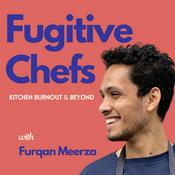
How Missing Culinary School Actually Put Me Ahead
18-08-2026 | 27 Min.I had an admission letter to culinary school in my hand. I never used it.
Some of you told me this podcast is starting to feel like an advertisement for culinary school. It's not — and I want to correct that directly instead of letting it sit.
This solo episode is my honest answer: the specific things that became possible for me because of the door I actually had in front of me, not because skipping culinary school is better than going.
Join the Fugitive Chefs Circle - a community for people building better careers, organisations, and ideas in food:
🌐 https://fugitivechefs.kit.com/297093b0dc
In this episode, I explore:
Why I never used my culinary school admission letters — and what a one-bedroom apartment in Bombay had to do with it
The real financial gap between hotel management and culinary school in India, and why IHM Mumbai wasn't a backup plan
What I didn't know walking into European kitchens for the first time — and the hazelnut praline moment that exposed it
Why nobody at Mugaritz, Noma, or Kraft Heinz ever asked me how many degrees I had
The two years I spent undocumented in Spain, and why I don't recommend anyone copy that path
Why the real problem isn't culinary school — it's that there's no map connecting kitchens to the rest of the food system
What I'd actually tell 19-year-old me, and what I think about the Michael Bakker and Adrian Woodhouse episodes
🎧 Fugitive Chefs explores how culinary expertise creates value across the modern food system.
📸 Furqan's Instagram: https://bit.ly/4dtiyTv
🎧 Podcast Instagram: https://bit.ly/43ndATO
🎵 Spotify: https://spoti.fi/3F6j25A
🍏 Apple Podcasts: https://apple.co/43vBtbT
▶️ YouTube: https://www.youtube.com/@fugitivechefsThe Forager Chef: Alan Bergo on Restaurant Burnout, Reinvention & the Power of Following Curiosity
11-08-2026 | 48 Min.Every restaurant Alan Bergo ever worked at closed.
In this episode of Fugitive Chefs, Alan — known online as the Forager Chef — shares how walking away from restaurant kitchens didn't mean walking away from food. It led him to become one of the world's most respected voices on wild ingredients, foraging, and building a business entirely on his own terms.
In this conversation we discuss:
Growing up grounded with a cookbook, and landing his first industry job at McDonald's
Taking a $2-an-hour pay cut to learn under Heartland's menu that changed every single day
Spotting a mushroom he'd just put on the menu while playing disc golf — and realizing he could forage it himself
Why he built his own website instead of relying on social media ("a website is a house, social media is a rental")
Getting "forced" out of restaurants after back-to-back closures, and monetizing his site overnight to survive
Pitching a Minneapolis restaurant a $500-a-week exclusive foraging retainer — and where that idea eventually led
Mentoring chefs who want to leave restaurants, including the visioning exercise that changed his own path
Why he now sees himself as more of a teacher than a chef
Learn more about Alan's work:
🌐 Forager Chef website: https://foragerchef.com/
📸 Instagram: https://www.instagram.com/foragerchef/
🎧 Fugitive Chefs explores what happens when chefs step outside the traditional kitchen path.
🌐 Website: www.fugitivechefs.com
📸 Furqan's Instagram: https://www.instagram.com/furqanmeerza/
🎧 Podcast Instagram: https://www.instagram.com/fugitivechefspodcast/
🎵 Spotify: https://open.spotify.com/show/57kmFAUgp6DhgnguexFuDs
🍏 Apple Podcasts: https://podcasts.apple.com/us/podcast/fugitive-chefs/id1676930088
▶️ YouTube: https://www.youtube.com/@fugitivechefsWhy the CIA President Says "It Depends" on Culinary School | Michiel Bakker
04-08-2026 | 1 u.Should you go to culinary school? The most honest answer we got all year: "It depends."
In this episode of Fugitive Chefs, I sit down with Michiel Bakker, the sixth president of the Culinary Institute of America, to talk about the future of culinary education — and what culinary expertise looks like in 2035.
Before leading the world's most influential culinary college, Michiel spent 12 years at Google building their Food at Work program, and 17 years before that in global hotel operations with Starwood. His path into food education wasn't a straight line, and that's exactly why this conversation matters: he's spent his career at the intersection of hospitality, technology, and now higher education.
In this episode, we explore:
Why "it depends" might be the most honest answer to "should I go to culinary school?"
Michiel's Vision 2035 — and what he hopes the food industry looks like a decade from now
Why AI could kill creativity for chefs, or free them to be more creative than ever
The industry's shared responsibility around diet-related disease
Why stackable credentials and short-form courses may replace the traditional 4-year degree
What CIA looks for in educators — practitioners vs. traditional academics
The transferable skills chefs don't realize they already have
Why Michiel believes the future workforce will be human, AI agent, and robot — all at once
Join the Fugitive Chefs Circle - a community for people building better careers, organisations, and ideas in food: 🌐 https://fugitivechefs.kit.com/297093b0dc
🎧 Fugitive Chefs explores how culinary expertise creates value across the modern food system.
🌐 Website: www.fugitivechefs.com
📸 Furqan's Instagram: https://bit.ly/4dtiyTv
🎧 Podcast Instagram: https://bit.ly/43ndATO
🎵 Spotify: https://spoti.fi/3F6j25A
🍏 Apple Podcasts: https://apple.co/43vBtbT
▶️ YouTube: https://www.youtube.com/@fugitivechefsAre We Training Chefs for the Wrong Careers? | Adrian Woodhouse
28-07-2026 | 52 Min.Culinary school taught you bechamel. It didn't teach you how to prove you're capable of anything else.
In this episode of Fugitive Chefs, I sit down with Adrian Woodhouse, head of school at Otago Polytechnic in New Zealand, to talk about why culinary education is still built around a narrow, traditional idea of what a chef becomes and why that no longer matches the industry.
Adrian has spent years helping experienced chefs prove their capabilities without another degree, decolonizing a curriculum still rooted in French tradition, and rethinking what "industry readiness" actually means for graduates entering a food system that now includes R&D, food styling, social media, AI, and far more than restaurants.
In this conversation we discuss:
Why so many chefs default to more degrees and credentials before feeling legitimate outside kitchens
The imposter syndrome chefs carry when they step outside traditional kitchen paths
What "fair work" is, and why it shuts down growth in professional kitchens
Why some of the best chefs never stop thinking of themselves as apprentices
How culinary curriculums are (slowly) being rebuilt around real industry needs
What capabilities kitchens develop exceptionally well — and what they fail to develop at all
The future of culinary careers: food styling, product development, AI, and beyond
Learn more about Adrian's work:
🔗 LinkedIn: https://www.linkedin.com/in/adrian-woodhouse-89267636/
🎧 Fugitive Chefs explores how culinary expertise creates value across the modern food system.
📸 Furqan's Instagram: https://bit.ly/4dtiyTv
🎧 Podcast Instagram: https://bit.ly/43ndATO
🎵 Spotify: https://spoti.fi/3F6j25A
🍏 Apple Podcasts: https://apple.co/43vBtbT
▶️ YouTube: https://www.youtube.com/@fugitivechefsWhy the Fugitive Chefs Podcast Is Changing
21-07-2026 | 15 Min.Fugitive Chefs started with a simple question: what can chefs become beyond restaurants?
A year later, that question feels too small.
In this solo episode, Furqan shares why Fugitive Chefs is evolving from a podcast about alternative careers for chefs into a broader exploration of how culinary expertise can create value across the modern food system.
Join the Fugitive Chefs Circle - a community for people building better careers, organisations, and ideas in food:
🌐 https://fugitivechefs.kit.com/297093b0dc
After a short pause in publishing, this is an honest look at what it takes to build a sustainable platform alongside a full-time job—and why the future of Fugitive Chefs will include more than career-transition stories.
In this episode, we explore:
• Why culinary expertise matters far beyond the restaurant
• Why the podcast is expanding to include educators, researchers, founders, hiring leaders, and innovation teams
• What restaurants, food companies, and culinary institutions can learn from each other
• Why better careers for chefs require better systems around them
• What is coming next for Fugitive Chefs
🎧 Fugitive Chefs explores how culinary expertise creates value across the modern food system.
📸 Furqan’s Instagram: https://bit.ly/4dtiyTv
🎧 Podcast Instagram: https://bit.ly/43ndATO
🎵 Spotify: https://spoti.fi/3F6j25A
🍏 Apple Podcasts: https://apple.co/43vBtbT
▶️ YouTube: https://www.youtube.com/@fugitivechefs
Meer Eetwaar podcasts
 Le Club & Sommeljj de WijnpodcastEetwaar, Kunst
 Mangiare!Eetwaar, Kunst, Maatschappij & cultuur
 The Food ChainEetwaar, Kunst, Maatschappij & cultuur
 Table Manners with Jessie and Lennie WareEetwaar, Kind en gezin, Kunst, Muziek
 Wijn en WijsheidCursussen, Eetwaar, Kunst, Onderwijs
 Wat Schaft de PodcastEetwaar, Gezondheid en fitness, Hobby's, Kunst, Voeding, Vrije tijd
 The Food ProgrammeEetwaar, Kunst
 DishEetwaar, Komedie, Kunst, Maatschappij & cultuur
 Klare wijn PodcastEetwaar, Hobby's, Kunst, Onderwijs, Vrije tijd
 De vegan lekkerbekEetwaar, Hobby's, Kunst, Vrije tijd
Trending Eetwaar -podcasts
 Craft Beer & Brewing Magazine PodcastEetwaar, Hobby's, Kunst, Onderwijs, Vrije tijd
 Filter Stories - Coffee DocumentariesEetwaar, Geschiedenis, Kunst, Wetenschap
 De BakcastEetwaar, Kunst
 Recipe ClubEetwaar, Kunst
 BuikgevoelEetwaar, Gezondheid en fitness, Kunst, Voeding
 Lunchbox EnvyEetwaar, Komedie, Kunst
- The Food ChainEetwaar, Kunst, Maatschappij & cultuur
 Comfort Eating with Grace DentEetwaar, Kunst
- Wijn en WijsheidCursussen, Eetwaar, Kunst, Onderwijs
- Table Manners with Jessie and Lennie WareEetwaar, Kind en gezin, Kunst, Muziek
 Spilled MilkEetwaar, Komedie, Kunst
 Home CookingEetwaar, Kunst
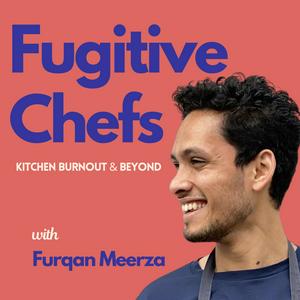
Over Fugitive Chefs
I’m Furqan Meerza, a chef who worked in some of the world’s top kitchens, including Mugaritz and Noma.
Like a lot of chefs, I hit burnout. And I realized I needed a different way to stay connected to food; one that didn’t cost me my health or identity.
Fugitive Chefs is a podcast for chefs and food creatives who still love this craft, but need change.
Each episode features honest conversations with those who’ve stepped away from the traditional kitchen and into something new, from fermentation and R&D to storytelling, drinks, food culture, and more.
Podcast websiteLuister naar Fugitive Chefs, Le Club & Sommeljj de Wijnpodcast en vele andere podcasts van over de hele wereld met de radio.net-app
Ontvang de gratis radio.net app
- Zenders en podcasts om te bookmarken
- Streamen via Wi-Fi of Bluetooth
- Ondersteunt Carplay & Android Auto
- Veel andere app-functies
Ontvang de gratis radio.net app
- Zenders en podcasts om te bookmarken
- Streamen via Wi-Fi of Bluetooth
- Ondersteunt Carplay & Android Auto
- Veel andere app-functies

Fugitive Chefs
Scan de code,
download de app,
luisteren.
download de app,
luisteren.
 Netherlands