
Luister gratis naar deze podcast in de app: Gratis downloaden in de App Store
radio.net
Slaaptimer
Favorieten opslaan
115 afleveringen
"You need to tackle your mechanic"
15-10-2026 | 1 u. 1 Min.What happens when you shut off the mags in flight? Mike, Paul, and Colleen answer this question, plus Cirrus cylinder woes, lapping technique, and more.
Email podcasts@aopa.org for a chance to be on the show.
Join the world's largest aviation community at aopa.org/join
Full notes below:
Jeff is questioning the part of his checklist that calls for turning off the mags just before shutting down. He remembers doing this accidentially in flight training and his instructor becoming somewhat panicked. The hosts explain that turning off the mags before shutting down is safe and determines if the P-lead is intact. Accidentally turning them off in flight is a different story. Unburned fuel in the exhaust will ignite rapidly and probably ruin the exhaust if you were to immediately turn them back on. If this happens, Paul recommends leaning the mixture completely, counting a few seconds, turning the mags back to both and then slowly brining up the mixture again. By doing this you'll hopefully allow the collected fuel to dissipate.
Brian asks about Cirrus cylinder problems after a recently failure caused his partner to execute an emergency landing. The hosts explain that Continental has been having issues with cylinders on certain big bore Continentals. There's an AD that requires the cylinder exhaust ports to be filed, and while they've seen many cracks where the AD had supposedly complied with, Mike said the issue is that most mechanics aren't filing away enough material. However, Paul has also seen cases where the AD was properly complied with and the cylinder still cracked, and even new cylinders that aren't covered by the AD are cracking. He recommends doing a careful visual inspection for cracking near the exhaust port anytime the cowling is off.
Yuriy wonders how much exhaust valve sidestepping is too much. Mike said he's had big sidestepping in many of his valves with no adverse effects. They recommend continuing to borsescope a few times a year to ensure the valve isn't burning. As Yuriy's compressions continue to come down the hosts recommend being proactive with lapping. Otherwise they recommend to keep flying as much as possible.
Randall wonders how much lapping is enough lapping. He's looking for clarity on when the job is done. Paul invokes the TLAR method (That Looks About Right) while Mike additionally says to invoke the TFAR method (That Feels About Right). They say 4 times with new compound is often enough, but that it's about feel and look of the valve. Mike does recommend a compression check before putting everything back together as a gut check, and that most people new to the procedure often don't go far enough."They will find you"
01-10-2026 | 57 Min.The right oil temp, inop and new equipment, and oily turbos are on tap for this episode.
Email podcasts@aopa.org for a chance to be on the show.
Join the world's largest aviation community at aopa.org/join
Full episode notes below:
Grace’s engine runs rough above about 2,000 rpm. She currently
has a single probe monitor, and is waiting to install a more comprehensive
engine monitor. She’s worried about running too cold, given that her oil temp is relatively low, even in the Pennsylvania summer. It’s not too low in her 180-horsepower Sundowner, Paul said. She’s unsure what’s too cool and how to check to see if there’s too much moisture in the oil, which would indicate it’s not running hot enough to burn off the moisture. Mike said that an oil analysis is the best way to tell, and so far hers have been consistently good.
Boris is looking deep into the regs and is wondering about equipment failures. He has a friend with a Piper Seminole and the manifold pressure gauge was inop. The gauge isn’t listed in the type certificate, minimum equipment list, etc. The current Part 23 doesn’t specifically require a
manifold pressure gauge with a controllable pitch propeller. However, 91.113(d) says that the equipment must be operational as originally certified, and Part 23 at the time required a manifold pressure gauge for an engine with a controllable pitch propeller.
Mark is wondering how turbos impact oil. Mike had written that the ratio of displacement to oil capacity is an indicator of how long you can go between changes. An IO-550 with a small sump calls for more frequent oil
changes, for example. The other thing Mark has heard is that an airplane with a turbo should have more frequent oil changes, and he’s wondering if that’s true. The turbocharger doesn’t make the oil dirty, Mike says. If the oil cooler is working properly it also shouldn’t make the oil run hotter. Paul also said not to worry because it doesn’t seem to make a difference. Mike said he’s seen really poor oil analysis reports with Cirrus that run to around 75 hours.
Jacob is a new A&P and he’s trying to figure out some of the ELT installation regulations. He’s unsure whether the remote audio and controller is a different installation for the purpose of the STC, regs, logbook, etc. The hosts agree that the TSO that form the basis of the ELT
certification requires the remote switch."Be careful what you ask for"
16-09-2026 | 1 u. 3 Min.A caller wants to know what they don't teach you in A&P school. Plus AD compliance, a scary engine failure, and putting the lean in lean of peak.
Email podcasts@aopa.org for a chance to get on the show.
Join the world's largest aviation community at aopa.org/join
KC wonders why ADs appear on some logbook entries as having been complied with with a terminating action, and in future entries the AD reappears. He discovered this was a common occurrence when he was looking through logbooks as he and a partner were purchasing an airplane. Mike said you can't tell from an AD compliance summary whether something has been permanently complied with. That is found in the logbook through some sort of permanent change, like a kit or STC. If some other IA signs off the AD compliance again it could be because the IA simply missed that the AD was permanently complied with. Paul said he always assumes an airplane he sees for the first time has errors in AD records compliance and he verifies everything himself. Paul said this often happens because the part was changed somewhere in the airplane's history to make it no longer permanently complied with.
Jeff is looking to fine-tune his lean of peak performance. He flies an RV-10 with an IO-540. He has a small window in lean of peak where he is running a bit rough, but if he runs more rich the CHTs will climb into the 360-degree range. Mike said Jeff is trying to run too cool. A Lycoming typically runs 20 degrees hotter than a Continental, so he said flying at 400 degrees CHT is perfect and nothing to worry about. Keeping it cooler won't necessarily matter.
Mark is going to A&P school on the side for additional enjoyment and greater involvement in his airplane maintenance. He is at a Part 147 school, and he feels like the education is good, but he's wondering what else he needs to know about GA maintenance. Paul explains that school is a great intro to the various topics, but it's not long enough to be detailed in all facets of aviation maintenance. Most specific learning is on the job training. Mike suggests Savvy's new IA renewal program, which anyone can take for free.
Frank has a turbocharged Rockwell Commander. The engine sputtered and stopped at 1,200 feet. He turned back to the runway and made it safely. His first thought was water, but none was found. The mechanic sent his magneto out but didn't find anything. Paul said it wouldn't be an ignition problem because both would have to fail or one would have to go badly mis-timed. A key piece of evidence is that the engine did end up restarting again on his approach to the runway. The hosts think it's fuel delivery. The electric boost pump was on. Mike suggests it was a stuck carb float. Paul said the engine will run on a similar engine for about 23 seconds with fuel just in the bowl.Live from AirVenture 2026, Session 2
01-09-2026 | 37 Min.Join Mike, Paul, and Colleen for a second live session from EAA AirVenture in Oshkosh 2026 as they are try to answer the audience's most pressing maintenance questions.
Email podcasts@aopa.org for a chance to get on the show.
Join the world's largest aviation community at aopa.org/joinLive from AirVenture 2026
15-08-2026 | 31 Min.Join Mike, Paul, and Colleen as they take questions live from the audience at the AOPA tent at EAA AirVenture 2026.
Meer Onderwijs podcasts










Trending Onderwijs -podcasts




























Over Ask the A&Ps
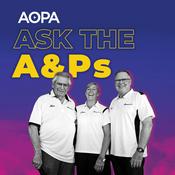
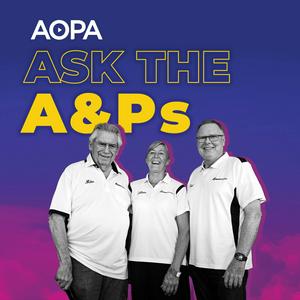
Experts Mike Busch, Paul New, and Colleen Sterling answer your toughest aviation maintenance questions. Submit questions to podcasts@aopa.org. New episodes are released the first and fifteenth of every month.
Podcast websiteLuister naar Ask the A&Ps, Dutch Sleepcast en vele andere podcasts van over de hele wereld met de radio.net-app
Ontvang de gratis radio.net app
- Zenders en podcasts om te bookmarken
- Streamen via Wi-Fi of Bluetooth
- Ondersteunt Carplay & Android Auto
- Veel andere app-functies
Ontvang de gratis radio.net app
- Zenders en podcasts om te bookmarken
- Streamen via Wi-Fi of Bluetooth
- Ondersteunt Carplay & Android Auto
- Veel andere app-functies

Ask the A&Ps
Scan de code,
download de app,
luisteren.
download de app,
luisteren.
Ask the A&Ps: Podcasts in familie
 Netherlands