
Luister gratis naar deze podcast in de app: Gratis downloaden in de App Store
radio.net
Slaaptimer
Favorieten opslaan
The Anxious Truth - A Panic, Anxiety, and Mental Health Podcast
Drew Linsalata
Nieuwste aflevering
349 afleveringen
When OCD Comes Back w/Jess Marriner | EP 355
21-10-2026 | 40 Min.Send in a question or comment via text.
If you have OCD, you've probably heard that it can never be cured, only managed. That can leave you wondering what happens if it comes back. This week I talk with Jess Marriner, an OCD therapist in the UK who also has OCD, about what that actually looks like and what she does when it happens.
A few days before we recorded, Jess had a morning where she fell down the rabbit hole of ruminating about one of her classic themes. She's open about that because she doesn't want anyone with OCD to think they're failing when it happens to them. The way Jess sees it, when people say their OCD is back, what's really going on is they've started doing compulsions again. Looking at it that way gives you some agency, because compulsions are something you can choose to stop doing.
We talk about why OCD tends to flare up during times of high stress, how to recognize when you're in the rabbit hole, and how physical sensations can be a clue that you're ruminating. OCD will try to tell you those sensations are proof that the thought matters. Jess shares her rule that no rumination is good rumination, the difference between problem solving and problem spinning, and why accepting the presence of a thought is different from accepting what it might mean. We also get into measuring recovery by impact. An hour down the rabbit hole is a very different thing from months of your life.
Find Jess on Instagram at https://instagram.com/jessmarrinertherapy and at https://www.jessmarrinertherapy.com
For full show notes on this episode:
https://theanxioustruth.com/355
Support The Anxious Truth: If you find the podcast helpful and want to support my work, you can buy me a coffee. Other ways to support my work like buying a book or signing up for a low cost workshop can be found on my website. None of this is never required, but always appreciated!
Interested in doing therapy with me? For more information on working with me directly to overcome your anxiety, follow this link.
Disclaimer: The Anxious Truth is not therapy or a replacement for therapy. Listening to The Anxious Truth does not create a therapeutic relationship between you and the host or guests of the podcast. Information here is provided for psychoeducational purposes. As always, when you have questions about your own well-being, please consult your mental health and/or medical care providers. If you are having a mental health crisis, always reach out immediately for in-person help.How To Turn Off Anxious Self-Scanning and Checking | EP 354
07-10-2026 | 29 Min.Send in a question or comment via text.
"How do I stop scanning and checking myself all the time?"
If you struggle with anxiety or OCD, you've probably asked some version of that question. Scanning your body for sensations. Scanning for bad thoughts. Checking whether a thought or emotion is the right one. I get asked how to make it stop almost every day.
In this episode I tell you the honest answer. You can't turn it off. Even my therapist brain scans and checks. I get migraine aura, and while I've learned to carry on with my day when it happens, my fully recovered anxiety expert brain still spends hours afterward scanning for signs it might come back. I know logically that it's over. My brain scans anyway.
That scanning function is normal and it serves a purpose. It's thinking that happens outside our awareness, and it naturally goes after the things that matter most to us, like safety, health, identity, and what we value. So the work in recovery is learning to recognize that process running and let it do its thing without making it the most important thing in the room. That takes practice with attention and a willingness to act courageously when your brain is telling you something is wrong. Over time, your brain may learn it doesn't need to scan as much.
I also talk about why this simple strategy is so hard to put into practice, and why you aren't failing when the scanning kicks in.
For full show notes on this episode:
https://theanxioustruth.com/354
Support The Anxious Truth: If you find the podcast helpful and want to support my work, you can buy me a coffee. Other ways to support my work like buying a book or signing up for a low cost workshop can be found on my website. None of this is never required, but always appreciated!
Interested in doing therapy with me? For more information on working with me directly to overcome your anxiety, follow this link.
Disclaimer: The Anxious Truth is not therapy or a replacement for therapy. Listening to The Anxious Truth does not create a therapeutic relationship between you and the host or guests of the podcast. Information here is provided for psychoeducational purposes. As always, when you have questions about your own well-being, please consult your mental health and/or medical care providers. If you are having a mental health crisis, always reach out immediately for in-person help.Anxiety And The "Almost" Story | Ep 353
23-09-2026 | 29 Min.Send in a question or comment via text.
"I almost passed out."
"I almost made a scene."
"I almost ruined everything."
If you have an anxiety disorder or OCD, you probably recognize that sentence. The word almost shows up constantly, and treating it like a fact is one of the things that keeps the cycle going.
In this episode I want to talk about what I call the almost story: the narrative anxiety and OCD write after a difficult moment to give your escape behaviors and compulsions credit for preventing a disaster that was never actually going to happen. The almost story feels completely real. The sensations were intense, the fear was overwhelming, and then you did your ritual or your avoidance and you felt better. So obviously the almost thing almost happened and your action stopped it, right?
That framing is a cognitive distortion, and a costly one. Because when the almost story gets written on the back end of a triggered episode, it fuels anticipatory anxiety on the front end of the next one. The cycle repeats. You never get to see anxiety and discomfort rise and fall on their own because the almost story keeps telling you that giving it that chance would be reckless.
I walk through where the almost story shows up in the cycle, why it's a story rather than a fact, what the proof of that actually is, and what it looks like to start recognizing and challenging it bit by bit.
Support The Anxious Truth: If you find the podcast helpful and want to support my work, you can buy me a coffee. Other ways to support my work like buying a book or signing up for a low cost workshop can be found on my website. None of this is never required, but always appreciated!
Interested in doing therapy with me? For more information on working with me directly to overcome your anxiety, follow this link.
Disclaimer: The Anxious Truth is not therapy or a replacement for therapy. Listening to The Anxious Truth does not create a therapeutic relationship between you and the host or guests of the podcast. Information here is provided for psychoeducational purposes. As always, when you have questions about your own well-being, please consult your mental health and/or medical care providers. If you are having a mental health crisis, always reach out immediately for in-person help.Anxiety, OCD and the Cost of Negotiated Avoidance | EP 352
09-09-2026 | 23 Min.Send in a question or comment via text.
Every time you give in to an avoidance or a ritual, it seems reasonable. Skip one social event, spend a few extra minutes on a compulsion, take one "me day" instead of pushing through. In isolation, none of it feels like a big deal. What's the harm?
That's the trap. Not the individual behaviors themselves, but what happens when you add them all up.
In this episode I want to talk about what I call negotiated avoidance: the process by which each individual accommodation to anxiety or OCD feels justified, smart, even cautious in the moment, while the cumulative cost quietly hollows out your life. Life gets smaller. Restrictions mount. Anxiety and OCD keep moving the goalposts. And the reason you can never seem to satisfy them is that they're not reasonable. You can't negotiate with a terrorist, and that's what anxious and OCD-driven demands actually are.
I talk through why each individual avoidance feels like no big deal, why that feeling is part of the trap, and what it looks like when you start asking a different question: not "what's the harm in this one thing?" but "what does all of this cost me in total?" The answer is usually more than people expect. I also talk through why change here doesn't happen overnight and what it actually looks like to chip away at this bit by bit without declaring yourself a failure when things don't click instantly.
The Act Triflex Episodes:
Get Present
Open Up
Do What Matters
For full show notes on this episode:
https://theanxioustruth.com/352
Support The Anxious Truth: If you find the podcast helpful and want to support my work, you can buy me a coffee. Other ways to support my work like buying a book or signing up for a low cost workshop can be found on my website. None of this is never required, but always appreciated!
Interested in doing therapy with me? For more information on working with me directly to overcome your anxiety, follow this link.
Disclaimer: The Anxious Truth is not therapy or a replacement for therapy. Listening to The Anxious Truth does not create a therapeutic relationship between you and the host or guests of the podcast. Information here is provided for psychoeducational purposes. As always, when you have questions about your own well-being, please consult your mental health and/or medical care providers. If you are having a mental health crisis, always reach out immediately for in-person help.Anxiety and OCD: The Strategy Mismatch Issue | EP 351
26-08-2026 | 29 Min.Send in a question or comment via text.
Anxiety disorders and OCD are what you get when a perfectly functioning brain applies its usual problem-solving strategies to the wrong problem. Your brain is good at solving things. The trouble is it keeps trying to solve something that isn't actually the problem, and that's what keeps you stuck in the loop: trigger, fix, feel better for a while, repeat.
In this episode I want to introduce the concept of strategy mismatch. The things that seem to need fixing in anxiety and OCD (the intrusive thoughts, the physical sensations, the worries about health or relationships or moral character, the uncertainty you can't seem to resolve) are not the actual problem. The actual problem is the fear and discomfort those things produce, and the endless attempts to eliminate that discomfort are what keep the disorder running.
How do you know? Because when you escape, avoid, reassure yourself, or perform a compulsion and feel better for a little while, the problem isn't solved. You just bought temporary relief until the cycle starts again. The strategy doesn't match the problem in front of you.
I talk through what the right strategy looks like, why it's counterintuitive, what gets in the way of applying it, and why this whole framing is actually good news. You don't have to solve your heartbeat, or the opinions of others, or the unpredictability of being alive. That was never going to work anyway.
For full show notes on this episode:
https://theanxioustruth.com/351
Want to talk about this episode or interact with me, Josh Fletcher, and folks that are sharing your experience and understand it? I'm hanging out on the Disordered community app:
https://disordered.fm/community
Support The Anxious Truth: If you find the podcast helpful and want to support my work, you can buy me a coffee. Other ways to support my work like buying a book or signing up for a low cost workshop can be found on my website. None of this is never required, but always appreciated!
Interested in doing therapy with me? For more information on working with me directly to overcome your anxiety, follow this link.
Disclaimer: The Anxious Truth is not therapy or a replacement for therapy. Listening to The Anxious Truth does not create a therapeutic relationship between you and the host or guests of the podcast. Information here is provided for psychoeducational purposes. As always, when you have questions about your own well-being, please consult your mental health and/or medical care providers. If you are having a mental health crisis, always reach out immediately for in-person help.
Meer Geestelijke gezondheid podcasts









Trending Geestelijke gezondheid -podcasts















Over The Anxious Truth - A Panic, Anxiety, and Mental Health Podcast
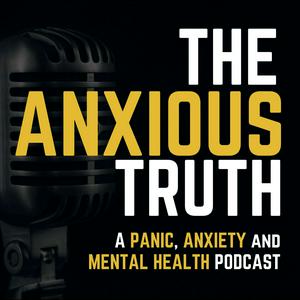
Struggling with panic attacks, agoraphobia, or other anxiety problems? The Anxious Truth will educate you, empower you, encourage you, and inspire you to get your life back! * Featured in the New York Times: "6 Podcasts to Soothe An Anxious Mind" (April 27, 2024)* Featured in Vogue Magazine: "The 15 Best Mental Health Podcasts Recommended by Therapists" (October 2023)Listen to the podcast, read the books, join the social media community, and get on the path to recovery.
Podcast websiteLuister naar The Anxious Truth - A Panic, Anxiety, and Mental Health Podcast, Let's go mental en vele andere podcasts van over de hele wereld met de radio.net-app
Ontvang de gratis radio.net app
- Zenders en podcasts om te bookmarken
- Streamen via Wi-Fi of Bluetooth
- Ondersteunt Carplay & Android Auto
- Veel andere app-functies
Ontvang de gratis radio.net app
- Zenders en podcasts om te bookmarken
- Streamen via Wi-Fi of Bluetooth
- Ondersteunt Carplay & Android Auto
- Veel andere app-functies

The Anxious Truth - A Panic, Anxiety, and Mental Health Podcast
Scan de code,
download de app,
luisteren.
download de app,
luisteren.
The Anxious Truth - A Panic, Anxiety, and Mental Health Podcast: Podcasts in familie
 Netherlands