
Luister gratis naar deze podcast in de app: Gratis downloaden in de App Store
radio.net
Slaaptimer
Favorieten opslaan
32 afleveringen
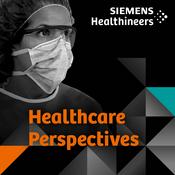
How AI could improve communication in breast cancer care
23-09-2026 | 23 Min.In this episode of Healthcare Perspectives, host Isabel Nieto Alvarez, PhD, an expert for patient experience at Siemens Healthineers, is joined by Maria Bernathova, MD, breast radiologist and generative AI specialist, and Caroline Justich, breast cancer patient advocate and founder of the patient support initiative Be Accepted. Together, they discuss how better communication — and the responsible use of AI — could help patients feel more informed, involved, and supported throughout their care.
What you'll learn:
Why communication challenges can occur throughout the breast cancer journey
How health literacy and language barriers affect patient understanding
The role of trust and shared decision-making in patient-centered care
How AI could help make complex medical information easier to understand
Why technology should support — not replace — human connection in healthcare
Resources:
Connect with Isabel Nieto Alvarez
Dr. Isabel Nieto Alvarez | LinkedIn
Connect with Maria Bernathova, MD
Maria Bernathova | LinkedIn
Connect with Caroline Justich
Caroline Justich | LinkedIn
Hosted on Acast. See acast.com/privacy for more information.Kidney disease, diabetes, and cardiovascular health — from risk to real lives
12-08-2026 | 33 Min.Across the globe, chronic kidney disease, diabetes, cardiovascular disease, and obesity continue to place a growing burden on healthcare systems. Many of these conditions develop silently, often remaining undetected until significant damage has already occurred.
In this episode of Healthcare Perspectives, host Angela Neale, Physician Assistant (PA), healthcare leader at Siemens Healthineers, and advocate for patient-centered care, is joined by Dr. Salvatore Viscomi, Founder and CEO of Carna Health, who specializes in population health, primary care, and early kidney disease intervention.
What you’ll learn:
Why kidney disease is often diagnosed late — and what earlier detection can change
How kidney disease, diabetes, and cardiovascular health are connected
The role of point-of-care testing in identifying risk sooner
Why patient education can support better decisions
How proactive primary care can help people take a more active role in managing their health
Resources:
Connect with Angela Neale
Angela Neale PA-C, MBA, MT (ASCP) - Siemens Healthineers | LinkedIn
Connect with Salvatore Viscomi
Salvatore Giovanni Viscomi, MD - Carna Health | LinkedIn
Hosted on Acast. See acast.com/privacy for more information.Driving sustainability in healthcare through refurbishment
29-07-2026 | 23 Min.Healthcare systems around the world are under increasing pressure to reduce their environmental footprint without compromising access to care, quality, or patient safety.
One often overlooked opportunity is the refurbishment of imaging systems. By giving imaging systems a second life, healthcare providers can help preserve resources while continuing to deliver clinical performance.
In this episode, host Julia Andes, Head of Lifecycle Products at Siemens Healthineers, is joined by MUDr. Diana Scheel MHBA, cardiac imaging specialist and member of the German Radiological Society; as well as Prof. PD Dr. Bernhard Scharinger, MSc, EdiR, EBCR, board-certified radiologist and running his own private practice.
What you’ll learn:
• Why healthcare has a significant environmental footprint and why procurement decisions matter
• How refurbished imaging systems can reduce resource consumption and emissions
• What motivated radiologist Prof. Dr. Scharinger decide on a refurbished CT system
• Why sustainability and excellent patient care can go hand in hand
• Practical ways healthcare providers can start acting more sustainably
Resources:
Connect with Julia Andes
Connect with Prof. Dr Bernhard Scharinger
Connect with Dr Diana Scheel
Hosted on Acast. See acast.com/privacy for more information.Using AI and UX design to pave the way towards the future of imaging automation
01-04-2026 | 32 Min.Across the globe, radiology departments are grappling with a paradox: imaging volumes are climbing while the trained workforce needed to operate scanners is shrinking.
Using AI-driven tools, a drive towards fully-automated radiology promises faster diagnoses, greater diagnostic accuracy, and more efficient workflows, improving both the patient and clinician experience. It is rapidly transforming the way medical imaging is performed, analyzed, and integrated into imaging workflows.
The success of this development relies strongly on intuitive and impactful user experience, or UX, design. Effective UX is integral to ensuring that patients and clinicians can use smart healthcare systems in ways that maintain safety and integrity and enhance user experience. The question is no longer whether higher levels of automation will play a role in radiology — it's how quickly, and where to begin.
Today, host Iwona Markuszewska welcomes Dr. Shivakumar Swamy S, Head and Director of the Radiology Department and Clinical Director of the Department of Radiomics and Radiogenomics at HCG Cancer care in Bangalore, India; Dr. Yair Safriel, Co-Founder and Chief Medical Officer at Pharmascan and MEC Chair of Radiology at Morton Plant Hospital Association in Clearwater, Florida; and Ralf Bauer, radiologist and partner at RNS joint practice in Wiesbaden, Germany, to examine the future of automation in radiology.
What you’ll learn in this episode:
Rising imaging demand, an aging population, and lack of trained technologists have pushed the radiology system to its breaking point
How higher levels of automation can ease this challenge and which types of exams may be the easiest entry point to introducing higher levels of automation in imaging operations
Automation starts way before image acquisition and can be implemented easily as early as in the patient check-in process
Patient trust and ease of use are of utmost importance for any automation in radiology is to be widely implemented
Automation will make it easier for healthcare professionals to spend more time with patients and with more complex, time-intensive cases
Connect with Iwona Markuszewska
LinkedIn
Dr. Shivakumar Swamy S
LinkedIn
Dr. Yair Safriel
LinkedIn
Dr. Ralf Bauer
LinkedIn
Hosted on Acast. See acast.com/privacy for more information.Live from RSNA 2025: Optimizing radiology workflow with digital tools
17-12-2025 | 21 Min.Medical imaging is already an integral part of modern healthcare, but as hospitals face growing imaging demand and staffing challenges, new solutions using artificial intelligence have become an effective way to help ease the load.
On today’s episode of Siemens Healthcare Perspectives, you’ll hear a panel conversation discussing AI’s increasing role in radiology, recorded live at the Radiological Society of North America’s 2025 meeting. Held in Chicago, the conference is the world's largest scientific and educational meeting for the radiologic sciences.
For this discussion, host Katharina Schmidler is joined by Dr. John McMenamy, an Associate Professor of Radiology at the University of Colorado and Associate Radiology Chair at Denver Health; Kelly McFarland, WakeMed’s Executive Director of Imaging Services; and Dustin Allen, CT Scan Supervisor at WakeMed.
Together, these industry leaders explore what intelligent imaging looks like in action as well as its potential to enhance quality, accelerate diagnosis, reduce burnout, and improve overall patient care.
What you’ll learn in this episode:
How AI is transforming radiology by improving workflow efficiency
Automation allows more focus on patient care
Real-time feedback between technologists and radiologists enhances image quality
AI tools can help identify subtle findings that may be overlooked
Training programs are essential for developing the next generation of technologists
Collaboration between health systems can enhance the benefits of AI
The vital role technologists play in patient care
Connect with Katharina Schmidler
LinkedIn
Connect with John McMenamy
LinkedIn
Connect with Kelly McFarland
LinkedIn
Hosted on Acast. See acast.com/privacy for more information.
Meer Geneeskunde podcasts









Trending Geneeskunde -podcasts


Over Healthcare Perspectives
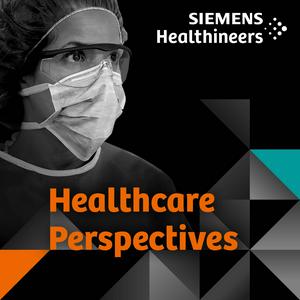
Healthcare Perspectives is a podcast by Siemens Healthineers about medical breakthroughs with the power to improve the lives of patients and their families everywhere. Meet thought leaders from across the globe, as we discuss our shared vision of fighting the world's most threatening diseases through breakthrough medical technology. Hear how technologies like patient twinning, precision therapy and digitization help medical professionals to make the best possible decisions.6f0570b4ce66aaf30246c7f725e75cf511acc6f2 Hosted on Acast. See acast.com/privacy for more information.
Podcast websiteLuister naar Healthcare Perspectives, Post Viraal Verhaal en vele andere podcasts van over de hele wereld met de radio.net-app
Ontvang de gratis radio.net app
- Zenders en podcasts om te bookmarken
- Streamen via Wi-Fi of Bluetooth
- Ondersteunt Carplay & Android Auto
- Veel andere app-functies
Ontvang de gratis radio.net app
- Zenders en podcasts om te bookmarken
- Streamen via Wi-Fi of Bluetooth
- Ondersteunt Carplay & Android Auto
- Veel andere app-functies

Healthcare Perspectives
Scan de code,
download de app,
luisteren.
download de app,
luisteren.
Healthcare Perspectives: Podcasts in familie
 Netherlands