
Luister gratis naar deze podcast in de app: Gratis downloaden in de App Store
radio.net
Slaaptimer
Favorieten opslaan
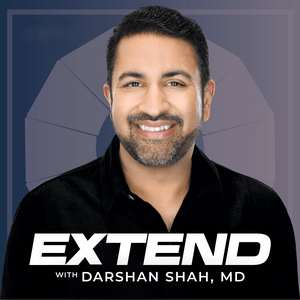
Extend Podcast with Darshan Shah, MD
Darshan Shah, MD
Nieuwste aflevering
218 afleveringen
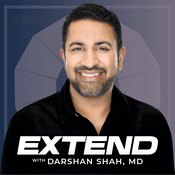
217. Howard Martin: Is Chronic Stress Accelerating Your Aging? How to Rewire Your Stress Response
17-11-2026 | 44 Min.What if one of the most powerful tools for healthy aging isn't another supplement, medication, or expensive treatment—but learning how to regulate your own nervous system?
We know chronic stress can take a toll on our health. But what if we could actually train our bodies to respond differently to stress, improve our resilience, and potentially influence how we age?
In this episode, I'm joined by Howard Martin, Executive Vice President of HeartMath, to explore the fascinating connection between heart rate variability (HRV), the nervous system, emotional health, and longevity.
For decades, HeartMath has studied how the heart communicates with the brain and how our emotional states influence the rhythms of our heart. Howard explains the concept of heart coherence, why the balance between our sympathetic and parasympathetic nervous systems matters, and how simple daily practices may help us become more resilient to stress.
We also discuss why HRV tends to change as we age, how emotional regulation can influence our physiology, and why nervous system training deserves a place alongside exercise, nutrition, and sleep in our longevity routines.
In this episode, you'll learn:
How chronic stress affects your nervous system and may contribute to accelerated aging
What heart rate variability (HRV) reveals about your body's response to stress
The connection between your heart, brain, and autonomic nervous system
What heart coherence means and how HeartMath measures it
How emotions like frustration, gratitude, and appreciation can influence heart rhythm patterns
Why nervous system regulation is a skill you can practice and potentially improve over time
What researchers are exploring about HRV training, brain function, memory, and cognitive health
How HeartMath's biofeedback technology can help you practice emotional regulation
A simple three-step breathing and emotional regulation technique you can use throughout the day
One of my favorite parts of this conversation is when Howard walks me through HeartMath's Quick Coherence Technique—a simple practice that combines heart-focused attention, intentional breathing, and positive emotion to help shift your response to stress.
We also discuss the power of taking short pauses throughout the day, building a consistent morning routine, and why even a few minutes of intentional nervous system training may make a meaningful difference in how we feel and function.
The biggest takeaway? We spend so much time trying to optimize our bodies, but we often overlook the system that helps regulate everything else.
Longevity isn't just about what we eat, how we exercise, or which biomarkers we track. It's also about how we respond to the stress of everyday life.
And learning to regulate that response may be one of the simplest, most accessible ways to support our health for years to come.
Learn more about Dr. Shah:
Website: drshah.com
Clinic: next-health.com
Instagram: @extend_podcast and @darshanshahmd
A special offer from Howard Martin and HeartMath:
Extend listeners can get the Inner Balance™ Coherence Plus sensor at HeartMath's best prices of the year:
30% off sitewide, Nov 16–30
25% off sitewide, Dec 8–31
Shop at https://www.heartmath.com/drshah
About HeartMath
For over 30 years, HeartMath has been a pioneer in Heart Coherence™ research, HRV biofeedback technology, and science-backed techniques for stress reduction, resilience, and well-being. Its tools are used across healthcare, education, first responders, and government, by organizations including Stanford Medicine, Kaiser Permanente, Duke Health, and NASA. HeartMath's methods are supported by 400+ independent research studies.
Thank You to Our Sponsors!
IM8: Try IM8 with our 30-day money back guarantee at im8health.com/drshah, use code DRSHAH at checkout for 10% off!
Next Health: Your destination for cutting-edge health optimization - from IV therapy to hormone balancing, peptides and stem cells. Explore at next-health.com216. Joel Jamieson: How to Improve VO2 Max, HRV & Longevity Without Overtraining
12-11-2026 | 1 u. 3 Min.What if working out harder isn't actually making you healthier? And what if the secret to improving your fitness, recovery, and longevity is knowing when to push—and when to pull back?
In this episode, I'm joined by Joel Jamieson, performance coach, HRV expert, and creator of Morpheus, to explore the science of VO2 max, heart rate variability (HRV), Zone 2 training, and exercise recovery.
After decades of training elite athletes, Joel explains why the same principles that drive peak performance can help everyday people improve cardiovascular fitness, build strength, and age better. We discuss why more exercise isn't always better, how chronic stress and poor sleep affect your ability to recover, and how to use wearable data without becoming obsessed with every number.
In this episode, you'll learn:
Why VO2 max is an important measure of cardiovascular fitness and longevity
How to use HRV and resting heart rate to understand stress and recovery
The difference between Zone 2 cardio and high-intensity interval training
Why recovery is when your body actually adapts and gets stronger
How to balance strength training, cardio, and rest for sustainable results
Why sleep, stress, and lifestyle should influence how hard you train
The biggest takeaway? You don't need to train like an elite athlete to benefit from the science of performance. The key is finding the right balance between exercise and recovery—and building a fitness routine you can sustain for life.
Learn more about Dr. Shah:
Website: drshah.com
Clinic: next-health.com
Instagram: @darshanshahmd and @extend_podcast
Book Pre-Order: https://www.amazon.com/YourNewHealthOS
Learn more about Joel Jamieson:
Website: trainwithmorpheus.com
Instagram: @coachjoeljamieson
Thank You to Our Sponsors!
Momentous: Head to livemomentous.com and use my code DRSHAH at checkout for up to 35% off!
Next Health: Your destination for cutting-edge health optimization - from IV therapy to hormone balancing, peptides and stem cells. Explore at next-health.com!215. Dr. Mindy Pelz: Why Fasting Stops Working for Women—Menopause, Stress & Hormones
10-11-2026 | 35 Min.What if menopause isn't the beginning of your decline—but the beginning of your most powerful chapter? And what if the reason fasting isn't working for you has more to do with stress than willpower?
In this episode, I welcome back Dr. Mindy Pelz, bestselling author of Fast Like a Girl and Age Like a Girl, to explore how menopause, hormones, and nervous system health influence the way women age.
Dr. Pelz challenges the traditional narrative around menopause, explaining how declining estrogen may affect the brain, behavior, and identity. We also discuss why intermittent fasting isn't one-size-fits-all, how chronic stress can affect metabolism and weight management, and why sometimes doing less is exactly what your body needs.
In this episode, you'll learn:
How menopause and declining estrogen can influence brain health, mood, and behavior
Why fasting strategies may need to change throughout a woman's menstrual cycle and menopause
How chronic stress, cortisol, and nervous system regulation relate to metabolic health
Why fasting harder and exercising more aren't always the best solutions for weight gain
How sleep, breathwork, nutrition, and recovery can support your nervous system
Why menopause can be an opportunity to rediscover your purpose and identity
The biggest takeaway? More isn't always better. Understanding what your body needs—and adjusting your approach as you age—may be one of the most powerful ways to support your long-term health.
Learn more about Dr. Darshan Shah:
Website: drshah.com
Clinic: next-health.com
Instagram: @DarshanShahMD and @extend_podcast
Learn more about Dr. Mindy Pelz:
Nervous System Questionnaire: NervousSystemQuestionnaire
Age Like a Girl Book: bit.ly/alagbook
Fast Like a Girl Book: bit.ly/fastlikeagirlbook
Resetter Collaborative Facebook Group: bit.ly/resettercollaborative
Reset Academy: bit.ly/resetacademymembership
Fast Like a Girl Certification Course: bit.ly/flagwaitlist
Thank You to Our Sponsors!
IM8: Try IM8 with a 30 day money back guarantee! Use code DRSHAH at checkout at im8health.com/drshah for 10% off!
Timeline: Timeline, powered by Mitopure, just dropped in price! Check it out using link shop.timeline.com/DRDARSHANSHAH for 20% off when you subscribe!214. Dr. Chris Motley: What Ancient Medicine Can Teach Us About Stress, Chronic Symptoms & Longevity
05-11-2026 | 46 Min.What if your body is giving you clues about your health that you're overlooking? From changes in your tongue and skin to chronic tension, anxiety, and digestive issues, traditional Chinese medicine offers a different perspective on how seemingly unrelated symptoms may be connected.
In this episode, I'm joined by Dr. Chris Motley, a practitioner of traditional Chinese medicine and acupuncture, to explore how ancient healing practices can complement modern approaches to health and longevity.
We dive into the fascinating world of acupuncture, meridians, fascia, nervous system regulation, herbal medicine, and the mind-body connection, exploring how traditional Chinese medicine interprets patterns in the body and approaches chronic health concerns.
Dr. Motley explains why he believes symptoms shouldn't always be viewed in isolation, how emotional stress may influence physical health, and why understanding the body's interconnected systems is central to his practice.
In this episode, you'll learn:
How traditional Chinese medicine approaches health, aging, and disease prevention
What acupuncture is, how it's traditionally understood to work, and why people use it for more than pain relief
Why Dr. Motley examines the tongue, skin, nails, and other physical characteristics when assessing health
How traditional Chinese medicine connects different organs with emotional patterns, including stress, anxiety, anger, and fear
The relationship between fascia, acupuncture meridians, and the body's nervous system
How acupuncture, acupressure, and ear seeds are used in traditional approaches to relaxation and stress management
Why practices like Tai Chi and Qigong may be valuable additions to a healthy aging routine
How Chinese herbal medicine is used in approaches to infections, gut health, and inflammation
What an integrative approach combining Eastern and Western medicine could look like
We also discuss the gut-brain connection, chronic infections, biofilms, applied kinesiology, and Dr. Motley's approach to identifying patterns that may contribute to persistent symptoms.
One of the most interesting parts of our conversation is how traditional Chinese medicine views the relationship between our emotional and physical health—and why managing stress may be an important part of supporting long-term well-being.
The biggest takeaway? Longevity isn't just about advanced diagnostics, supplements, and cutting-edge technology. It's also about paying attention to your body, understanding your patterns, and building habits that support your health over time.
As we continue exploring the science of healthy aging, there's value in understanding how ancient medical traditions approach the body—and where those perspectives may complement evidence-based modern care.
Learn more about Dr. Shah:
Website: drshah.com
Clinic: next-health.com
Instagram: @darshanshahmd and @extend_podcast
Learn more about Dr. Chris Motley:
Website: doctormotley.com
Instagram: @doctormotley
Youtube: youtube.com/@drmotley
Thank You to Our Sponsors!
Pendulum: Head to pendulumlife.com/collections/darshan-shah and use code EXTEND for a discount on your first membership!
IM8: Try IM8 with a 30-day money back guarantee! Use code DRSHAH at checkout for 10% off at im8health.com/drshah213. Nicole Bell: The Hidden Dangers of Lyme Disease—Brain Fog, Alzheimer's & Misdiagnosis
03-11-2026 | 49 Min.What if a negative Lyme disease test doesn't tell the whole story? And could an overlooked infection be contributing to symptoms like brain fog, chronic fatigue, or even cognitive decline?
When Nicole Bell's husband began experiencing personality changes, memory loss, and confusion, doctors diagnosed him with early-onset Alzheimer's disease. But Nicole, an engineer with a background in medical diagnostics, couldn't shake the feeling that something was being missed.
Despite initially testing negative for Lyme disease, her husband was later found to have evidence of Lyme and other infections, including Bartonella and Babesia. His decline and eventual passing transformed Nicole's life, inspiring her to become CEO of Galaxy Diagnostics and advocate for better testing for tick-borne diseases.
In this episode, Nicole joins me to explore the often-overlooked world of Lyme disease, chronic symptoms, tick-borne infections, and their potential connections to brain health and inflammation.
We discuss why Lyme disease can be difficult to diagnose, the limitations of traditional antibody testing, and emerging diagnostic approaches designed to detect infections more directly.
In this episode, you'll learn:
Why Lyme disease can be difficult to diagnose, especially in its early stages
How Lyme disease and other tick-borne infections may affect the brain, joints, heart, and nervous system
What researchers are investigating about infections, neuroinflammation, and Alzheimer's disease
Why a negative Lyme disease test doesn't always rule out an infection
The differences between antibody testing, PCR testing, and emerging urine antigen tests
What Bartonella and Babesia are, and why identifying co-infections matters
Why Lyme disease doesn't always cause the classic bullseye rash
What to know about tick bites, early symptoms, and seeking prompt medical evaluation
How to advocate for yourself when you're experiencing unexplained or persistent symptoms
We also discuss the challenges of living with chronic illness, the importance of early detection, and Nicole's mission to make more accurate diagnostic tools accessible to patients and healthcare providers.
Nicole shares the deeply personal story behind her book, What Lurks in the Woods, and the lessons she learned navigating her husband's illness while raising a family and searching for answers.
The biggest takeaway? A negative test isn't always the end of the diagnostic process, especially when symptoms and exposure history suggest there's more to investigate.
Understanding your symptoms, asking better questions, and working with knowledgeable healthcare professionals can make an enormous difference in identifying health problems earlier.
Because longevity isn't just about treating disease once it appears. It's about recognizing warning signs, understanding potential causes, and giving ourselves the best opportunity to protect our long-term health.
Learn more about Dr. Shah:
Website: drshah.com
Clinic: next-health.com
Instagram: @darshanshahmd and @extend_podcast
Learn more about Nicole Bell:
Website: galaxydx.com
Instagram: @nicoledaniellebell and @galaxydiagnostics
Book - What Lurks in the Woods: amazon.com/What-Lurks-Woods
Thank You to Our Sponsors!
Next Health: Your destination for cutting-edge health optimization - from IV therapy to hormone balancing. Explore at next-health.com!
Momentous: Head to livemomentous.com and use my code DRSHAH at checkout for up to 35% off.
Meer Geneeskunde podcasts




Trending Geneeskunde -podcasts


Over Extend Podcast with Darshan Shah, MD
Extend with Darshan Shah, MD is a podcast dedicated to cutting-edge science, research, tools, and protocols designed to help you extend your healthspan.
Starting my medical journey at 16 and becoming one of the youngest doctors in the country, studying and training at the Mayo Clinic, Harvard Business School, Singularity University and other prestigious institutions, becoming a board certified surgeon and accumulating over two decades of practice, I have discovered that a mere 20% of health knowledge yields 80% of the results.
That's why this podcast is all about cutting through the noise on how to turn back the aging clock.
I interview world-renowned medical practitioners, doctors, experts, and thought leaders, offering you a step-by-step guide and actionable advice to proactively avoid disease and optimize your health.
Plus, I share weekly solo episodes giving you quick, digestible protocols for successfully extending your healthspan.
Podcast websiteLuister naar Extend Podcast with Darshan Shah, MD, Huisarts Podcast voor Patiënten en vele andere podcasts van over de hele wereld met de radio.net-app
Ontvang de gratis radio.net app
- Zenders en podcasts om te bookmarken
- Streamen via Wi-Fi of Bluetooth
- Ondersteunt Carplay & Android Auto
- Veel andere app-functies

 Netherlands

