
Luister gratis naar deze podcast in de app: Gratis downloaden in de App Store
radio.net
Slaaptimer
Favorieten opslaan
171 afleveringen
6 Breast Changes You Should Never Ignore + Dr. A’s Breast Cancer Story
20-10-2026 | 52 Min.For Breast Cancer Awareness Month, Dr. Thaïs Aliabadi shares her own breast cancer story and the lessons she wants every woman to take from it.
Dr. A explains how an abnormal breast biopsy led her to calculate her lifetime breast cancer risk, why she continued pushing for a preventative double mastectomy despite being repeatedly reassured that she was fine, and the shocking pathology result that revealed breast cancer after surgery.
She also breaks down six breast changes women should take seriously, including new or persistent breast lumps, skin dimpling, nipple changes, discharge, persistent flaky or scaly skin and changes in the appearance of the breast skin.
Dr. A explains the difference between traditional monthly self-exams and breast awareness, why knowing what is normal for your body matters, and when a breast change should prompt a call to your doctor.
Plus, we discuss dense breasts, mammograms and ultrasounds, family history, lifetime breast cancer risk, genetic testing, polygenic risk scores and why being young or having no family history does not mean a breast change should be dismissed.
This episode is about knowing your risk, noticing changes and becoming your own health advocate.
Sponsors
OSEA Malibu: The episode features OSEA Malibu’s Undaria Algae Body Oil, a seaweed-infused body oil designed to moisturize skin and promote a healthy-looking glow. Use code CMD for 10% off your first order.
Gusto: Featured in a sponsored segment about simplifying payroll, tax filings, HR, and employee benefits for small businesses. The episode promotes three months of free payroll for eligible new customers.
Peloton: Featured in a sponsored segment introducing the Tread Flex treadmill and discussing accessible running, walking, hiking, and at-home fitness.
David Protein: Featured in a sponsored segment highlighting the brand's high-protein bars, including its Gold and Bronze product lines. The episode promotes a buy-four-cartons-get-the-fifth-free offer.
What You’ll Learn
How Dr. Thaïs Aliabadi discovered that her lifetime breast cancer risk was significantly higher than expected, despite having no family history or known major genetic mutations.
Why atypical lobular hyperplasia can increase breast cancer risk and why understanding biopsy results matters when evaluating your personal risk.
How Dr. Aliabadi's experience with preventive mastectomy ultimately led to an unexpected breast cancer diagnosis.
Why breast cancer concerns can be dismissed in healthcare settings and how patients can advocate for further evaluation when something does not feel right.
The six breast changes that warrant medical attention: a new or persistent lump, skin dimpling or other skin changes, nipple discharge, newly inverted nipples, persistent crusting or scaling of the nipple, and unusual redness or discoloration.
The difference between routine self-breast examinations and breast awareness, including why it is important to recognize what is normal for your own body.
How family history, breast density, previous biopsies, hormonal history, and other factors can contribute to an individual's breast cancer risk assessment.
What the Tyrer-Cuzick risk assessment tool evaluates and how a lifetime risk estimate can help inform conversations about screening.
Why dense breast tissue can both increase breast cancer risk and make abnormalities more difficult to identify on a mammogram.
How 3D mammography, breast ultrasound, and breast MRI may be used in screening plans, depending on individual risk and clinical guidance.
What genetic testing can reveal about inherited breast cancer risk, including mutations in genes such as BRCA.
What polygenic risk scores measure and how numerous genetic variants may contribute to breast cancer risk even when a person does not have a major known genetic mutation.
Why breast implants do not eliminate the need for appropriate breast awareness and screening.
Why new or persistent breast changes should be evaluated by a healthcare professional, even in younger women or those without a family history of breast cancer.
Key Timestamps
00:00 Why women's breast cancer concerns can be dismissed
00:31 Six breast changes every woman should know
01:09 Dr. Thaïs Aliabadi's personal breast cancer journey
01:42 Understanding atypical lobular hyperplasia
04:34 Why Dr. Aliabadi decided to take action
07:55 Searching for a surgeon who would listen
09:58 The complications of preventive surgery
16:10 The unexpected breast cancer diagnosis
18:54 Finding purpose after a life-changing diagnosis
21:50 The six breast changes that warrant medical attention
23:33 Understanding what is normal for your breasts
24:37 Breast self-exams versus breast awareness
27:04 Why every woman should understand her personal risk
28:20 Using the Tyrer-Cuzick tool to estimate lifetime risk
30:22 How family history influences screening recommendations
34:01 Understanding average, intermediate, and high-risk categories
37:04 Why dense breasts can make cancer harder to detect
39:10 Why knowing your lifetime risk matters
40:35 Breast cancer risk factors and early detection
41:37 Genetic testing and polygenic risk scores explained
44:57 When to consider additional genetic risk assessment
46:54 Understanding breast cancer risk when a family member has a BRCA mutation
48:44 Reviewing the six breast changes you should never ignore
49:57 Why younger women should not dismiss breast symptoms
51:14 Advocating for yourself when your concerns are dismissed
Key Takeaways
Breast cancer risk is not determined by family history alone. Dr. Aliabadi's experience demonstrates why a lack of known family history or a major genetic mutation does not eliminate the possibility of developing breast cancer. Personal risk assessment should consider multiple factors, including previous breast biopsies, breast density, and relevant medical and family history.
Know what is normal for your breasts. Breast texture, tenderness, and fullness can change with menstrual cycles and hormonal fluctuations. Becoming familiar with your usual breast appearance and feel can help you recognize new or persistent changes that deserve medical attention.
Recognize the six breast changes discussed in the episode. These include a new or persistent lump, skin dimpling or other visible skin changes, nipple discharge, newly inverted nipples, persistent crusting or scaling of the nipple, and unusual skin discoloration. These changes do not automatically indicate cancer, but they should be evaluated by a healthcare professional.
Dense breast tissue can complicate cancer detection. Dense breasts contain more glandular and connective tissue relative to fat. Because both dense tissue and many breast cancers appear white on a mammogram, abnormalities can be harder to see. Breast density is also an independent risk factor, making it important to discuss appropriate screening options with a healthcare provider.
Personalized risk assessment can help inform screening decisions. Tools such as the Tyrer-Cuzick model use information about family history and other risk factors to estimate lifetime breast cancer risk. Screening recommendations can vary depending on a person's risk profile, age, medical history, and applicable clinical guidelines.
Genetic risk involves more than a single mutation. Genetic testing can identify inherited mutations associated with increased breast cancer risk. Polygenic risk scores assess the combined contribution of numerous genetic variants. These approaches provide different types of information and may help clinicians develop a more complete picture of risk when appropriate.
Preventive decisions can involve difficult trade-offs. Dr. Aliabadi shares the physical challenges, uncertainty, and emotional weight involved in deciding to undergo preventive surgery. Her story highlights the importance of informed decision-making, individualized medical guidance, and having one's concerns taken seriously.
Do not assume you are too young for a breast abnormality to matter. Although most breast changes are not cancerous, symptoms should not be dismissed based on age alone. Persistent or concerning changes warrant timely evaluation, and seeking another medical opinion may be appropriate when concerns remain unresolved.
Patient advocacy is an important part of healthcare. Understanding your medical history, asking questions, requesting clarification about screening options, and seeking further evaluation when necessary can help you participate more actively in decisions about your health.
Early detection and risk reduction are distinct but complementary goals. No screening strategy can prevent every breast cancer diagnosis. However, understanding personal risk, following an appropriate screening plan, and responding to new symptoms can support earlier detection and more informed care.
See Privacy Policy at https://art19.com/privacy and California Privacy Notice at https://art19.com/privacy#do-not-sell-my-info.Why Women Sleep Worse in Perimenopause with Eight Sleep's Alexandra Zatarain
15-10-2026 | 43 Min.Why does sleep suddenly become so much harder for so many women in their 30s, 40s and 50s?
Eight Sleep cofounder Alexandra Zatarain joins SheMD to explore how hormones, temperature and the brain’s natural circadian rhythm affect the way women sleep throughout different stages of life.
Dr. Thaïs Aliabadi explains why fluctuations in estrogen and progesterone during perimenopause can contribute to night sweats, temperature changes, anxiety, racing thoughts and middle-of-the-night wake-ups.
Alexandra shares what years of sleep research and data have taught the Eight Sleep team about deep sleep, REM sleep, temperature regulation, pregnancy, menopause and recovery.
We also break down how much sleep adults actually need, why consistency matters and why alcohol, caffeine and late-night exercise may interfere with recovery even when you are technically getting enough hours.
Plus, Alexandra shares five practical habits she recommends for better sleep and helps us tackle common sleep myths, including whether you can really catch up on lost sleep over the weekend and whether a nightcap actually helps you sleep.
If your sleep has changed and you cannot figure out why, this episode is for you.
Sponsors
Eight Sleep is featured in this episode through a conversation with co-founder Alexandra Zatarain about sleep science and the company’s sleep technology. No formal sponsorship or promotional offer is mentioned.
What You’ll Learn
How Alexandra Zatarain's personal experiences inspired the creation of Eight Sleep and its approach to improving sleep through technology.
Why perimenopause and menopause can disrupt sleep, including the roles of fluctuating estrogen, declining progesterone, night sweats, and anxiety.
How body temperature and circadian rhythms influence when we fall asleep, stay asleep, and wake up.
Why pregnancy and postpartum hormonal changes can affect temperature regulation, snoring, and sleep quality.
The differences between deep sleep and REM sleep, and why both are essential for physical recovery, memory, and emotional processing.
How much sleep adults generally need, why individual sleep requirements vary, and how to recognize whether you're getting enough rest.
Why alcohol may make it easier to fall asleep while negatively affecting overnight recovery.
Why catching up on sleep over the weekend cannot fully compensate for consistently getting too little sleep during the week.
How sleep-tracking technology can help monitor sleep patterns, recovery, temperature preferences, and potential signs of sleep apnea.
Five practical ways to improve sleep, including prioritizing sufficient rest, maintaining a consistent schedule, optimizing your sleep environment, adjusting daily habits, and working with your partner.
Why women experiencing persistent sleep disruptions should consider underlying factors, including hormonal changes and other health conditions, with guidance from a healthcare provider.
Key Takeaways
Sleep is a foundational pillar of health. Prioritizing exercise and nutrition while consistently sacrificing sleep can undermine overall well-being. Making enough time for rest is an essential part of supporting long-term health.
Hormonal changes can significantly disrupt women's sleep. Fluctuating estrogen and progesterone levels during perimenopause and menopause may contribute to temperature sensitivity, night sweats, anxiety, and nighttime awakenings. Persistent sleep difficulties deserve attention rather than being dismissed as an inevitable part of aging.
Temperature plays an important role in sleep. Core body temperature naturally declines as we approach sleep and rises toward morning. A comfortable, cool sleeping environment can support this process, although individual temperature preferences vary.
Deep sleep and REM sleep serve different but complementary functions. Deep sleep is associated with physical restoration, while REM sleep supports processes involving memory, learning, and emotional processing. Getting sufficient sleep allows the body to cycle through both.
Alcohol can interfere with overnight recovery. Although alcohol may help someone fall asleep more quickly, it can affect recovery metrics, including resting heart rate and heart rate variability. Falling asleep faster does not necessarily mean sleeping well.
Consistency matters as much as duration. Maintaining relatively consistent bedtimes and wake-up times can support the body's circadian rhythm. Alexandra recommends aiming for seven to nine hours of sleep for most adults while paying attention to individual needs.
Sleep quality can be affected by more than personal habits. Snoring, possible sleep apnea, hormonal changes, stress, and a partner's sleep patterns can all contribute to disrupted rest. Persistent symptoms may warrant evaluation by a healthcare professional.
Small, sustainable changes can improve sleep habits. Gradually extending sleep time, keeping the bedroom cool, dark, and quiet, limiting late-day caffeine and alcohol, and avoiding heavy meals close to bedtime are practical starting points.
Women's sleep deserves more research and individualized care. Pregnancy, postpartum recovery, perimenopause, and menopause each present different challenges. Understanding these life stages can help inform better research, technology, and healthcare support.
See Privacy Policy at https://art19.com/privacy and California Privacy Notice at https://art19.com/privacy#do-not-sell-my-info.Naomi Watts on Menopause, Desire & Having Better Sex
13-10-2026 | 1 u. 4 Min.Naomi Watts joins SheMD alongside renowned sexual arousal researcher Dr. Cindy Meston for a candid conversation about sex, desire and what happens to women’s bodies during perimenopause and menopause.
Naomi shares her experience learning in her 30s that she was likely entering early menopause, the shame and isolation she initially felt and how opening up about her changing body ultimately transformed her relationship with intimacy.
Dr. Meston explains why female sexual desire may work differently than many women have been taught, including why arousal can sometimes come before desire. She also breaks down the physical and psychological factors that can affect sex, from hormones, blood flow and vaginal changes to stress, sleep, body image and relationships.
Dr. Thaïs Aliabadi discusses treatment options for women experiencing painful sex, vaginal dryness and changes in libido, including vaginal moisturizers, lubricants, vaginal estrogen and testosterone.
Plus, Naomi explains why she believes menopause can be an empowering new chapter rather than the end of pleasure, intimacy or good sex.
Sponsors
Sarah Pharmaceuticals / The PreTRM Test: Learn more about the PreTRM test at pre-term.com and talk with your healthcare provider about whether it may be appropriate for you.
Momentous: Try Momentous Signature Spec Creatine at livemomentous.com and use code GMD or CMD POD for up to 35% off your first order.
David Protein: Buy four cartons and get the fifth free at davidprotein.com/cmd.
Talkiatry: Visit talkiatry.com/cmd to complete a short assessment and get matched with an in-network psychiatrist.
What You’ll Learn
Why Naomi Watts' personal experience with early menopause inspired her to help change the conversation around women's health.
The lesser-known symptoms of perimenopause and menopause, including brain fog, sleep disruption, dry eyes, vaginal dryness, and painful sex.
How hormonal changes can affect vaginal health, lubrication, and urinary symptoms.
Why sexual arousal can precede desire for many women, particularly during perimenopause and menopause.
How stress, exercise, relationship dynamics, and negative thoughts can influence sexual arousal and intimacy.
What treatment options are available for vaginal dryness and painful sex, including moisturizers, lubricants, vaginal estrogen, and other therapies.
Why open communication with your partner and a knowledgeable healthcare provider is essential to navigating changes in sexual health.
How Naomi's experiences and conversations with women inspired Stripes' sexual wellness products.
Why menopause can be a new chapter of confidence, self-advocacy, and sexual fulfillment rather than the end of a satisfying sex life.
Key Timestamps
00:00 Naomi Watts on why good sex doesn't have an age limit
04:51 The overlooked symptoms of perimenopause and menopause
07:32 Vaginal dryness, painful sex, and recurring UTIs
12:32 How arousal, body image, and negative thoughts affect intimacy
18:55 Naomi's experience navigating menopause in a new relationship
22:08 The science of arousal, exercise, and blood flow
31:42 Vaginal estrogen and long-term vaginal health
40:31 How stress, sleep, and relationship dynamics affect desire
42:00 Why women should never feel they have to tolerate painful sex
45:24 The connection between psychological arousal, physical response, and communication
51:16 Testosterone therapy and the Mona Lisa laser
56:38 Naomi's menopause tips, favorite Stripes products, and rapid-fire questions
58:05 The language around menopause that needs to change
1:00:38 Dr. Meston's advice for women navigating menopause
1:02:29 Reframing menopause as an empowering new chapter
Key Takeaways
Menopause affects more than hot flashes. Hormonal changes can influence sleep, mood, cognition, skin, eyes, vaginal health, and sexual comfort, sometimes years before menopause itself.
Female desire and arousal don't always follow a linear pattern. For many women, particularly as they age, arousal can come before desire. Understanding this can help women move away from the expectation that sexual desire must always happen spontaneously.
Sexual health involves both the mind and the body. Physical changes, stress, fatigue, body image, relationship dynamics, and distracting thoughts can all influence arousal and intimacy.
Painful sex should not be accepted as an inevitable part of aging. Vaginal moisturizers, lubricants, vaginal estrogen, and other treatment options may help, depending on individual needs and medical history. Women experiencing persistent pain should seek guidance from a qualified healthcare provider.
Communication can transform intimacy. Talking openly with a partner outside the bedroom about changing needs, comfort, and pleasure can help couples adapt and maintain connection throughout different stages of life.
Women deserve individualized, evidence-informed care. There is no single approach to sexual health during menopause. Working with a clinician knowledgeable in menopause and sexual medicine can help women understand their options.
Menopause is not the end of a fulfilling sex life. Naomi's story underscores the importance of challenging stigma, listening to women's experiences, and giving women the confidence to advocate for their health and pleasure.
See Privacy Policy at https://art19.com/privacy and California Privacy Notice at https://art19.com/privacy#do-not-sell-my-info.REPLAY: SZA on Her Health, Family History & Becoming Her Own Advocate
08-10-2026 | 54 Min.We are revisiting one of our favorite SheMD conversations with SZA.
SZA joins her longtime physician Dr. Thaïs Aliabadi and Mary Alice Haney for an intimate conversation about her health, family history and the anxiety that can come with trying to understand what is happening inside your own body.
Dr. A walks through SZA’s breast cancer risk assessment, family history, genetic testing and why a negative genetic test does not necessarily mean someone has an average lifetime risk of breast cancer.
SZA also talks candidly about health anxiety, therapy, trauma, relationships, creativity and learning to accept the parts of herself that do not fit the traditional idea of being a “nice girl.” She reflects on the drive that helped build her career, why outside validation once mattered so much to her and what she is still learning about trusting herself.
Plus, SZA talks about getting off the internet, motherhood, life beyond music and the people who have shaped who she is today.
This conversation was originally recorded before SZA went on to win three Grammys following the release of SOS.
Subscribe to SHE MD Podcast for expert tips on PCOS, endometriosis, fertility, hormonal balance, mental health, and more. Share with friends and visit SHE MD website and Ovii for research-backed resources, holistic health strategies, and expert guidance on women's health and well-being.
Sponsors
Blueland: Get 15% off your first order at blueland.com/shemd.
Ladder: Take the quiz at ladder.fit/shemd to find your perfect plan and get a free 7-day trial plus $10 off your first month.
Huel: Get 15% off online with code SheMD at huel.com/shemd. New customers only.
Toothpillow: Use code SheMD at toothpillow.com/shemd to unlock a free full video assessment, a $50 value.
Sequencing.com: Get up to 10% off your full genome test plus free shipping at sequencing.com with promo code SheMD.
What You'll Learn
Where the name SZA comes from and what each letter represents.
Why every woman should know her lifetime risk of breast cancer, even without a family history.
How factors like height, weight, breast density, family history, and genetic testing change a lifetime risk score.
Why women with a lifetime risk above 20% should start breast imaging at 30 instead of 40.
What a fibroadenoma is and why imaging catches cancers years before a lump can be felt.
How a family history of cancer can create lasting health anxiety, and why being your own advocate matters.
The story behind SOS and SZA's journey away from trying to be a "nice girl."
SZA's advice for young artists on protecting their health and creativity.
Key Takeaways
The average woman has a 12.5% lifetime risk of breast cancer, and every woman should have her personal risk calculated by her doctor.
A negative genetic test does not mean low risk, since family history, breast density, and other factors still affect a woman's lifetime risk.
Women with a lifetime risk above 20% should begin breast imaging at 30, not 40, and may be missed if risk is never calculated.
By the time a lump can be felt, it has often been there for years, which is why regular imaging is essential.
Watching loved ones go through cancer can create real health anxiety, and advocating for yourself is better than assuming something is nothing.
Integrating every part of yourself, including your edge, can be a source of strength rather than shame.
See Privacy Policy at https://art19.com/privacy and California Privacy Notice at https://art19.com/privacy#do-not-sell-my-info.Diagnosed With Stage 3 Breast Cancer at 19: Miranda McKeon’s Story
06-10-2026 | 43 Min.Miranda McKeon was only 19 when she noticed a lump in her breast and was diagnosed with stage three, hormone positive, HER2 negative invasive ductal carcinoma.
In honor of Breast Cancer Awareness Month, Miranda joins SheMD to share the full story of her diagnosis, treatment and life after breast cancer. She opens up about the breast dimpling she initially dismissed, learning she carried a CHEK2 mutation despite having no family history of cancer, freezing her eggs before chemotherapy, undergoing a double mastectomy and radiation, and entering medically induced menopause in her early 20s.
Miranda also talks candidly about painful sex, vaginal dryness, low libido, dating, body image, fertility and the emotional impact of experiencing cancer during what should have been her college years.
Dr. Thaïs Aliabadi explains breast changes women should pay attention to, how genetics and breast density can affect risk, and why knowing your own baseline and speaking up when something changes can matter.
This conversation is a powerful reminder that breast cancer does not only affect older women and that knowing your body is an important part of advocating for your health.
Subscribe to SHE MD Podcast for expert tips on PCOS, endometriosis, fertility, hormonal balance, mental health, and more. Share with friends and visit SHE MD website and Ovii for research-backed resources, holistic health strategies, and expert guidance on women’s health and well-being.
Sponsors
SmileSet: Listeners get an additional 35% off clear aligners at smileset.com/shemd.
Arca Wealth: Book a complimentary financial planning call with an Arca advisor at arcawealth.com/shemd. Arca Wealth is a fee-only fiduciary firm. This is a paid endorsement. See arcawealth.com for important disclosures.
AG1: For a limited time, get a free immune support bundle (omega-3 fish oil and vitamin D3 K2) with your first AG1 NextGen or AG1 Pro subscription order at drinkag1.com/shemd.
Gusto: Get three months free when you run your first payroll at gusto.com/shemd.
Larine: Listeners get up to 50% off Larine remineralizing gum at buylarine.com/shemd.
What You'll Learn
Why breast cancer rates are rising faster in women under 50, and why young women's symptoms are so often dismissed.
The early signs of breast cancer beyond a lump, including skin dimpling, nipple changes, discharge, and persistent one-sided flaky skin.
How CHEK2 mutations and polygenic risk scores shape breast cancer risk, even without a family history.
Why a one-size-fits-all mammogram age misses individual risk, and how breast density, family history, and genetics change the picture.
How to calculate your lifetime breast cancer risk with the Tyrer-Cuzick model and when high-risk screening should begin.
How chemotherapy can affect fertility, and why egg freezing should come before treatment.
What medically induced menopause looks like for a young woman, including hot flashes, low libido, and vaginal dryness.
How vaginal estrogen and CO2 laser treatments can help with painful sex.
How to cope emotionally with a young-onset diagnosis, from therapy to gratitude lists to a trusted inner circle.
Key Takeaways
Breast cancer is more common after 50, but rates are rising faster in younger women, and one in six new invasive cases occurs before age 50.
Skin dimpling and other changes are symptoms too. A young woman may not recognize them as warning signs, which can delay diagnosis.
Most women diagnosed with breast cancer have no family history, so a lack of family history is not a guarantee of low risk.
Mammograms starting at 40 treat everyone alike. Breast density, genetics, family history, and polygenic risk can all change when screening should begin.
Every woman should know her lifetime breast cancer risk by 30. A risk of 20% or more means earlier imaging, which may include mammogram, ultrasound, and MRI.
Egg freezing should be part of the first conversation before chemotherapy, because chemo's effect on ovarian reserve is unpredictable.
Medically induced menopause can bring severe symptoms, including painful sex, and women shouldn't feel ashamed to bring them up with their doctors.
A double mastectomy leaves some residual breast tissue, so ongoing monitoring is still important.
Know what's normal for your breasts and report changes promptly.
Therapy, gratitude, and a trusted circle can help you get through a young-onset diagnosis.
Guest Bio - Miranda McKeon
Miranda McKeon is a breast cancer survivor, women’s health advocate, and content creator who was diagnosed with stage 3 hormone-positive, HER2-negative invasive ductal carcinoma at just 19 years old. After discovering a lump in her breast while home from college, Miranda underwent chemotherapy, a double mastectomy, radiation, and medically induced menopause. She later learned that she carries a CHEK2 genetic mutation associated with an increased risk of breast cancer.
Since her diagnosis, Miranda has become an outspoken advocate for young women navigating cancer, sexual health, fertility, body image, and life after treatment. She openly shares her experience with intimacy and medically induced menopause and uses her platform to encourage women to understand their bodies and advocate for their health.
See Privacy Policy at https://art19.com/privacy and California Privacy Notice at https://art19.com/privacy#do-not-sell-my-info.
Meer Geneeskunde podcasts







Trending Geneeskunde -podcasts

Over SHE MD
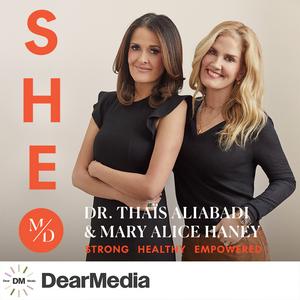
SHE MD is a weekly podcast hosted by world-renowned OBGYN, Dr. Thais Aliabadi, “Dr. A,” and women's advocate and influencer, Mary Alice Haney. Their candid conversations with celebrity guests and today's leading experts about women's health topics, such as menopause, endometriosis, PCOS, and fertility empower their audience with the knowledge and tools to become their own health advocates.Dr. A and Mary Alice dive deep into critical health issues, offering women the knowledge and tools to become their best health advocates.At SHE MD, we believe that every woman deserves access to the latest medical insights, personalized care strategies, and expert advice to navigate their health journey. From breaking down myths to providing practical tips, Dr. Aliabadi and Mary Alice Haney create a welcoming and informative space for women to take control of their health. The podcast features exclusive interviews with top-tier celebrity guests and leading experts across the medical, wellness, and health industries. Together, they explore real-world stories, struggles, and successes to ensure that every listener can feel heard and supported.SHE MD aims to change that by providing a platform where women can receive trustworthy, expert advice on key health issues affecting their lives. Whether you’re dealing with painful menstrual cycles, navigating fertility challenges, or going through menopause, SHE MD brings clarity to these topics in a way that feels personal, approachable, and actionable. Dr. Thais Aliabadi provides expert insights into the most pressing women’s health issues, offering listeners a chance to learn from one of the leading voices in the field. Her knowledge is complemented by Mary Alice Haney's ability to relate to everyday challenges, offering a compassionate and approachable perspective on complex topics.Meet the HostsDr. Thais Aliabadi, "Dr. A"Dr. Thais Aliabadi is a renowned board-certified OBGYN, known for her compassionate, patient-first approach. Specializing in fertility, high-risk pregnancies, menopause, and minimally invasive surgeries, Dr. A has spent her career guiding women through all stages of life. With experience treating high-profile patients and a commitment to public health education, she’s a trusted voice advocating for better healthcare access for women globally. Dr. Aliabadi frequently appears in major media to discuss key women’s health issues.Mary Alice HaneyMary Alice Haney is a prominent women's advocate and lifestyle influencer who empowers women to take control of their health and wellness. With a background in fashion and lifestyle, she brings a holistic approach to well-being. As co-host of SHE MD, Mary Alice fosters open, relatable conversations on often-overlooked women's health topics, helping women break down barriers and gain the knowledge they need to advocate for themselves. Her commitment to providing practical, actionable advice has made her a trusted figure in the health community.ResourcesSHE M/D- https://www.shemdpodcast.comSHE M/D YouTube- https://www.youtube.com/@SHEMDPodcastInstagram- https://www.instagram.com/shemdpodcast/Mary Alice Haney Instagram- https://www.instagram.com/haneyofficial/Dr A Instagram- https://www.instagram.com/drthaisaliabadi/Tik Tok- https://www.tiktok.com/@shemdpodcastFacebook- https://www.facebook.com/profile.php?id=61556530329981&sk=aboutTwitter- https://x.com/shemdpodcast#SHEMDPodcast #WomensHealth #HealthAdvocacy #DrThaisAliabadi #MaryAliceHaney #MenopauseMatters #EndometriosisAwareness #PCOS #FertilityJourney #OBGYN #HealthAndWellness #MedicalInsights #HealthEducation #EmpoweringWomen #HealthcareSelfAdvocacy #HealthTips #BreakingHealthMyths #WomenSupportingWomen #HealthJourney
Podcast websiteLuister naar SHE MD, KopCast en vele andere podcasts van over de hele wereld met de radio.net-app
Ontvang de gratis radio.net app
- Zenders en podcasts om te bookmarken
- Streamen via Wi-Fi of Bluetooth
- Ondersteunt Carplay & Android Auto
- Veel andere app-functies
Ontvang de gratis radio.net app
- Zenders en podcasts om te bookmarken
- Streamen via Wi-Fi of Bluetooth
- Ondersteunt Carplay & Android Auto
- Veel andere app-functies

SHE MD
Scan de code,
download de app,
luisteren.
download de app,
luisteren.
SHE MD: Podcasts in familie
 Netherlands