

Luister gratis naar deze podcast in de app: Gratis downloaden in de App Store
radio.net
Slaaptimer
Favorieten opslaan
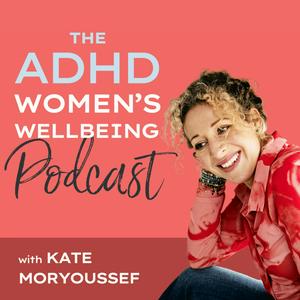
ADHD Women's Wellbeing Podcast
Kate Moryoussef
Nieuwste aflevering
354 afleveringen
ADHD Business Burnout: Hyperfocus and Redefining Success with Amanda Perry
18-10-2026 | 1 u. 1 Min.This October, I'm putting community, real experiences and practical support at the heart of ADHD Awareness Month. Visit the Events page to see we're planning and get involved!
Today's Podcast:
One statistic changed everything for Amanda Perry. More than half of neurodivergent entrepreneurs say they only started a business because the workplace couldn’t support them.
Not a dream. A necessity.
This week’s More Yourself episode comes from my first-ever live podcast recording, with Amanda Perry, founder of Brain First and author of Brain First Business: The ADHD Entrepreneur’s Guide to Success.
Amanda has spent 18 years building businesses, 13 of them undiagnosed. Burnout after burnout. Bankruptcy. A marketing agency that grew from five people to 40 in three months. After her ADHD diagnosis at 42, she sold it and started again, this time brain first.
Champagne dreams and lemonade energy. The fear of burning out again. God mode and the crash that follows. And why so many of us end up building a prison instead of a business.
Recorded live, with your questions answered in real time.
Advertisement⏐Try AG1 now at http://drinkag1.com/adhdwomen and get £20 off your first order + 5 AG1 Travel Packs for on the go, a bottle of Vitamin D3+K2, and the Welcome Kit for FREE. No risk with the 30-day money-back guarantee. Find all details about the health benefits in the link. Study results are on file with AG1, 2023.
In this episode, we cover:
Why so many neurodivergent entrepreneurs start businesses out of necessity, not desire
Amanda’s 13 undiagnosed years in business: burnout, bankruptcy and chasing the LinkedIn version of success
What rich really means, and giving yourself permission to define success on your own terms
How Amanda built a prison instead of a business twice, and what she’s doing differently now
Why delegation feels so hard with ADHD, and the shift from VAs to an inverted Christmas tree structure
FOBO, the fear of burning out, and why shrinking your life isn’t the same as healing
God mode, hyperfocus and spotting the first sign of burnout
Interruptions, motherhood and protecting your focus when you work from home
Brain First Workplace, the dropped kerb and why neuro-inclusive design benefits everyone
Live Q&A on breaking the burnout cycle, keeping things simple and disclosing ADHD at work
Timestamps:
00:00 - Welcome and Amanda’s journey in business
00:43 - Why so many neurodivergent founders start businesses out of necessity
02:30 - 18 years in business, 13 undiagnosed: burnout, bankruptcy and borrowed goals
05:35 - Permission to create your own version of success
07:20 - “Disgustingly rich” and what rich really means
10:48 - Building a prison, not a business
12:07 - Purpose, values and the pressure to be nice as a female founder
13:30 - Delegation, communication and why it’s quicker to do it yourself
16:04 - From VAs to a chief of staff: the inverted Christmas tree
17:33 - Self-trust, perimenopause and not knowing how you’ll wake up
18:14 - Kate on leaving PR and shrinking herself to avoid burnout
22:01 - FOBO: the fear of burning out
24:48 - Champagne dreams, lemonade energy
25:19 - Interruptions, motherhood and the nervous system
27:41 - God mode, hyperfocus and the first sign of burnout
33:07 - Brain First Workplace and open conversations at work
34:26 - Tribunals, “them and us” culture and why managers are scared
36:30 - The dropped kerb and designing for every brain
42:20 - Live Q&A: breaking out of the prison cycle
44:58 - Awareness, alignment and action
46:57 - Don’t be afraid of simplicity
48:13 - Disclosing ADHD at work
50:17 - Ideas, strategy and getting from A to Z before anyone else
52:26 - Where to find Amanda
Links and Resources:
Find my popular ADHD Women's Wellbeing workshops and resources on my website here.
Follow the podcast on Instagram: @adhd_womenswellbeing_pod
Get my book, The ADHD Women's Wellbeing Toolkit (also available in ebook and audiobook) here
Join the More Yourself membership community here
Get Amanda’s book, Brain First Business: The ADHD Entrepreneur’s Guide to Success
Visit Amanda’s website: amandaperry.co.uk
Connect with Amanda on Instagram
Kate Moryoussef is a women's ADHD lifestyle and wellbeing author, coach and EFT practitioner who helps overwhelmed and unfulfilled newly diagnosed women with ADHD find more calm, balance, hope, health, compassion, creativity and clarity.
Learn more about your ad choices. Visit megaphone.fm/adchoicesWhy Do I Need So Much Time to Recover From People? ADHD, Social Exhaustion and the Need to Decompress
14-10-2026 | 50 Min.What Actually Helps You!? This October, I'm putting community, real experiences and practical support at the heart of ADHD Awareness Month. There are live conversations, Instagram Lives, podcast events and ways for you to share what actually helps in your own life.
Visit the Events page to see what’s happening and get involved.
_____________________
You leave the party first. You pay extra for the room on your own. You say yes, then spend the whole evening counting down until you can go home. And somewhere along the way, you decided that made you the difficult one.
On this week’s episode of The ADHD Women’s Wellbeing Podcast, I’m joined by Alice Bramhill, registered mental health nurse, interpersonal psychotherapist and accredited therapeutic coach specialising in neurodivergent adults. Her first book, I Need My Space (But I Like You Too!): A Neurodivergent Guide to All Types of Relationships, is out now.
Alice has nearly 30 years of clinical experience. She was diagnosed with ADHD at 47 and autism at 50, and is a parent carer to two neurodivergent children.
Masking until there’s nothing left. Being the fixer, the capable one, the people pleaser. Families who keep casting you in your old role. A nervous system that panics every time you say no.
You’re allowed to need your space.
This is a fantastic conversation that I know will resonate so strongly with so many of you.
Advertisement⏐Try AG1 now at http://drinkag1.com/adhdwomen and get £20 off your first order + 5 AG1 Travel Packs for on the go, a bottle of Vitamin D3+K2, and the Welcome Kit for FREE. No risk with the 30-day money-back guarantee. Find all details about the health benefits in the link. Study results are on file with AG1, 2023.
_____________________
In this episode, we cover:
Why relationships sit at the heart of our mental health, and what interpersonal psychotherapy can offer neurodivergent adults
How masking leads to an erosion of self and a lack of authenticity in our relationships
What an emotionally sustainable life looks like, and why so many social expectations simply aren't sustainable for us
Why it's okay to leave the party after an hour, and how to communicate your social battery without shame
Rejection sensitivity and why it isn't our job to manage other people's emotions
Shrinking versus discernment, and how to navigate the fear of loneliness when you start pulling back
Setting boundaries with family when you've always been cast as the fixer, the capable one or the people pleaser
What emotional labour really means, and where information sharing ends and over-explaining begins
Why your nervous system may push back when you start saying no, and how to practise it gently
Noticing the shoulds, starting with a maybe and why it's okay to disappoint people
Timestamps:
00:00 - Welcome and introducing Alice Bramhill
01:30 - Why Alice wrote I Need My Space
02:30 - Interpersonal psychotherapy and why relationships shape our mental health
05:30 - Masking, authenticity and the erosion of self
07:30 - Building an emotionally sustainable life
09:30 - Redefining the terms of engagement and leaving when you're done
11:30 - Rejection sensitivity and other people's emotions
14:00 - Needing space in friendships and on holidays
16:30 - Shrinking, discernment and the fear of loneliness
20:30 - Shedding, permission and life after diagnosis
21:30 - Perimenopause and caring less about what others think
25:00 - Who Alice wrote the book for
26:30 - Boundaries with family and stepping out of old roles
30:30 - What emotional labour really means
34:00 - The fixers, the capable ones and the people pleasers
36:30 - When your nervous system pushes back
39:00 - Cycle breakers and generational change
41:00 - Noticing automatic yeses and starting with a maybe
42:30 - Catching the shoulds and getting curious
44:00 - Asking why and giving yourself permission to disappoint people
46:00 - Where to find Alice's book, Substack and one-to-one support
Links and Resources:
Find my popular ADHD Women's Wellbeing workshops and resources on my website here.
Follow the podcast on Instagram: @adhd_womenswellbeing_pod
Get my book, The ADHD Women's Wellbeing Toolkit (also available in ebook and audiobook) here
Join the More Yourself membership community here
Visit Alice's website and join the waitlist for one-to-ones here
Connect with Alice on Instagram
Kate Moryoussef is a women's ADHD lifestyle and wellbeing author, coach and EFT practitioner who helps overwhelmed and unfulfilled newly diagnosed women with ADHD find more calm, balance, hope, health, compassion, creativity and clarity.
Learn more about your ad choices. Visit megaphone.fm/adchoicesThe Overlap of ADHD and Autism: Do I have AuDHD?
11-10-2026 | 15 Min.This October, I'm putting community, real experiences and practical support at the heart of ADHD Awareness Month. There are live conversations and ways for you to share what actually helps in your own life. Visit the Events page to see what’s happening and get involved.
Understood.org's The ADHD Channel for Women features three shows hosted by three different hosts, unpacking a different side of life with ADHD. They cover everything from sex, dating, and relationships to deep dives into where neurodivergence meets the biggest news stories, like how a newly discovered gene variant could change the way we treat ADHD. There's also an ADHD coach who answers listeners' questions.
Check out The ADHD Channel for Women here
This episode from The ADHD Channel for Women is called ‘ADHD and autism: Do I have AuDHD?’ You’ll hear a clear and compassionate look at where ADHD and autism meet, where they part ways and what it means when you recognise yourself in both.
AuDHD isn’t a formal diagnosis. But it’s everywhere online, and for many late-diagnosed women it’s the first language that has ever truly fitted. Dr. J, a licensed psychologist and host of Understood.org’s ADHD and podcast, explains why the overlap is the norm rather than the exception. Research suggests that 30 to 50 percent of autistic people also meet the criteria for ADHD.
She unpacks the push and pull so many people with AuDHD describe. Craving routine but struggling to keep it. Wanting deep connection but hitting a wall of social exhaustion. She also talks honestly about what comes next, including the grief that can surface if a label you’ve found community in doesn’t become your diagnosis.
This week’s episode is sponsored by Understood.org, the leading nonprofit dedicated to empowering the millions of people with learning and thinking differences, such as ADHD and dyslexia.
For all things ADHD Women's Wellbeing, including the podcast, resources and events, head here: www.adhdwomenswellbeing.co.uk
Learn more about your ad choices. Visit megaphone.fm/adchoicesADHD, Progesterone and Hormones: Life-Changing Information Every Woman Needs to Know with Dr Jolene Brighten
07-10-2026 | 59 Min.This ADHD Awareness Month 2026, ADHD Women's Wellbeing is putting this community, lived experiences, and practical support front and center. There are live conversations, Instagram Lives, podcast events and ways for you to share what actually helps in your own life.
Visit the Events page to see what’s happening and get involved.
We talk a lot about hormones and ADHD. But this conversation goes much deeper.
What if the fatigue, anxiety, gut issues, difficult periods and the way your ADHD seems to shift throughout your cycle aren’t separate problems? What if they’re all giving you information about what’s happening in your body?
This week on The ADHD Women’s Wellbeing Podcast, I’m joined by Dr Jolene Brighten for a fascinating and powerful deep dive into the biology behind ADHD in women, and some of the connections we just aren’t talking about enough.
Jolene is a board-certified naturopathic endocrinologist, nutritionist, certified menopause specialist and bestselling author of Beyond the Pill and Is This Normal? Her new book, ADHD and Women: A Guide to Understanding Your Hormones and Thriving with ADHD, is out now.
And she does not hold back in this conversation.
We get into progesterone, histamine, endometriosis, PMDD and perimenopause, and what they can mean for women with ADHD. We explore why symptoms that appear unrelated may be more connected than we realise, why so many women have spent years being passed between specialists and why understanding ADHD as something that affects the whole body can completely change the conversation.
Jolene also shares her own story, from her son’s ADHD diagnosis to being diagnosed with endometriosis after 29 years of periods and later discovering she is autistic.
This is one of those episodes that may have you joining dots you didn’t even realise were connected. If you’ve ever felt as though your hormones, brain and body are all speaking different languages, this conversation could help you understand the bigger picture.
Advertisement⏐Try AG1 now at https://drinkag1.com/adhdwomen and get £20 off your first order + 5 AG1 Travel Packs for on the go, a bottle of Vitamin D3+K2, and the Welcome Kit for FREE. No risk with the 30-day money-back guarantee. Find all details about the health benefits in the link. Study results are on file with AG1, 2023.
_____________________
In this episode, we cover:
Jolene's late diagnoses of ADHD, endometriosis and autism, and why accommodations are so often mistaken for success
Why fatigue and anxiety are among the most common symptoms of endometriosis, and how it can be present without any pain
The links between ADHD, endometriosis, PMDD and fibroids, and why medicine so often treats them as coincidences
How histamine and mast cells may be connected to 2am to 4am waking, irritability and emotional dysregulation
What happens to dopamine, serotonin, acetylcholine and GABA when oestrogen and progesterone drop
Why hysterectomy and hormone suppression don't cure PMDD or endometriosis, and what this means for ADHD women
Body identical progesterone versus synthetic progestins, progesterone intolerance and why starting low and going slow can help
What research tells us about hormonal contraception and depression in ADHD women
Why movement is so powerful for the ADHD brain, and an honest look at why it can feel so hard to do
Alcohol, GABA and the luteal phase, and why we were never designed to be productive all the time
Timestamps:
00:00 - Welcome and introducing Dr Jolene Brighten
02:30 - Jolene's journey to ADHD, endometriosis and autism diagnoses
05:30 - Entrepreneurship, accommodations and the support nobody sees
08:00 - What endometriosis can look like, including when there's no pain
10:00 - Jolene's endometriosis story, from childhood gut issues to secondary infertility
15:00 - Mast cells, histamine and the brain, immune and hormone connection
17:00 - Kate's experience with endometriosis, adenomyosis and continuous progesterone
21:00 - Access to care in the UK, US and Canada
23:00 - Why ADHD is the operating system you were born with
25:00 - What happens to the brain when oestrogen and progesterone drop
27:00 - PMDD: why it may be more than one condition
29:00 - NAC, mitochondria and the ADHD brain in perimenopause
32:00 - Progesterone, progestins and the research on contraception and depression
35:00 - ADHD as a full-body condition and the gut microbiome
37:00 - Progesterone intolerance, dosing and different ways of taking it
42:00 - Serotonin, dopamine and how the ADHD brain adapts
43:00 - Exercise, BDNF and giving your brain more energy
46:00 - Hysterectomies, unsupported women and the generations before us
48:00 - Alcohol, GABA and the luteal phase
49:00 - Rejecting productivity culture and honouring the need to rest
53:00 - Superpowers, kryptonite and asking what it's costing you
56:00 - Where to find Jolene's book and resources
Links and Resources:
Find my popular ADHD Women's Wellbeing workshops and resources on my website here.
Follow the podcast on Instagram: @adhd_womenswellbeing_pod
Get my book, The ADHD Women's Wellbeing Toolkit (also available in ebook and audiobook) here
Join the More Yourself membership community here
Get Jolene's book, ADHD and Women (also available in ebook and audiobook): drbrighten.com/adhd-and-women
Visit Jolene's website for free articles on hormones, ADHD, PMDD and endometriosis: drbrighten.com
Listen to Jolene's podcast: The Dr. Brighten Show
Connect with Jolene on Instagram: @drjolenebrighten
Watch Jolene on YouTube: @DrJoleneBrighten
See Explore Worldwide's range of destinations in the link HERE
If today’s episode brought up anything for you, these organisations offer support and information:
Endometriosis UK Support Network
The Miscarriage Association helpline and support services
Campaign Against Living Miserably
Kate Moryoussef is a women's ADHD lifestyle and wellbeing coach and EFT practitioner who helps overwhelmed and unfulfilled newly diagnosed women with ADHD find more calm, balance, hope, health, compassion, creativity, and clarity.
Learn more about your ad choices. Visit megaphone.fm/adchoicesA Community of Support: What's Coming to ADHD Women's Wellbeing
04-10-2026 | 21 Min.What Actually Helps YOU: This ADHD Awareness Month 2026, I'm putting community, real experiences, and practical support throughout the month. There are live podcast recordings, Instagram Lives, podcast events and ways for you to share what actually helps in your own life. Visit the Events page to see what’s happening and get involved.
This one is a little different. No guest, no workshop clip — just me, talking to you about what's coming next and why community is at the heart of everything we're building here.
Today I'm sharing a personal update about what's happening at ADHD Women's Wellbeing this October and beyond, including some exciting plans for live events in 2027, how you can get involved in ADHD Awareness Month right now, and how I want your wisdom to shape something I'm creating for this community.
This one is warm, unscripted and very much from the heart. Sign up for the ADHD WW events waitlist here
Advertisement⏐Try AG1 now at https://drinkag1.com/adhdwomen and get £20 off your first order + 5 AG1 Travel Packs for on the go, a bottle of Vitamin D3+K2, and the Welcome Kit for FREE. No risk with the 30-day money-back guarantee. Find all details about the health benefits in the link. Study results are on file with AG1, 2023.
In this episode, I cover:
What the first-ever ADHD Women's Wellbeing live event in Manchester taught me, and why I want to do more
My plans for in-person events in 2027, what they'll look and feel like, and how to get on the waitlist
Why ADHD Awareness Month 2026 is all about community, lived experience and what actually helps
The Google Form I'm creating to collect your wisdom — what makes your daily life easier with ADHD — and how your answers will shape a community workbook
How to attend free live podcast recordings this October and ask experts your questions in real time
Why I believe lived experience often comes before the research, and why I want more of your voice in this space
The legacy I want to leave through ADHD Women's Wellbeing and what I'm building towards
Why I'm doing all of this with very finite energy, a tiny team, and a genuine commitment to keeping things accessible
Links and Resources:
Visit the Events page and join the live events waitlist here
Fill in the What Actually Helps You Form here
Explore the ADHD Women's Wellbeing Workshop Library here
Get my book, The ADHD Women's Wellbeing Toolkit (also available in ebook and audiobook) here
Join the More Yourself membership community here
Follow the podcast on Instagram: @adhd_womenswellbeing_pod
Kate Moryoussef is a women's ADHD lifestyle and wellbeing coach and EFT practitioner who helps overwhelmed and unfulfilled newly diagnosed women with ADHD find more calm, balance, hope, health, compassion, creativity, and clarity.
Learn more about your ad choices. Visit megaphone.fm/adchoices
Meer Alternatieve gezondheid podcasts

Trending Alternatieve gezondheid -podcasts
Over ADHD Women's Wellbeing Podcast
Are you struggling with the challenges of life as a woman with ADHD? Perhaps you need support with your mental and physical wellbeing, so you can feel calmer, happier and more balanced? Perhaps you’re newly diagnosed with ADHD – or just ADHD curious – and don’t know where to turn for support. Or perhaps you’re wondering how neurodivergence impacts your hormones or relationships?
If so, the ADHD Women’s Wellbeing Podcast is for you. This multi-award-winning podcast is hosted by Kate Moryoussef, an ADHD lifestyle and wellbeing coach, author, EFT practitioner, mum of four, and late-in-life diagnosed with ADHD herself.
Each week, thousands of women just like you tune in to hear Kate chat with top ADHD experts, thought leaders, professionals and authors. Their powerful insights will help you harness your health and enhance your life as a woman with ADHD.
From tips on nutrition, sleep and motivation to guidance on regulating your nervous system, dealing with anxiety and living a calmer and more balanced life, you’ll find it all here.
The ADHD Women’s Wellbeing Podcast will help you live alongside your ADHD with more awareness, self-compassion and acceptance. It’s time to put an end to self-criticism, judgment and blame – and get ready to live a kinder and more authentic life.
“Mindblowing guests!” ⭐️⭐️⭐️⭐️⭐️
“Brilliant and so life-affirming” ⭐️⭐️⭐️⭐️⭐️
“So, so grateful for this!” ⭐️⭐️⭐️⭐️⭐️
“Obsessed with this pod on ADHD!” ⭐️⭐️⭐️⭐️⭐️
ORDER NOW! Kate's new book, The ADHD Women's Wellbeing Toolkit! https://www.adhdwomenswellbeing.co.uk/adhd-womens-wellbeing-toolkit
In The ADHD Women’s Wellbeing Toolkit, Kate Moryoussef shares the psychology and science behind the challenges faced by women with ADHD and lays out a roadmap for you to uncover your authentic self.
With practical lifestyle tools on how to manage mental, emotional, physical, and hormonal burnout and lean into your unique strengths to create more energy, joy, and creativity, this book will help you (re)learn to not only live with this brain difference but also thrive with it.
Podcast websiteLuister naar ADHD Women's Wellbeing Podcast, The Cure for Chronic Pain with Nicole Sachs, LCSW en vele andere podcasts van over de hele wereld met de radio.net-app
Ontvang de gratis radio.net app
- Zenders en podcasts om te bookmarken
- Streamen via Wi-Fi of Bluetooth
- Ondersteunt Carplay & Android Auto
- Veel andere app-functies
Ontvang de gratis radio.net app
- Zenders en podcasts om te bookmarken
- Streamen via Wi-Fi of Bluetooth
- Ondersteunt Carplay & Android Auto
- Veel andere app-functies

ADHD Women's Wellbeing Podcast
Scan de code,
download de app,
luisteren.
download de app,
luisteren.
ADHD Women's Wellbeing Podcast: Podcasts in familie
 Netherlands