

Luister gratis naar deze podcast in de app: Gratis downloaden in de App Store
radio.net
Slaaptimer
Favorieten opslaan
Muscle Intelligence — Longevity, Training & Human Performance with Ben Pakulski
Ben Pakulski
Nieuwste aflevering
451 afleveringen
The Truth About Testosterone
12-10-2026 | 15 Min.Get my free guide on how to boost testosterone whether you're natural or enhanced → https://bit.ly/4dyepz4
My FULL Testosterone Optimization Program → https://bit.ly/4hTD3eV
Implement these protocols with My Team → https://bit.ly/4B7AQW4
I first took testosterone at 21 with the intention of being Mr. Olympia, and I still take it today. So this is not an anti-testosterone episode. It's the one the TRT clinics won't give you.
Almost 70 percent of men on supplemental testosterone don't actually feel better, and nobody tells you that when they bill your card and drop ship the vial.
In this solo episode of the Muscle Intelligence Podcast I lay out why:
Low testosterone is a light on the dashboard, and TRT on its own just turns the light off.
The four upstream problems driving your current levels.
The REAL purpose of testosterone according to science (and why you MUST optimize your levels)
Why current reference ranges tell you NOTHING
I close with my Max T protocol: how to train, eat and live to maximize your testosterone before you hop on TRT
Here's what skipping this costs you: you become the guy asking the clinic to bump him from 200 to 300 milligrams, wondering why nothing changed. The question this episode answers: if you're going to take testosterone, what has to be true first for it to work?
Chapters
0:00 Intro
1:21 What Affects Testosterone
10:05 What Does Testosterone Do?
11:19 What Should Your Levels Be?
13:01 The Protocol
Connect with Ben Pakulski
Website – https://www.benpakulski.com
Muscle Intelligence – https://muscleintelligence.com
Instagram – https://www.instagram.com/bpakfitness/
X – https://x.com/bpakfitness
Facebook – https://www.facebook.com/BenPakulskiMuscleIntelligence/How to Become the Billion-Dollar Version of Yourself: The Weekly Operating System I Give My Clients
05-10-2026 | 15 Min.Work with My Team → https://muscleintelligence.com/apply
I coach men who create billions of dollars a year. After six years and hundreds of them, I've noticed something: they all run the same four-part operating system, and most of them don't know it. In this solo episode of the Muscle Intelligence Podcast I'm giving it to you in sixteen minutes. Clarity. Commitment. Character. Capacity.
Here's what it costs you to skip this: a billion-dollar version of you already exists, and every week you don't run the system is a week that gap stays open. If you're searching for the success habits of billionaires, this is the view from the man in the room with them. I don't measure success by net worth. I measure it by responsibility and follow-through.
The question this whole episode answers: why do the most successful men I coach commit to less than you do?
5 Key Takeaways
The #1 measure of success, and it has nothing to do with your net worth.
Why you keep failing at your goals for the opposite reason you think, and what it quietly teaches your subconscious.
The compliance rate I call a fail in my coaching program, and what I do when a client can't hit it.
The Mars test for character, and why it matters more the bigger your mission gets.
The four kinds of leverage my most successful clients use to multiply capacity, including one you probably don't think of as leverage.
Chapters
0:00 What the billion-dollar version of you actually means
3:45 Clarity: the four assessments, and the brakes on your potential
6:55 Commitment: everyone wants to win, nobody wants to prepare to win
9:50 Character: nobody follows you to Mars if you can't take out your trash
11:25 Capacity: the four kinds of leverage
12:40 The whole system in one pass, and the Sunday reset
15:00 Close
More from Muscle Intelligence
Website – https://www.benpakulski.com
Muscle Intelligence – https://muscleintelligence.com
Instagram – https://www.instagram.com/bpakfitness/
X – https://x.com/bpakfitness
Facebook – https://www.facebook.com/BenPakulskiMuscleIntelligence/Integrative Longevity Medicine: How Peptides, Stem Cells, and Exosomes Work Together (and What Has to Happen Before Any of Them) | Dr. Alexander Grinberg
28-09-2026 | 1 u. 7 Min.Apply to work with a Muscle Intelligence Coach → https://muscleintelligence.com/apply
Most people add peptides, stem cells, and supplements in the wrong order. Dr. Alexander Grinberg is the doctor other doctors call when a complex patient wants to try these treatments before the clinical trials are finished, and he says the first step isn't a treatment. It's finding out what's already wrong.
Grinberg is an integrative medicine physician in San Francisco with 35+ years in clinical practice, immunology research, and biotech. Ben Pakulski asks him how all of it actually fits together, and his answer is a system rather than a protocol. Read your labs for high-normal and low-normal, not just "in range." Run the extended panels. Get a whole-body MRI and cancer markers before anything regenerative. Fix what's out of balance before you go after longevity.
Then he gets specific about supplements: why six to eight at a time is his limit, why he rotates them by body system every month, what megadoses of vitamin D really do, and the popular mitochondrial supplement that can make reflux worse. He also explains "supplement exhaustion," which is what happens when you keep pushing your body after it's already improved.
The second half is the new science, explained by someone who uses it on patients:
Epigenetics, explained as how loud your genes get played
How peptides reach your DNA, and what thymus peptides do to your immune cells
The six generations of stem cells, why Muse cells are different, and the risk that comes with repeat mesenchymal stem cell injections
Stem cells vs. secretomes vs. exosomes (a city, a house, and a pitcher of water), and why exosomes can reach the brain when cells can't
Klotho, a protein discovered in 1997 that tracks with every major killer, and what he's seeing with klotho peptides and kidney function in biohackers
If you're stacking peptides, thinking about stem cells, or wondering what your 40 supplements are actually doing, watch this before you spend another dollar.
5 Key Takeaways
The one word on a "normal" blood panel that Grinberg reads differently from most doctors, and the test it tells him to order next
The two checks he wants done before anyone touches peptides or stem cells (they have nothing to do with whether the treatment works)
How many supplements is too many, why you should let your body keep a 20 to 30 percent improvement instead of pushing further, and the mitochondrial supplement people take with the exact condition it makes worse
Which generation of stem cells we're on now, why the label on the vial isn't enough, and the machine that shows what you're actually injecting
Why he thinks the young-plasma results were really about klotho, and what happens to regenerative treatments when you raise klotho first
Chapters 00:00 Why most people start in the wrong place 01:08 What integrative medicine actually means 04:44 The right order to layer advanced therapies 11:28 The labs to run first (and why "normal" isn't enough) 16:38 Supplement exhaustion: when more stops working 26:12 What epigenetics really is 29:46 How peptides change the way your genes behave 34:39 The six generations of stem cells 44:12 Do you know what's in the vial? 47:26 Stem cells vs. secretomes vs. exosomes 53:25 Klotho: the longevity protein most people haven't heard of 59:22 Klotho peptides: safety and early results 1:02:47 Can damaged kidneys regenerate? 1:05:23 Where to find Dr. GrinbergSuccess Mindset: The Hidden Skill Behind Winning Every Domain
21-09-2026 | 29 Min.Apply to work with a Muscle Intelligence Coach → https://muscleintelligence.com/apply
What does success actually mean? In this solo episode of the Muscle Intelligence Podcast, Ben Pakulski redefines it: not a number, a title, or a physique, but how fully you show up in every domain of your life, minute to minute. Ben walks through the domains he measures himself against (father, partner, entrepreneur, athlete, man), why most people never close the gap between where they are and where they want to be, and the two things he believes sit at the root of every fulfilled life: personal responsibility and consciousness. He strips consciousness down to what it really is, the ability to be present with your thoughts, your body, and your world, and explains why the success mindset that actually works is built on presence rather than pressure.
This one is for high performers, entrepreneurs, fathers, and any man who has built the external life and still feels like something's off. Ben covers the difference between objective and subjective goals, why your relationship with food, alcohol, and money matters more than the thing itself, the "angry edge" myth that keeps so many driven men pushing a rock uphill, and how he uses exercise as a conduit for consciousness. He gets specific on what mutes your awareness (alcohol, pharmaceuticals, overeating, social media, the constant pursuit of more), why shedding an old identity is the hardest part of personal growth, and the practices that make presence portable: the breakfast exercise, the workout as meditation, and a three-minute daily reflection on how you showed up. If you're looking for a mindset shift, a clearer sense of life purpose, or simply how to be present in the moment, start here.
Chapters:
0:00 What Success Actually Means: The Domains of Life
2:38 Personal Responsibility, and What Consciousness Actually Is
7:17 Loving Everything That Made You
10:34 Objective vs. Subjective Goals: Your Relationship With Everything
13:16 The Angry Edge Myth: Pushed Uphill vs. Pulled Uphill
16:14 Exercise as a Conduit for Consciousness, and Shedding the Old Identity
19:53 Making It Objective: The Workout as Meditation and the Breakfast Practice
22:38 Make Time for Being: Richness, Fulfillment, and the 3-Minute Reflection
Whenever you're ready... here are 3 ways we can help you look, feel and perform at your best:
1. Grab a free copy of 1 of our BRAND NEW Peak Performance Protocols. This is for high performers looking to 10x their training and nutrition results by becoming 10x more effective. Click here - https://go.muscleintelligence.com/high-performance-executive-report/
2. Join the Muscle Intelligence Community and connect with other men like you who want to uplevel their health and fitness. It's our new Facebook group where I coach members live, share what's working with my private clients and announce tickets to my upcoming trainings and events. Click here - https://www.muscleintelligence.com/community
3. Work with me 1-on-1 If you're a top performing executive or entrepreneur who wants a fully customized comprehensive health protocol and support from a team of world-class specialists, click here to speak with a member of my team to review all of your goals and options: https://www.muscleintelligence.com/applyPsychedelic Therapy in 2026: The New Frontier of Treating Addiction and Trauma, and What's Coming First | Bryan Hubbard, Americans for Ibogaine
14-09-2026 | 1 u. 4 Min.Apply to work with a Muscle Intelligence Coach → https://muscleintelligence.com/apply
W. Bryan Hubbard is the CEO of Americans for Ibogaine, the organization he co-founded with former Texas Governor Rick Perry, and the reason ibogaine is now inside an FDA drug development pathway. He is also a conservative Kentucky attorney who once believed anyone holding a psychedelic belonged under the jail. What changed his mind was a single Scientific American article about psilocybin and alcohol dependency, a family history with alcohol, and a decade running two of Kentucky's largest government systems while the opioid epidemic that began in his ancestral home county killed nearly a million Americans. In this episode of the Muscle Intelligence Podcast, Ben Pakulski sits down with Hubbard to understand what psychedelic therapy actually does to the brain, how ibogaine interrupts opioid addiction in a single treatment without withdrawal, and why a medicine that has never had a recreational use is now the centerpiece of a federal and state partnership.
This is a conversation about the new frontier of mental health treatment for anyone who has watched addiction, PTSD, depression, or trauma take someone they love, and for anyone in the performance world who wants to understand what these medicines are before they arrive in the U.S. medical system. Hubbard explains the difference between a drug and a medicine, why psychedelics carry a built-in anti-addictive property, how ibogaine differs from psilocybin, ayahuasca, MDMA and 5-MeO-DMT, who should never take it, and what the executive order signed in April means for how soon psilocybin therapy, MDMA therapy and ibogaine treatment reach patients. He also covers the neuroregenerative research pointing toward traumatic brain injury and Parkinson's, and why natural sources have to survive the arrival of Western medical demand.
5 Key Takeaways
What happens in the 36 to 48 hours after an ibogaine treatment, and why Hubbard calls it an addiction interrupter rather than a cure.
The difference between a drug and a medicine, and the built-in property of psychedelics that makes them nearly impossible to abuse.
Why ibogaine has no recreational use, and what that has to do with why you've never heard of it.
Which psychedelic medicines are likely a year from prescription in the U.S., and which one is still years out.
Who ibogaine is not for, and why Hubbard says no one should ever order it online.
Chapters
0:00 Why a Performance Podcast Is Talking About Psychedelics
10:16 What Plant Medicine Changed About How He Sees People
19:04 The Opioid Epidemic and the Discovery of Ibogaine
29:47 From Kentucky to Texas to the Executive Order
40:02 Who Ibogaine Is Not For, and Medicine vs. Drug
46:15 Why Each Psychedelic Is Different
52:16 The Timeline: What's Coming and When
56:47 Natural vs. Synthetic and the Supply Chain Problem
Connect with Bryan Hubbard
Website – https://www.wbryanhubbard.com
Americans for Ibogaine – https://www.americansforibogaine.org
X – https://x.com/w_bryan_hubbard
Instagram – https://www.instagram.com/w_bryan_hubbard/
LinkedIn – https://www.linkedin.com/in/w-bryan-hubbard
Meer Alternatieve gezondheid podcasts







Trending Alternatieve gezondheid -podcasts

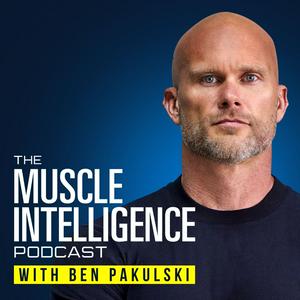
Over Muscle Intelligence — Longevity, Training & Human Performance with Ben Pakulski
You don't have to decline. Your body is more capable than you think. This podcast will show you how.
Muscle Intelligence is the podcast for high-performing men who want to build muscle, optimize hormones, extend their healthspan, and maintain full cognitive and physical output as they age.
Ben Pakulski spent 25 years as an IFBB Pro Bodybuilder, coach, and researcher, working with and learning from the world's leading experts in longevity, performance medicine, testosterone optimization, peptides, and human performance. Every episode takes that body of work and gives you something specific to do with it.
Most men lose muscle, hormonal function, and mental clarity through their 40s and 50s without knowing it's happening or that it's reversible. Ben has spent 25 years working on exactly that problem, alongside the coaches, physicians, and researchers who have the best answers.
If you're an executive, entrepreneur, or serious athlete who wants to train smarter, age better, and get advice from someone who has done the work, this is your show.
Topics include: muscle building, body composition, peptides, hormone optimization, longevity, cognitive performance, sleep, nutrition, and the systems high-performing men use to operate at their best in their 40s, 50s, and beyond.
New episodes every Monday.
Podcast websiteLuister naar Muscle Intelligence — Longevity, Training & Human Performance with Ben Pakulski, Natuurgeluiden en vele andere podcasts van over de hele wereld met de radio.net-app
Ontvang de gratis radio.net app
- Zenders en podcasts om te bookmarken
- Streamen via Wi-Fi of Bluetooth
- Ondersteunt Carplay & Android Auto
- Veel andere app-functies
Ontvang de gratis radio.net app
- Zenders en podcasts om te bookmarken
- Streamen via Wi-Fi of Bluetooth
- Ondersteunt Carplay & Android Auto
- Veel andere app-functies

Muscle Intelligence — Longevity, Training & Human Performance with Ben Pakulski
Scan de code,
download de app,
luisteren.
download de app,
luisteren.
Muscle Intelligence — Longevity, Training & Human Performance with Ben Pakulski: Podcasts in familie
 Netherlands